Table of Contents >> Show >> Hide
- What Are Neptune Balls, Exactly?
- Why These Weird Balls May Be Saving the Ocean
- Why Seagrass Matters Far Beyond These Beach Balls
- The Catch: Neptune Balls Are Helpful, but They Are Not Magic
- What the U.S. Can Learn From a Mediterranean Beach Mystery
- How to Actually Help Instead of Just Admiring the Weirdness
- Experiences From the Shoreline: What This Story Feels Like in Real Life
- Conclusion
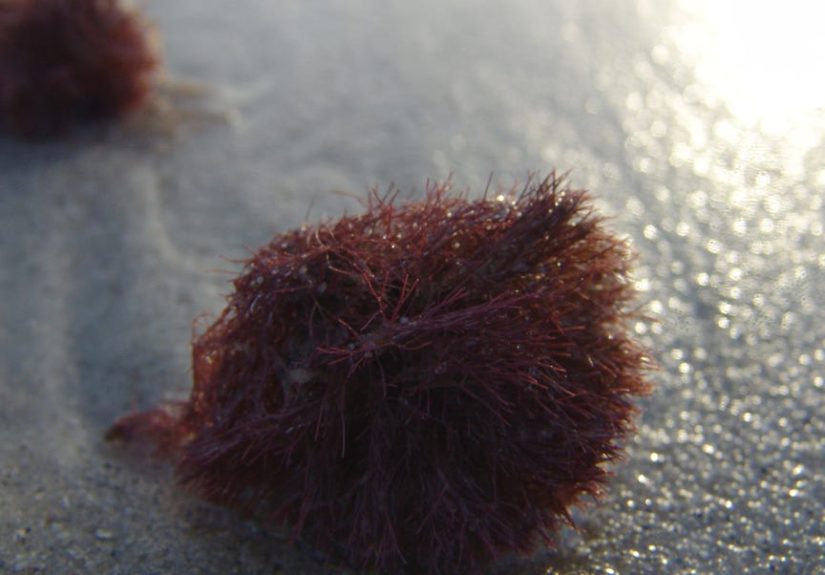
At first glance, they look like props from a low-budget sci-fi movie: fuzzy brown balls, roughly the size of tennis balls or coconuts, scattered across the sand after a storm. Tourists stare. Kids poke them with sticks. Someone always says, “Please tell me that’s not from a sewer.” Fair question. Beaches have seen enough strange things to earn a healthy sense of suspicion.
But some of these odd little bundles are not pollution. They are Neptune balls, natural fiber clumps formed by Posidonia oceanica, a Mediterranean seagrass species that behaves less like ordinary lawn grass and more like an underwater engineer. In recent years, scientists have discovered that these weird beach balls can trap microplastics and carry them out of the coastal water column. That means a beach curiosity may also be a natural cleanup mechanism.
This does not mean the ocean has hired its own housekeeping staff and we can all go back to buying glitter-covered plastic nonsense with zero consequences. It does mean something important: healthy seagrass meadows are doing far more work than most people realize. They provide nursery habitat for fish, stabilize sediments, store carbon, soften wave energy, and now appear to help remove some plastic pollution from the sea. The strange balls on the beach are not a miracle cure, but they are a clue. Nature is still trying to help us. The least we can do is stop making its job impossible.
What Are Neptune Balls, Exactly?
Neptune balls are compacted masses of seagrass fibers. As Posidonia oceanica grows, older leaves and sheaths break down. Over time, the plant releases tough lignocellulosic fibers. Waves and underwater motion roll those fibers together into dense, felt-like spheres known scientifically as aegagropilae. “Neptune balls” is simply the friendlier name, and honestly, the better branding choice.
These balls are most commonly associated with the Mediterranean, where Posidonia oceanica forms vast meadows on the seafloor. Those meadows are ecological heavyweights. They shelter marine life, improve water clarity, and trap particles moving through coastal waters. When storms hit, some of the fiber balls are dislodged and wash ashore, where beachgoers discover them and wonder whether Poseidon has started playing dodgeball.
For years, these balls were mostly treated as an odd natural byproduct of coastal ecosystems. Then researchers studying beaches in Mallorca found something much more interesting: the balls were carrying plastic. Not large bottle caps or shattered beach toys, but the small, stubborn stuff that is much harder to remove from the ocean once it sinks or fragments.
Why These Weird Balls May Be Saving the Ocean
They trap microplastics that are otherwise difficult to remove
Microplastics are tiny plastic particles, generally smaller than five millimeters, that come from broken-down waste, synthetic fibers, packaging, industrial pellets, and other debris. They are a nightmare because they are small enough to spread almost everywhere and persistent enough to stick around for a very long time. Fish, invertebrates, seabirds, and other wildlife can ingest them, and the particles can also carry or attract chemical contaminants.
What makes the Neptune-ball finding so compelling is that seagrass appears to be especially good at capturing the kinds of plastic particles that do not simply float at the surface. In the Mediterranean study, researchers found up to roughly 1,470 plastic items per kilogram of seagrass fiber in these natural balls. Scientists also estimated that Mediterranean seagrass meadows may trap and eject on the order of 867 million to 900 million plastic fragments per year. That is not a rounding error. That is a real ecosystem service.
In plain English, the seagrass is acting like a natural lint roller for the sea. The plant slows water movement, increases particle retention, and provides a tangle of fibers where dense plastic fragments and synthetic threads can get caught. Some of that material becomes incorporated into beach wrack or fiber balls and is physically moved out of the marine environment during wave events.
They reveal an overlooked form of ocean cleanup
Most public conversations about ocean plastic focus on floating trash patches, cleanup vessels, bans on single-use items, or beach volunteer days. Those things matter. But Neptune balls highlight a quieter process: ecosystems themselves can intercept pollution before it keeps moving through food webs and coastal habitats.
That matters because not all plastic pollution is equally visible. A water bottle on the sand is ugly but obvious. A dense microfiber lodged in sediment is less dramatic, but often more difficult to recover. When seagrass meadows trap those particles, they reduce the amount of debris staying suspended, drifting into new habitat, or cycling endlessly through shallow coastal waters.
They show that healthy habitats do multiple jobs at once
The most exciting part of this story is not just the plastic. It is the reminder that healthy ecosystems are multitaskers. A seagrass meadow is not merely a plant community sitting politely on the seafloor. It is habitat, nursery, shoreline buffer, carbon sink, sediment stabilizer, and now, at least in part, a plastic trap. When conservation works, it often works in layers.
Why Seagrass Matters Far Beyond These Beach Balls
It is a nursery for marine life
Seagrass meadows are among the most productive coastal habitats on Earth. They provide food, shelter, and breeding or nursery grounds for fish, crustaceans, sea turtles, manatees, and countless smaller organisms. NOAA has described seagrass as essential habitat because animal abundance in grass beds can be dramatically higher than in nearby bare seafloor. A single acre can support astonishing numbers of fish and invertebrates.
This is one reason the “weird balls on beaches” story is bigger than it first appears. If the same habitat trapping microplastics is also raising juvenile fish and supporting coastal food webs, then protecting seagrass creates a double win. Lose the meadow, and you lose both the nursery and part of the filtration effect.
It stores carbon with impressive efficiency
Seagrass has earned a reputation as a blue carbon powerhouse. Conservation groups and marine scientists often point out that seagrass can capture and store carbon at rates that punch far above its size. Even though seagrass covers only a tiny fraction of the ocean floor, it plays an outsized role in marine carbon sequestration. That means these underwater meadows are not only helping biodiversity; they are part of the climate conversation too.
Carbon storage matters here because plastic pollution and climate stress are not separate problems living in separate filing cabinets. Warming waters, declining water quality, stronger storms, and habitat degradation can all weaken the same coastal systems we need to remain resilient. Saving seagrass helps on multiple fronts at once.
It protects shorelines and improves water quality
Seagrass slows currents, traps sediments, and helps keep coastal waters clearer. It can also reduce erosion and support more stable shorelines. USGS and NOAA research has repeatedly shown that seagrass contributes to natural coastal protection and broader ecosystem health. In other words, these plants do not just make the water prettier for paddleboard photos. They shape the physical environment in ways that matter for people, property, and wildlife.
The Catch: Neptune Balls Are Helpful, but They Are Not Magic
This is where the internet usually takes a running leap into oversimplification. A headline says weird beach balls may save the ocean, and suddenly everyone imagines a furry army of biodegradable superheroes rolling across the Mediterranean like eco-friendly tumbleweeds. Reality is less cinematic and more useful.
First, Neptune balls do not eliminate the plastic crisis. They capture only some of the debris moving through specific coastal habitats. Second, the very fact that these natural balls are filled with plastic is also evidence of how thoroughly pollution has spread. A ball of seagrass should not have to moonlight as a trash collector.
Third, seagrass meadows themselves are under pressure. Coastal development, murky water, nutrient pollution, dredging, boat damage, and climate change have caused major losses in seagrass habitat worldwide. In the case of Posidonia oceanica, scientists have warned that large portions of its historic potential range have disappeared over recent decades. So the ecosystems performing this accidental cleanup service are also ecosystems we are actively degrading. That is not a smart long-term management plan. That is a cry for help with a shoreline.
What the U.S. Can Learn From a Mediterranean Beach Mystery
Even though Neptune balls are a Mediterranean phenomenon, the lesson travels well. The United States has its own seagrass-rich regions, from Florida Bay and Tampa Bay to parts of the Gulf Coast, Chesapeake Bay, and the Pacific coast. Different species, same principle: healthy submerged vegetation delivers huge ecological and economic value.
There is real evidence that restoration works. In parts of Florida’s Gulf Coast, satellite-based analyses have documented substantial gains in seagrass cover over recent decades. NOAA has also highlighted recovery in places such as Chesapeake Bay, Tampa Bay, and Sarasota Bay where improved water clarity helped underwater grasses rebound. Those examples matter because they show that habitat decline is not always a one-way slide into ecological doom.
If policymakers want a practical takeaway, it is this: do not think about seagrass conservation as a niche project for marine biologists with clipboards and sunburns. Think of it as infrastructure. Natural infrastructure, yes, but infrastructure all the same. It supports fisheries, improves resilience, stores carbon, and may even reduce some plastic transport in coastal zones. That is an excellent return on investment for something that does not send you an invoice.
How to Actually Help Instead of Just Admiring the Weirdness
The Neptune-ball story is encouraging, but it should not become an excuse for complacency. Nature is helping, but nature is also keeping receipts. The better response is to reduce the burden on the system. That means cutting plastic leakage at the source, improving waste management, upgrading stormwater and wastewater controls, reducing microfiber release, and protecting coastal habitats before they unravel.
For readers, the practical version is simple. Support policies that reduce plastic pollution upstream. Avoid treating beach wrack and seagrass cast-offs as worthless mess when they are often part of functioning coastal ecology. Respect seagrass areas when boating or wading. Pay attention to local restoration efforts. And maybe, just maybe, stop assuming every weird thing on the beach is useless because it is not Instagram-friendly.
Sometimes the ocean sends us a warning. Sometimes it sends us evidence. Neptune balls are both. They are proof that plastic pollution is reaching deep into natural systems, and proof that those systems still retain some ability to push back. That combination is unsettling, impressive, and very 2026.
Experiences From the Shoreline: What This Story Feels Like in Real Life
One reason this topic resonates so strongly is that it lives at the point where science meets ordinary beach experience. Most people do not encounter microplastics as a chart in a journal article. They encounter the consequences indirectly: a strandline of trash after high tide, tangles of fishing line, bits of foam mixed into seaweed, synthetic fibers clinging to wet sand, or that uneasy realization that the ocean is carrying far more human-made material than it should. Neptune balls make that invisible problem visible in a strange, almost theatrical way.
Imagine walking a beach after a storm. The sea has rearranged everything overnight. There are shells, driftwood, wrack, and then these oddly perfect brown spheres sprinkled along the shore. They look handmade, as if someone sat down with a ball of coarse yarn and too much free time. Most beachgoers would never guess they are formed underwater by seagrass, and fewer still would guess they may contain microplastics. That surprise is part of what makes them powerful. They turn an abstract environmental problem into something you can pick up, inspect, and suddenly understand in a new way.
For volunteers and coastal residents, experiences like this often change how a beach is seen. A strip of washed-up plant material can look messy until you learn it shelters invertebrates, feeds coastal food webs, and sometimes helps move pollutants out of the sea. A meadow offshore can seem invisible until you learn it is functioning as fish habitat, carbon storage, and a natural sediment trap all at once. The more people understand what coastal ecosystems are doing, the less likely they are to dismiss them as debris, weeds, or wasted space.
Scientists and restoration teams often talk about ecosystem services, but the lived version is simpler. Clearer water means you can actually see the bottom when you wade. Stabilized sediments mean fewer clouds of muck after every disturbance. More seagrass usually means more life around it: juvenile fish, crabs, shrimp, and all the subtle motion that makes a healthy coastal zone feel alive instead of empty. When those systems decline, people notice that too, even if they do not always have the vocabulary for it. The water gets murkier. The fishing changes. Storm impacts feel harsher. The coastline seems less forgiving.
That is why the Neptune-ball story lands emotionally as well as scientifically. It suggests that the ocean is not passive. Coastal habitats are still working on our behalf, still trapping, filtering, buffering, and rebuilding. But it also reminds us that their help has limits. A beach covered in natural seagrass balls is fascinating. A natural seagrass ball packed with synthetic waste is fascinating and embarrassing at the same time. It is the ecological equivalent of finding your houseplant quietly sorting your recycling because you forgot to do it yourself.
In the end, the experience this story leaves readers with is a mix of wonder and accountability. Wonder, because it is genuinely amazing that a marine plant can roll fibers into dense spheres and pull plastic out of circulation. Accountability, because the existence of that service does not excuse the pollution that made it necessary. The weird balls on the beach are not just curiosities. They are a message from the shoreline: healthy ecosystems still have remarkable powers, but they should not have to spend those powers cleaning up after us.
Conclusion
The weird balls washing up on beaches are more than a marine oddity. They are evidence that seagrass meadows can trap and expel plastic pollution while also supporting fisheries, storing carbon, and protecting coastlines. That makes Neptune balls both a symbol of ecological resilience and a warning about the scale of human waste. If we want oceans that are cleaner, richer, and more resilient, we should not wait for mysterious beach balls to save the day. We should protect the habitats making them in the first place.