Table of Contents >> Show >> Hide
- The Big Reveal: The Puppy’s Joke Is a Classic
- How Puppies Tell Jokes Without Words
- Seven “Jokes” Your Comedy Puppy Might Be Telling
- The Science Behind Dog Humor (And Why It Feels So Real)
- How to Encourage a Funny Puppy Without Training a Menace
- When the Joke Isn’t a Joke: Reading the Room (And the Dog)
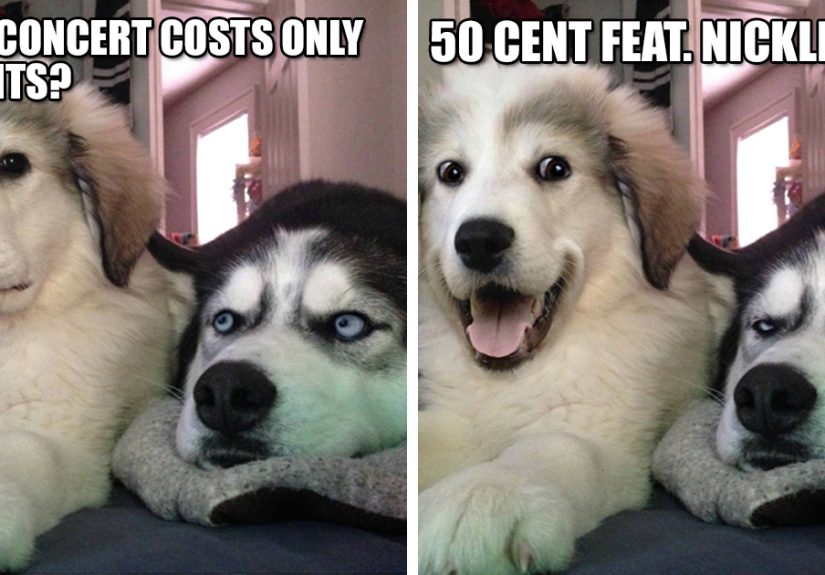
- So… What Joke Did This Comedy Genius Puppy Tell?
- of Real-Life “Comedy Genius Puppy” Moments
The puppy cleared his throatby which I mean he snorted, spun in a tight circle, and
launched into a full-speed sprint down the hallway like he’d just heard the world’s
funniest secret. Then he returned, sat politely, and stared at me with the kind of
innocent confidence usually reserved for stand-up comics who know they nailed the opener.
So what joke did this comedy genius puppy tell?
Not a pun. Not a one-liner. Not even a respectable knock-knock.
The joke was a performancea perfectly timed piece of canine comedy that said,
“Watch this… you’re going to love it,” and then delivered the punchline with paws, posture,
and impeccable timing.
If you’ve ever lived with a puppy, you already know the truth: dogs don’t need English to be funny.
They have their own languagebody signals, playful “laugh” sounds, dramatic pauses, and
a shockingly advanced understanding of what makes humans react.
This article breaks down the “joke” your puppy is telling, why it works, and how to encourage
safe, adorable dog humor without accidentally training a tiny, furry chaos magician.
The Big Reveal: The Puppy’s Joke Is a Classic
The comedy genius puppy’s joke is usually some version of:
“I’m going to do the thing you expect… nope, gotcha!”
It’s slapstick. It’s misdirection. It’s the canine equivalent of a banana peelexcept the banana peel
is your sock, and the audience is you, and the stage is your living room at 9:47 p.m.
The most common “signature joke” looks like this:
- Setup: Puppy brings a toy (or approaches the leash, the treat jar, the door, your lap).
- Build: Puppy offers a play bow, bouncy steps, loose wiggles, and bright-eyed focus.
- Misdirection: Puppy waits for you to reachthen darts away.
- Punchline: Puppy explodes into zoomies, returns triumphantly, and repeats until you laugh.
In human terms, your puppy is saying: “You thought this was fetch.
But it’s actually chase.” And if you’re smiling (or running), you’ve just bought a ticket to the show.
How Puppies Tell Jokes Without Words
1) The Setup: “Everything After This Is Just Play”
Puppies are surprisingly good at announcing their comedic intent. They do it with loose,
springy movement and that iconic “front end down, back end up” posture that looks like
a polite invitation and a prank at the same time.
In comedy, you call this establishing tone. In puppy comedy, it’s the difference between
“I’m being silly” and “I’m stressed.”
A happy puppy comedian tends to look wiggly, bouncy, and relaxedlike a tiny
improv actor who just got a great suggestion from the crowd.
2) The Pause: Puppies Understand Timing
Timing is everything. Your puppy knows that the funniest moment is often the half-second
after you commit. You bend down to clip the leash? Pause. You reach for the ball? Pause.
You open the treat bag? Pause… stare… then sprint.
That pause isn’t just adorable; it’s information gathering. Puppies watch your hands, your posture,
and your face. They learn the rhythm of your routinesthen they remix them for laughs.
3) The “Rimshot”: Snorts, Huffs, and Play Sounds
Some dogs make breathy, pant-like sounds during play that people interpret as “laughter.”
It’s not a sitcom laugh track, but it often shows up in goofy, joyful moments: play wrestling,
tug games, silly chases, or a victory lap after stealing a dish towel.
If you’ve ever heard that happy, breathy “haff-haff” soundor seen a puppy sneeze mid-play like
an overexcited magician revealing a doveyou’ve witnessed the canine version of a rimshot.
Seven “Jokes” Your Comedy Puppy Might Be Telling
The title asks for the joke, but puppies are prolific. Here are seven greatest hits,
translated into human termsplus what your puppy is probably trying to achieve.
Joke #1: The Fake Fetch
What you see: Puppy drops the ball, you reach, puppy grabs it first and bolts.
What it means: “I have discovered the funniest sport: you almost got it.”
Why it works: It turns a predictable game into a chase sceneinstant excitement.
Joke #2: The “I’m Innocent” Face After Chaos
What you see: A shredded paper towel. A puppy sitting politely beside it.
What it means: “I wasn’t involved in this… unless you’re laughing, in which case I did it on purpose.”
Why it works: Dogs are masters of contrast: chaos followed by saintly stillness is comedy gold.
Joke #3: The Sock Heist With a Victory Parade
What you see: Puppy steals a sock and trots by slowly, making sure you notice.
What it means: “Behold my treasure. I’m not running yet. Are you watching? Great.”
Why it works: It’s a setup begging for a reactionand your reaction is the applause.
Joke #4: The Doorbell Impression
What you see: Puppy barks at a sound you can’t hear, then looks at you like,
“Did you get it? That was my impression of the neighborhood!”
What it means: Sometimes it’s excitement, sometimes uncertaintyeither way, it’s communication.
Joke #5: The “Trip” That Isn’t a Trip
What you see: Puppy dramatically flops or rolls like a soccer player after a gentle bump.
What it means: “This is a tragic scene. Please provide sympathy snacks.”
Why it works: Puppies learn that big theatrics can produce big human attention.
Joke #6: The Zoomies Monologue
What you see: The puppy rockets around the house, returns, bows, rockets again.
What it means: “I have energy and I am sharing the plot with everyone.”
Why it works: It’s pure physical comedyno translation required.
Joke #7: The “I Know That Word” Surprise
What you see: You casually say “walk” (or “treat,” or “outside”) and the puppy reacts like
you just announced a celebrity cameo.
What it means: Puppies can learn meaningful wordsespecially when those words predict fun.
The Science Behind Dog Humor (And Why It Feels So Real)
Here’s the honest, slightly mind-blowing part: your puppy isn’t telling jokes the way humans do.
But puppies are excellent at learning what gets a response, and they naturally invent playful behaviors
that look a lot like comedic beats.
Dogs are social. They pay attention to faces, voices, and routines.
They also repeat what worksespecially if “what works” is laughter, attention, play, or treats.
That feedback loop is basically the same loop that keeps human comedians writing new material.
Add in playful signals, breathy play sounds, and zoomies, and you get a creature that feels like
it’s performing comedyeven if it’s actually doing something simpler: experimenting with social connection.
How to Encourage a Funny Puppy Without Training a Menace
If you laugh every time your puppy steals laundry, your puppy is not hearing,
“Please stop.” Your puppy is hearing, “Encore!”
Use Reward-Based Training for the Behaviors You Want
Want a puppy who’s hilarious and easy to live with? Make the good stuff pay.
Reward calm greetings, “drop it,” checking in, and bringing toys appropriately.
Keep sessions short, upbeat, and frequentlike tiny comedy sets with lots of applause.
Redirect the Joke, Don’t Punish the Punchline
Puppies need outlets. If the joke is “I steal the sock,” give them a better prop:
a tug toy, a chew, a food puzzle, or a short training game.
You’re not removing comedyyou’re changing the script.
Build a “Safe Comedy Zone”
Comedy is best when nobody gets hurt. Create predictable, puppy-proof spaces.
Put laundry away. Block off temptation zones. Offer legal items to carry and shred.
You’re not being strict; you’re being a good stage manager.
When the Joke Isn’t a Joke: Reading the Room (And the Dog)
Sometimes humans misread stress as silliness. A puppy can pant from heat or anxiety.
A puppy can vocalize because they’re overwhelmed.
A puppy can growl as a warning, not a punchline.
A playful puppy generally looks loose and bouncy. A worried puppy may look stiff,
tucked, avoidant, or “freeze-y.” If you’re ever unsure, slow down the situation and give space.
Real comedy requires consentyes, even in puppy form.
So… What Joke Did This Comedy Genius Puppy Tell?
The best answer is also the sweetest one:
The puppy’s joke is “Let’s play,” disguised as a prank.
The joke is the fake-out fetch. The sock parade. The dramatic flop.
The play bow that says, “Everything after this is friendly.”
The perfectly timed dash that transforms your boring Tuesday into a slapstick scene.
And the punchline is always the same: you react, you engage, you connect.
Your puppy isn’t trying to become famous. Your puppy is trying to become yours.
Comedy is just the fastest way to your attentionand, honestly, it’s working.
of Real-Life “Comedy Genius Puppy” Moments
If you’ve ever tried to explain puppy humor to someone who hasn’t lived it, you know it sounds fake.
“My dog told a joke.” Sure. And yet, the stories keep happeningremarkably consistent across households,
as if puppies arrive with the same tiny comedy handbook tucked under one paw.
One of the most relatable experiences is the “I brought you a gift” routine.
A puppy trots in proudly holding something they’re not supposed to havean oven mitt, a remote,
a mysterious sock that seems to have teleported from the laundry basket. They don’t run immediately.
They slow down. They make eye contact. They angle their body so you can’t miss the prize.
It’s as if they’re saying, “Before I begin the chase scene, please admire my work.”
The comedy isn’t just the theftit’s the deliberate presentation, the way they pause to see if you noticed,
and the split-second they choose chaos only after confirming you’re watching.
Another classic: the “I can’t hear you” bit. You call your puppy’s name. Nothing.
You call again. Still nothing. Then you whisper something like “cookie” or “outside,”
and suddenly you have an attentive scholar sitting at your feet like they’re defending a dissertation.
This moment feels personal, like the puppy is roasting you. In reality, it’s a lesson in what predicts
good outcomes. But it lands like comedy because the timing is so sharpan instant costume change from
“deaf gremlin” to “polite citizen.”
Puppies also invent physical comedy with a level of commitment that would impress professional stunt performers.
They trip dramatically over nothing. They roll with a toy like it’s the funniest joke in the world.
They do the play bow, then bounce sideways as if they just heard a tiny cymbal crash.
Watching them is like seeing a kid discover their body can do weird thingsand deciding the weirdest thing is best.
The laughter you feel is partly surprise, partly joy, and partly relief that the puppy is clearly having fun.
And then there are the “audience tests,” the moments when a puppy seems to workshop new material.
They try a small pranksnatching a tissue. They glance at you. If you react, they escalate:
a bigger tissue, a faster run, a sharper corner, a triumphant lap around the couch.
If you don’t react, they pivot: a toy toss, a play bow, a gentle paw tap on your knee.
It’s not manipulation so much as experimentation. Puppies are learning what gets engagement, and they keep
offering different bits until they find the one that makes you look at them with delight.
The most tender “comedy genius” moment is when the joke ends with closeness.
After the zoomies and fake-outs and dramatic flops, many puppies return and sit near you,
satisfied, as if the show is complete. They may nudge your hand or lean their shoulder into your leg.
That’s the part people forget when they focus on the chaos: the goal was never the sock.
The goal was always the shared moment. The puppy told a joke so you’d join their world for a minute
and you did.