Table of Contents >> Show >> Hide
- Why “But” Causes So Much Comma Confusion
- The Main Rule: Use a Comma Before “But” Between Two Independent Clauses
- The Quick Test: Can Both Sides Stand Alone?
- Do Not Use a Comma Before “But” When It Connects Two Verbs
- Do Not Use a Comma Before “But” Between Two Adjectives or Phrases
- When to Use a Comma After “But”
- Can You Start a Sentence With “But”?
- Comma Before “But” in Short Sentences
- Comma Before “But” With “Not Only…But Also”
- Comma Before “But” With Contrasting Elements
- Common Mistakes With Commas Before and After “But”
- “But” vs. “However”: Why the Comma Rules Change
- How Commas With “But” Improve SEO Writing
- Practical Examples for Everyday Writing
- A Simple Decision Chart for Commas With “But”
- More Examples: Correct vs. Incorrect
- My Experience Learning When to Use a Comma Before and After “But”
- Conclusion
Few punctuation marks cause as much quiet panic as the comma, and few words attract comma confusion faster than but. It looks innocent. It is tiny. It only has three letters. Yet the moment it appears in a sentence, writers everywhere begin squinting at the screen like they are defusing a grammar bomb.
Should there be a comma before but? Should there be one after but? Can a sentence start with but? Is “but, however” legal, or will the punctuation police arrive with flashing red pens?
The good news is that the rules are much easier than they look. In standard American English, the main rule is simple: use a comma before but when it joins two independent clauses. Do not use a comma before but when it connects words, phrases, or incomplete clauses. Use a comma after but only when another comma rule calls for it, usually because an interrupter follows.
That is the short answer. But since commas love drama, let’s unpack the full story with clear examples, practical tests, and a few friendly warnings.
Why “But” Causes So Much Comma Confusion
The word but is a coordinating conjunction. That means it connects things of equal grammatical value: word to word, phrase to phrase, clause to clause, or sentence idea to sentence idea. It usually introduces contrast, exception, limitation, correction, or surprise.
For example:
- I wanted coffee but ordered tea.
- The jacket is expensive but beautiful.
- She studied all night, but she still felt nervous.
In all three sentences, but signals a turn. The comma depends not on the meaning of but, but on the grammar around it. In other words, commas do not appear because a sentence “feels pause-y.” They appear because the structure needs them. Your ear can help, but your ear also sometimes lies. Mine once told me to put a comma after every dramatic breath. We no longer let it manage punctuation unsupervised.
The Main Rule: Use a Comma Before “But” Between Two Independent Clauses
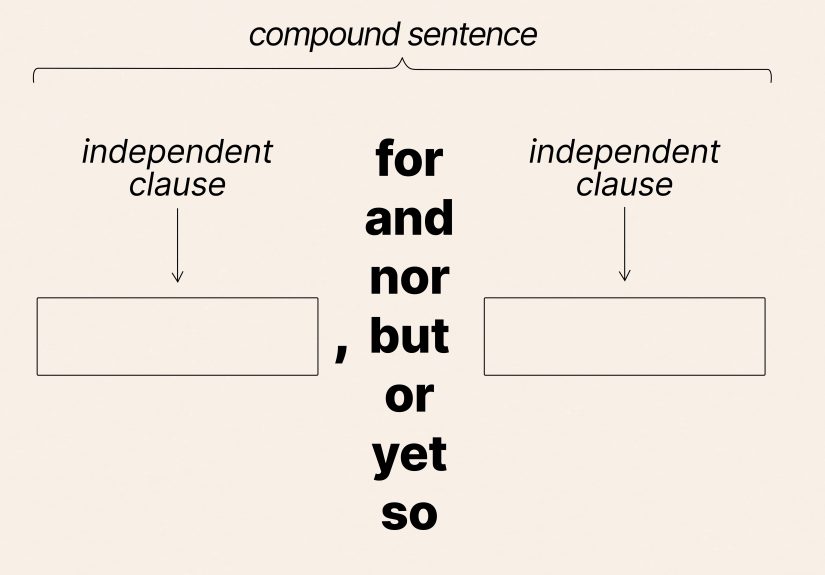
Use a comma before but when it joins two independent clauses. An independent clause is a group of words that has a subject and a verb and can stand alone as a complete sentence.
Correct Examples
- I wanted to finish the report, but my laptop had other plans.
- The recipe looked simple, but the sauce staged a tiny kitchen rebellion.
- Marcus loves grammar, but he still fears semicolons.
- The team prepared carefully, but the client changed the deadline.
In each example, the words before and after but could become separate sentences:
- I wanted to finish the report. My laptop had other plans.
- The recipe looked simple. The sauce staged a tiny kitchen rebellion.
- Marcus loves grammar. He still fears semicolons.
Because both sides are complete thoughts, the comma before but helps readers see where one complete idea ends and the next begins.
The Quick Test: Can Both Sides Stand Alone?
The easiest way to decide whether you need a comma before but is to use the “stand-alone test.” Cover the word but. Then ask: can the words on each side be complete sentences?
Example 1
Sentence: I wanted pizza, but I made a salad.
- I wanted pizza. Complete sentence? Yes.
- I made a salad. Complete sentence? Yes.
Result: Use a comma before but.
Example 2
Sentence: I wanted pizza but made a salad.
- I wanted pizza. Complete sentence? Yes.
- Made a salad. Complete sentence? No.
Result: Do not use a comma before but.
This test works beautifully for most everyday writing. It is fast, reliable, and cheaper than hiring a tiny grammarian to sit on your keyboard.
Do Not Use a Comma Before “But” When It Connects Two Verbs
One of the most common mistakes is placing a comma before but when the second part of the sentence does not have its own subject.
Incorrect
I opened the email, but forgot to reply.
Correct
I opened the email but forgot to reply.
Why? Because forgot to reply is not a complete sentence. The subject I applies to both verbs: opened and forgot. Since but is connecting two verbs with the same subject, no comma is needed.
More Correct Examples
- She bought the ticket but missed the train.
- We cleaned the garage but found three spiders and one emotional crisis.
- He promised to help but disappeared when the moving boxes arrived.
- The dog heard the command but ignored it with professional confidence.
In these sentences, the second part cannot stand alone. So the comma stays out.
Do Not Use a Comma Before “But” Between Two Adjectives or Phrases
You also do not need a comma before but when it connects two adjectives, nouns, phrases, or other short sentence parts.
Correct Examples
- The movie was strange but memorable.
- Her answer was brief but helpful.
- The room was small but cozy.
- He is not rude but direct.
- The design is simple but effective.
In each sentence, but connects equal parts, not two complete clauses. A comma would slow the sentence unnecessarily and make the writing feel choppy.
When to Use a Comma After “But”
Here is the rule many people miss: you usually do not put a comma immediately after but. A comma after but appears only when another comma rule requires it.
The most common reason is an interrupter. An interrupter is a word or phrase that breaks into the sentence to add emphasis, clarification, attitude, or extra information.
Correct Examples With a Comma After “But”
- I wanted to agree, but, honestly, the plan made no sense.
- The class was useful but, in my opinion, too short.
- She seemed calm, but, as everyone noticed, her coffee cup was shaking.
- The proposal is strong but, to be fair, not ready yet.
In these examples, the comma after but does not belong to but itself. It belongs to the interrupting phrase: honestly, in my opinion, as everyone noticed, and to be fair. If you remove the interrupter, the comma after but disappears.
Without the Interrupter
- I wanted to agree, but the plan made no sense.
- The class was useful but too short.
- The proposal is strong but not ready yet.
So the key idea is this: do not automatically place a comma after but. Only do it when something inserted after but needs to be set off with commas.
Can You Start a Sentence With “But”?
Yes, you can start a sentence with but. Despite the old classroom myth, beginning a sentence with but is acceptable in modern American English, especially when you want a clear contrast or a conversational rhythm.
Correct Examples
- But the results were not what we expected.
- But there is one important exception.
- But no one remembered to bring the charger.
Starting with but can make writing feel natural and direct. However, do not overuse it. If every other sentence begins with but, your article may start sounding like it is arguing with itself in a grocery store.
Do You Need a Comma After “But” at the Beginning of a Sentence?
Usually, no.
Correct
But the answer is more complicated.
Also Correct With an Interrupter
But, of course, the answer is more complicated.
Again, the comma after but appears only because of course is an interrupter. Without the interrupter, no comma is needed.
Comma Before “But” in Short Sentences
In formal grammar, a comma is normally used before but when it joins two independent clauses, even if the clauses are short.
Example: I called, but no one answered.
Some style guides allow writers to omit the comma when both clauses are very short and closely connected. For example:
Possible in casual style: I called but no one answered.
For school writing, professional writing, SEO articles, business emails, and most polished web content, it is safer to include the comma. Clear punctuation beats “technically maybe okay” punctuation almost every time.
Comma Before “But” With “Not Only…But Also”
The phrase not only…but also often does not need a comma.
Correct Examples
- She is not only talented but also disciplined.
- The course covers not only grammar but also style.
- The app is not only fast but also easy to use.
Because not only…but also usually connects parallel words or phrases, a comma is not normally needed. However, if the construction joins two complete independent clauses, a comma may be appropriate for clarity.
Example With Complete Clauses
Not only did she revise the article, but she also improved the headline.
Here, the comma helps separate two larger grammatical units. The sentence is more complex, and the comma makes it easier to read.
Comma Before “But” With Contrasting Elements
Sometimes but introduces a sharp contrast rather than a full independent clause. In short contrasts, a comma is often unnecessary.
No Comma Needed
- It was difficult but worth it.
- The answer is simple but surprising.
- The sofa is old but comfortable.
However, commas may appear when the contrast is longer, more interruptive, or added for emphasis.
Comma May Help
The solution was not elegant, but surprisingly effective.
In this case, the comma gives the reader a slight pause before the contrast. Still, be careful: not every contrast needs a comma. When in doubt, check whether but connects two complete clauses. That rule should guide your decision first.
Common Mistakes With Commas Before and After “But”
Mistake 1: Adding a Comma Before Every “But”
Incorrect: The laptop is old, but reliable.
Correct: The laptop is old but reliable.
The words old and reliable are adjectives. Since but is not joining two independent clauses, the comma is unnecessary.
Mistake 2: Forgetting the Comma Between Independent Clauses
Incorrect: I saved the file but the power went out.
Correct: I saved the file, but the power went out.
Both sides are complete sentences: I saved the file and the power went out. The comma belongs before but.
Mistake 3: Putting a Comma After “But” for No Reason
Incorrect: I wanted to leave, but, the meeting continued.
Correct: I wanted to leave, but the meeting continued.
There is no interrupter after but, so there is no reason for the comma after it.
Mistake 4: Using “But However” Awkwardly
Awkward: The idea is creative, but however, it is too expensive.
Better: The idea is creative, but it is too expensive.
Also Better: The idea is creative; however, it is too expensive.
But and however both show contrast. Using them together often sounds redundant. Choose one and let it do its job without making it share a cubicle.
“But” vs. “However”: Why the Comma Rules Change
But is a coordinating conjunction. However is usually a conjunctive adverb. That difference matters because the punctuation changes.
With “But”
I liked the article, but I changed the headline.
With “However”
I liked the article; however, I changed the headline.
You can also write:
I liked the article. However, I changed the headline.
A common error is using a comma before however as if it were but.
Incorrect
I liked the article, however, I changed the headline.
This is a comma splice because two independent clauses are joined with only a comma. To fix it, use a semicolon, a period, or rewrite with but.
How Commas With “But” Improve SEO Writing
At first glance, comma rules may not seem connected to SEO. Search engines do not rank a page higher because it has charming punctuation. If they did, English teachers would control the internet.
But punctuation affects readability, and readability affects user experience. A clear article keeps readers engaged, reduces confusion, and helps information flow naturally. When readers can quickly understand your content, they are more likely to stay on the page, scroll, click, share, and trust your site.
For SEO writing, commas before and after but matter because they help organize contrast. Articles often explain differences, warnings, exceptions, pros and cons, and “yes, but” situations. Clean punctuation makes that structure easier to follow.
SEO-Friendly Example
Weak: This method is fast but it can create errors if used carelessly.
Better: This method is fast, but it can create errors if used carelessly.
The improved version gives readers a clean turn between benefit and warning. That small comma makes the sentence smoother, especially on mobile screens where readers scan quickly.
Practical Examples for Everyday Writing
Business Writing
Correct: We reviewed the proposal, but we need more time before making a decision.
Correct: The proposal is detailed but too expensive for the current budget.
Academic Writing
Correct: The study produced useful results, but the sample size was limited.
Correct: The argument is logical but incomplete.
Creative Writing
Correct: He opened the door, but no one was there.
Correct: The house was quiet but not empty.
Email Writing
Correct: I can attend the meeting, but I may arrive five minutes late.
Correct: I read your message but have not reviewed the attachment yet.
A Simple Decision Chart for Commas With “But”
Use this quick checklist whenever you are unsure:
- Does “but” join two complete sentences? Use a comma before but.
- Does “but” join two verbs with the same subject? Do not use a comma before but.
- Does “but” join two adjectives, nouns, or phrases? Do not use a comma before but.
- Is there an interrupter after “but”? Use commas around the interrupter.
- Does the sentence begin with “But”? Do not add a comma after but unless an interrupter follows.
More Examples: Correct vs. Incorrect
Comma Before “But” Needed
- Incorrect: The instructions were clear but nobody followed them.
- Correct: The instructions were clear, but nobody followed them.
- Incorrect: The restaurant was crowded but the service was excellent.
- Correct: The restaurant was crowded, but the service was excellent.
No Comma Before “But” Needed
- Incorrect: The instructions were clear, but ignored.
- Correct: The instructions were clear but ignored.
- Incorrect: The restaurant was crowded, but friendly.
- Correct: The restaurant was crowded but friendly.
Comma After “But” Needed Because of an Interrupter
- Correct: The draft is finished, but, unfortunately, it still needs editing.
- Correct: The plan worked but, in the end, cost more than expected.
My Experience Learning When to Use a Comma Before and After “But”
Learning how to use a comma before and after but is one of those writing lessons that seems tiny until you start editing real sentences. Then it becomes obvious that this little punctuation rule can change the rhythm, clarity, and professionalism of an entire paragraph.
In my experience, the biggest challenge is not understanding the rule in theory. Most writers can memorize “comma before but between two independent clauses” without much trouble. The tricky part is recognizing independent clauses quickly while writing naturally. When you are drafting an article, email, essay, or product description, your brain is usually focused on ideas. Grammar is sitting in the back seat, eating chips, occasionally shouting, “Was that a clause?”
One helpful habit is reading the sentence in two pieces. For example, take the sentence: “I wanted to publish the article, but the conclusion still felt weak.” The first half, “I wanted to publish the article,” works as a sentence. The second half, “the conclusion still felt weak,” also works as a sentence. That means the comma before but is doing useful work. It separates two complete thoughts and prepares the reader for a contrast.
Now compare that with: “I wanted to publish the article but needed a stronger conclusion.” The second half, “needed a stronger conclusion,” does not stand alone because it has no subject. The subject is still I. So the comma disappears. This is where many writers over-punctuate. They feel a pause before but, so they add a comma. But punctuation is not only about pauses; it is about structure.
Another experience many writers share is the temptation to add a comma after but. It looks fancy. It feels literary. It says, “I own a bookshelf and possibly a cardigan.” But most of the time, the comma after but is unnecessary. You need it only when a phrase interrupts the sentence: “But, of course, we made one more revision.” The phrase of course is the reason for the commas. Without it, the sentence becomes: “But we made one more revision.” No comma after but.
Editing web content makes this rule especially valuable. Online readers move quickly. They scan headings, skim examples, and make fast decisions about whether a page is worth their time. A misplaced comma may not ruin an article, but repeated punctuation problems can make content feel careless. On the other hand, clean comma use makes writing feel polished without calling attention to itself. That is the dream: grammar that works so smoothly nobody notices it.
The best practical advice is to treat but like a checkpoint. Each time you see it, pause for one second and ask what it connects. Two complete sentences? Add a comma before it. Two words, phrases, or shared-subject verbs? Skip the comma. An interrupter right after it? Add commas around the interrupter. Once this habit becomes automatic, commas with but stop feeling mysterious and start behaving like helpful little traffic signals.
Conclusion
Knowing when and how to use a comma before and after but makes your writing clearer, smoother, and more professional. The main rule is easy to remember: use a comma before but when it joins two independent clauses. Do not use a comma before but when it connects words, phrases, adjectives, or verbs that share the same subject. Use a comma after but only when an interrupter follows.
Once you understand the structure, punctuation becomes less about guessing and more about guiding the reader. And that is the real purpose of commas: not to decorate sentences like grammatical confetti, but to help ideas move cleanly from one point to the next.
Note: This article synthesizes established guidance from reputable American grammar references, university writing centers, and major style resources. Source links are intentionally omitted for clean web publishing.