Table of Contents >> Show >> Hide
- What Does “Track 5” Mean in Taylor Swift’s Music?
- How the Track 5 Tradition Started
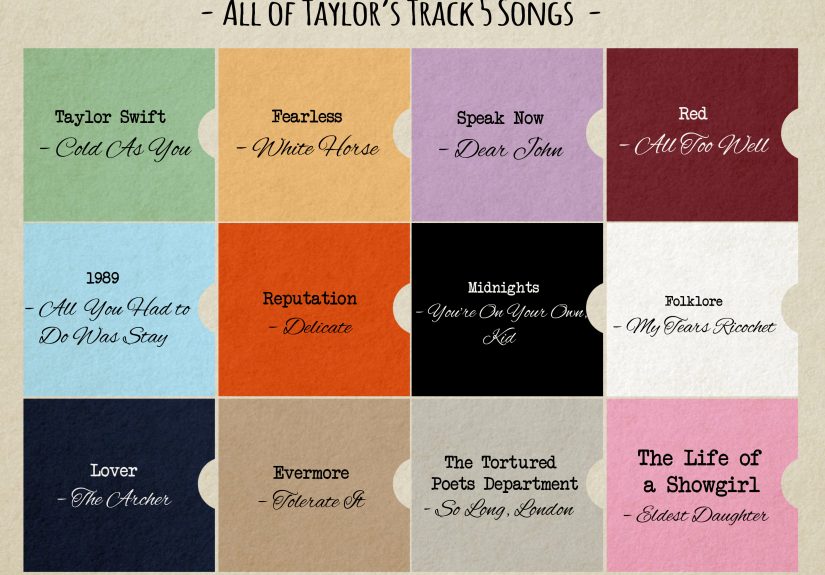
- Every Taylor Swift Track 5 and Why It Matters
- “Cold As You” Taylor Swift
- “White Horse” Fearless
- “Dear John” Speak Now
- “All Too Well” Red
- “All You Had to Do Was Stay” 1989
- “Delicate” Reputation
- “The Archer” Lover
- “My Tears Ricochet” Folklore
- “Tolerate It” Evermore
- “You’re On Your Own, Kid” Midnights
- “So Long, London” The Tortured Poets Department
- “Eldest Daughter” The Life of a Showgirl
- Why Fans Care So Much About Track 5
- Are Track 5s Always the Saddest Songs?
- The Songwriting Power Behind Taylor Swift’s Track 5s
- What Track 5 Reveals About Taylor Swift’s Career
- Experiences Related to Taylor Swift’s Track 5s
- Conclusion: The Meaning of Taylor Swift’s Track 5s
Taylor Swift fans can decode a cardigan color, a nail polish shade, a suspiciously timed Instagram caption, and possibly the emotional weather system of an entire album before breakfast. But one piece of Swiftie lore is especially important: the legendary “Track 5.” For casual listeners, track five may sound like nothing more than the fifth song on an album. For Swifties, however, it is the emotional trapdoor, the diary page left open, the soft piano in the haunted hallway, and occasionally, the reason everyone is staring silently out a car window pretending they are in a music video.
So, why are Taylor Swift’s Track 5s important? The simple answer is that fans have come to understand the fifth track on a Taylor Swift album as one of the most vulnerable, personal, and emotionally revealing songs on the project. The deeper answer is more interesting: Track 5 became a tradition because Swift repeatedly placed some of her most intimate songwriting in that slot, and fans noticed before the music industry could turn it into a neat little headline.
From “Cold As You” to “All Too Well,” from “The Archer” to “So Long, London,” and now “Eldest Daughter,” Taylor Swift’s Track 5s work like emotional centerpieces. They may not always be the saddest songs, and they are not always acoustic tearjerkers, but they usually reveal something raw: insecurity, grief, regret, self-awareness, betrayal, longing, or the complicated business of growing up in public.
What Does “Track 5” Mean in Taylor Swift’s Music?
In Taylor Swift’s discography, “Track 5” refers to the fifth song on each of her studio albums. Over time, fans observed a pattern: many of those fifth tracks felt unusually personal compared with the songs around them. They were often less about big hooks and more about emotional confession. They did not always shout, but they almost always hurt politely, which is very Taylor Swift of them.
The tradition became more widely recognized during the Lover era, when “The Archer” was released as the album’s fifth track. Swift acknowledged the fan theory around Track 5s and described that position as a home for songs that are honest, emotional, vulnerable, and personal. In other words, the fans were not merely connecting invisible yarn on a corkboard. Well, they were doing that too, but this time the yarn was correct.
Track 5 matters because it gives listeners a clue about where the emotional core of an album may be hiding. On a Taylor Swift album, the first single might introduce the era, the opening song might set the mood, and the closer might lock the door behind you. But Track 5 often turns the lights down and says, “Let’s talk about what really happened.”
How the Track 5 Tradition Started
The Track 5 tradition was not announced with a glitter cannon or a corporate strategy memo. It developed naturally. On Swift’s 2006 debut album, the fifth song, “Cold As You,” showed a teenage songwriter already capable of sharp emotional detail. It was not the album’s biggest country-radio moment, but it had a quiet sting. Fans later looked back and saw it as the first clue that track five had a job to do.
Then came “White Horse” on Fearless, a song that stripped away fairy-tale expectations and replaced them with heartbreak realism. On Speak Now, “Dear John” made the fifth position feel even heavier, offering a long, devastating portrait of regret, manipulation, and emotional damage. By the time Red arrived with “All Too Well” as Track 5, the pattern had become impossible to ignore. The fifth slot had become the album’s emotional pressure point.
Fans are excellent at spotting patterns, especially when those patterns are wearing a scarf and walking through autumn leaves. They began referring to these songs as “Track 5s,” and the phrase became part of Swiftie vocabulary. Today, when Taylor Swift announces a new album tracklist, fans immediately search for the fifth title like it contains state secrets.
Every Taylor Swift Track 5 and Why It Matters
Each Track 5 has its own mood, story, and emotional temperature. Together, they create a map of Swift’s growth as a songwriter and public figure.
“Cold As You” Taylor Swift
“Cold As You” introduced the Track 5 blueprint before anyone knew there was a blueprint. It is a song about loving someone emotionally unavailable, written with a level of bitterness and clarity that felt mature for Swift’s age at the time. The song matters because it showed that even early in her career, Swift was not afraid to write from the bruised part of the heart.
“White Horse” Fearless
“White Horse” takes the fairy-tale imagery often associated with the Fearless era and gently sets it on fire. It is about realizing someone is not the prince, the story is not magical, and the happy ending may require leaving. This Track 5 is important because it marks Swift’s early ability to turn disappointment into a clean, memorable emotional narrative.
“Dear John” Speak Now
“Dear John” is one of Swift’s most direct and widely discussed songs. It stretches past the six-minute mark and unfolds like a letter that should probably be sent after three friends have reviewed it, but thank goodness it was not. The song explores emotional imbalance, regret, and the painful clarity that often arrives after a damaging relationship. As a Track 5, it proved that Swift was willing to be specific, sharp, and uncomfortably honest.
“All Too Well” Red
For many fans, “All Too Well” is the crown jewel of Track 5s. The original version became a cult favorite because of its cinematic storytelling, vivid memory, and emotional restraint. The later ten-minute version deepened its mythology even more, turning the song into one of Swift’s defining artistic achievements. “All Too Well” matters because it demonstrates what Swift does best: she turns small details into emotional evidence.
“All You Had to Do Was Stay” 1989
At first glance, “All You Had to Do Was Stay” might seem too bright and polished to be a classic Track 5. But that is exactly why it is interesting. Beneath the glossy pop production is a song about abandonment, frustration, and the exhausting cycle of someone wanting back in after causing damage. It shows that vulnerability does not always wear a cardigan. Sometimes it arrives with a massive chorus.
“Delicate” Reputation
Reputation is full of armor, snakes, smoke, and tabloid noise. Then “Delicate” appears and lowers the shield. The song captures the anxiety of beginning something real when your public image feels unstable. It is not melodramatic; it is nervous, intimate, and careful. That makes it a perfect Track 5. It asks whether love can survive when the world has already decided who you are.
“The Archer” Lover
“The Archer” is the moment the Track 5 tradition became officially unavoidable. Sparse, anxious, and self-questioning, the song explores insecurity, self-sabotage, and the fear of being left. It is not about one simple breakup. It is about identity, fame, conflict, and the exhausting question of whether anyone can truly stay when they see the mess behind the sparkle.
“My Tears Ricochet” Folklore
“My Tears Ricochet” is one of Swift’s most haunting Track 5s. Written in the language of ghosts, funerals, betrayal, and aftermath, the song is often interpreted through the lens of broken trust and professional heartbreak. It shows how Swift can make personal pain feel mythic without losing the human ache inside it.
“Tolerate It” Evermore
“Tolerate It” is quiet devastation in song form. It describes the pain of giving deep love to someone who merely accepts it, rather than cherishing it. The emotional horror is not explosive betrayal; it is being slowly minimized. As a Track 5, it proves Swift understands that indifference can be just as painful as heartbreak.
“You’re On Your Own, Kid” Midnights
“You’re On Your Own, Kid” feels like a coming-of-age story told from the other side of fame. It moves through youth, ambition, loneliness, sacrifice, and eventual self-acceptance. The song became especially beloved among fans because it feels both personal to Swift and universal to anyone who has had to become their own support system. Cheerful? Not exactly. Empowering? Absolutely. Emotionally inconvenient at 2 a.m.? Definitely.
“So Long, London” The Tortured Poets Department
“So Long, London” continues the Track 5 tradition with a farewell that feels heavy, exhausted, and final. The song is widely understood as a goodbye to a long relationship and to the life built around it. Its placement as Track 5 signaled to fans that this was not casual album material. This was the emotional luggage carousel, and every suitcase was over the weight limit.
“Eldest Daughter” The Life of a Showgirl
“Eldest Daughter,” the fifth track on The Life of a Showgirl, brings the tradition into a newer phase. The song explores responsibility, emotional performance, and the identity of being the person expected to hold everything together. It connects Swift’s public role, personal history, and broader cultural conversations about eldest daughters carrying invisible labor. In classic Track 5 fashion, it asks what happens when the person who looks strong is also tired.
Why Fans Care So Much About Track 5
Swifties care about Track 5 because it feels like an invitation. Taylor Swift’s career has always been built on a rare kind of emotional closeness between artist and audience. Her songs often sound like private thoughts that accidentally learned how to rhyme. Track 5 intensifies that relationship because fans expect it to reveal something especially personal.
That expectation creates a listening ritual. When a new Taylor Swift album arrives, fans do not simply press play. They study the tracklist, predict the emotional damage, prepare group chats, and possibly hydrate. Track 5 becomes a checkpoint. Listeners ask: What is the wound this time? What is she admitting? What part of the album’s story does this unlock?
The importance also comes from consistency. Not every artist has a recurring emotional track placement that fans actively monitor. Swift does. That turns album sequencing into storytelling. It makes the order of songs feel meaningful, not random. For an artist famous for Easter eggs, symbols, colors, numbers, and narrative arcs, Track 5 fits perfectly into her larger creative universe.
Are Track 5s Always the Saddest Songs?
No, Taylor Swift’s Track 5s are not always the saddest songs on their albums. That is one of the biggest misunderstandings about the tradition. A Track 5 is usually vulnerable, but vulnerability can sound like grief, anxiety, anger, regret, embarrassment, hope, or radical self-recognition. Sadness is only one flavor. Track 5 is the full emotional buffet, and sometimes the buffet has glitter on it.
“All You Had to Do Was Stay” is upbeat on the surface. “Delicate” is romantic and airy. “You’re On Your Own, Kid” ends with resilience rather than defeat. These songs are not simple sob sessions. Their importance comes from emotional honesty. They reveal what the album is afraid to say out loud.
This is why Track 5 works so well as a fan concept. It is flexible. It does not force every fifth song into the same mold. Instead, it identifies a recurring songwriting mode: Taylor Swift at her most exposed, reflective, or internally conflicted.
The Songwriting Power Behind Taylor Swift’s Track 5s
The best Taylor Swift Track 5s are powerful because they combine specificity with relatability. Swift is famous for using concrete details: places, objects, gestures, seasons, clothing, phone calls, rooms, and memories that feel lived-in. Even when listeners do not share the exact experience, they recognize the emotional shape of it.
That is why “All Too Well” can feel personal to millions of people who have never had the same relationship, the same scarf, or the same autumn heartbreak. The details are specific enough to feel real, but the emotional truth is broad enough to travel. Track 5s often operate in that space. They are not vague inspirational posters. They are tiny emotional documentaries with melodies.
Swift also understands escalation. Many Track 5s start with a controlled tone and gradually reveal more. “The Archer” circles anxiety until it becomes confession. “Tolerate It” builds from domestic quiet into emotional devastation. “You’re On Your Own, Kid” begins with longing and ends with hard-earned acceptance. These songs do not just describe feelings; they move through them.
What Track 5 Reveals About Taylor Swift’s Career
Looking at Taylor Swift’s Track 5s in order is like reading a parallel autobiography. The early songs focus on romantic disappointment and emotional betrayal. The middle albums explore public image, memory, and identity. The later Track 5s widen the lens to fame, power, grief, endurance, and self-definition.
This evolution mirrors Swift’s career. She began as a teenage country songwriter, became a global pop star, survived backlash, reclaimed her catalog, expanded into indie-folk storytelling, and turned her life’s chapters into eras. Through all of that, Track 5 remained a place where polish could give way to pressure.
That is the real reason the tradition matters. Track 5 is not just a fun fact. It is a recurring artistic device. It tells listeners, “Here is the part of the album where the mask slips.” For a performer whose career includes massive stadiums, record-breaking tours, and carefully constructed visual worlds, that small moment of emotional exposure can feel enormous.
Experiences Related to Taylor Swift’s Track 5s
One of the most interesting things about Taylor Swift’s Track 5s is how differently people experience them. A casual listener may hear “You’re On Your Own, Kid” as a catchy, reflective pop song. A longtime fan may hear it as a survival manual. Someone who moved away from home, lost friends, started over, or built a life without much support may hear it and think, “Oh. So we are doing therapy with a bridge now.”
That is the magic of the Track 5 tradition. It gives listeners a place to put their own emotional history. “White Horse” may remind one person of the first time they stopped romanticizing someone who kept disappointing them. “Dear John” may resonate with someone who finally understood that a relationship had not simply ended; it had changed how they saw themselves. “Tolerate It” may hit hardest for people who have felt invisible while giving everything. These songs become mirrors, and sometimes mirrors are rude enough to be accurate.
Many fans also experience Track 5s socially. They listen together at midnight album releases, post reactions online, trade interpretations, and compare rankings with the seriousness of constitutional scholars. There is humor in it, but also connection. A fan who cries over “My Tears Ricochet” may find thousands of strangers online saying, “Yes, that one got me too.” That shared recognition is part of why Swift’s fan community is so intense and enduring.
Track 5s can also mark different stages of life. A teenager might first connect with “All You Had to Do Was Stay” because it captures the frustration of someone leaving and returning too late. Years later, that same listener might find “The Archer” more meaningful because insecurity and self-sabotage feel more familiar. Later still, “Eldest Daughter” may speak to the burden of being responsible, capable, and quietly exhausted. The songs age with the listener, which is one reason Swift’s catalog has such unusual staying power.
There is also a practical listening experience: Track 5 often changes the way the whole album feels. Once you hear the vulnerable center, the surrounding songs can take on new meaning. “Delicate” softens the armor of Reputation. “So Long, London” deepens the emotional landscape of The Tortured Poets Department. “The Archer” adds anxiety and self-doubt to the pastel romance of Lover. A great Track 5 does not sit alone; it sends emotional signals backward and forward through the album.
For writers, artists, and fans of storytelling, Track 5 offers a lesson in structure. Placement matters. Vulnerability matters. You can build a shiny world, but the audience often remembers the moment when the voice cracks. Swift’s Track 5s prove that emotional honesty is not a weakness in pop music. It is the engine. The confetti is lovely, but the confession is what people carry home.
Conclusion: The Meaning of Taylor Swift’s Track 5s
Taylor Swift’s Track 5s are important because they represent the emotional core of her albums. They are where vulnerability becomes structure, where personal storytelling becomes fan ritual, and where a simple track number becomes one of the most recognizable traditions in modern pop music.
The meaning of Track 5 is not that every fifth song must be the saddest, slowest, or most dramatic song on the album. The meaning is emotional honesty. These songs often reveal the fear beneath the confidence, the grief beneath the glamour, and the private cost behind the public story. From “Cold As You” to “Eldest Daughter,” Track 5 has become Taylor Swift’s unofficial confession booth, and fans keep showing up because the songs make their own feelings easier to understand.
Note: This article is written from publicly available information about Taylor Swift’s official album tracklists, widely reported music commentary, and fan-recognized Track 5 tradition. It contains no direct source links for clean web publishing.