Table of Contents >> Show >> Hide
- Chronic pain isn’t always “just” an injury
- What is Rolfing, exactly?
- Why fascia gets blamed (and why it gets attention)
- What the research actually says (and what it doesn’t)
- What a Rolfing session feels like
- Is Rolfing safe? Who should be cautious
- How Rolfing can fit into a smart chronic pain plan
- How to find a qualified Rolfer (and avoid a “deep tissue cowboy”)
- Experiences: what people often notice when they try Rolfing for chronic pain (about )
- Bottom line
Chronic pain has a special talent: it can turn your body into a full-time complaint department.
Your back emails HR. Your neck starts a group chat with your shoulders. Your hips quietly unfollow you.
And somewhere in the middle of all that drama, you start wondering: “Is there anything that doesn’t feel like
a temporary patch?”
That’s where Rolfing® Structural Integration (often shortened to “Rolfing”) enters the conversationusually via a friend
who says something suspiciously hopeful like, “I didn’t realize I was walking like a question mark until I wasn’t.”
Rolfing isn’t a magic wand, and it’s not the right fit for everyone. But for some people with persistent aches,
movement limitations, and posture-related strain, it can be a surprisingly useful piece of the chronic-pain puzzle.
Chronic pain isn’t always “just” an injury
When pain outlives the original problem
A helpful starting point: chronic pain is generally pain that lasts longer than three months (or keeps going after your
body “should” have healed). It can be tied to clear causes (like arthritis, nerve injury, or old structural issues),
or it can linger without a neat explanation. Either way, chronic pain can reshape your daily lifesleep, mood,
energy, attention, and movement habits can all get pulled into the orbit.
Why your nervous system gets involved
Over time, the nervous system can become more protective (and sometimes overly reactive), meaning the body may interpret
normal inputspressure, movement, certain positionsas threats. This doesn’t mean the pain is “in your head.”
It means pain is influenced by the body and the brain, and long-term relief often requires more than
chasing one sore spot.
That’s also why many modern pain guidelines emphasize non-drug approachesmovement, rehabilitation, stress regulation,
and skill-buildingespecially for chronic musculoskeletal pain. Hands-on therapies can fit into that bigger plan,
but they tend to work best when they’re not the only tool in the box.
What is Rolfing, exactly?
Structural Integration, in plain English
Rolfing is a form of manual therapy paired with movement education. The idea is to work with the body’s connective
tissue networkoften described as fasciawhile also changing how you move, stand, breathe, and distribute effort.
Instead of treating one “hot spot,” Rolfing commonly looks at patterns: how your hips relate to your ribs, how your
head stacks over your spine, and how your feet support the whole operation.
Think of it like this: if your body is a tent, fascia and other soft tissues are part of the system of lines and tension
that holds the structure up. If the tension is uneven, one corner of the tent can sag while another is pulled too tight.
Rolfing aims to redistribute that tension so the structure feels more balancedand moving starts to feel less like paying
rent with interest.
The famous Ten-Series (and why it matters)
A hallmark of classic Rolfing is the “Ten-Series,” a traditional sequence of ten sessions designed to address the body
systematically. Different practitioners may adapt the approach, but the original concept is intentionally progressive:
early sessions focus on easing restrictions and improving basic capacity (like breathing and support), middle sessions
often go deeper into core and leg patterns, and later sessions emphasize integrationmaking changes stick in real movement.
This is one reason Rolfing can feel different from “a massage I get when my traps start acting like they’re auditioning
for a granite countertop.” It’s typically less about a single relaxing appointment and more about a structured process.
How Rolfing differs from massage, PT, and chiropractic
- Massage often focuses on local relief and relaxation (though some massage includes myofascial work).
- Physical therapy is rehab-focused, often centered on strength, mobility, function, and injury recovery.
- Chiropractic often emphasizes joint function, including spinal manipulation, depending on the provider.
- Rolfing blends hands-on tissue work with postural/movement re-education and a whole-body strategy.
None of these is “better” in general. They’re different tools. The smartest approach is usually the one that matches your
specific pain pattern, health history, and goals.
Why fascia gets blamed (and why it gets attention)
Fascia 101
Fascia is connective tissue that surrounds and interweaves through muscles, nerves, vessels, and organs. It’s not just
“packaging.” It’s part of how force is transmitted, how movement feels, and how the body organizes itself.
When people describe feeling “stuck,” “bound,” or “like my body forgot how to glide,” they’re often describing
a movement experience that fascia may influence.
What Rolfing claims it can change
Rolfing practitioners commonly describe their work as helping to “release,” “realign,” and “rebalance” the body by
creating more adaptability in soft tissues and improving movement patterns. In practice, this often looks like slow,
deliberate pressure combined with guided movementbreathing, bending, walking, reachingso the nervous system learns
a new “default setting.”
Importantly, some proposed mechanisms are still theoretical. Scientific research on fascia and manual therapy is evolving,
and not every explanation used in marketing is proven. The most grounded way to think about it is: Rolfing may help by
changing tissue sensitivity, improving motion options, reducing protective guarding, and refining movement habits that
keep loading the same painful areas.
What the research actually says (and what it doesn’t)
Chronic low back pain: a useful signal, not a victory parade
One of the more cited studies in this area is a randomized pilot clinical trial in people with chronic nonspecific low back
pain, comparing standard outpatient rehab alone versus rehab plus Structural Integration sessions.
The results were nuanced: pain reduction in the combined group wasn’t clearly better in a statistically significant way,
but disability/function measures improved more in the group that received Structural Integration.
Translation: in that small study, Rolfing-style work didn’t reliably make pain disappearbut it may have helped some people
move and function better in the short term. For chronic pain, that distinction matters. Sometimes the first win isn’t
“zero pain.” It’s “I can sit, walk, sleep, and work without feeling like I’m negotiating with a villain.”
Why evidence still feels “limited”
The research base for Rolfing/Structural Integration is still relatively small compared with major rehab approaches.
Many studies are small, outcomes vary, and it’s tricky to create perfect placebo controls for hands-on bodywork.
Reviews in complementary and integrative health frequently land on a similar conclusion: manual therapies can help some
people, but effects are often modest, individual, and stronger when combined with exercise and education.
So, if you’re looking for “guaranteed cure,” Rolfing is not the product for that shelf. If you’re looking for
“one more high-quality, skill-based, body-and-movement approach that might improve function and reduce the strain spiral,”
it becomes more interesting.
What a Rolfing session feels like
Hands-on work + movement coaching
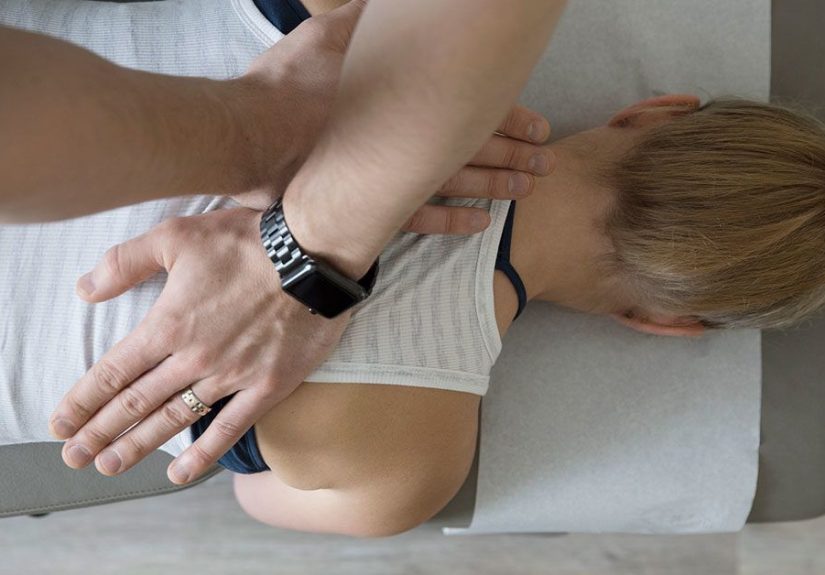
Most sessions involve hands-on contact using palms, knuckles, and sometimes elbows or forearms. The practitioner may work
while you lie on a table, sit, or stand. You may be asked to move slowlyturn your head, bend your knees, take fuller breaths
while pressure is applied. The goal isn’t just to “work tissue,” but to teach your system a new pattern.
Expect questions like:
“What happens to your low back when you inhale?”
or
“Can you feel your weight shift into your left heel?”
If you like the idea of learning what your body is doing (and why), you’ll probably enjoy this.
If you want to nap through your appointment like a happy housecat, you may prefer a more relaxing style of massage.
Intensity: “deep” should still be collaborative
Rolfing has a reputation for being intense, and it can be. But “effective” doesn’t require “white-knuckle suffering.”
A skilled practitioner works with your nervous system, not against it. Discomfort can happen, especially around sensitive,
guarded areas, but the best sessions feel purposeful, not punishing. You should always be able to ask for less pressure
and expect the practitioner to adjust.
Is Rolfing safe? Who should be cautious
Common after-effects
People often report temporary sorenesssimilar to how you might feel after a deep tissue session or a new workout.
Some feel looser immediately; others feel “reorganized” in a way that takes a day or two to settle.
Mild bruising can happen with deeper work, depending on your sensitivity, medications, and technique.
When to talk to your clinician first
If you have conditions that increase riskbleeding disorders, are on blood thinners, have fragile skin, recent surgery,
severe osteoporosis, active cancer treatment considerations, acute inflammation, unexplained neurological symptoms,
or complex medical conditionsget medical guidance before starting intensive manual therapy. If your pain includes
red flags (unexplained weight loss, fever, loss of bladder/bowel control, major weakness, night pain with systemic symptoms),
get evaluated first. Rolfing should complement appropriate medical care, not replace it.
How Rolfing can fit into a smart chronic pain plan
Use it as a “reorganization” toolthen reinforce it with movement
The most durable improvements in chronic pain usually come from combining approaches:
hands-on work can open options, and exercise/movement practice can keep those options available.
In practical terms, that might look like:
- Strength and stability: glutes, trunk, upper backwhatever supports your vulnerable zones.
- Mobility you can control: not extreme stretching, but usable range of motion.
- Pacing: building capacity without flaring symptoms every time you have one productive day.
- Stress and sleep support: because pain loves chaos and hates recovery.
Many reputable health sources emphasize non-drug options for pain managementphysical therapy, activity, relaxation skills,
and other evidence-based approaches. Rolfing can be part of that, especially if it helps you move more comfortably
and consistently.
Track outcomes like a reasonable adult scientist
One of the best ways to avoid the “I think it helped?” fog is to measure a few simple things for four to six weeks:
- Average pain (0–10)
- Function goal (e.g., “walk 20 minutes,” “sit through a meeting,” “sleep through the night”)
- Range-of-motion marker (e.g., “can I turn my head to check my blind spot?”)
- Flare frequency and recovery time
If pain is the same but function is better, that’s still progress. If everything flares and stays flared, that’s data too.
Chronic pain responds best to informed iteration, not blind loyalty.
How to find a qualified Rolfer (and avoid a “deep tissue cowboy”)
Because intensity and technique vary, training matters. Look for credentials through established training organizations,
ask about experience with chronic pain, and pay attention to how they communicate. Green flags include:
- They explain goals clearly (not vague promises).
- They encourage feedback and adjust pressure.
- They talk about integrating movement and daily habits.
- They respect medical boundaries and refer out when appropriate.
Red flags include:
“No pain, no gain,” guarantees of curing complex conditions, or dismissing medical evaluation when symptoms are concerning.
Your body is not a rusted bolt that needs brute force. It’s a nervous system with opinions.
Experiences: what people often notice when they try Rolfing for chronic pain (about )
Experiences with Rolfing tend to fall into a few familiar storylinesdifferent details, same theme: people stop feeling
like they’re living inside a tense negotiation.
1) “I didn’t know I was bracing all day.”
A common chronic-pain habit is constant low-grade guarding. You’re not clenching dramatically like a movie villain
you’re just quietly tightening your jaw, lifting your shoulders, locking your knees, and holding your breath like
your inbox is going to attack you. During Rolfing, people often become aware of those patterns in real time.
The practitioner might work along the ribcage while coaching breath, and suddenly the client realizes:
“Oh. I haven’t taken a full breath since 2019.” That awareness can be more than a neat discoveryit can be a doorway
to less daily strain.
2) “My pain didn’t vanish, but my body feels more ‘organized.’”
This is the sneaky win. Many chronic pain conditions respond slowly. But people sometimes report that movement feels
smoother, walking feels more stable, or standing feels less exhausting. Even if their pain rating drops only a little,
their effort drops a lot. They might say, “I’m not fighting gravity as much,” or “I’m not collapsing into my low back.”
That aligns with the idea that improving biomechanics and movement efficiency can reduce repeated irritation.
3) “The first sessions were weirdthen things started to click.”
Because Rolfing often follows a series-based logic, some people describe an adjustment phase.
After an early session, they feel sore or strangely “different,” like their posture got edited without permission.
Then, as sessions continue and they practice new movement cues, the changes begin to feel usable.
This is also why it helps to pair Rolfing with simple homework: gentle walks, mobility drills, or strength work that
supports the new alignment. Without reinforcement, the body can default back to its old “protective setting.”
4) “I learned what triggers my flares.”
Chronic pain often comes with mystery flares: you did laundry and now your hip hates you.
With more body awareness, people may start connecting dotshow sitting slumped affects the neck,
how one foot collapses and the knee complains, how stress tightens breathing and then the low back stiffens.
Even when symptoms remain, the sensation of “I have a map now” reduces fear and improves self-management.
5) “It’s intense, but it’s not random.”
People who benefit from Rolfing often say the intensity felt targeted and meaningful, not like getting tenderized
for no reason. They appreciate being part of the process: adjusting pressure, breathing through a release,
standing up and re-checking how their body moves. That collaborative feel can matter, because chronic pain tends to
improve when you feel agency rather than helplessness.
The most realistic takeaway from these experiences: Rolfing is rarely a single “aha” fix. It’s a structured attempt
to change how your body loads itself, how your nervous system interprets movement, and how you inhabit your posture
day after day. For some people, that’s exactly what chronic pain needsless brute force, more re-education.
Bottom line
Rolfing might be the answer to chronic pain if your pain is tightly linked to posture, movement habits, and long-term
tissue guardingand if you’re willing to treat it as a process, not a one-time rescue mission.
The research is still developing, and results vary. But as part of a broader, evidence-informed plan
(movement, rehabilitation, stress regulation, and good clinical judgment), Rolfing can be a meaningful tool for improving
function, reducing strain, and helping you feel more at home in your body.