Table of Contents >> Show >> Hide
- Why Fitness Feels Different After 40
- The Best Workout Priorities for Women Over 40
- Workout Tips for Women Over 40 That Actually Work
- A Simple Weekly Workout Plan for Women Over 40
- Common Workout Mistakes Women Over 40 Should Avoid
- What Real Progress Looks Like After 40
- Experiences Women Over 40 Often Have With Fitness
- Final Thoughts
Turning 40 does not mean your workouts need a retirement party. It means your strategy needs an upgrade. The body you have in your 20s often responds well to chaos: random classes, late-night workouts, and the occasional “I guess I’ll do burpees until I question my life choices.” After 40, that same approach can feel less effective, harder on the joints, and suspiciously rude to your recovery.
The good news is that fitness after 40 can be incredibly rewarding. With the right plan, women can build strength, improve bone health, protect heart health, boost mood, support mobility, and stay active for decades. The goal is not to punish your body into behaving. The goal is to train in a way that works with your body, your hormones, your schedule, and your real life.
This guide covers practical workout tips for women over 40, including strength training, cardio, mobility, recovery, and the everyday habits that make exercise sustainable. Think of it as a smarter, kinder, stronger way to train.
Why Fitness Feels Different After 40
Many women notice that the same routine that used to work suddenly feels less magical after 40. That is not laziness, and it is not your imagination. Midlife often brings changes in muscle mass, bone density, recovery, sleep, stress tolerance, and hormones. Perimenopause and menopause can also affect energy, body composition, joint comfort, and how well you bounce back after a tough session.
That does not mean you should work out less. It means you should work out more intentionally. The focus shifts from chasing exhaustion to building results that last: stronger muscles, steadier balance, healthier bones, better stamina, and fewer injuries.
In other words, this is the season to train smarter. Your future knees, hips, and lower back would like to send a thank-you card.
The Best Workout Priorities for Women Over 40
1. Make Strength Training Non-Negotiable
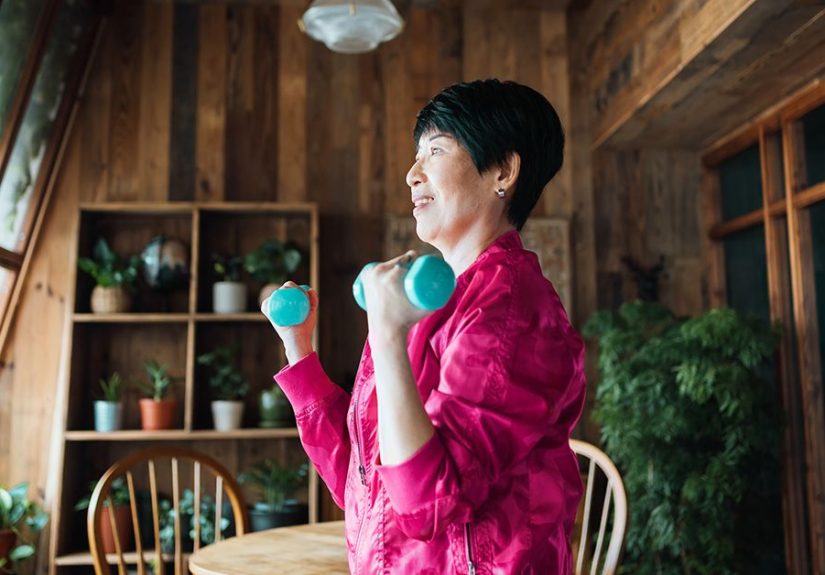
If there is one habit that deserves a gold medal, it is strength training. Resistance exercise helps preserve and build muscle, supports healthy bones, improves posture, boosts day-to-day function, and makes everything from carrying groceries to climbing stairs feel easier. It is also one of the best tools for protecting long-term independence.
You do not need to become a powerlifter overnight. Start with two or three strength sessions per week. Focus on movement patterns that train the whole body:
- Squats or sit-to-stands
- Hip hinges such as deadlifts or Romanian deadlifts
- Rows
- Push-ups or chest presses
- Overhead presses
- Step-ups, split squats, or lunges
- Core stability work such as planks, carries, or dead bugs
Free weights, machines, resistance bands, and body weight can all work. The best choice is the one you can perform safely and consistently. Aim for good form, controlled reps, and gradual progress. Fitness is not a reality show. You do not win by doing the wildest thing in the room.
2. Keep Cardio in the Picture
Strength training may be the star, but cardio is still on the team. Brisk walking, cycling, swimming, dancing, rowing, hiking, and low-impact intervals all help support heart health, endurance, blood sugar control, mood, and overall energy. Cardio also helps you feel more capable in everyday life, which is an underrated luxury.
A practical target is a mix of moderate aerobic exercise spread through the week. That can mean 30 minutes of brisk walking five days a week, or shorter sessions broken into smaller chunks when life gets chaotic. Yes, shorter bouts still count. No, you do not need a two-hour sweat marathon to be “serious.”
If high-impact exercise bothers your joints, choose joint-friendly options. Walking on an incline, cycling, elliptical training, swimming, and water aerobics can all deliver strong benefits without turning your knees into drama queens.
3. Train Balance, Mobility, and Flexibility Too
Mobility is what keeps strength useful. Balance is what keeps confidence high. Flexibility is what helps you move well instead of creaking through life like an old attic door.
Add a few minutes of mobility work to your warmup and cool-down. Include balance work several times a week, especially if you are already in your 40s and thinking long-term. Simple options include:
- Standing on one leg while holding onto support if needed
- Heel-to-toe walking
- Tai chi or yoga
- Single-leg deadlifts with body weight
- Hip, ankle, and thoracic spine mobility drills
This part of training may not look glamorous on social media, but it pays off in real life. A body that feels steady and mobile is easier to trust.
Workout Tips for Women Over 40 That Actually Work
Warm Up Like You Mean It
A quick warmup is not a waste of time. It helps prepare your heart, muscles, and joints for what is coming next. Spend five to 10 minutes doing light movement before harder exercise. Think walking, cycling, marching, arm circles, bodyweight squats, glute bridges, or dynamic stretches.
A good warmup should make you feel more ready, not more tired. Save the heroic stretching contest for another day.
Use Progressive Overload, Not Random Suffering
One of the most important fitness principles is progressive overload: doing a little more over time so the body has a reason to adapt. That can mean adding weight, reps, sets, time, or control. Progress does not need to be dramatic. In fact, tiny increases are often more sustainable.
For example, if you are goblet squatting 15 pounds for 8 reps this week, maybe next week you do 10 reps. Or maybe you keep the reps and improve your depth and form. Progress is progress.
Prioritize Form Over Ego
Midlife is not the time to compete with your old self, the person next to you, or a 22-year-old fitness influencer who thinks “recovery” means iced coffee. Good technique matters. It protects joints, improves results, and helps you train consistently.
If an exercise causes sharp pain, modify it. Swap jumping for stepping. Use dumbbells instead of a barbell. Shorten your range of motion, use support, or work with a qualified coach or physical therapist if needed. Smart modifications are not weakness. They are strategy.
Recover Harder Than You Brag
Recovery is not the lazy cousin of exercise. It is part of the plan. Women over 40 often do better when they leave enough time between challenging sessions for tissues, energy systems, and sleep to catch up. That may include easy walking, gentle mobility work, stretching, or a full rest day.
Active recovery can be helpful, but so can plain old rest. If you are unusually sore, under-slept, stressed, or dealing with pain, going lighter may help more than forcing intensity. Sometimes the toughest move in fitness is not adding another workout. It is respecting the one you already did.
Do Not Skip Protein, Hydration, and Sleep
Exercise works better when your daily habits support it. Eating enough protein can help maintain muscle and support recovery. Drinking enough fluids matters for performance, especially during heat, longer workouts, or menopause-related temperature swings. Sleep is the repair shop your body uses at night. Ignore it long enough and everything gets noisier.
You do not need a perfect meal plan to make progress. Start simple: include protein at meals, drink water throughout the day, and protect your sleep routine like it is a VIP appointment.
Work With Your Energy, Not Against It
Some women feel strongest in the morning. Others do better later in the day after joints loosen up and the brain has accepted reality. During perimenopause or menopause, energy can fluctuate even more. The best workout schedule is one you can repeat.
If hot flashes or poor sleep are making hard workouts miserable, try shorter sessions, lower-impact cardio, or strength training with longer rest periods. Fitness should challenge you, not make you feel like you are being punished by your own calendar.
A Simple Weekly Workout Plan for Women Over 40
Here is an example of a balanced week:
- Monday: Full-body strength training
- Tuesday: Brisk walk or cycling plus mobility
- Wednesday: Full-body strength training
- Thursday: Easy recovery walk, yoga, or stretching
- Friday: Cardio intervals or steady-state cardio
- Saturday: Full-body or lower-body strength session plus balance work
- Sunday: Rest or gentle movement
That plan is flexible. You can do shorter sessions, combine cardio and strength on the same day, or train four days instead of six. The point is to cover the basics: resistance, aerobic fitness, mobility, and recovery.
Common Workout Mistakes Women Over 40 Should Avoid
Doing Too Much Too Soon
Motivation is wonderful, but it can be a little reckless. Jumping from zero workouts to six intense sessions a week is a classic way to get sore, frustrated, or injured. Build gradually and let consistency do the heavy lifting.
Only Doing Cardio
Cardio is great, but cardio alone is not enough. Women over 40 benefit tremendously from resistance training for muscle, bone, posture, and metabolic health. The treadmill is a tool, not a personality.
Ignoring Pain Signals
Discomfort from effort is normal. Sharp, worsening, or persistent pain is not. Joint pain, pelvic floor symptoms, dizziness, chest discomfort, or unusual shortness of breath deserve attention. Modify, pause, and get medical guidance when needed.
Chasing Sweat Instead of Results
A workout does not have to leave you flattened on the floor to be effective. Productive training often looks boring from the outside: solid technique, enough challenge, enough recovery, repeated for months. That is where the magic hides.
What Real Progress Looks Like After 40
Progress at this stage is not just a number on a scale or a smaller clothing tag. It is sleeping better. Carrying luggage without help. Feeling less stiff when you get up from the couch. Walking up stairs without losing your breath. Feeling strong enough to live your life instead of planning your life around what hurts.
For many women, the biggest change is mental. Exercise becomes less about shrinking and more about building: building stamina, building resilience, building confidence, building a body that supports the life you want. That shift is powerful.
Experiences Women Over 40 Often Have With Fitness
One of the most common experiences women over 40 describe is realizing that their old workout playbook no longer works the same way. The routine that once delivered quick results now leaves them sore for three days, annoys a shoulder, or simply feels exhausting. At first, that can be frustrating. But for many women, it ends up being a useful turning point. Instead of chasing harder workouts, they start choosing better ones.
A lot of women in this age group also discover strength training almost by accident. They might begin because they want to tone up, improve posture, or support weight management, but they stay with it because of how it changes daily life. Carrying groceries gets easier. Knees feel more supported. Back pain eases. Confidence climbs. The surprise is not usually “Wow, I look different overnight.” It is “Wow, I feel capable again.” That kind of result tends to stick.
Another common experience is learning that recovery is no longer optional. In younger years, it is easy to get away with minimal sleep, back-to-back hard workouts, and the occasional “I warmed up by walking from the parking lot.” After 40, the body usually requests a bit more respect. Women often notice that when they sleep better, hydrate better, and stop stacking intense sessions every day, their workouts actually improve. The irony is almost funny: doing a little less chaos often leads to a lot more progress.
Many women also talk about how hormones change the exercise conversation. During perimenopause or menopause, workouts can feel unpredictable. One week you feel powerful; the next week your sleep is off, your joints are grumpy, and your motivation has left the group chat. Women who succeed long-term usually do not panic when that happens. They adapt. They swap high-impact intervals for brisk walking. They shorten the session. They lift lighter. They keep moving without insisting every workout must be a personal best.
There is also the experience of rediscovering enjoyment. After years of exercising only for appearance, many women over 40 begin choosing movement they genuinely like. That might be hiking with friends, dancing in the living room, lifting weights, swimming, Pilates, cycling, or long walks with a podcast and zero desire to be perceived. This matters more than it sounds. When workouts feel rewarding instead of punishing, consistency becomes much easier.
And perhaps the most encouraging experience of all is this: women over 40 often realize they are not too late. Not too late to build muscle. Not too late to improve balance. Not too late to protect bone health. Not too late to feel athletic, energetic, and strong. Progress may look different than it did at 25, but different is not worse. In many cases, it is better. It is steadier, wiser, and based on habits that can last.
So if you are starting again, starting for the first time, or simply trying to train in a way that feels better, that is not a small thing. That is a smart thing. The best workout plan after 40 is the one that helps you keep showing up, keeps you healthy, and reminds you that strength is not about age. It is about practice.
Final Thoughts
The best workout tips for women over 40 are not flashy. Lift weights. Move often. Build balance and mobility. Recover on purpose. Progress gradually. Stay consistent. Adjust when your body asks for it, but do not assume age means decline is inevitable. A strong, active life after 40 is not a fantasy. It is a training plan.
And the best part? You do not need to be perfect. You just need to keep going.