Table of Contents >> Show >> Hide
- Why Sunflower Companion Planting Works (and When It Doesn’t)
- 10 Best Sunflower Companion Plants
- 1. Marigolds: The Tiny Bodyguards
- 2. Nasturtiums: The Sacrificial Heroes
- 3. Cucumbers: Climbers That Love a Sunflower Support
- 4. Squash and Zucchini: Groundcover Powerhouses
- 5. Sweet Corn: A Tall, Sun-Loving Partner
- 6. Lettuce: Shade-Loving Salad Under the Giants
- 7. Basil: Aromatic Ally for Pollinators and Pests
- 8. Zinnias: Colorful Companions That Attract Beneficial Insects
- 9. Echinacea (Coneflower): Pollinator-Friendly Prairie Style
- 10. Chives and Other Allium Herbs: Subtle but Effective
- Plants You Should Keep Away from Sunflowers
- How to Arrange Sunflower Companions in Any Garden
- Real-Life Experiences and Extra Tips with Sunflower Companion Planting
- Conclusion: Build a Sunflower “Community,” Not Just a Row
Sunflowers are like the extroverts of the garden world: tall, loud, ridiculously cheerful, and impossible to ignore.
But even the life of the party needs a good supporting cast. That’s where sunflower companion plants come in. Choose
the right neighbors and your sunflowers will stand taller, bloom longer, and attract an A-list of pollinators. Pick
the wrong ones and…well, you might end up with stunted veggies and a confused-looking garden.
In this guide, we’ll walk through the 10 best sunflower companion plants for any garden, plus a few you should keep at
a respectful distance. We’ll talk about pest control, pollinators, shade benefits, and clever layout tips, all based on
real gardening knowledgenot myths passed around like gossip at the garden fence.
Why Sunflower Companion Planting Works (and When It Doesn’t)
Companion planting is the practice of growing plants together so they help each other outkind of like good roommates
who share chores instead of “forgetting” the dishes. Sunflowers bring some serious perks to the garden:
- Pollinator magnets: Bees, butterflies, and other beneficial insects love sunflowers, which boosts fruit set on nearby crops.
- Natural shade: Their tall stalks and big leaves cast shade, protecting tender or heat-sensitive plants in hot summers.
- Living trellises: Vining crops can climb sunflower stalks, saving you space and hardware.
- Visual structure: They create a vertical backdrop and beautiful contrast for shorter flowers and vegetables.
There is one important catch: sunflowers are mildly allelopathic, meaning they release natural chemicals
that can suppress the growth of certain nearby plants, especially some members of the nightshade family (like tomatoes
and potatoes) and sometimes beans. This doesn’t mean you can’t ever plant these together, but you do need to be mindful
of spacing and soil health over time.
With that in mind, let’s meet the 10 best sunflower companion plants that tend to play nicely and make the whole garden
healthier, more productive, and a lot more beautiful.
10 Best Sunflower Companion Plants
1. Marigolds: The Tiny Bodyguards
Marigolds are the classic “security team” of the garden. Their strong scent helps deter nematodes, aphids, and other
pests that can bother both flowers and vegetables. They’re especially useful around crops like squash, cucumbers, and
peppers, and they add a rich band of orange and gold under your towering sunflowers.
Plant marigolds in a low border at the base of your sunflower row. They won’t compete for height, and their constant
bloom keeps the area buzzing with beneficial insects. Bonus: the color combination of deep yellow sunflowers with bright
orange marigolds is so pretty you might forget this is “pest control” and not just a style choice.
2. Nasturtiums: The Sacrificial Heroes
Nasturtiums are like that friend who volunteers to distract the mosquitoes so everyone else can enjoy the campfire.
These trailing flowers are famous as “trap crops”: aphids and some beetles love them, so they’ll usually go after
nasturtiums first instead of your sunflowers or veggies.
Plant nasturtiums at the front of the sunflower bed, where they can sprawl and form a leafy, flowering carpet. They
shade the soil, reduce weeds, and help keep the root zone a bit cooler. Plus, their blooms echo sunflower tones in red,
yellow, and orange. As a bonus, nasturtium leaves and flowers are edible with a peppery flavorperfect for salads.
3. Cucumbers: Climbers That Love a Sunflower Support
Cucumbers and sunflowers are a natural team. Sunflowers provide a built-in trellis for cucumber vines, lifting fruits
off the ground for better air circulation and fewer rot issues. In return, a dense cucumber canopy can help shade the
soil and cool the root zone around your sunflowers.
For best results, choose tall, sturdy sunflower varieties with strong stems. Plant cucumbers on the sunny side
of the sunflowers so they still get plenty of light as they climb. Space everything generously; this is one combo that
can get exuberant fast. If your summers are hot, the partial shade from sunflower leaves can actually improve cucumber production.
4. Squash and Zucchini: Groundcover Powerhouses
Large-leafed crops like squash and zucchini are fantastic companions for sunflowers. They spread across the ground and
act as living mulch, shading the soil, reducing evaporation, and helping suppress weeds. In a mixed bed, sunflowers
shoot up, while squash spreads outeveryone gets their own “floor” in the garden.
This combo fits nicely into a “Four Sisters” style planting (a twist on the traditional Three Sisters of corn, beans,
and squash): sunflowers add an extra vertical layer and more pollen and nectar. Just don’t crowd squash too close; give
each plant the space it needs, and use paths so you don’t have to trample vines to reach your sunflowers.
5. Sweet Corn: A Tall, Sun-Loving Partner
If you have the space for a sunny patch, pairing sunflowers with sweet corn can be stunning. Both love full sun, rich
soil, and consistent moisture. Grown together in blocks, they create a mini “field” that becomes a magnet for bees and
other pollinatorsgreat news for any nearby vegetable beds.
One simple layout is to plant corn in the center of a block and sunflowers along the outer edges. That way, you can
still access the corn, and the sunflowers frame the planting with color. Avoid interplanting too densely within the
same row; both crops are heavy feeders and will appreciate a little elbow room and extra compost.
6. Lettuce: Shade-Loving Salad Under the Giants
Lettuce and other leafy greens tend to bolt (go to seed) quickly in hot weather. Sunflowers can help by providing dappled
shade during the hottest part of the day, effectively turning your sunflower stalks into a living shade cloth.
Sow lettuce around the base of your sunflowers as the stalks start to rise. You’ll often get an extended harvest window
because the leaves stay cooler and less stressed. This trick is especially useful in small urban gardens where every bit
of shade and vertical space counts.
7. Basil: Aromatic Ally for Pollinators and Pests
Basil isn’t just for tomato beds. This fragrant herb makes a wonderful neighbor for sunflowers as well. When allowed
to flower, basil sends up small spikes of blossoms that bees adore, adding even more pollinator traffic to a sunflower-heavy area.
Plant basil in pockets around your sunflower patch or at the ends of rows. Its scent can help confuse and deter some
pests, and you’ll always have fresh basil near the garden gate. Try a mix of classic Genovese and purple basil varieties
for extra color contrast against your sunflowers.
8. Zinnias: Colorful Companions That Attract Beneficial Insects
Zinnias are like the confetti of the gardenbright, fun, and loved by butterflies and bees. Their long, steady blooming
season makes them a perfect companion for sunflowers, especially if you grow branching sunflower varieties that produce
multiple blooms over time.
Plant zinnias in front of or between sunflower rows. They don’t mind full sun and well-drained soil, and they’ll draw in
beneficial insects that help keep pest populations in check. As a side benefit, you get armloads of cut flowers from both
sunflowers and zinnias all summer long.
9. Echinacea (Coneflower): Pollinator-Friendly Prairie Style
Echinacea, or coneflower, shares a lot of the same preferences as sunflowers: full sun, moderate water, and well-drained
soil. Plant them together, and you get a prairie-inspired mix that’s almost unbelievably attractive to bees, butterflies,
and even songbirds later in the season.
Use coneflowers to create a mid-height layer in front of taller sunflowers. Their daisy-like blooms in purple, pink, or
white complement the warm tones of sunflower petals, and their deep roots don’t usually interfere with annual sunflower
roots. This combination looks fantastic along fences or at the back of perennial borders.
10. Chives and Other Allium Herbs: Subtle but Effective
Chives, onions, and other allium herbs can be quiet but powerful allies in a sunflower bed. Their oniony scent helps deter
some pests, and when they flower, their globes of purple or white blooms draw in pollinators and beneficial insects.
Plant chives in clumps around the edges of your sunflower patch. They don’t take up much space, they’re perennial in many
climates, and they add another layer of interest and function. Snip the leaves for the kitchen, and let some plants bloom
for the bees and your own enjoyment.
Plants You Should Keep Away from Sunflowers
While this article is all about the best sunflower companions, it’s helpful to know a few plants that are often
not ideal neighbors:
- Potatoes and some beans: These can be sensitive to the natural chemicals sunflowers release and may show stunted growth or yellowing.
- Some nightshades (like tomatoes) if crowded: In tight spaces, sunflowers can outcompete them for light and may suppress growth over time.
- Very shallow-rooted, thirsty plants: Sunflowers are heavy feeders and drinkers, so plants that can’t handle competition may struggle right next door.
You don’t have to ban these crops from the gardenjust give them their own beds or keep a comfortable distance between
them and your sunflower rows. Think of it as “separate apartments, same neighborhood.”
How to Arrange Sunflower Companions in Any Garden
Whether you’re gardening in raised beds, a big backyard, or a small side yard, you can mix sunflower companions in ways
that are both practical and beautiful. Here are a few layout ideas:
For Small Raised Beds
- Plant a single row of dwarf or mid-height sunflowers along the north side of the bed.
- Underplant with lettuce and basil for shade and easy access.
- Add marigolds and nasturtiums along the outer edge for color and pest control.
For Larger Vegetable Plots
- Use tall sunflowers as a living fence along one edge of the garden.
- Plant cucumbers or squash at their feet so they can climb or sprawl beneath.
- Interplant patches of zinnias, marigolds, and chives at the corners for pollinators.
For Decorative Borders
- Combine sunflowers, coneflowers, and zinnias in a layered border for a wildflower-meets-cottage look.
- Use marigolds and nasturtiums at the front edge for a low, colorful ribbon.
- Tuck in herbs like basil and chives where you can easily reach them for cooking.
No matter the layout, remember the basics: full sun, well-drained soil, and consistent watering. Add compost at planting
timesunflowers and their companions will repay you with bigger blooms, better harvests, and a garden that hums with life.
Real-Life Experiences and Extra Tips with Sunflower Companion Planting
Once you start experimenting with sunflower companion planting, you realize it’s not just a techniqueit’s a whole
mindset. Instead of thinking in single rows of one crop, you start thinking in layers, teams, and tiny ecosystems.
Here are some experience-based insights and practical tips that gardeners often discover after a season or two with
sunflower companions.
First, sunflowers can be surprisingly heavy feeders. A lot of people plant them in the corner of the
garden and then wonder why nearby plants look a bit tired. If you’re planning to grow sunflowers with cucumbers, squash,
or corn, consider enriching the soil before planting with compost or well-rotted manure. This way, everyone at the
“table” gets enough nutrients and you don’t end up with one star and several struggling sidekicks.
Another common lesson: don’t underestimate shade. In cool or mild climates, shade sounds like the enemy
of vegetable production. But in hot summers, the partial shade cast by sunflower leaves can save sensitive crops like
lettuce, spinach, or even young seedlings from bolting or burning out too early. Gardeners often report that lettuce
under sunflowers stays crisper and usable longer, especially in mid-to-late summer when unprotected greens would normally
turn bitter.
Many gardeners also notice how sunflower companion planting changes the insect “traffic pattern” in
their yard. Plant a row of sunflowers with marigolds, nasturtiums, and zinnias, and suddenly that corner becomes a busy
hub for bees, butterflies, hoverflies, ladybugs, and other beneficial insects. Even if you don’t track it on a chart,
you’ll see more pollinators working your cucumbers, squash, and nearby fruiting plants. Over time, this can make a
visible difference in yieldsmore flowers pollinated, more fruits set, more to harvest.
On the flip side, gardeners who plant sunflowers right in the middle of delicate crops without thinking about
root competition and spacing sometimes learn a hard lesson. Sunflowers develop strong, fibrous root
systems that reach out for water and nutrients. If you tuck a tiny, shallow-rooted plant right against the base of a
sunflower and forget to water deeply and consistently, the smaller plant may end up sulking. A simple fix is to leave a
bit of breathing room6 to 12 inches between the sunflower stem and more delicate neighborsand to water slowly so
moisture penetrates the root zone of both plants.
Another practical trick from experience: use your sunflower companions to guide your garden layout.
For example, plant a sunflower and marigold combo at the corners of beds as “anchors.” Then use vining cucumbers or
nasturtiums to spill over the edges, and tuck lettuce, basil, or chives closer to the paths. This doesn’t just look
goodit also makes it easier to harvest without stepping on anything important. The sunflowers act like signposts:
“Here’s where this bed starts, here’s the edge, walk here.”
Many gardeners also talk about the emotional side of growing sunflowers with companions. There’s
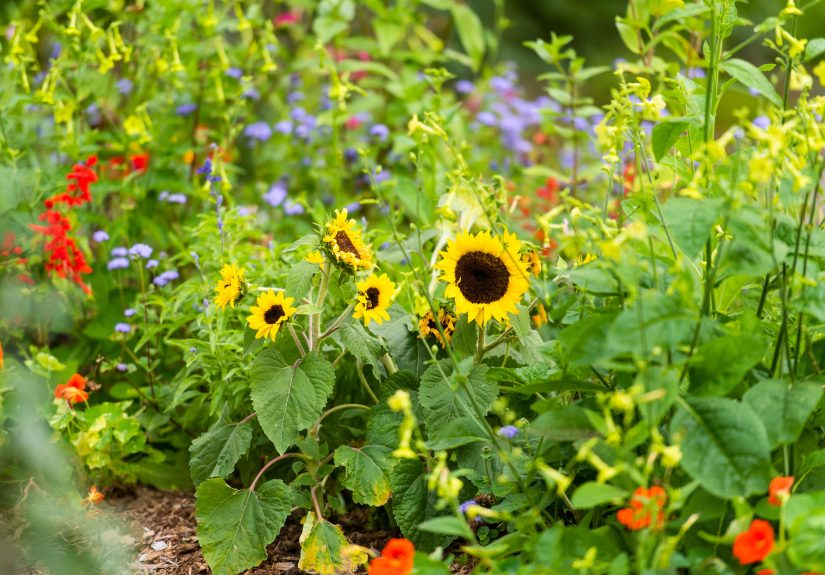
something uniquely satisfying about seeing a “community” of plants that clearly thrive together. The tall sunflowers,
buzzing with bees, shading a patch of glossy green basil and crisp lettuce, with marigolds sparkling at their feet,
feel less like a random vegetable patch and more like a small, living neighborhood. For families, sunflower companion
beds are an easy way to get kids interested in gardening: they’re dramatic, colorful, and full of life.
Finally, don’t be afraid to experiment and adjust. Companion planting is part science, part art. What
works beautifully in one climate or soil type might need tweaking in another. You might find that cucumbers climb your
sunflowers perfectly, or you might discover that your winds are too strong and you need an extra trellis for support.
You might realize that basil loves a spot in front of the sunflowers but lettuce prefers a little more space. Take notes
each seasonwhere plants thrived, where they struggledand tweak your combinations next year.
Over time, you’ll develop your own “signature” sunflower companion mix that fits your garden’s personality. Maybe it’s a
prairie-style strip of sunflowers, coneflowers, and zinnias, or a highly productive vegetable patch with sunflowers,
squash, cucumbers, lettuce, marigolds, and basil woven together. Whatever you choose, you’ll end up with more than just
big yellow blooms. You’ll have a dynamic, living system that supports itself, delights pollinators, and rewards you with
color, food, and a garden that feels alive in every direction.
Conclusion: Build a Sunflower “Community,” Not Just a Row
Sunflowers are already showstoppers on their own, but when you surround them with smart companionslike marigolds,
nasturtiums, cucumbers, squash, corn, lettuce, basil, zinnias, coneflowers, and chivesyou turn a simple planting into a
thriving mini-ecosystem. You get better pollination, more natural pest control, cooler soil, and a garden that looks like
it belongs on a postcard.
Start small if you need to: a single row of sunflowers with a border of marigolds and a few patches of basil and
nasturtiums can already transform your space. Then add more companions each year as you learn what works best in your
climate, soil, and style. Before long, your sunflowers will have the perfect supporting castand your garden will feel
more alive than ever.