Table of Contents >> Show >> Hide
- Why Kitchen Decluttering Is About More Than Looking Neat
- 1. Old Kitchen Sponges and Smelly Dish Rags
- 2. Deeply Scratched or Cracked Cutting Boards
- 3. Scratched Nonstick Pans
- 4. Bulging, Leaking, Rusted, or Deeply Dented Cans
- 5. Mystery Leftovers and Takeout Containers
- 6. Moldy Soft Foods and Questionable Dairy
- 7. Expired Baking Powder, Old Yeast, and Tired Spices
- 8. Rancid Oils, Nuts, Seeds, and Whole-Grain Flours
- 9. Warped Plastic Containers, Missing Lids, and Takeout Tubs
- 10. Chipped Glassware, Cracked Mugs, and Broken Utensils
- How to Do a Fast Expert-Style Kitchen Toss in 30 Minutes
- Common Mistakes People Make When Throwing Things Out
- Real-World Kitchen Cleanout Experience: What Usually Happens
- Conclusion: A Cleaner Kitchen Starts With Smarter Tossing
- SEO Tags
Your kitchen is supposed to help you cook, snack, sip coffee, and occasionally stare into the fridge like it owes you answers. But when old leftovers, mystery lids, scratched pans, and suspicious sponges start taking over, your kitchen stops being helpful and starts becoming a tiny indoor obstacle course. The good news? A smarter kitchen reset does not require a full renovation, a label maker obsession, or a dramatic montage set to upbeat music. Sometimes, it starts with throwing out the right things.
Food safety experts, home organizers, and consumer-safety professionals all agree on one point: the kitchen holds more “I should deal with that later” items than almost any room in the house. Some are a clutter problem. Others can affect freshness, flavor, or sanitation. A few are simply pretending to be useful while quietly occupying premium cabinet real estate like tiny plastic squatters.
Below are 10 kitchen items to throw out ASAP, plus expert-backed reasons for why they deserve to leave. Consider this your friendly permission slip to stop saving the cracked container “just in case.” The case has been dismissed.
Why Kitchen Decluttering Is About More Than Looking Neat
A tidy kitchen looks nice, but the bigger benefit is function. When you remove unsafe, expired, broken, or useless items, you make everyday cooking faster and safer. You can see what you own. You waste less food. You stop buying the same jar of cumin every six months because the first three jars are hiding behind the pancake mix.
Kitchen clutter also makes food safety harder. Crowded refrigerators can block cold air circulation. Old dish sponges and cutting boards can harbor germs. Forgotten leftovers can spoil. Scratched nonstick pans and warped plastic containers may no longer perform as intended. In other words, this is not just about creating a Pinterest-perfect pantry. It is about building a kitchen that works without making you suspicious of your own lunch.
1. Old Kitchen Sponges and Smelly Dish Rags
If your sponge smells like a wet sock that made bad life choices, it is time to throw it out. Kitchen sponges and dish rags are often used to wipe plates, counters, sinks, and spills, which means they can collect moisture, food particles, and bacteria. Warm and damp is basically a luxury spa package for germs.
Experts often recommend sanitizing sponges regularly and replacing them frequently. But let’s be honest: most people are not running a sponge wellness program. If a sponge smells sour, looks shredded, feels slimy, or has been around long enough to have its own emotional history, toss it.
What to do instead
Use washable dishcloths, microfiber cloths, or a clean brush that dries quickly. Wash reusable cloths often and let them dry completely between uses. For messy raw-meat cleanup, use paper towels or a cloth that goes straight into the laundry. Your counters deserve better than yesterday’s bacteria parade.
2. Deeply Scratched or Cracked Cutting Boards
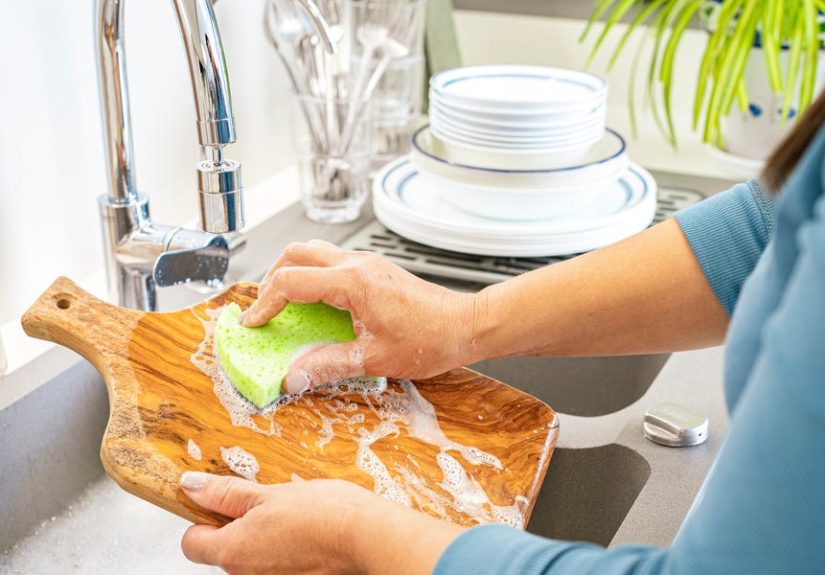
Cutting boards take a beating. They face onions, chicken breasts, tomatoes, bread, and your overly ambitious attempt to chop herbs like a TV chef. Over time, deep grooves and cracks can form, and those tiny valleys can trap food particles and bacteria.
Food safety experts recommend using separate cutting boards for raw meat, poultry, and seafood and another board for produce, bread, and ready-to-eat foods. But separation only helps if the boards can be cleaned properly. If your board is warped, cracked, deeply scarred, or smells funky even after washing, it has earned retirement.
What to do instead
Keep two or three boards you actually use: one for raw proteins, one for produce and bread, and perhaps a small one for quick tasks like slicing fruit. Choose boards that are easy to clean and store. A smaller, clean board is more useful than a giant decorative slab that blocks the backsplash and judges your snack choices.
3. Scratched Nonstick Pans
A good nonstick pan is wonderful until it becomes a peeling, scratched, uneven mess that turns scrambled eggs into a rescue mission. Consumer-safety experts commonly advise replacing nonstick cookware once the coating is chipped, scratched, or flaking. Damaged coatings can lose their nonstick performance and may release tiny particles into food.
Another red flag is food sticking in the same spot every time. If the pan needs half a stick of butter to “act nonstick,” it is no longer a nonstick pan. It is a regular pan with a complicated backstory.
What to do instead
Replace damaged nonstick cookware with a safer, durable option that fits your cooking style. Stainless steel, carbon steel, cast iron, and newer ceramic-coated pans can work well when used correctly. If you keep nonstick cookware, use low to medium heat, avoid metal utensils, and never stack pans without a protector between them.
4. Bulging, Leaking, Rusted, or Deeply Dented Cans
Canned foods are pantry superheroes when stored properly. Beans, tomatoes, broth, tuna, and soup can save dinner when your meal plan collapses. However, damaged cans are not worth the risk. Experts recommend throwing out cans that are bulging, leaking, heavily rusted, swollen, or deeply dented, especially if the dent is on a seam.
A small cosmetic dent may not be a problem, but a deep dent can compromise the seal. A bulging can is a hard no. Do not open it “just to check.” Your nose is not a laboratory, and your dinner should not involve suspense.
What to do instead
During pantry cleanouts, pull every can forward and inspect it. Keep safe cans in a cool, dry place and rotate older ones to the front. Write purchase dates on bulk items if that helps. When in doubt, throw it out. A $1.49 can of beans is not worth turning taco night into a digestive thriller.
5. Mystery Leftovers and Takeout Containers
Every refrigerator has at least one container that inspires fear. Is it soup? Is it gravy? Was it once pasta? Nobody knows, and frankly, it does not want to be known. Leftovers should generally be refrigerated promptly and eaten within a few days. If they have been hanging around longer than you can confidently identify, it is time to say goodbye.
Food safety experts recommend refrigerating leftovers within two hours, or within one hour if the temperature is especially hot. Leftovers should be stored in shallow, covered containers so they cool quickly and stay protected. If food has an unusual smell, texture, color, or visible mold, toss it.
What to do instead
Label leftovers with the date before placing them in the fridge. A strip of masking tape and a marker can prevent the classic “was this from Tuesday or the previous administration?” situation. Keep a small “eat first” area in the refrigerator for leftovers, cut fruit, open sauces, and other short-lived items.
6. Moldy Soft Foods and Questionable Dairy
Not all moldy food behaves the same way. With some hard cheeses, experts may advise cutting away the mold with a generous margin. But soft cheeses, shredded cheese, sliced cheese, yogurt, sour cream, cream cheese, jams, soft fruits, cooked leftovers, and bread should usually be tossed if mold appears. These foods can allow mold threads and bacteria to spread beyond what you can see.
This is where many people try to negotiate. “But it is only one corner!” “But I just bought it!” “But cream cheese is expensive!” Understandable. Still, visible mold on soft, moist, or porous food is your cue to let it go.
What to do instead
Store dairy properly, seal containers tightly, and use clean utensils instead of dipping in with the butter knife you just used on toast. Keep soft cheeses and spreads in the coldest part of the fridge, not in the door where temperatures fluctuate more often.
7. Expired Baking Powder, Old Yeast, and Tired Spices
Old spices probably will not send you running to urgent care, but they can make dinner taste like cardboard wearing perfume. Spices lose flavor, aroma, and color over time, especially when stored near heat, light, or moisture. That means the paprika above your stove has been through a lot.
Baking powder and yeast are a different issue: they lose effectiveness. Expired baking powder may fail to lift biscuits, pancakes, muffins, or cakes, resulting in baked goods with the energy level of a deflated air mattress. Yeast that has lost its power can turn bread-making into an emotional support exercise.
What to do instead
Test baking powder by stirring a teaspoon into hot water. If it foams strongly, it still has life. If it sits there like it is contemplating retirement, toss it. Smell spices before using them. If they have no aroma, they will not bring much to your recipe. Buy spices in smaller amounts unless you truly use them often.
8. Rancid Oils, Nuts, Seeds, and Whole-Grain Flours
Pantry foods can spoil even when they look innocent. Oils, nuts, seeds, nut butters, and whole-grain flours contain fats that can turn rancid over time, especially when exposed to heat, light, and air. Rancid food often smells stale, bitter, sour, metallic, or paint-like. If your cooking oil smells like an old garage, it is not adding “depth.” It is adding regret.
Whole-wheat flour, brown rice, flaxseed, walnuts, and similar ingredients may not last as long as highly refined pantry staples because their natural oils can oxidize. This does not mean you must fear your pantry. It simply means you should stop treating every dry good as immortal.
What to do instead
Store oils in a cool, dark place and keep lids tightly closed. Refrigerate or freeze nuts, seeds, and whole-grain flours if you do not use them quickly. Write the opening date on packages. The freezer is not just a place for ice cream and unidentified bags of peas; it is also a freshness tool.
9. Warped Plastic Containers, Missing Lids, and Takeout Tubs
Food storage containers multiply when no one is looking. One day you have six containers and six lids. Two months later you have 27 lids, three containers, and a square blue top that fits absolutely nothing on Earth. Professional organizers often recommend matching containers and lids regularly, then recycling or discarding pieces that are missing partners, warped, cracked, or stained beyond rescue.
Warped plastic containers may not seal well, which makes them bad for freshness and annoying for transport. Cracked plastic can trap food residue. Old takeout containers are often not designed for repeated use, microwaving, or dishwashing. If a container is cloudy, sticky, melted, permanently stained, or smells like last month’s curry no matter what you do, thank it for its service.
What to do instead
Keep a realistic set of containers in sizes you use weekly. Glass containers with locking lids are sturdy for leftovers, while lightweight plastic can be useful for dry snacks or packed lunches when labeled for the purpose. Store lids vertically in a bin or file sorter so the cabinet does not become a plastic avalanche.
10. Chipped Glassware, Cracked Mugs, and Broken Utensils
That chipped mug may be sentimental, but if it has a sharp edge or a crack running through it, it belongs in the goodbye pile. Cracked mugs can worsen with heat. Chipped glasses can cut lips or hands. Broken spatulas, melted turners, loose knife handles, and warped measuring spoons are not charmingly imperfect; they are kitchen clutter with a side of inconvenience.
This category is often overlooked because the items still seem “usable.” But usable does not mean safe, pleasant, or worth storing. A drawer full of half-functional tools slows you down every time you cook. You reach for a spatula, find one with a melted edge, put it back, dig for another, and somehow burn the onions. The onions did not deserve this.
What to do instead
Keep tools that are comfortable, clean, heat-safe, and intact. Donate duplicates that are in good condition. Throw away anything sharp, cracked, melted, peeling, or splintered. Your kitchen drawers should not feel like a hardware store clearance bin after a small earthquake.
How to Do a Fast Expert-Style Kitchen Toss in 30 Minutes
If the list above feels like a lot, do not empty the entire kitchen onto the floor unless you have snacks and emotional support. Instead, use a simple zone-by-zone method.
Step 1: Start with the refrigerator
Remove expired dairy, spoiled produce, old leftovers, questionable sauces, and anything you cannot identify. Wipe sticky shelves and put soon-to-eat foods at eye level. Keep raw meat, poultry, and seafood sealed and away from ready-to-eat foods.
Step 2: Move to the pantry
Check cans for swelling, rust, leaks, and deep dents. Smell oils, nuts, seeds, and whole-grain flours. Test leaveners if you bake. Toss stale, rancid, or unsafe items. Group what remains by category: breakfast, baking, grains, snacks, canned goods, oils, and spices.
Step 3: Attack the storage-container cabinet
Match every container with a lid. If it has no match, recycle or discard it according to local rules. Keep only the number of containers you can store neatly. This is the moment when many people discover they have been housing an entire lid orphanage.
Step 4: Inspect tools and cookware
Look for scratched nonstick pans, splintered wooden spoons, cracked cutting boards, chipped mugs, and dull knives with loose handles. Keep the good tools within easy reach and remove the rest. A kitchen becomes more enjoyable when every item earns its space.
Common Mistakes People Make When Throwing Things Out
The first mistake is keeping unsafe food because it feels wasteful to toss it. Food waste is frustrating, but eating questionable food is not the solution. The better fix is buying smaller quantities, labeling dates, freezing foods before they spoil, and planning meals around what is already open.
The second mistake is keeping broken items for imaginary future use. A cracked pitcher will not become more useful next summer. A lidless container will not suddenly find its soulmate. A pan with peeling coating will not heal after a motivational podcast.
The third mistake is replacing clutter with new clutter. After a big kitchen cleanout, it can be tempting to buy matching bins, new jars, and a beautiful set of containers. Storage products can help, but only after you know what actually needs storing. Declutter first, organize second, shop last.
Real-World Kitchen Cleanout Experience: What Usually Happens
In real-world kitchen cleanouts, the first surprise is usually not how much people throw away. It is how much they already own. Many kitchens contain enough duplicate items to outfit a small cooking school: three peelers, five spatulas, two garlic presses, four water bottles, seven mugs nobody likes, and a heroic number of food storage lids that appear to have lost their containers in a tragic cabinet incident.
The refrigerator tends to be the emotional center of the process. People open it confidently, then immediately encounter a jar of sauce from a forgotten recipe era. Was it for tacos? Stir-fry? A marinade? Nobody knows. The best approach is to stop debating every questionable item and use clear rules. If it is spoiled, moldy, leaking, expired in a way that affects safety, or impossible to identify, it goes. If it is still safe but unlikely to be used, plan a meal around it within the next day or two.
The pantry is where optimism goes to gather dust. This is where people find five types of pasta, three open bags of rice, ancient sprinkles, stale crackers, and spices from a previous kitchen color scheme. A good pantry reset often reveals that the problem is not lack of food. It is lack of visibility. Once expired, rancid, stale, or damaged items are removed, the remaining food becomes easier to use. Dinner ideas appear. Shopping lists get shorter. The cabinet door closes without requiring a shoulder check.
The container drawer is usually the most dramatic. It looks harmless until everything is pulled out. Suddenly the counter is covered with lids, bowls, tubs, tiny sauce cups, and takeout containers saved “because they might be useful.” The fastest method is simple: match pairs, test seals, remove damaged pieces, and set a limit. Most households do not need enough containers to pack leftovers for a professional sports team. A smaller, matched set saves space and makes storing food less annoying.
Cookware and tools create a different kind of hesitation because people remember what they paid for them. But a scratched nonstick skillet, cracked cutting board, or melted spatula is not saving money if it makes cooking harder or less safe. Replacing one truly worn-out item with one durable, useful item is often better than keeping six mediocre ones.
The best part of the experience comes at the end. Counters look calmer. The fridge smells fresher. The pantry makes sense. Cooking feels less like a scavenger hunt. A kitchen cleanout does not have to be perfect to be powerful. Even throwing out ten problem items can make the room feel lighter, cleaner, and easier to use. And yes, closing a drawer without wrestling it is a small domestic victory worth celebrating.
Conclusion: A Cleaner Kitchen Starts With Smarter Tossing
Throwing things out is not about being wasteful. It is about making room for food that is fresh, tools that are safe, and routines that actually work. Old sponges, deeply scratched cutting boards, damaged nonstick pans, unsafe cans, mystery leftovers, moldy soft foods, dead spices, rancid oils, warped containers, and chipped glassware all make your kitchen less efficient and less enjoyable.
Start small. Choose one shelf, one drawer, or one category. Remove what is unsafe, broken, expired, duplicated, or unused. Then organize what remains so you can see it and reach it. Your kitchen does not need to look like a magazine spread. It just needs to stop fighting you every time you make breakfast.
And if you are still holding a container with no lid because “maybe it will turn up,” let this be the sign. The lid has moved on. You can, too.