Table of Contents >> Show >> Hide
Let’s start with a truth bomb wrapped in a throw pillow: science does not actually march into your house, point at your formal dining room, and yell, “Fraud!” What research does show, however, is that single-purpose rooms that are rarely used often become expensive dead weight. They cost money to heat, cool, clean, furnish, and maintain. They collect clutter like it’s their side hustle. And in an era when people want homes to support work, rest, storage, cooking, exercise, and actual daily life, underused rooms can feel less like a luxury and more like a mortgage-backed museum exhibit.
That shift is not just a design trend cooked up by people who own too many beige sofas. It reflects real changes in how Americans live. Households are smaller, affordability is tighter, and homeowners increasingly want rooms that can change with them. That is why the old idea of having a special room for special occasions is losing ground to something less glamorous but far more useful: flexibility.
So which rooms are most likely to be wasting space today? Not every version of them. Not in every home. But according to housing data, design trends, behavioral research, and common-sense economics, a few familiar suspects keep showing up in the lineup.
The Real Problem Is Not the Room Name. It’s the Room-to-Use Ratio.
A room is not wasteful because of what it is called. It is wasteful when it takes up meaningful square footage and gives very little back. That is the heart of the issue. A dining room that hosts nightly meals, homework sessions, and weekend board games is doing excellent work. A dining room that sees action only when a relative visits with a casserole twice a year is basically wearing a tuxedo to sit in storage.
Research and market data point in the same direction. Buyers are showing more interest in smaller homes, flexible layouts, efficient kitchens, better storage, and spaces that can adapt to changing needs. Meanwhile, extra square footage still brings ongoing costs. Larger homes use more energy overall, and extra rooms increase the burden of heating, cooling, lighting, and upkeep. That makes the modern idea of “wasted space” less emotional and more measurable.
Why Some Rooms Age Poorly
1. American households do not look like they used to.
Many traditional floor plans were designed around a different household model: larger families, more formal entertaining, and clearer separation between public and private life. But household composition has shifted. Fewer households fit the old template, and less than half of U.S. family households now include children under 18. That matters because room demand changes when the household changes. A home designed for a dinner-party calendar and four children can feel oddly over-scripted for one person, a couple, or a hybrid-working household.
2. Flexibility beats formality.
Peer-reviewed research on housing flexibility suggests that homes support well-being better when residents have more control over how spaces can be used, modified, and reinterpreted over time. In plain English: people do better when rooms can multitask. A room that can become an office, guest room, reading nook, workout area, or quiet retreat has a better shot at earning its square footage than a room with one rigid identity and a dramatic chandelier.
3. Clutter turns unused rooms into psychological static.
Unused rooms rarely stay empty. They become overflow zones. First a shipping box. Then holiday decorations. Then the treadmill that turned into a very judgmental coat rack. Research connecting stressful home environments with mood and cortisol suggests that cluttered, chaotic, unfinished-feeling spaces can chip away at well-being. A room nobody uses often becomes a room everybody avoids, and avoidance is a terrible interior design strategy.
4. Extra square footage is not free just because you already own it.
Even when a room is technically “paid for,” it still extracts a monthly fee in utilities, maintenance, cleaning time, furniture, and opportunity cost. That is especially important now that buyers are showing greater willingness to accept smaller homes and smaller rooms if those homes perform better. Function is beating excess. Or at least giving excess a firm talking-to.
The Rooms Most Likely To Be A Waste Of Space
1. The Formal Dining Room
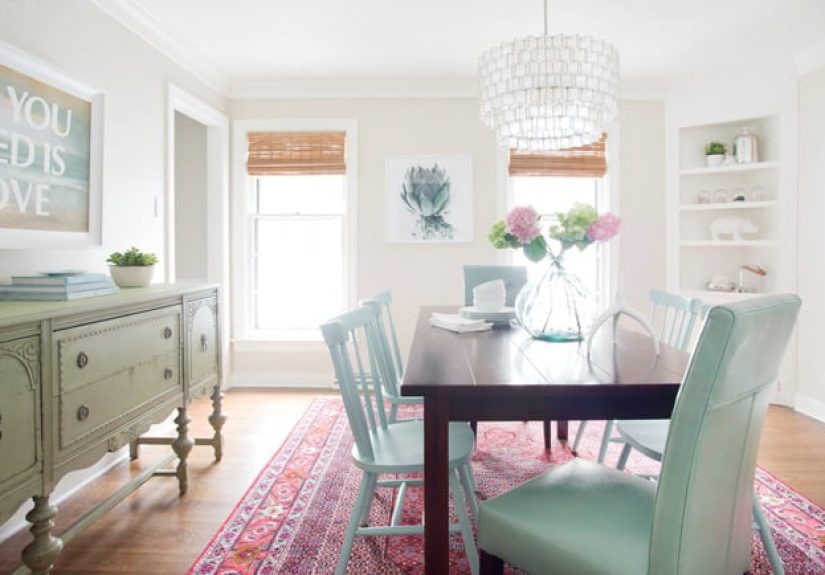
This is the reigning champion of beautiful underachievement. The formal dining room once symbolized order, hospitality, and adulthood. You had a table, matching chairs, maybe a sideboard, and the confidence to say things like “Please pass the gravy” without irony. Today, though, many households eat in kitchens, breakfast nooks, islands, on sofas, or while standing near the fridge debating whether shredded cheese counts as dinner.
That does not make dining rooms bad. It makes underused dining rooms questionable. Housing and design reporting increasingly shows that formal dining rooms are disappearing, especially when buyers prefer open layouts and more versatile living space. Open connections between kitchens, family rooms, and dining areas remain highly desirable because they improve flow and allow a single footprint to support multiple activities. In many homes, the separate dining room has become the architectural equivalent of fancy china: impressive, sentimental, and strangely absent from everyday life.
If yours is rarely used, it may be a better candidate for a library, homework hub, office, hobby room, or combined dining-and-work space with storage that actually earns applause on random Tuesdays.
2. The Formal Living Room or “Sitting Room”
Ah yes, the room for sitting but not too comfortably. The formal living room made sense when homes separated entertaining from daily life. But today, many families already have a family room, great room, media room, or kitchen-living combo doing the heavy lifting. That leaves the formal living room in a weird identity crisis: too nice to mess up, too stiff to enjoy, and too visible to ignore.
Research from home-buyer preference surveys suggests a notable share of buyers would even consider a home without a living room. That does not mean gathering spaces no longer matter. It means people are happy to consolidate them. One strong, multifunctional main living area often beats two mediocre ones, especially when one of them spends most of the year looking like a furniture showroom waiting for customers who never arrive.
If you have a formal living room nobody actually lives in, it may be stealing square footage from a quieter office, a better storage wall, a guest-ready flex room, or a play space that does not have to be hidden five minutes before visitors arrive.
3. The Oversized Guest Room
Guest rooms are lovely. Entirely guest-centered rooms that sit empty 350 days a year are another matter. Recent survey data suggest that more than half of Americans have at least one unoccupied bedroom, and spare rooms are often used as guest space, storage, or home offices. In other words, many “guest rooms” are already admitting they are not really guest rooms. They are part-time hospitality, part-time life support for everything else.
This is where the math gets awkward. If a room is fully furnished, climate-controlled, and protected from ordinary life solely for the occasional overnight visitor, you may be devoting premium square footage to an event that happens less often than oil changes. A smarter version is the dual-duty guest room: office by day, Murphy bed by night; craft room most of the year, cozy guest spot when needed; reading room that can transform without drama.
The key is not eliminating hospitality. It is refusing to dedicate an entire room to a social cameo.
4. The Single-Purpose Bonus Room
Bonus rooms sound delightful because the word “bonus” suggests free value. But many become expensive limbo zones. Too disconnected to be part of daily life, too undefined to develop a real function, and too tempting as a dumping ground, they often end up as awkward media rooms, halfhearted gyms, abandoned playrooms, or storage units with recessed lighting.
Science-backed design thinking favors adaptability. A room with only one narrow purpose is more vulnerable to obsolescence. The second a child outgrows the toys, the movie projector stops being exciting, or the exercise bike becomes a silent monument to January optimism, the room starts losing its case. Bonus rooms work best when they are planned with layers: work, guests, exercise, reading, gaming, or quiet retreat. Without that adaptability, “bonus” becomes “burden” surprisingly fast.
5. The Grand Foyer That Exists Mostly To Impress Delivery Drivers
Large foyers and dramatic entries can feel luxurious, but they often rank low on practical value compared with square footage devoted to kitchens, storage, laundry, or flexible rooms. Unless your household genuinely needs a generous transition zone, a massive entry can become decorative dead air. It is heated. It is cooled. It is dusted. It contributes exactly zero to dinner prep, remote work, sleep quality, or hiding backpacks.
There is nothing wrong with beauty, and first impressions matter. But when affordability is tight and every foot counts, a modest entry with smart storage often beats an echo chamber with a chandelier and emotional ambition.
What Science and Market Data Suggest Instead
Make rooms earn their keep.
The smartest homes are not always the biggest or the trendiest. They are the ones where each space does real work. That usually means designing around daily patterns, not aspirational fantasies. Where do you actually eat? Where do you take calls? Where do bags, shoes, paper clutter, charging cords, and mystery batteries go? These questions are not glamorous, but they are the difference between a home that supports life and a home that demands choreography.
Prioritize kitchens, storage, and quiet zones.
Recent remodeling and buyer-preference reporting points to practical features winning attention: efficient kitchens, built-in storage, pantry space, multifunctional islands, first-floor laundry, and adaptable layouts. People increasingly want homes that reduce friction. That means fewer ceremonial rooms and more spaces that help everyday life run smoothly.
Design for changing needs, not one frozen moment.
The best room may be the one that can survive several identities without a full existential breakdown. Nursery to office. Dining room to homework zone. Guest room to studio. Family room corner to reading nook. Flexibility is not just trendy; research suggests it relates to psychological well-being because it gives residents more control and more options as life changes.
About the Human Experience of Reclaiming “Wasted” Rooms
One of the most interesting things about underused rooms is that people often feel guilty about them long before they change them. The formal dining room is usually not hated. It is just quietly resented. The guest room is not offensive. It is simply hard to justify when your laptop lives at the kitchen counter and your craft supplies are stacked in a closet like they are hiding from the law. The bonus room is not a villain. It just keeps asking for a purpose and then refusing all assignments.
That is why reclaiming these rooms tends to feel bigger than a normal redecorating project. It often feels like permission. People stop protecting the fantasy version of their house and start making room for the life they actually live. That shift can be surprisingly emotional. The minute an untouched dining room becomes a library-office with a round table for puzzles, coffee, and occasional pasta, the whole house starts feeling more honest. Less staged. Less bossy.
Another common experience is relief. Once a space is allowed to do double duty, tension drops. The parent who worked from a kitchen stool gets a desk. The couple who stored everything in random corners gets real cabinets. The “guest room” stops acting like a shrine to hypothetical visitors and becomes useful every single week. Even when the room still welcomes guests, it no longer holds the house hostage in between arrivals.
There is also a funny little identity shift that happens. Homeowners start bragging less about the number of rooms and more about what those rooms actually do. Instead of saying, “We have a formal living room,” they say, “This room is our reading room, office, and holiday overflow zone.” That sounds less fancy on paper, but it is usually a much better deal in real life. Utility is deeply attractive once you have lived without it.
And then there is the clutter effect. A reclaimed room often changes nearby rooms too. When one neglected room gets storage, function, and a reason to exist, clutter starts losing territory across the house. Stuff finally has a place. Activities stop competing for the same surface. Daily routines become less chaotic. That does not turn anyone into a minimalist saint overnight, but it can make a home feel lighter, calmer, and easier to maintain.
Perhaps the biggest experience, though, is the sense of alignment. People often discover that what they wanted was never “more house.” It was a house that fit better. A home with fewer formalities and more usefulness. A layout that supports everyday meals, focused work, better storage, easier cleaning, and occasional company without dedicating half the mortgage to ceremonial square footage. That realization is not anti-design. It is excellent design. It means the home is finally behaving like a partner instead of a performance.
So yes, some rooms really can be a waste of space. But the solution is not to shame the room. It is to ask it a more useful question: What job could you do now that would make this home better today? If the answer is different from what the blueprint said 20 years ago, that is not failure. That is evolution with better lighting.
Conclusion
Science does not condemn formal dining rooms, living rooms, guest rooms, or bonus rooms by default. What it does support is a simple idea: homes work better when their spaces match real behavior. When a room is beautiful but barely used, it may be costing more than it contributes. When that same square footage becomes flexible, useful, and adaptable, the home usually performs better emotionally, financially, and functionally.
In other words, the most wasteful room is not the smallest room, the plainest room, or the least glamorous room. It is the room that takes up space in your house without making life easier inside it. And that, dear homeowner, is the kind of bad tenant nobody should keep forever.
Note: This article is fully rewritten in clean, web-ready HTML based on real research and reporting, with stray citation artifacts and placeholder references removed for publication.