Table of Contents >> Show >> Hide
- 1. The cave was discovered only recently, in 1994
- 2. The paintings are among the oldest known figurative artworks in the world
- 3. A rockfall helped preserve the cave like a time capsule
- 4. The cave contains far more than a few animal sketches
- 5. The animal lineup is unusual, and that is one of Chauvet’s biggest surprises
- 6. The artists were technically brilliant
- 7. The paintings capture movement in a way that feels almost cinematic
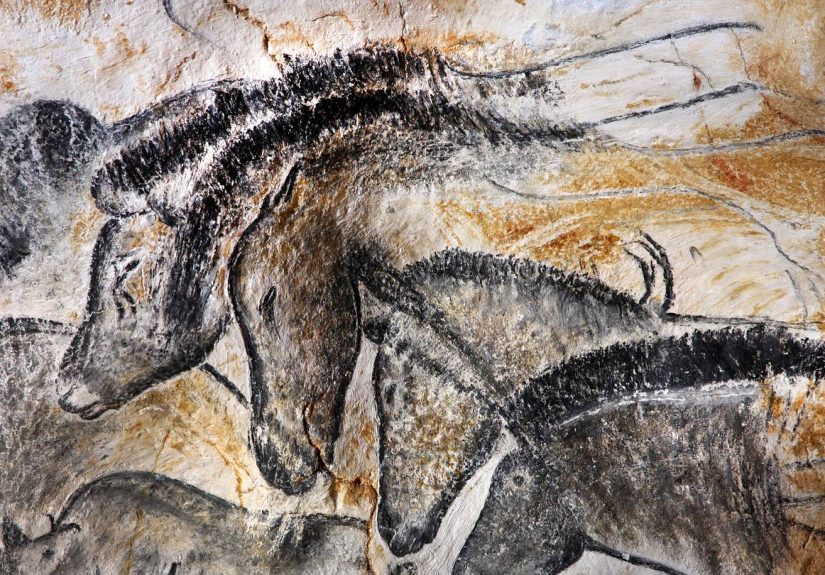
- 8. The famous Horse Panel is one of prehistoric art’s greatest hits
- 9. The cave was shared, at different times, with bears
- 10. Human traces inside the cave are rare and deeply moving
- 11. Human figures are rare, but symbolic imagery appears
- 12. The cave was probably not a home
- 13. You cannot visit the original cave, but that is exactly why it still survives
- Why the Chauvet Cave Paintings Still Feel Personal Today
- Conclusion
If you think prehistoric art was just a few stick figures and a lot of grunting, Chauvet Cave is here to politely ruin that theory. Hidden in southern France, the Chauvet Cave paintings are among the most astonishing examples of prehistoric cave art ever discovered. They are ancient, technically brilliant, beautifully preserved, and honestly a little intimidating. Some of these animals look so alive that you half expect one of the rhinos to step off the wall and ask why you are staring.
Known officially as Chauvet-Pont-d’Arc, this remarkable site changed the way historians, archaeologists, and art lovers think about early humans. Instead of seeing Ice Age people as artists-in-training, Chauvet shows them as fully capable creators with skill, style, and serious visual ambition. Here are 13 facts about the Chauvet Cave paintings that make this underground gallery one of the greatest art stories on Earth.
1. The cave was discovered only recently, in 1994
For something packed with paintings that are tens of thousands of years old, Chauvet entered modern history surprisingly late. On December 18, 1994, three speleologistsJean-Marie Chauvet, Eliette Brunel-Deschamps, and Christian Hillairefound the cave in France’s Ardèche region. That date matters because the discovery was not a slow scholarly process; it was a genuine jolt. One moment the cave was unknown to the modern world, and the next it was one of the most important prehistoric art sites ever found.
The cave was later named after Jean-Marie Chauvet, but the discovery belongs to the whole team. Their find instantly attracted historians, archaeologists, and art experts because what lay inside was not a handful of faded markings. It was an extraordinary visual archive from the Upper Paleolithic period.
2. The paintings are among the oldest known figurative artworks in the world
Chauvet is often described as roughly 36,000 years old, and that shorthand is useful, but the real timeline is even more interesting. Scientific dating has suggested multiple phases of human activity in the cave, with major artistic work stretching back deep into the Aurignacian period. In plain English: these images are staggeringly old.
That age matters because the Chauvet Cave paintings are not primitive-looking first attempts. They are sophisticated. The animals have motion, proportion, overlap, and confidence. Chauvet helped blow up the old assumption that human art slowly crawled from awkward doodles to realism. Apparently, Ice Age artists skipped the “beginner phase” and went straight to masterpiece mode.
3. A rockfall helped preserve the cave like a time capsule
One reason Chauvet feels so miraculous is that it stayed sealed for around 20,000 years after a rockfall blocked the entrance. That natural closure protected the interior from weather, later human traffic, and the kind of wear that damaged other famous cave sites. So while many ancient places survive in fragments, Chauvet survived with breathtaking integrity.
This preservation is a huge part of its importance. The cave is not just old; it is unusually intact. Researchers found art, footprints, torch traces, animal remains, and surfaces that still communicate the atmosphere of the original setting. In archaeology, that is the equivalent of finding a laptop from prehistory with the battery somehow still charged.
4. The cave contains far more than a few animal sketches
Chauvet is not a tiny art nook. It is a major decorated cave with more than 1,000 images and motifs recorded, including hundreds of animal depictions. Britannica notes that around 430 of the drawings represent animals, and the range of species is striking. This is not one horse, one bison, and a shrug. It is an ambitious visual program.
The sheer number of works matters because it suggests planning, repeated visits, and a serious investment of time. Chauvet was not a random stop for bored cave explorers. It was a meaningful place where images were created thoughtfully and in large numbers, which is one reason the site remains central to discussions of Paleolithic art and human imagination.
5. The animal lineup is unusual, and that is one of Chauvet’s biggest surprises
Many prehistoric cave sites focus heavily on herbivores that ancient people hunted or observed often. Chauvet does include familiar Ice Age animals such as horses, bison, aurochs, and mammoths, but it is especially famous for its predators. Cave lions, woolly rhinoceroses, bears, and hyena-like imagery make the cave feel bolder and less predictable than many later sites.
That unusual selection has fascinated scholars for decades. The Met has noted that lions, mammoths, and rhinos dominate the identified animals in ways that do not simply reflect daily hunting life. In other words, the artists were not making a grocery list. The imagery seems symbolic, selective, and deliberate. Chauvet reminds us that prehistoric people were interested not only in survival, but also in awe, danger, and meaning.
6. The artists were technically brilliant
One of the most jaw-dropping facts about the Chauvet Cave paintings is how advanced they look. These artists used charcoal and red ochre, and they did not just outline shapes. They shaded, blended, engraved, and used the natural bulges and curves of the cave wall to create volume. Some images seem to swell forward because the rock itself becomes part of the design.
This technical control is why Chauvet still feels modern to many viewers. The horses are elegant. The rhinos feel muscular. The lions look alert. The art does not come across as ancient in the sense of “crudely done.” It comes across as ancient in the sense of “How on earth did people do this so long ago?” That question is part of Chauvet’s enduring power.
7. The paintings capture movement in a way that feels almost cinematic
Chauvet is famous for its sense of motion. Some animals appear with repeated outlines or overlapping heads, which creates an impression of movement. The effect can feel surprisingly modern, almost like an early storyboard or a Stone Age animation experiment. No, nobody was screening rhino action films in the cave, but the visual intelligence is impossible to miss.
That dynamism becomes even more intriguing when you imagine the paintings in flickering firelight. Scholars studying Paleolithic art have suggested that dancing torchlight could make engraved or layered images seem even more alive. Whether the artists intended every effect exactly that way or not, Chauvet’s walls clearly reward movement, shadow, and changing points of view. These were images made to be experienced, not just glanced at.
8. The famous Horse Panel is one of prehistoric art’s greatest hits
If Chauvet had a celebrity wall, it would be the Horse Panel. This section of the cave is celebrated for its elegant heads, strong composition, and remarkable realism. The horses appear alert and energetic, and the arrangement feels intentional rather than crowded. It is one of those artworks that makes you forget you are looking at something created tens of thousands of years ago.
The Horse Panel often gets attention because it compresses so much of Chauvet’s genius into one place: confident line, sophisticated shading, and a sharp eye for anatomy. It is also a reminder that prehistoric cave paintings were not merely ritual marks or symbolic scratches. At Chauvet, they are art in every serious sense of the word.
9. The cave was shared, at different times, with bears
Humans were not the only visitors. Chauvet also contains extensive evidence of cave bear occupation, including paw prints, bones, and skulls. More than 190 cave bear skulls have been found there, and some of the floor depressions are interpreted as bear nests or sleeping hollows. So yes, this was an art space with extremely intense wildlife credentials.
One of the most discussed finds is a bear skull placed on a stone block in a dramatic position. Researchers debate exactly what that means, but the image of it is unforgettable. The coexistence of human art and animal traces gives Chauvet unusual atmosphere. It is not just a gallery. It is a space where human imagination and Ice Age animal life overlap in the same dark chambers.
10. Human traces inside the cave are rare and deeply moving
Chauvet preserves more than paintings. Archaeologists have also found evidence of human movement and activity, including torch marks, hearth traces, and a child’s footprint. That footprint is especially haunting because it narrows the historical distance so quickly. You stop thinking in huge abstract numbers and start imagining one actual child stepping through soft ground by torchlight.
This is part of what makes the cave so emotionally powerful. The paintings are magnificent, but the small traces of presence are just as affecting. They remind us that Chauvet was used by real people with bodies, voices, tools, fears, and curiosity. The cave is ancient, but the human feeling inside it does not seem ancient at all.
11. Human figures are rare, but symbolic imagery appears
Most of Chauvet’s drawings focus on animals, not people. That matches a broader pattern in prehistoric cave art, but Chauvet still includes intriguing non-animal imagery. Experts have identified geometric signs and rare human-related forms, including a striking composite image often described as part woman, part bison. It is one of the most mysterious images in the cave.
Because complete human figures are scarce, these unusual images attract a lot of attention. They raise questions about belief, symbolism, storytelling, and ritual. Nobody can say with certainty what every mark meant, and that mystery is part of the cave’s appeal. Chauvet does not hand over its secrets easily. It prefers to keep a little prehistoric attitude.
12. The cave was probably not a home
It is tempting to imagine prehistoric families hanging out in decorated caves like they were very drafty living rooms, but Chauvet was almost certainly not ordinary domestic space. Scholars point out that deeply decorated caves were dark, humid, and difficult to access. They were poor choices for everyday shelter and better suited to special activities.
That matters because it changes how we read the art. If the cave was not a home, the paintings were not casual wallpaper. They likely belonged to ceremonies, storytelling, memory, spiritual activity, teaching, or some combination of purposes we still do not fully understand. Whatever the exact function, Chauvet appears to have been a significant place, not just a convenient blank wall.
13. You cannot visit the original cave, but that is exactly why it still survives
The original Chauvet Cave is closed to the general public for conservation reasons. That may disappoint travelers, but it is also a smart lesson learned from other fragile heritage sites. Human breath, heat, moisture, and microbes can damage ancient art quickly. Preserving Chauvet means limiting access, even when the art is world-famous.
Instead, visitors can experience a carefully built full-scale replica, often called Grotte Chauvet 2 Ardèche. Opened in 2015, it allows people to see the visual drama of the paintings without endangering the original. It is one of the best examples of how conservation and public education can work together. No, it is not the original cave, but it is much better than loving the site to death.
Why the Chauvet Cave Paintings Still Feel Personal Today
One of the most fascinating experiences related to the Chauvet Cave paintings is that they never stay locked in the category of “important archaeological material” for very long. You may begin by admiring them as historical evidence, but after a few minutes they start feeling startlingly personal. The horses do not look like relics. The lions do not look like textbook illustrations. They look observed. They look remembered. They look made by someone who cared deeply about how an animal moved through space and how a line could capture power.
That emotional shift is part of the Chauvet experience, even for people who encounter the cave through books, documentaries, museum essays, or the official replica rather than the original site. At first, the age is the headline. Thirty-plus thousand years. Incredible. Mind-bending. Then the real surprise arrives: after the shock of age wears off, what remains is artistic intimacy. You realize the people who made these images were not distant abstractions called “early humans.” They were artists making choices.
There is also something strangely moving about the setting itself. Chauvet is not bright, open, or easy. It belongs to darkness, echo, stone, and restricted access. That makes the artwork feel intentional in a way modern viewers immediately understand. Nobody wandered into that cave with a handful of charcoal because they needed a hobby. Reaching those interior spaces required effort. Making art there required planning. Seeing the images there would have been an event. Even without knowing the exact ritual or cultural purpose, you can feel the seriousness of the place.
Another memorable part of the Chauvet experience is the collision between danger and beauty. The cave walls are filled with animals that were powerful, unpredictable, and in some cases terrifying. Yet the paintings are graceful. The result is not a visual contradiction; it is a visual truth. Humans have always been drawn to what awes them, not just what comforts them. Chauvet captures that perfectly. It tells us that fascination with wildness is not new. It is ancient enough to be painted by torchlight during the Ice Age.
And then there is the humble emotional punch delivered by the smallest traces: a footprint, a torch mark, a skull, a path through the cave. Those details make the site feel less like a legend and more like a moment interrupted. Someone was here. Someone looked at this wall. Someone chose this line, this angle, this animal. That is why Chauvet continues to affect modern audiences so strongly. It is not just old art. It is evidence that imagination, symbolism, and the urge to create meaningful images were already fully alive in people who lived unimaginably long ago. The cave narrows the distance between then and now, and that may be its most unforgettable experience of all.
Conclusion
The Chauvet Cave paintings are not famous just because they are old. They are famous because they are excellent. Their age grabs attention, but their artistry keeps it. From the cave’s 1994 discovery to its predator-heavy imagery, advanced techniques, haunting human traces, and careful modern conservation, Chauvet remains one of the clearest reminders that creative intelligence runs deep in human history.
If you want to understand why prehistoric cave art still matters, Chauvet is the place to start. It proves that early people were not waiting around for civilization to teach them beauty. They were already making itbrilliantly, boldly, and in the dark.