Table of Contents >> Show >> Hide
- What Actually Happened, According to Verified Reporting
- Why This Story Hit Such a Nerve
- Why Restaurants Are Imposing Teen Access Rules in the First Place
- The Policy Debate: Safety Measure or Collective Punishment?
- What Research Suggests About Youth Misconduct and Better Responses
- So, Does This McDonald's Policy Make Sense?
- Experiences Related to the Debate: Why So Many People Instantly Chose a Side
- Conclusion
It takes almost no time at all for the internet to turn a blurry video into a full-blown culture war. Add a fast-food chain, a teenager, a police escort, and a headline that sounds like it was cooked in the outrage fryer, and suddenly everyone has a hot take before the fries even cool down.
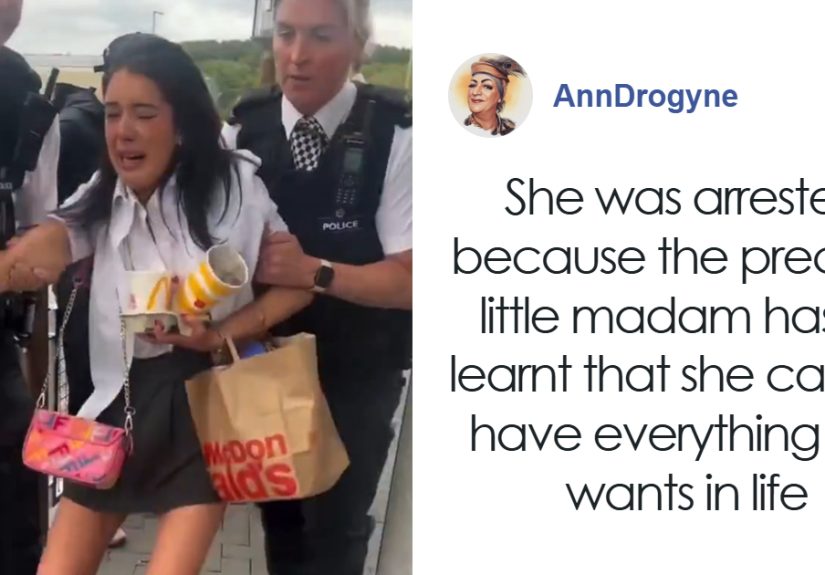
That is exactly what happened when a viral post claimed a 13-year-old girl was arrested at McDonald's because of a policy banning minors after 5 p.m. The story spread fast because it hit every modern nerve at once: youth behavior, corporate rules, policing, public safety, and the uneasy feeling that ordinary spaces are becoming miniature checkpoints. To many people, the whole thing sounded absurd. To others, it sounded like the logical end point of years of disorder in public places. Either way, the reaction was instant: This makes no sense.
But once the noise settles, the real story is more complicated than the viral framing suggests. And honestly, that is what makes it worth writing about. This is not just a story about one video. It is a story about how businesses handle safety, how communities respond to disruptive behavior, and how quickly public debate can flatten nuance into a cartoon.
What Actually Happened, According to Verified Reporting
The viral version of the story made it sound as if a 13-year-old girl simply showed up at McDonald's after a cutoff time and got arrested for existing near a McFlurry machine. That framing traveled because it was clean, dramatic, and easy to rage-share. The verified picture is messier.
Reliable reporting later clarified that the girl was not detained merely for entering a McDonald's after 5 p.m. Instead, authorities said officers had responded to reports involving youths allegedly threatening or attempting to assault staff. Police said the girl was arrested on suspicion of common assault, and that during the escort she allegedly assaulted an officer. Her mother then attended the scene, and the girl was de-arrested into her mother's care.
That distinction matters. A lot.
It does not mean the public debate is silly. It does mean the viral headline oversimplified the event so aggressively that it turned a dispute involving alleged threatening behavior into a pure morality play about a child versus a fast-food policy. That is a completely different argument.
Where the Policy Confusion Came From
Part of the confusion came from the fact that McDonald's locations in the United Kingdom have, at times, used temporary restrictions on unaccompanied minors in response to disruptive behavior. Those measures were not some grand, chain-wide anti-teen decree descending from burger headquarters on a cloud of laminated signs. They were localized responses tied to specific safety concerns.
That is why the story exploded. People heard "new policy" and imagined a universal rule. In reality, these kinds of restrictions are typically local, reactive, and messy. They arise when a restaurant becomes less of a lunch stop and more of an unofficial after-school conflict zone.
Still, even when the facts are corrected, the emotional reaction remains understandable. Watching a young teenager end up in a confrontation with police outside a place associated with Happy Meals is jarring. There is no way to make that look normal. And maybe that discomfort is the entire point of the debate.
Why This Story Hit Such a Nerve
People were not just reacting to one incident. They were reacting to what the incident seemed to symbolize.
For critics, the clip looked like proof that society has become far too quick to criminalize adolescence. Teenagers are loud, awkward, impulsive, annoying, funny, chaotic, and occasionally impossible. That has been true since the invention of teenagers. To critics, policies targeting minors in broad categories can feel like collective punishment: a few bad actors cause trouble, and suddenly every kid in a school uniform is treated like a risk factor with shoelaces.
For supporters, the clip pointed to a different reality: workers and ordinary customers are not required to tolerate intimidation, fights, verbal abuse, vandalism, or threats just because the people causing the disruption are young. Fast-food crews are there to serve burgers, not moonlight as crowd-control specialists in a stress-soaked social experiment.
That is why the debate got so intense. Each side was responding to a real fear. One side fears over-policing and the casual punishment of youth. The other fears that public spaces become unusable when boundaries vanish and nobody protects staff.
The Internet Loves a Clean Villain. Real Life Rarely Provides One.
Viral discourse works like a blender set to "puree nuance." A complicated, emotionally loaded incident gets reduced to the simplest possible script. In this case, the script was obvious: little girl + giant corporation + police + silly rule = outrage. That version was tailor-made for screenshots, reposts, and furious comments from people who had already decided what the story meant before checking whether the details held up.
But public policy is not made of screenshots. Or at least it should not be.
Why Restaurants Are Imposing Teen Access Rules in the First Place
Here is where the story becomes bigger than one video. Similar age-based restrictions have appeared in the United States too, which tells us this is not an isolated overseas oddity. It is part of a wider struggle over how to manage safety in highly trafficked public-facing businesses.
In Brooklyn, one McDonald's introduced an identification policy requiring anyone under 20 to be accompanied by a parent. The owner said the restaurant had been dealing with repeated problems involving unruly teens. In Virginia, a McDonald's near a high school temporarily restricted dine-in access for customers 21 and younger, while still allowing mobile pickup, drive-thru orders, and entry for young people accompanied by adults.
Those policies sounded extreme to some people, and that is fair. Requiring ID to enter a McDonald's sounds like the kind of sentence that should only exist in satire. But the fact that multiple locations reached for versions of the same solution suggests the underlying tension is real. Restaurant owners and staff are trying to keep order in spaces that, in some neighborhoods, have become flashpoints for fights, harassment, or disruption.
McDonald's own corporate standards emphasize protecting the physical and psychological safety of staff and customers and preventing workplace violence. So from a company perspective, the logic behind localized restrictions is straightforward: if a site has recurring trouble, management will try to reduce risk. The question is not whether safety matters. Of course it does. The harder question is whether broad age restrictions are smart, fair, and proportional.
The Policy Debate: Safety Measure or Collective Punishment?
This is where reasonable people split.
The case for the policy is simple. If staff are being threatened, if customers are getting chased away, and if a location is repeatedly dealing with violence or intimidation, management has to do something. Businesses are allowed to create rules for entry. Nobody expects a restaurant manager to shrug through chaos because the troublemakers happen to be teenagers. A temporary restriction can look less like discrimination and more like basic damage control.
The case against the policy is just as strong. Blanket age rules sweep up plenty of young people who did absolutely nothing wrong. A quiet 16-year-old grabbing fries after school gets treated the same as the kid who turned the dining room into an amateur wrestling ring last week. Critics argue that this approach teaches law-abiding teens a very clear lesson: your age, not your behavior, is the thing that makes you suspicious.
That is why the phrase this makes no sense resonated. People were not only reacting to the one arrest claim. They were reacting to a bigger discomfort with one-size-fits-all rules that try to solve human problems with age cutoffs and locked doors.
When "Temporary" Rules Start Feeling Permanent
Another reason these policies spark backlash is that temporary restrictions often feel like prototypes for something bigger. Today it is "under 20 with a parent." Tomorrow it is a doorbell, then a guard, then another sign, then another business doing the same thing down the street. Before long, spaces that once functioned as casual community hangouts start operating like semi-secure zones.
Supporters call that realism. Critics call it mission creep. Both sides have a point.
What Research Suggests About Youth Misconduct and Better Responses
Research on juvenile justice adds another important layer to this conversation. In the United States, curfew violations are generally treated as status offenses, meaning they are acts that are only illegal because of a person's age, not because the conduct would be illegal for an adult. That distinction matters because it reminds us that not all youth-related misconduct should be handled the same way.
Some scholars and justice experts argue that when young people get pulled deeper into the system for low-level behavior, the long-term results can be worse, not better. Community-based responses, diversion programs, restorative justice models, counseling, and structured support often produce stronger outcomes than reflexive punishment for nonviolent or low-level conduct. In plain English: sometimes the smartest response is not the loudest one.
There is also evidence that restorative practices can reduce suspensions and arrests. That does not mean every conflict can be solved with a circle of folding chairs and a brave conversation. It does mean that systems built entirely around exclusion and punishment often miss the chance to repair harm and change behavior before it hardens into something worse.
At the same time, civil-liberties groups have long warned that broad youth restrictions and curfews can be unevenly enforced, vulnerable to profiling, and legally shaky. Courts in the United States have not spoken with one voice on these policies. Some curfew rules have survived. Others have been struck down. So the debate is not just emotional. It is legal, practical, and deeply unsettled.
So, Does This McDonald's Policy Make Sense?
The honest answer is: partly yes, partly no.
It makes sense that restaurant owners want to protect staff and paying customers. It makes sense that repeated fights or abuse would force management to set firmer boundaries. It makes sense that workers should not have to fear the after-school rush more than the lunch rush.
But it makes less sense when broad restrictions become the default tool. Age alone is a clumsy filter. It is easy to enforce on paper and frustrating to live under in practice. It can calm a location in the short term while breeding resentment in the long term, especially among teenagers who were never part of the problem.
The best version of these policies is narrow, transparent, temporary, and paired with alternatives: adult accompaniment, off-site pickup, clear signage, trained staff, coordination with schools, and a plan to phase out the restriction once conditions improve. The worst version is vague, indefinite, and enforced in a way that turns ordinary adolescent behavior into a suspicious category all by itself.
That is the real lesson from this story. Not that kids should run wild. Not that every business rule is tyranny. But that public trust collapses fast when safety policy looks like a substitute for judgment.
Experiences Related to the Debate: Why So Many People Instantly Chose a Side
If you have ever been inside a fast-food restaurant right after school lets out, you already understand why this debate feels bigger than one headline. The room changes. One minute it is parents with toddlers, delivery drivers, retirees nursing coffee, and somebody quietly questioning whether they really need a second apple pie. The next minute the place is louder, faster, more crowded, and more unpredictable. For some workers, that shift is routine. For some customers, it is annoying. For others, it is the point of no return.
Adults who support these policies often describe the same experience: they do not hate teenagers; they hate feeling that nobody is in charge. They talk about lines getting jammed, tables getting pounded, bathrooms trashed, food tossed around, and workers looking one bad interaction away from quitting on the spot. To them, an age rule does not feel cruel. It feels like a business finally admitting the obvious.
Teenagers, though, often experience the exact opposite. Many of them are not causing trouble. They are just hungry, broke, and killing time between school and home in one of the few places that lets people exist without buying anything expensive. When they see signs aimed at minors, they read them as a giant message in all caps: we already expect you to be the problem. Even the well-behaved kids can feel branded by association.
Parents tend to split down the middle. Some are relieved by stricter rules because they worry about where their kids spend unsupervised time and who they run into there. Others see these policies as lazy shortcuts that push communities away from the harder work of mentoring young people, supervising hot spots, and creating better after-school options. In other words, one group sees a necessary boundary, while the other sees an adult failure disguised as policy.
Workers may be the easiest group to overlook and the hardest to argue with. A cashier making an hourly wage is not being paid extra for conflict de-escalation, crowd management, or absorbing verbal abuse with saintly patience. When staff say a location feels unsafe, that deserves real weight. At the same time, even workers benefit more from smart systems than blunt rules. Good security, quick manager response, strong local partnerships, and consistent standards usually work better than simply treating everyone under a certain age as a red flag with sneakers.
That is why this debate keeps catching fire. Most people can project their own memory onto it. The teenager remembers being unfairly judged. The parent remembers worrying. The worker remembers chaos. The regular customer remembers wanting five quiet minutes with fries and failing spectacularly. Everyone recognizes a piece of the scene, which is exactly why the argument refuses to stay small.
Conclusion
The viral McDonald's story took off because it appeared to confirm something many people already suspected: that public life is getting stranger, stricter, and more punitive in ways that often seem ridiculous at first glance. But once the facts are separated from the headline, the real issue is not whether a 13-year-old was arrested simply for breaking a 5 p.m. rule. Verified reporting says that is not the full story.
The real issue is whether businesses can protect workers and customers without turning ordinary teenagers into a category of suspect people. That is the line communities are struggling to draw. And if this debate proves anything, it is that once a restaurant starts carding for burgers or locking doors against minors, the argument is no longer just about fast food. It is about how a society balances safety, fairness, trust, and common sense when everybody feels a little more on edge than they used to.