Table of Contents >> Show >> Hide
- Quick Jump
- 1) Intimacy coordinators are now part of the crew’s “safety squad”
- 2) A “closed set” is still a setjust with fewer eyeballs
- 3) Consent is written down, not “assumed”
- 4) Sex scenes are choreographed like stunts
- 5) Modesty garments do most of the heavy lifting
- 6) Angles and framing create the illusion of “more”
- 7) The least sexy words on earth: “Reset for take two”
- 8) Robes, blankets, and “coverage between takes” are standard
- 9) Tiny details are continuity landmines
- 10) Bath scenes often get “sex-scene level” planning
- 11) Some productions rehearse intimacy like a dance class
- 12) Sound is half the scene
- 13) Privacy isn’t just courtesyit’s workflow
- 14) The camera crew can be smaller, but the prep crew gets bigger
- 15) “Uncomfortable” isn’t a price of art anymore
- Final Take
- On-Set Experiences: What Pros Describe (Extra 500+ Words)
- 1) The first feeling is usually logistics, not romance
- 2) The weirdest part can be the silence between “cut” and “reset”
- 3) The most helpful thing isn’t always “more direction,” it’s clearer language
- 4) Crew professionalism changes everything
- 5) After the scene, many describe a “comedown”
- 6) The biggest misconception: “awkward” means “bad”
On screen, it’s all candlelight, perfect hair, and emotion. On set, it’s… a boom mic hovering like a curious seagull, a coordinator with a clipboard, and someone politely asking, “Robes on?” between takes.
If you’ve ever wondered how filmmakers make intimate scenes look cinematic (without turning the set into a stress carnival), here are 15 real behind-the-scenes truthsplus a final “what it feels like” section that captures the human side of the work.
1) Intimacy coordinators are now part of the crew’s “safety squad”
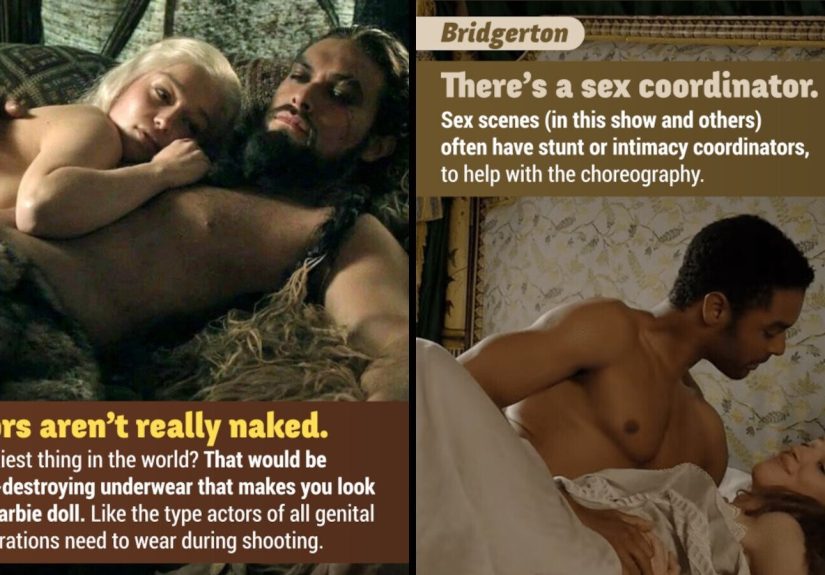
An intimacy coordinator (IC) is not there to “make things spicy.” Their job is to make things clear, consensual, and repeatable. Think of them as a blend of movement coach, liaison, and performer advocatesimilar to how a stunt coordinator makes risky action scenes safer and more precise. The IC helps translate a director’s vision into choreography that respects boundaries and keeps everyone on the same page.
The key word is structure. When the physical actions are mapped out, actors can focus on the emotional performancerather than negotiating personal limits mid-take with a dozen people watching.
2) A “closed set” is still a setjust with fewer eyeballs
“Closed set” doesn’t mean “two actors alone in a room.” It means only essential personnel are presenttypically the director, minimal camera team, sound, and a few department leads. The goal is privacy and focus. On many productions, extra monitors are turned off so the scene isn’t quietly becoming a spectator sport in video village.
Translation: fewer people, fewer distractions, and fewer chances for a moment to feel exposed for the wrong reasons.
3) Consent is written down, not “assumed”
For scenes involving nudity or simulated sex, expectations are typically spelled out in writing (often via a rider). The rider can detail what is shown, what kinds of touch are permitted, how the scene is shot, and what conditions must be met (like a closed set).
Why the paperwork? Because “We’ll figure it out on the day” is how confusion becomes pressure. Clear, specific agreements protect performers and protect productionseveryone knows what was agreed to and what was not.
4) Sex scenes are choreographed like stunts
Many intimate scenes are broken into stepswho moves where, what hands do, where heads turn, how close bodies get, what the “beats” are. You may even hear intimacy described using the same logic as fight choreography: specific, repeatable actions that look spontaneous on camera.
Why this matters
Choreography creates predictability. Predictability creates safety. Safety creates better acting. That’s the whole equation.
5) Modesty garments do most of the heavy lifting
If you’ve imagined actors are fully nude while filming every intimate moment… Hollywood would like a word. Modesty garments (and modesty barriers) are designed to reduce skin-to-skin contact and protect privacy while still reading as nudity on camera. They can include seamless coverings, adhesive solutions, and padding that prevents unwanted contact.
The wardrobe department and IC often collaborate so the performer’s comfort level is reflected in what’s wornbecause “technically covered” and “feels protected” are not always the same thing.
6) Angles and framing create the illusion of “more”
Film grammar is powerful: a tight close-up, a carefully placed sheet, and a strategic camera angle can suggest far more intimacy than is physically happening. A scene might look like full-body contact when the performers are actually positioned to minimize contactbecause the camera is doing the “connecting.”
It’s one of the oldest tricks in cinema: the audience fills in blanks. Editors and cinematographers just give the audience the right blanks.
7) The least sexy words on earth: “Reset for take two”
A sex scene is built from repetitionmultiple takes, multiple angles, constant micro-adjustments. That means performers may do the same moment again and again while a crew tweaks lighting, lens choices, focus marks, and sound.
Many actors describe the process as awkward or unglamorous because the environment is technical by design. Romance is for the final cut. The set is for the checklist.
8) Robes, blankets, and “coverage between takes” are standard
On professional sets, nudity typically happens only during “action” to “cut.” Between takes, performers are covered quicklyoften with a dedicated robe person, plus whatever blankets or coverings keep them warm, comfortable, and not stuck making small talk while half-dressed.
It’s not preciousness. It’s basic workplace dignity.
9) Tiny details are continuity landmines
In a dramatic scene, continuity is “Did the glass move?” In an intimate scene, continuity is also “Which hand was where, exactly?” A shifted sheet, a necklace that disappears, or a hand that changes position between angles can break the illusionand sometimes create boundary issues if choreography isn’t consistent.
This is another reason choreography matters: it keeps the scene consistent and prevents accidental drift into “we didn’t agree on that.”
10) Bath scenes often get “sex-scene level” planning
Intimacy isn’t only about explicit sex. Scenes involving bathing, partial nudity, or vulnerable body positions often require the same planning: closed-set considerations, modesty solutions, and clarity about what’s shown.
The rule of thumb is simple: if a scene leaves a performer feeling exposed, treat it as high-exposure workeven if the script calls it “just a bath.”
11) Some productions rehearse intimacy like a dance class
Especially when a scene mixes intimacy with emotion or conflict, rehearsal can look like movement work: spacing, rhythm, timing, breath, and repeatable “beats.”
Sometimes that training happens in unexpected ways. For certain projects, cast members have described dance-style prep that helps with choreography not just for sex scenes, but also for fight scenes where bodies need to move safely and convincingly.
12) Sound is half the scene
What makes a sex scene feel “real” to viewers is often not what’s happening visuallyit’s what you hear: breath, sheets, subtle movement, the hush of a room. Sound teams capture what they can, but many productions also refine audio later in post.
The result is a scene that plays intimate and immediate… even though the set itself was basically a math problem with feelings.
13) Privacy isn’t just courtesyit’s workflow
Modern productions increasingly treat intimacy scenes as sensitive work with a plan: fewer people present, limited monitoring, clear rules about who can enter, and direct communication about when performers are ready.
It’s not only about comfort; it keeps the day moving. When boundaries are respected, performers can focus and the crew can get what they need efficiently.
14) The camera crew can be smaller, but the prep crew gets bigger
The moment of filming may involve fewer people in the room, but preparation often requires more coordination across departments: wardrobe, props, direction, camera, sound, and the IC all syncing on a shared plan.
The paradox of movie magic: the more “natural” it looks, the more carefully engineered it usually is.
15) “Uncomfortable” isn’t a price of art anymore
For decades, actors were expected to “just be professional” in intimate scenesoften with vague direction and uneven power dynamics. Today, the industry conversation has shifted. Guidelines, training, and the growing normalization of intimacy coordination aim to reduce gray areas, lower the risk of harassment, and give performers stronger tools to advocate for themselves.
Put bluntly: the goal is to make the work bold on screen without making it unsafe off screen.
On-Set Experiences: What Pros Describe (Extra 500+ Words)
Ask people who’ve worked these scenesactors, directors, crew, intimacy coordinatorsand you’ll hear a surprisingly consistent theme: the experience is less “sexy” and more “strangely normal,” because the set turns intimacy into a sequence of professional tasks. That doesn’t mean the emotions are fake. It means the process is built to keep emotions from spilling into confusion or pressure.
1) The first feeling is usually logistics, not romance
Before anything rolls, the day often starts with questions that sound like they belong in a production meeting (because they do): Who’s in the room? What’s the camera seeing? What’s the boundary on touch? Where are robes and coverings between takes? Performers often describe a strange relief in those questions. The mood becomes, “Okay, we have a plan,” instead of, “We’ll improvise intimacy in front of twelve strangers and hope nobody misreads anything.”
2) The weirdest part can be the silence between “cut” and “reset”
In many scenes, the emotional temperature is highcharacters are vulnerable, angry, tender, desperate, connected. Then someone calls “cut,” and the room snaps back into technical mode. A light is adjusted. Focus marks move. The sheet gets tugged two inches. It can feel like hitting pause on a song mid-chorus.
That start-stop rhythm is one reason intimacy choreography matters: it creates a repeatable map so performers aren’t searching for the scene again from scratch every take. You return to known “beats” the way a musician returns to a chord progression.
3) The most helpful thing isn’t always “more direction,” it’s clearer language
A lot of performers describe how valuable it is when someone can talk plainlywithout euphemisms or awkward vaguenessabout what’s happening. Clear language prevents misunderstandings. It also removes the social pressure that comes from trying to be “cool” about something that is, by nature, vulnerable. When the communication is specific (“hand here,” “face turn,” “pause,” “then separate”), the work becomes safer and oddly more creative. You stop guessing. You start acting.
4) Crew professionalism changes everything
People outside the industry sometimes imagine the crew as a rowdy audience. In reality, experienced crews tend to treat intimate scenes like any other high-stakes setup: focused, quiet, and efficient. The crew’s behavior sets the tone. When everyone treats the moment as normal workand not spectacleperformers report feeling less exposed.
This professionalism shows up in small acts: a wardrobe adjustment handled matter-of-factly, quick coverage between takes, no unnecessary visitors, no jokes that land like tiny punches. The room feels like a workplace again, not a test of someone’s comfort.
5) After the scene, many describe a “comedown”
Even though the actions are simulated, the body can still respond to stress and adrenaline. People who do this work often describe a post-scene comedown where they want a minute to resetgrab water, breathe, shift out of character, and mentally “return” to themselves. Some productions build in quick check-ins to make sure performers feel okay before moving on.
6) The biggest misconception: “awkward” means “bad”
Awkward can simply mean human. Many performers say the scene feels awkward and professional at the same timelike any job that asks you to do something intense under bright lights. The difference today is that awkwardness is no longer treated as proof you should suffer in silence. The expectation is moving toward: speak up early, define boundaries, rehearse, film with privacy, and respect what was agreed.
In other words, the behind-the-scenes experience is evolving into something closer to a well-run stunt day: it’s still challenging, but it’s built on preparation, consent, and the shared goal of getting the story rightwithout anyone feeling harmed in the process.