Table of Contents >> Show >> Hide
- Why Deer-Resistant Shade Plants Work So Well
- 17 Deer-Resistant Shade Plants to Brighten a Low-Light Garden
- 1. Hellebore (Helleborus)
- 2. Barrenwort (Epimedium)
- 3. Lungwort (Pulmonaria)
- 4. Columbine (Aquilegia)
- 5. Brunnera (Brunnera macrophylla)
- 6. Foamflower (Tiarella cordifolia)
- 7. Astilbe (Astilbe)
- 8. Coral Bells (Heuchera)
- 9. Wild Ginger (Asarum canadense)
- 10. Japanese Painted Fern (Athyrium niponicum var. pictum)
- 11. Autumn Fern (Dryopteris erythrosora)
- 12. Bleeding Heart (Dicentra and Lamprocapnos)
- 13. Ajuga (Ajuga reptans)
- 14. Hakone Grass (Hakonechloa macra)
- 15. Solomon’s Seal (Polygonatum)
- 16. Toad Lily (Tricyrtis)
- 17. Jack-in-the-Pulpit (Arisaema triphyllum)
- How to Make a Deer-Resistant Shade Garden Look Intentional
- What Gardeners Commonly Experience With Deer-Resistant Shade Plants
- Final Thoughts
Shade gardens have a bit of a reputation problem. People hear “shade” and immediately picture a gloomy corner, a few tired leaves, and one sad stepping stone that looks like it has given up on life. Then deer arrive, treat the area like an all-you-can-eat buffet, and suddenly the whole space feels even more doomed. Thankfully, that story is not set in stone.
If you choose the right plants, a low-light garden can look lush, colorful, layered, and surprisingly lively without becoming a nightly salad bar. The key is to focus on deer-resistant shade plants that offer more than survival. You want texture, flowers, evergreen structure, and enough personality to make the whole border feel intentional instead of accidental.
One important reality check before we get to the good stuff: deer-resistant does not mean deer-proof. If deer are hungry enough, especially during drought, winter, or periods of heavy browsing pressure, they may still nibble plants they normally ignore. But many shade-loving plants are naturally less appealing because of rough foliage, fuzzy leaves, bitter sap, fragrance, leathery texture, or compounds deer would rather not mess with. In other words, you are not building an impenetrable fortress. You are simply making the buffet far less appealing.
Below are 17 standout shade plants that can help brighten dark areas, soften the look of woodland beds, and give deer one more reason to keep walking.
Why Deer-Resistant Shade Plants Work So Well
A good shade garden does not rely on nonstop blooms alone. In fact, some of the most effective plantings lean heavily on foliage, form, and contrast. Heart-shaped leaves, silver markings, burgundy stems, golden blades, and ferny textures all matter. That is good news, because many of the plants deer tend to avoid also happen to be some of the most beautiful performers in lower light.
For the best results, match plants to the kind of shade you actually have. Dry shade under mature trees is a very different beast from moist woodland shade near a downspout or stream edge. Once you stop treating all shade like one category, your garden gets much easier to design.
17 Deer-Resistant Shade Plants to Brighten a Low-Light Garden
1. Hellebore (Helleborus)
Hellebores are the overachievers of the shade garden. They bloom when most plants are still mentally in pajamas, often in late winter to early spring, and their flowers linger for weeks. The foliage stays handsome for most of the year, giving you season-long structure. Plant them where they get dappled or partial shade, rich soil, and good drainage. Once established, they handle short dry spells better than many people expect, but they still appreciate evenly moist soil.
2. Barrenwort (Epimedium)
If you garden in dry shade and have almost given up, barrenwort is here to restore your faith. This deer-resistant perennial spreads slowly by rhizomes, creating a graceful ground layer with wiry stems and delicate spring flowers. The leaves often emerge tinted red or bronze before settling into green. It is one of the smartest choices for planting beneath trees, where moisture competition can make other shade plants act dramatic.
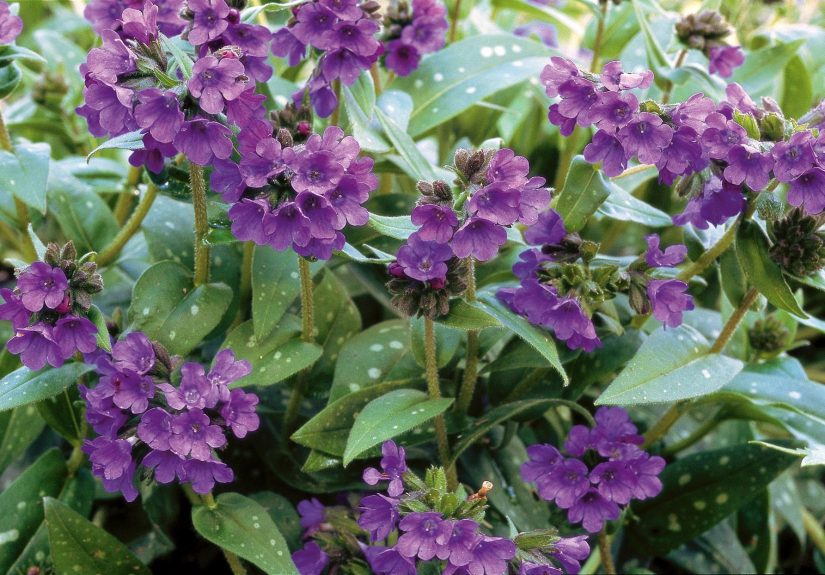
3. Lungwort (Pulmonaria)
Lungwort has one of the least glamorous names in gardening and one of the prettiest performances. Its spotted or silver-washed leaves brighten shady beds even when the plant is not blooming, and the flowers often open pink before maturing to blue or violet. It loves cool conditions, humus-rich soil, and reliable moisture. Tuck it near the front of a bed where the foliage can do its thing without being hidden behind taller neighbors.
4. Columbine (Aquilegia)
Columbine brings a lighter, airier look to shade plantings. Its nodding flowers seem to float above delicate foliage, making it perfect for softening heavier textures like ferns or broad-leaved perennials. Many columbines do especially well in part shade with moist, well-drained soil. They can be short-lived, but they often reseed politely, which is gardener code for “free replacements with better manners than most volunteers.”
5. Brunnera (Brunnera macrophylla)
Brunnera earns its place through foliage first and flowers second, which is exactly the kind of dependable behavior shade gardeners appreciate. The heart-shaped leaves, especially on silver or variegated cultivars, glow in low light. In spring, sprays of small blue flowers hover above the foliage like miniature forget-me-nots. It prefers fertile, moist, well-drained soil and protection from harsh afternoon sun. In cooler climates, it can become one of the brightest accents in the whole border.
6. Foamflower (Tiarella cordifolia)
Foamflower is a woodland favorite that looks soft without being weak. In late spring, frothy spikes of white or pale pink flowers rise above attractive leaves that may take on bronze or reddish tones later in the season. It works beautifully as a groundcover in moist shade and pairs especially well with ferns, wild ginger, and coral bells. Give it humus-rich soil and enough moisture to keep it from drying out in summer.
7. Astilbe (Astilbe)
Astilbe is what you plant when you want actual flower power in shade. Its feathery plumes show up in white, blush, rose, lavender, and red, adding both color and vertical lift. The foliage is attractive even before bloom, so it never feels like a one-hit wonder. Astilbe likes rich soil and steady moisture, which makes it ideal for woodland borders, streamside plantings, or shady beds that are amended with compost and mulched well.
8. Coral Bells (Heuchera)
Coral bells are a cheat code for color. Even without flowers, the leaves can come in lime, caramel, purple, near-black, peach, silver, or combinations that look like they were mixed by someone with zero interest in subtlety. Many selections grow well in part shade, and the lighter foliage colors can glow under trees. They prefer well-drained soil with organic matter and generally perform best when they are not left to bake in hot afternoon sun.
9. Wild Ginger (Asarum canadense)
Wild ginger is one of the best native groundcovers for shady gardens. Its broad, heart-shaped leaves create a quiet, polished carpet that feels lush from spring through fall. The flowers are unusual but mostly hidden beneath the foliage, so think of this one as a foliage star. It spreads gradually, making it useful under trees and along woodland paths. If you want your shade garden to look settled, layered, and a little bit elegant, wild ginger is a strong move.
10. Japanese Painted Fern (Athyrium niponicum var. pictum)
Japanese painted fern proves that “green” is not the only shade-garden color. The fronds are brushed with silver, gray-green, and burgundy, which gives the plant a cool, refined look that plays well with almost everything. Deer usually leave it alone, and it stays compact enough for the front of the border. Use it near walkways, where the subtle leaf pattern can be appreciated up close rather than lost in the general fern chaos.
11. Autumn Fern (Dryopteris erythrosora)
Autumn fern adds a warm, coppery flush when new fronds emerge, then settles into deep green as the season matures. That color shift makes it especially valuable in shady beds that need a little motion and contrast. It is also more tolerant of difficult conditions than some fussier ferns, though it still looks best in moist, well-drained soil with plenty of organic matter. It is a solid backbone plant for the middle of a woodland border.
12. Bleeding Heart (Dicentra and Lamprocapnos)
Bleeding heart is classic for a reason. The arching stems and dangling heart-shaped flowers bring romance to shady spots without tipping into excess. Traditional forms often bloom in spring and then fade with heat, while fern-leaf types can keep going longer. Plant bleeding heart in partial to full shade with rich, moist, well-drained soil. It looks especially good when layered with hosta alternatives, ferns, or foamflower that can cover the space if older types go dormant.
13. Ajuga (Ajuga reptans)
Ajuga is one of the fastest ways to cover bare soil in part shade to shade. It forms a low mat of glossy or burgundy-toned foliage and sends up spikes of blue-purple flowers in spring. Deer tend to leave it alone, and it can be useful on slopes or under shrubs where erosion is a concern. The only caution is that ajuga can spread enthusiastically, so plant it where a dense groundcover is actually welcome, not where it will try to annex the neighborhood.
14. Hakone Grass (Hakonechloa macra)
Hakone grass is for gardeners who want movement. Its soft, cascading blades arch like a fountain and bring an almost glowing effect to shade, especially the golden or variegated forms. It prefers rich, moist, well-drained soil and does best in partial shade, though in hotter regions it tolerates deeper shade. Use it along paths, at the edge of beds, or draping over a wall where its texture can spill and soften hard lines.
15. Solomon’s Seal (Polygonatum)
Solomon’s seal adds grace to woodland plantings with arching stems and dangling bell-shaped flowers in spring. Variegated forms are particularly useful for brightening dark corners because the creamy leaf margins catch available light. Many types prefer partial to full shade and humus-rich soil that stays consistently moist without turning swampy. This is the plant you use when the border needs height and rhythm but not bulk.
16. Toad Lily (Tricyrtis)
Toad lily is a gift for late-season shade, blooming when many woodland beds start to look tired. The orchid-like flowers are speckled, intricate, and close-up worthy, so plant it near a path, patio, or favorite corner bench. It likes shade to partial shade, moisture-retentive but well-drained soil, and protection from drying heat. Deep cave-like shade is not ideal; open shade with some filtered light usually gives the best show.
17. Jack-in-the-Pulpit (Arisaema triphyllum)
For a native woodland look, Jack-in-the-pulpit is hard to beat. Its hooded flower structure is wonderfully weird in the best possible way, and it thrives in rich, damp shade. Deer tend to avoid it, likely because the plant contains irritating compounds. It often goes dormant by midsummer, so pair it with later-rising companions like ferns, foamflower, or wild ginger. That way the show continues even after Jack quietly exits the stage.
How to Make a Deer-Resistant Shade Garden Look Intentional
The easiest way to make shade plantings look designer-level instead of random is to layer by texture. Combine broad leaves with fine foliage, glossy surfaces with matte ones, and mounding forms with arching shapes. For example, pair brunnera with Japanese painted fern and hakone grass. Or combine astilbe, foamflower, and wild ginger for a bed that feels soft, full, and seasonally rich.
Also, repeat plants. A shade bed with three drifts of the same lungwort or coral bells will almost always look more polished than a collection of one-offs. Use the brighter foliage plants near paths, patios, or darker corners where their leaf color can do real work.
What Gardeners Commonly Experience With Deer-Resistant Shade Plants
The first real-life lesson most gardeners learn is that deer-resistant plants change the odds, not the laws of nature. In gardens with heavy deer pressure, new plantings are often tested at least once. Deer seem to operate with the confidence of diners who believe the chef may have finally changed the menu. Usually, though, the browsing pattern becomes obvious after a few weeks. They may sample columbine once, ignore hellebores completely, sniff the epimedium like skeptical food critics, and then go right back to demolishing the one plant you were told not to buy but bought anyway.
The second big experience is that shade gardening is often less about sunlight and more about moisture. Many people assume a shady bed will automatically stay cool and damp. Then summer arrives, tree roots start competing for water, and suddenly that “moist woodland area” behaves more like a crunchy underground parking lot. Plants such as astilbe, brunnera, lungwort, and foamflower will tell you very quickly when they are not thrilled. Their leaves may crisp, fade, or look generally offended. Meanwhile, epimedium, wild ginger, and autumn fern often hold up with much more composure.
Another common discovery is that foliage matters far more than beginners expect. In sunny gardens, flowers can carry the show for months. In shade, flowers are often shorter-lived, so the leaves do the heavy lifting. That is why gardeners become unexpectedly attached to silver-brushed brunnera, coppery new fern growth, or the golden cascade of hakone grass. Once you live with these plants, you stop thinking of them as backup singers and start recognizing them as the headliners.
There is also the issue of pacing. Shade gardens do not always peak in one giant burst. Instead, they tend to unfold in waves. Hellebores and bleeding hearts kick things off early. Brunnera, foamflower, and columbine pick up spring momentum. Ferns, coral bells, and wild ginger anchor summer. Toad lily arrives late with a flourish when you thought the show was winding down. Gardeners who lean into that sequence usually end up happier than those chasing nonstop bloom from every square foot.
One of the most practical experiences people report is that a mixed strategy works better than faith alone. Deer-resistant plants help a lot, but beds near the woods, along the street, or beside known deer trails often still benefit from repellents, motion-activated sprinklers, or strategic placement. In real gardens, success usually comes from stacking the deck: choose less palatable plants, improve soil, mulch to preserve moisture, and avoid placing deer favorites right beside your “resistant” selections like a garnish.
Most of all, gardeners learn that a shade bed can become one of the most satisfying parts of the landscape. It feels cooler, calmer, and often more layered than a sunny border. When the plant palette is right, a shade garden does not read as a compromise. It reads as a mood. And if the deer keep moving because your hellebores, ferns, and foamflower are not worth the trouble, that mood gets even better.
Final Thoughts
A bright, inviting shade garden is absolutely possible, even in areas where deer roam like they own the place. The trick is to choose plants that combine shade tolerance with lower deer appeal, then group them in ways that create contrast, rhythm, and season-long interest. Mix flowers with foliage stars, combine moisture lovers with the right site conditions, and let texture do as much work as color. Your garden will look fuller, smarter, and far less like a buffet line.