Table of Contents >> Show >> Hide
- What Is SaaStr Annual and Why Poker Night Matters
- Inside the CRO + CEO VIP Poker Night on September 11
- Why Poker Is the Perfect Icebreaker for CROs and CEOs
- What You Really Get Out of SaaStr Poker Night (Besides a Good Story)
- How to Make the Most of SaaStr Annual Poker Night
- Is Poker Night Right for You?
- Real-World Experiences from SaaStr Annual Poker Night
- Final Thoughts: More Than Just a Game
If you’ve ever tried to chase down a busy CRO or CEO for “just 15 minutes,” you already know it can feel harder than closing a seven-figure deal in Q4.
Now imagine 250+ of the top CROs, VPs of Sales, and 100+ high-growth CEOs all in one place, sleeves rolled up, playing poker, swapping war stories, and
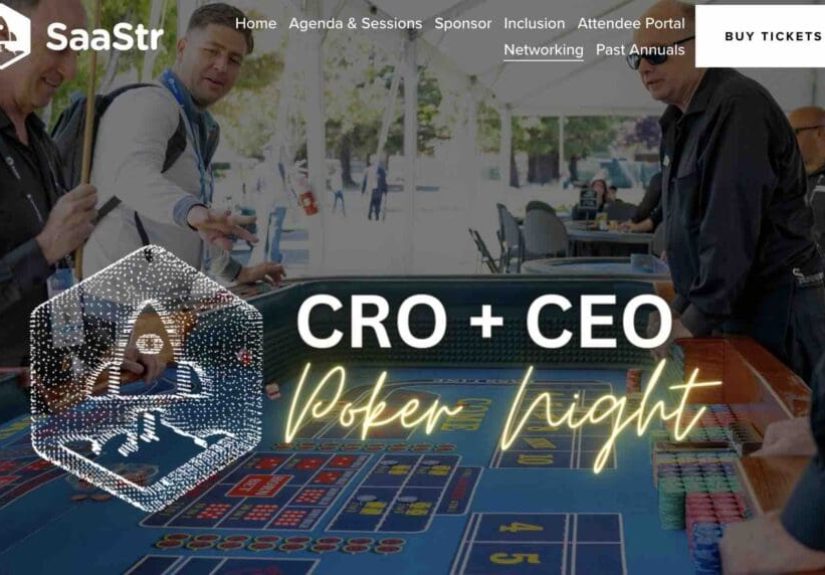
quietly planning their next big moves. That’s exactly what’s happening at the SaaStr Annual CRO + CEO Poker Night on September 11 and it’s one of the
most strategic “just for fun” events on the SaaS calendar.
On the surface, it’s chips, cards, and cocktails. Underneath, it’s a highly curated room of revenue leaders and founders from companies doing roughly
$2 million to $20+ million in ARR, all there to network, compare notes, and, yes, occasionally bluff each other into long-term partnerships. If you’re
serious about scaling a SaaS business, this isn’t just another conference mixer it’s where the real conversations happen.
What Is SaaStr Annual and Why Poker Night Matters
SaaStr Annual has grown into one of the world’s largest independent SaaS gatherings, bringing together thousands of founders, executives, investors, and
operators for three days of deeply tactical sessions, hands-on workshops, and non-stop networking in the San Francisco Bay Area. The big-name keynotes
and AI summits get the headlines, but SaaStr has also doubled down on smaller, curated experiences designed specifically for senior leaders.
One of the newest and most buzzworthy additions is the invite-only CRO + CEO Summit and VIP Poker Night. Originally launched as a special networking
evening alongside the broader SaaStr schedule, it quickly turned into a must-attend event for revenue leaders. The format is simple: mix a carefully
selected group of CROs, VPs of Sales, and CEOs, add a structured yet relaxed poker tournament, and let the conversations flow.
From Casino Royale to High-Roller Strategy Table
SaaStr has experimented with casino-style networking for several years think “Casino Royale” vibes, but with ARR, CAC, and NRR as the real currency.
The CRO + CEO Poker Night is the evolved, more focused version of that idea. Instead of open-to-everyone casino games, this is a targeted, application-based
event where only senior revenue leaders and founders make the cut.
The goal isn’t to create high-pressure deal tables. It’s to give executives a way to talk like humans first and leaders second. When you’re deciding whether
to call or fold on the river, your title matters a lot less than your ability to read people, adapt, and manage risk which, conveniently, are also the
core skills of running a SaaS business.
Inside the CRO + CEO VIP Poker Night on September 11
So what actually happens at this famed Poker Night at SaaStr Annual? Think of it as three hours of structured chaos, with just enough organization to keep
things moving and just enough looseness to make the conversations real.
Who’s in the Room?
The guest list is intentionally tight and high-impact. You’ll typically find:
- 250+ CROs and VPs of Sales from B2B SaaS and AI companies, many leading global go-to-market teams.
- 100+ CEOs from venture-backed or fast-growing bootstrapped companies in the $2M–$20M+ ARR range.
- Board members, investors, and senior operators occasionally joining as guests or observers.
If you’re picturing a random mix of titles, think again. The whole point is that everyone at the table understands the pressure of building and scaling
revenue engines. There’s a shared language: pipeline coverage, payback periods, quota design, expansion strategies, comp plans, and the very real stress
of hitting the number when the macroeconomy is wobbling.
The Flow of the Evening
While the exact schedule can vary, the rough format usually looks something like this:
- Check-in and mixer: You arrive, grab a drink, and mingle with fellow execs before the cards hit the table. This is where a lot of “So, what are you running these days?” conversations kick off.
- Seated poker tournament: Tables are arranged so that CROs and CEOs are mixed together. That way, you’re not just playing against your own function you’re hearing perspectives from the other side of the boardroom.
- Rotations and re-seating: Depending on structure, players may get reshuffled so you meet an even broader set of executives.
- Final table and casual close: Someone wins the bragging rights, but the real value is the list of people you now know on a first-name basis.
There’s no pressure to be a professional poker player. In fact, not being one can be a great icebreaker. The atmosphere leans more toward “smart and relaxed”
than “Vegas high stakes.” The only thing that’s truly high stakes is the potential impact of the relationships you build.
Why Poker Is the Perfect Icebreaker for CROs and CEOs
At first glance, poker might seem like an odd choice for a SaaS networking event. But when you think about it, it’s almost too on-the-nose for revenue and
company leaders:
- Decision-making under uncertainty: Every hand is a mini case study in incomplete information. Sound familiar?
- Risk management: Do you commit more chips to this hand (or more budget to this channel), or do you wait for a better opportunity?
- Reading the table: CROs and CEOs constantly read markets, customers, boards, and teams. Reading a fellow exec across the table is just a more entertaining version.
- Long-term mindset: Winning one hand doesn’t matter if you’re out of chips later. The same is true of chasing short-term revenue at the expense of long-term health.
Poker gives executives permission to relax and still feel like they’re flexing the skills that make them good at their jobs. You’re not stuck in another
panel where someone’s presenting their “standard” GTM deck. Instead, you’re learning how that person actually thinks what they value, what they joke about,
how they react when the cards don’t go their way.
What You Really Get Out of SaaStr Poker Night (Besides a Good Story)
Let’s be honest: no CRO or CEO is flying to the Bay Area just to play cards. The poker night is valuable because it compresses months of relationship-building
into a single evening. Here’s what many leaders walk away with:
1. Real Talk on Metrics and Playbooks
It’s one thing to read a blog post about “world-class” SaaS metrics. It’s another to hear a CRO casually mention their team’s ramp time, expansion rate, or
sales cycle length between hands. In a relaxed environment, executives tend to be more honest about what’s actually working and what looked great on a slide
but flopped in reality.
You might learn:
- How a peer restructured territories after a failed product-led growth experiment.
- Which sales compensation changes actually improved retention instead of blowing up morale.
- What a CEO wishes they’d pushed back on when a board insisted on “growth at any cost.”
2. Hiring, Career, and Role Transitions
Poker night is also a quiet marketplace for talent. Some CEOs attend because they’re thinking about their next CRO or VP of Sales. Some CROs show up because
they’re considering a change in the next 12–24 months and want to understand what kind of product, stage, and culture they want next.
It’s not a job fair, but plenty of “Let’s continue this after Annual” conversations happen. Those can turn into advisory roles, board seats, or full-time
leadership positions over the following year.
3. Partnerships and Pipeline
With so many SaaS and AI companies in one place, the odds are high that you’ll meet someone whose product complements yours, sells into the same ICP, or
solves a problem your customers keep complaining about. A few hands of poker can lead to:
- Co-marketing ideas (“Let’s run a joint webinar your product is the perfect upstream fit for ours”).
- Channel and reseller conversations.
- Intros to investors, advisors, or design partners.
None of this feels forced. You’re not cold-pitching in a hallway. You’re naturally building rapport and then asking, “Hey, should we carve out 20 minutes
tomorrow to see if there’s something we could do together?”
How to Make the Most of SaaStr Annual Poker Night
Getting into the room is step one. Making that evening count is step two. Here are some practical ways to turn one night into long-term value.
1. Show Up with a Simple, Clear Story
You don’t need a polished pitch deck at the poker table, but you should be able to explain what you do in one or two sentences:
- CRO version: “We help mid-market finance teams automate revenue recognition so they can close the books in two days, not ten.”
- CEO version: “We’re at about $8M ARR, mostly North America, and we’re figuring out the right mix of PLG and enterprise.”
Short, clear statements make it easier for people to remember you and decide if a deeper follow-up makes sense.
2. Set One or Two Goals (Not Ten)
Think about what success looks like before you sit down:
- “I want to talk to three CROs who’ve scaled from $5M to $25M ARR.”
- “I want to understand how other CEOs are thinking about quota vs. productivity in 2025.”
- “I’d like to meet one or two people I can grab a longer coffee with during the conference.”
With simple goals, it’s easier to steer casual table banter into valuable conversations without feeling like you’re selling anything.
3. Ask the Questions Only Executives Can Answer
The beauty of a CRO + CEO-only event is that you can skip the “What does your company do?” checklist and move straight to:
- “What’s the hardest GTM decision you’ve made in the last 12 months?”
- “What metric do you care about more than your board does?”
- “What did you try this year that absolutely did not work?”
- “If you had to rebuild your sales org from scratch, what would you do differently?”
These questions invite real answers, not marketing sound bites. And you’ll often get insights that never make it onto stage slides.
4. Follow Up Like a Pro (Without Being Weird)
After the cards are cleared and SaaStr Annual moves into its next day of sessions and braindates, the real work begins:
- Send a short, specific follow-up within a few days (“Loved the conversation about sales enablement at the poker table mind if I send you our new playbook?”).
- Offer something useful first: a connection, a resource, or a perspective.
- If a bigger partnership or hiring conversation makes sense, suggest a separate call once everyone’s back from the conference whirlwind.
The best poker night relationships don’t feel transactional. They feel like the continuation of a genuinely interesting conversation that just happened to
start over a deck of cards.
Is Poker Night Right for You?
Because Poker Night is invite-only and geared toward senior leaders, it’s not the right fit for everyone and that’s okay. If you’re a CRO, VP of Sales, or
CEO responsible for meaningful revenue decisions, you’re firmly in the target zone. If you’re earlier in your career, you can still benefit indirectly: many of
the playbooks, ideas, and relationships formed here show up later in how these leaders build their teams and strategies.
For founders, Poker Night is especially useful if you:
- Are hiring or planning to hire senior GTM leadership.
- Want to validate your pricing, packaging, or sales motion with people who have done it at scale.
- Are figuring out what “good” looks like in terms of AE productivity, pipeline coverage, and CS handoffs.
In other words: if you’re the kind of exec who naturally thinks in KPIs and comp plans, but also appreciates a good bluff once in a while, you’ll probably
feel at home here.
Real-World Experiences from SaaStr Annual Poker Night
To really understand why SaaStr’s CRO + CEO Poker Night has become such a talked-about experience, it helps to look at what actually happens after everyone
goes home and the chips are put away. The magic isn’t just the night itself; it’s what those conversations turn into over the following months.
The CEO Who Found a CRO at the Table
Picture a Series B CEO who’s been stuck in the “founder sells everything” phase for too long. Their board is gently (or not so gently) nudging them to hire
a seasoned CRO, but every candidate so far has felt either too enterprise, too early-stage, or not aligned with the culture.
At Poker Night, that CEO ends up seated next to a CRO from a slightly larger SaaS company that has already navigated the same challenges: moving from
founder-led sales to a repeatable motion, building a frontline manager layer, and smoothing out lumpy pipeline. They don’t jump straight into hiring mode.
Instead, they trade stories what worked, what didn’t, what surprised them.
Over the next few weeks, those conversations continue. The CRO becomes a trusted informal advisor, then a formal board observer for a period, and eventually
joins full-time when the timing and stage align. No recruiter, no 20-interview gauntlet just a relationship that started with “Nice hand, by the way, how
are you thinking about renewals vs. new logo targets?”
The CRO Who Rebuilt Their Comp Plan After One Night
Another attendee, a CRO at a fast-growing mid-market SaaS company, came into Poker Night feeling uneasy. Their team had hit quota, but it took heavy
discounting and heroic end-of-quarter pushes. AE burnout was creeping in, and churn in the sales org was ticking up. Something was off in the system,
but it wasn’t obvious what.
At the table, they started comparing notes with other CROs:
- How much variable comp was tied to expansion vs. new logo?
- Were teams comped on gross or net revenue?
- How did different orgs treat multi-year deals and ramping reps?
Within one evening, the CRO left with three or four concrete ideas. Over the next quarter, they piloted a refreshed plan with clearer territories, more
realistic quotas, and a better balance of base and variable. AE turnover dropped, productivity increased, and maybe most importantly the executive felt
less alone. It wasn’t just “our problem”; it was a common pattern that others had already solved.
The Founder Who Turned One Conversation into a Strategic Partnership
Then there’s the founder of a small but fast-growing AI tool that plugs into existing SaaS workflows. They weren’t a big name yet, but their product had
strong early traction. At Poker Night, they landed at a table with a CEO whose company served the exact same ICP, just from a different angle.
Between hands, they sketched out the beginnings of a “better together” story. A few weeks later, their teams were running a joint webinar. A quarter after
that, they were being co-introduced to prospects through a partner channel. Pipeline grew on both sides, and each team got visibility into customer problems
they hadn’t fully understood before.
None of that was on the official “agenda.” It emerged because two people with aligned interests had enough time, space, and trust to ask, “What if we tried
something together?”
The Intangible Value: Not Feeling Alone at the Top
Finally, there’s the quieter benefit that doesn’t show up on ROI spreadsheets: leadership can be lonely. CROs carry the weight of the number; CEOs carry the
weight of everything. Sitting at a table with peers who understand those pressures and can joke about them while trying not to go all-in on a marginal hand
is a kind of relief you don’t get from formal panels.
Many executives leave Poker Night with something harder to measure but incredibly important: a sense that they’re not the only ones facing tough tradeoffs,
tricky boards, or messy GTM experiments. That perspective often leads to better decision-making long after the event ends.
Final Thoughts: More Than Just a Game
SaaStr Annual’s CRO + CEO Poker Night on September 11 isn’t about proving who’s the sharpest card shark in SaaS. It’s about creating a rare environment where
some of the most influential revenue leaders and founders can connect as people, not just job titles.
If you’re lucky enough to grab a seat at the table, come prepared to do three things: listen carefully, share openly, and follow up thoughtfully. The chips
will eventually go back in the case, but the relationships, ideas, and opportunities that start at those tables can easily outlast the current fund, product
cycle, or even company.