Table of Contents >> Show >> Hide
- Way 1: Master the Basketball Fundamentals
- Way 2: Become a Smart, Reliable Team Player
- Way 3: Train Your Body, Mind, and Habits
- A Simple Weekly Practice Plan for Improvement
- Common Mistakes That Hold Players Back
- of Real-World Experience: What Actually Helps You Become a Better Basketball Player
- Conclusion
Becoming a good basketball player is not about buying the flashiest shoes, copying one move from a highlight reel, and yelling “Kobe!” every time you shoot from the driveway. It is about building habits that hold up when the game gets fast, loud, sweaty, and slightly chaotic. The best players are not always the tallest, strongest, or most naturally gifted. They are usually the ones who can dribble without staring at the ball like it owes them money, make smart passes, defend with effort, and stay useful even when their shot decides to take a vacation.
This guide breaks player development into three practical ways: master the fundamentals, become a smart and reliable teammate, and train your body and mind for real game situations. These are not magic tricks. They are the boring-looking skills that become exciting when they help you score, stop a fast break, win a loose ball, or earn more playing time. Whether you are trying out for a school team, playing pickup, joining a youth league, or just trying not to get cooked by your cousin at the park, these basketball tips can help you improve with purpose.
Way 1: Master the Basketball Fundamentals
Every good basketball player starts with fundamentals. Fancy moves are fun, but basic skills are what keep you on the floor. Coaches trust players who can dribble under pressure, pass on time, shoot with balance, defend without fouling, and understand spacing. You do not need to play like an NBA star to be valuable. You need to be dependable, which is less glamorous than a windmill dunk but much more useful when the score is tied.
Improve Your Ball Handling Without Over-Dribbling
Ball handling is more than bouncing the ball quickly. A good dribbler protects the ball, changes speed, changes direction, and keeps the head up. If your eyes are glued to the ball, you cannot see open teammates, defenders, cutting lanes, or the coach dramatically pointing at something important.
Start with stationary dribbling using both hands. Practice low pounds, waist-high control dribbles, crossovers, between-the-legs moves, and behind-the-back dribbles only after you can control the ball cleanly. Then move into full-court and half-court drills. Dribble in zigzags, use cones, attack imaginary defenders, and practice stopping on balance. Game dribbling should have a purpose: create space, improve a passing angle, escape pressure, or attack the rim. Dribbling just to hear the ball bounce is not offense; it is basketball karaoke.
A simple routine can work wonders. Spend five minutes on strong-hand control, five minutes on weak-hand control, five minutes on change-of-direction moves, and five minutes on game-speed attacks. Focus on quality. Losing the ball during practice is fine. Losing the ball because you are practicing lazy is not.
Build a Repeatable Shooting Form
Shooting is the skill everyone notices first, but good shooting begins before the ball leaves your hand. Your feet, balance, hand placement, eyes, rhythm, and follow-through all matter. A reliable shooter does not simply “throw it toward the hoop and hope the basketball gods are in a generous mood.” A reliable shooter repeats the same motion again and again.
Begin close to the basket with form shooting. Keep your shooting hand under the ball, guide hand on the side, elbow comfortable, and finish with your wrist relaxed toward the rim. Add free throws, short jump shots, catch-and-shoot reps, and shots off one or two dribbles. As you improve, practice at game speed. A slow, perfect shot that only works when no defender exists is like an umbrella with holes: technically an umbrella, emotionally disappointing.
Track your makes and misses. Instead of saying, “I shot around today,” record something specific: 25 form shots, 20 free throws, 30 corner jumpers, 20 layups with each hand. Numbers help you see progress. They also keep you honest, which is useful because every player magically “made almost all of them” when nobody was counting.
Learn to Pass Like You Actually Like Your Teammates
Passing is one of the fastest ways to become a better basketball player. The ball moves faster through the air than it does on the dribble. A sharp pass can beat a defender, start a fast break, create an open shot, or reward a teammate who made a smart cut. Good passing also tells your team, “I see you,” which is much better than “Please watch me dribble into traffic.”
Practice chest passes, bounce passes, overhead passes, one-hand push passes, and passes off the dribble. Work on catching, too. A pass is only beautiful if someone receives it. Keep your hands ready, show a target, step toward the ball, and secure it before making your next move. Passing drills with a partner, wall passing, three-player weave, and no-dribble small-sided games can help you learn timing and accuracy.
The best pass is not always the hardest one. Sometimes the right play is simple: swing the ball, hit the cutter, feed the post, or make the extra pass to the open shooter. Smart basketball often looks easy because the player made the decision before panic entered the room wearing sneakers.
Practice Layups, Footwork, and Finishing
Layups are not automatic just because they are close to the rim. In games, you may finish through contact, avoid a shot blocker, use the backboard, or adjust your steps. Practice right-hand and left-hand layups from both sides. Add reverse layups, power finishes, floaters, and jump stops as you improve.
Footwork is the quiet hero of basketball. It helps you pivot, protect the ball, shoot on balance, defend quicker players, and avoid traveling. Learn the jump stop, front pivot, reverse pivot, triple-threat stance, and proper closeout steps. Players with good footwork look calm under pressure. Players without it often perform an accidental dance routine and then hand the ball to the referee.
Way 2: Become a Smart, Reliable Team Player
Basketball is a team sport, which means being good is not only about your personal stats. A player who scores 12 points but gives up 20 on defense, ignores open teammates, and complains after every mistake is not helping as much as they think. A good basketball player understands roles, spacing, communication, effort, and decision-making.
Play Defense With Pride
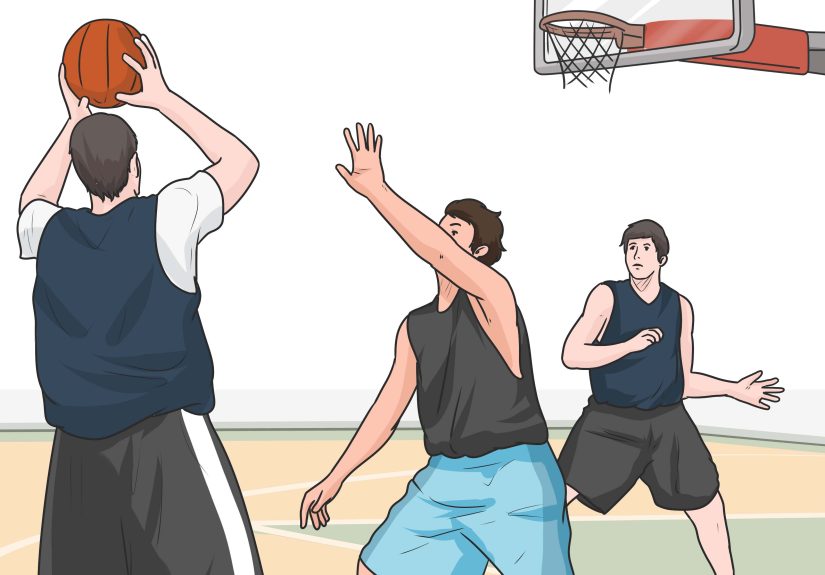
Defense is one of the clearest signs of a serious player. You may have cold shooting nights, but effort on defense can travel with you to every gym. Good defense begins with stance, balance, footwork, and awareness. Bend your knees, stay on the balls of your feet, keep your chest in front, and move with slides instead of reaching. Reaching often leads to fouls, and fouls lead to the bench, also known as the world’s saddest front-row seat.
On-ball defense means containing the dribbler, forcing tough shots, and making every move uncomfortable. Off-ball defense means seeing both your player and the ball, helping when needed, closing out under control, and recovering quickly. Great defenders communicate constantly. They call out screens, switches, cutters, help, and shots. You do not need to deliver a Shakespeare monologue. Simple words like “screen left,” “help,” “ball,” and “shot” are enough.
Rebounding is also defense. A great defensive possession is not finished until your team controls the ball. Box out first, then go get it. Do not just stare at the ball like it is a shooting star. Find a body, make contact legally, and pursue the rebound with two hands.
Understand Spacing and Movement
Spacing makes offense breathe. When players crowd the ball, defenders can guard multiple people at once. When players space correctly, cut with purpose, and move after passing, the defense has to work. A good player knows when to fill an open spot, when to cut backdoor, when to screen, and when to get out of the way.
If you pass the ball and stand still, you become easy to guard. Try pass-and-cut, pass-and-screen-away, or relocate to open space. Watch how good teams move without the ball. Many open shots happen because someone cut hard, set a solid screen, or shifted into the right window at the right time.
Spacing also helps ball handlers. If your teammate drives, do not run directly into the lane with your defender unless the plan is to create a traffic jam with sneakers. Drift to the corner, lift to the wing, or cut behind the defense depending on the situation. Smart movement turns one player’s attack into a team advantage.
Make Better Decisions Under Pressure
Basketball moves quickly, and decisions often matter more than moves. A good player asks: Is this a good shot? Is someone more open? Did the defense help? Can I attack the closeout? Should I slow down? Should I push the fast break? These questions happen in seconds, which is why practice should include game-like situations.
Play one-on-one, two-on-two, three-on-three, and advantage drills like two-on-one or three-on-two. Small-sided games give players more touches, more decisions, and more chances to learn. They also expose habits quickly. If you always drive into two defenders, small-sided games will reveal it faster than your teammate saying, “Bro, pass,” for the 400th time.
Film study helps, too. Watch your own games if possible. Look for patterns. Are you picking up your dribble too early? Are you missing open teammates? Are you late on defense? Are you taking rushed shots? Honest review can feel uncomfortable, but it is one of the fastest ways to improve basketball IQ.
Way 3: Train Your Body, Mind, and Habits
Skill matters, but basketball also demands speed, balance, stamina, coordination, strength, and mental toughness. A good player trains in a way that supports performance and reduces unnecessary injury risk. That does not mean doing random exhausting workouts until your legs file a complaint. It means building athletic qualities that match the game.
Develop Basketball Conditioning
Basketball is not a slow jog. It is sprint, stop, slide, jump, land, cut, recover, and repeat. Good conditioning should include short bursts, changes of direction, defensive slides, backpedals, closeouts, and controlled rest periods. Running long distances can build general fitness, but basketball conditioning should look like basketball.
Try simple drills such as baseline-to-free-throw sprints, lane slides, full-court dribble sprints, closeout-to-rebound drills, and shuttle runs. Add a ball whenever possible. Conditioning with a basketball helps you handle fatigue while still making decisions and controlling your skills. Anyone can dribble well when fresh. The test comes late in the game when your legs are tired and your brain is trying to open a snack stand.
Build Strength, Balance, and Injury-Resistant Movement
Strength training can help players move better, jump stronger, absorb contact, and stay balanced. For young athletes, the focus should be proper technique, supervision, and age-appropriate exercises. Bodyweight squats, lunges, glute bridges, planks, pushups, calf raises, and balance work can build a solid foundation. As players mature, resistance training can be added carefully with qualified guidance.
Landing mechanics are especially important. Practice landing softly with knees bent, chest controlled, and feet balanced. Basketball includes constant jumping, so learning to land well is not optional. It is like learning brakes before driving downhill.
Warm up before intense play. A good warm-up can include light jogging, skips, high knees, defensive slides, hip mobility, ankle mobility, and easy ball-handling. Cool down after hard sessions, hydrate, and get enough sleep. Recovery is not laziness. Recovery is where the body adapts, repairs, and prepares to do it again without sounding like an old folding chair.
Strengthen Your Mental Game
Every basketball player makes mistakes. The difference is how quickly you respond. A missed shot should not become bad defense. A turnover should not become three minutes of pouting. A coach’s correction should not feel like a personal attack from the universe. Good players learn, reset, and compete on the next possession.
Confidence grows from preparation. When you know you have practiced your handle, your free throws, your defensive footwork, and your conditioning, you play with more trust. Confidence is not pretending you never miss. Confidence is knowing that one miss does not define the next shot.
Set small goals. Instead of “I want to be amazing,” choose targets like “make 70 out of 100 free throws,” “use my left hand on every left-side layup,” “talk on defense every possession,” or “watch one quarter of film and write down three lessons.” Specific goals are easier to chase, measure, and improve.
A Simple Weekly Practice Plan for Improvement
You do not need a professional facility to improve. A driveway, park, gym, wall, or open space can help. The key is consistency. A focused 45-minute workout three or four times per week can beat a random three-hour session once in a while.
Sample 45-Minute Basketball Workout
Start with a five-minute dynamic warm-up. Move your body, loosen your hips and ankles, and get your heart rate up. Then spend 10 minutes on ball handling with both hands. Include low dribbles, crossovers, retreat dribbles, and change-of-speed attacks.
Next, spend 15 minutes on shooting. Begin close with form shots, then move to mid-range shots, catch-and-shoot attempts, and free throws. Track your makes. After shooting, spend 10 minutes on finishing: right-hand layups, left-hand layups, jump stops, and controlled finishes off the backboard. Finish with five minutes of defense or conditioning, such as slides, closeouts, and short sprints.
Once or twice per week, add competitive play. Basketball skills must eventually survive defenders, pressure, and decision-making. Play pickup, small-sided games, or controlled one-on-one. Practice teaches the move. Competition teaches when to use it.
Common Mistakes That Hold Players Back
One common mistake is practicing only what feels fun. Shooting deep threes may be exciting, but if you cannot make layups, free throws, or basic passes, your game has holes big enough for a mascot to walk through. Build from the inside out.
Another mistake is ignoring the weak hand. If you can only dribble and finish with one hand, defenders will notice quickly. They may not say it politely, but they will notice. Spend extra time on your non-dominant hand until it becomes dependable.
A third mistake is confusing activity with improvement. Sweating does not automatically mean you trained well. A good workout has intention. Know what skill you are improving, how many reps you completed, and what needs work next time.
Finally, many players underestimate attitude. Coaches value players who listen, hustle, encourage teammates, and accept feedback. Talent may get attention, but reliability gets trust. Be the player who runs back on defense, dives for loose balls safely, and celebrates a teammate’s success. That type of energy is contagious in the best way.
of Real-World Experience: What Actually Helps You Become a Better Basketball Player
One of the most useful experiences in basketball is realizing that improvement often feels unimpressive while it is happening. You might spend an entire week working on left-hand layups and still miss more than you make. You might practice defensive slides until your legs feel like noodles with opinions. You might shoot 100 free throws and discover that your percentage is not as heroic as your imagination promised. That is normal. Basketball growth is built through small corrections repeated many times.
A player who wants to become good should learn to enjoy the process. The quiet workouts matter. The early misses matter. The awkward weak-hand drills matter. In fact, awkward practice is usually a sign that you are attacking the right weakness. If every drill feels easy, you are probably polishing what you already know instead of building what you need.
In real games, the players who stand out are often the ones who make simple plays consistently. They catch the ball cleanly. They pivot away from pressure. They pass before the trap arrives. They take open shots instead of forced ones. They sprint back after a turnover. They box out even when they are tired. They talk on defense. None of these plays will break the internet, but they help teams win.
Another real lesson is that confidence comes from doing the work when nobody is clapping. If you have practiced 200 left-hand layups during the week, you are more likely to attempt one in a game. If you have practiced free throws while tired, the line feels less scary in the fourth quarter. If you have defended quick players in practice, you will not panic as much when a fast guard attacks you. Preparation does not remove pressure, but it gives pressure less room to bully you.
It also helps to play with people better than you. At first, this can be humbling. You may get your shot blocked, lose the ball, or discover that your favorite move only works on your little brother and one very confused traffic cone. Good. Better competition reveals the truth. It teaches speed, spacing, timing, and toughness. Just remember to learn instead of sulk. Ask what worked, what failed, and what you can try next time.
Finally, being a good basketball player is not only about skill. It is about being coachable. Listen when someone corrects your footwork. Accept that defense matters. Thank the teammate who passes to you. Admit mistakes quickly. Keep showing up. A player with talent and a bad attitude becomes exhausting. A player with solid skills, great effort, and a learning mindset becomes someone every team wants.
Conclusion
Being a good basketball player comes down to three big habits: master the fundamentals, become a smart teammate, and train your body and mind for the real demands of the game. Dribbling, shooting, passing, defense, footwork, conditioning, and basketball IQ all work together. You do not need to become perfect overnight. You need to become more consistent, more aware, and more useful every week.
Start with simple goals. Practice both hands. Shoot with balance. Pass with purpose. Defend with pride. Communicate. Watch the game. Learn from mistakes. Basketball rewards players who keep improving, even when progress looks slow. Keep stacking good reps, and one day the “small things” will turn into a game that looks smooth, confident, and seriously fun.