Table of Contents >> Show >> Hide
- What Makes a Fall Wreath Feel Like “Nature’s Bounty”?
- Pick Your Base Like You Mean It
- Nature-First Materials (And What to Use Instead If You’re Not Foraging)
- 40 Fall Wreath Ideas That Showcase Nature’s Bounty
- A DIY Blueprint: How to Build a Fall Wreath That Doesn’t Fall Apart
- How to Make Your Wreath Last Through the Season
- Hanging Your Wreath Without Door Drama
- Where Else to Use Fall Wreaths (Besides the Front Door)
- Experience Section: What You Learn After Making (or Buying) a Lot of Fall Wreaths
Fall is basically nature’s way of yelling, “Look what I can do!”and honestly, it’s rude not to applaud.
A fall wreath is that applause, hung right on your front door like a seasonal high-five.
It’s part welcome sign, part mini harvest festival, and part “yes, I did pick up those branches on purpose.”
The best fall wreaths don’t just scream autumn; they whisper it in textures: crisp leaves, fuzzy seed heads,
glossy berries, papery husks, and maybe one perfectly imperfect mini pumpkin that looks like it has opinions.
Below you’ll find 40 fall wreath ideas that celebrate nature’s bountyplus practical DIY guidance,
preservation tips, and real-life “I learned this the hard way” experiences so your wreath survives the season.
What Makes a Fall Wreath Feel Like “Nature’s Bounty”?
“Bounty” isn’t just color (though the coppery oranges and moody burgundies help). It’s abundance.
The most convincing autumn wreaths layer multiple elementsleaf shapes, seed pods, grains, fruit, herbs
so the design feels gathered, not bought. Think of it like a good chili: one-note is fine, but five-note is legendary.
Quick Design Principles (That Make Any Wreath Look Expensive)
- Work in odd clusters: Groups of 3–5 elements look natural and intentional.
- Mix matte + shine: Dried leaves (matte) + berries or ribbon (shine) adds depth.
- Anchor one focal zone: Most wreaths look best with a “heavier” lower-left or lower-center cluster.
- Repeat a color at least twice: It keeps the design cohesive instead of chaotic.
- Leave some breathing room: Negative space is what makes your “bounty” look curated, not crowded.
Pick Your Base Like You Mean It
Your base determines the vibe and how easy your build will be. A grapevine wreath gives instant woodland charm.
A straw form feels farmhouse and is easy to pin into. A metal hoop looks modern and airy.
Foam forms are light and cheap, but they usually need wrapping so the foam doesn’t peek through like an uninvited guest.
Base Cheat Sheet
- Grapevine: Rustic, forgiving, great for wiring stems into the twists.
- Straw: Perfect for pinning wheat, grasses, and faux stems; easy coverage.
- Wire frame: Best for bundles (wheat, eucalyptus) and lightweight designs.
- Hoop (metal or wood): Minimalist, works well with asymmetrical clusters.
- Fresh evergreen base: Not just for wintermakes fall accents pop, but needs care to stay fresh.
Nature-First Materials (And What to Use Instead If You’re Not Foraging)
You can build a stunning wreath from yard trimmings, farmers market finds, craft-store stems, or all three.
If you forage, take lightlynever strip one plant bare, and avoid anything sprayed with pesticides.
If you buy faux, look for realistic textures: wired leaves, varied tones, and mixed stem thicknesses.
Classic “Bounty” Ingredients
- Dried grasses (wheat, oat, bunny tail, pampas), seed pods, and cones
- Fall foliage (real preserved leaves or high-quality faux)
- Mini pumpkins/gourds (faux for durability; real for short displays)
- Berries (faux is usually safer and longer-lasting)
- Herbs (rosemary, sage, bay leaves) for a subtle “my porch smells fancy” moment
- Dried citrus slices, cinnamon sticks, star anise for warm, harvesty detail
- Ribbon, twine, or fabric scraps to tie it all togetherliterally
40 Fall Wreath Ideas That Showcase Nature’s Bounty
Leaves, Branches, and Woodland Texture
-
Classic Maple Leaf Ombre
Layer faux maple leaves from green-to-gold-to-rust so it looks like your wreath is “turning” in real time.
-
Oak Leaf + Acorn Harvest Ring
Use oak leaves as the base texture and tuck acorns into grapevine twists for a subtle woodland feel.
-
Birch Twig Minimalist
Wrap a hoop with birch twigs and add one asymmetrical cluster of dried leaves for modern cabin vibes.
-
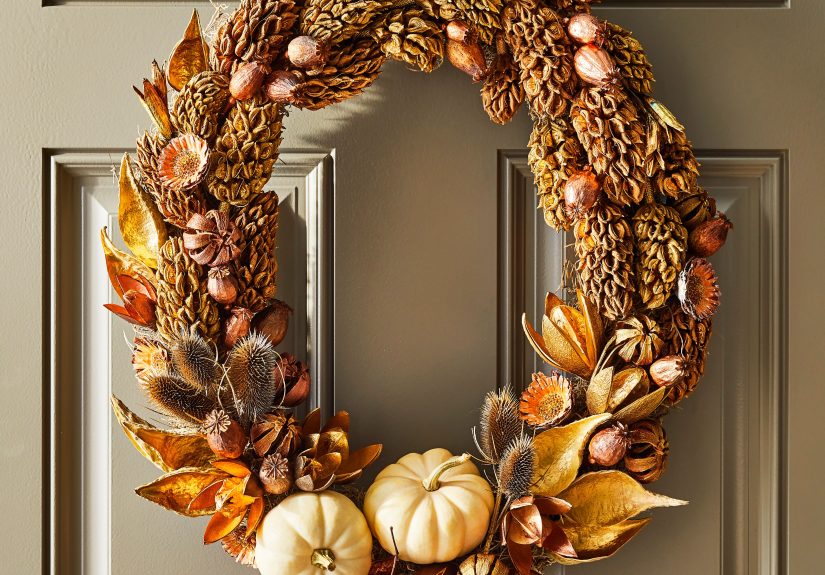
Pinecone Panorama
Glue pinecones in mixed sizes, then add dried moss in gapslike a tiny forest floor for your door.
-
Seed Pod Sculpture
Feature lotus pods, milkweed pods, or similar seed heads as the focal point for a bold, architectural look.
-
Feather + Foliage (Soft Woodland)
Combine muted leaves with a few tasteful feathers for a cozy, cottagecore wreath that feels collected.
-
Magnolia Leaf Mood
Magnolia leaves bring dramatic contrastglossy green on top, velvety brown underneath. Keep it monochrome and chic.
-
Rustic Stick Starburst
Create a starburst base with thin sticks, then nest a small wreath cluster in the center like a woodland medallion.
Grains, Grasses, and Field-to-Front-Door
-
Full Wheat Halo
Bundle wheat in small bunches and tie onto a wire framesimple, classic, and surprisingly elegant.
-
Oat + Rye “Golden Hour” Wreath
Mix oat stems and rye for a lighter, feathery texture that glows in afternoon sun.
-
Pampas + Muted Leaves
Use preserved pampas as the star, then add dusty rose or caramel leaves for a soft, trendy palette.
-
Bunny Tail Grass + Tiny Berries
Keep it airy with bunny tail grass and a few berry picksminimal effort, maximum “boutique shop” look.
-
Corn Husk Ruffle Wreath
Soak dried corn husks to soften, then ruffle and layer them for a dramatic, textural harvest statement.
-
Harvest Sheaf Wreath
Create a base of bundled “mini sheaves” (wheat + dried grasses), then tie with twine like tiny field bouquets.
-
Barley + Eucalyptus Blend
Mix warm barley with cool eucalyptus for a balanced wreath that works from September through Thanksgiving.
-
Gingham Bow + Grain Base
Let grains do the heavy lifting, then add one oversized gingham bow for instant farmhouse charm.
Fruits, Gourds, and Market-Fresh Color
-
Mini Pumpkin Cluster Wreath
Use faux mini pumpkins in mixed tones (cream, sage, orange) clustered at the bottom for a modern harvest look.
-
Gourd + Vine “Heirloom” Wreath
Choose warty gourds (the more personality, the better), then weave vines around them like a pumpkin patch crown.
-
Apple Orchard Wreath
Red faux apples + greenery + twine = classic fall nostalgia. Add a few leaves for natural context.
-
Pear + Sage Elegance
Pair soft green pears with sage-toned leaves for a restrained, upscale palette that still feels seasonal.
-
Dried Orange Slice Wreath
Oven-dry citrus slices, then layer them with bay leaves or eucalyptusbright, cozy, and smells like ambition.
-
Pomegranate “Jewel Tone” Wreath
Use deep red accents (pomegranates or faux berries) against darker foliage for dramatic, holiday-adjacent richness.
-
Cranberry + Pinecone Pop
Combine faux cranberries with pinecones for a wreath that bridges fall and winter without changing outfits.
-
Grapevine + Faux Fig Accent
Figs add a moody, Mediterranean vibeespecially with olive-toned foliage and neutral ribbon.
Flowers, Herbs, and “I Have My Life Together” Energy
-
Mum-Inspired Floral Wreath
Use faux mums in mustard and burgundy with leafy fillerpeak fall flower shop, no watering required.
-
Dahlia Drama
Go bold with dahlias as focal blooms, then soften with smaller filler flowers and leaves.
-
Hydrangea Harvest
Dried-look hydrangeas create instant fullness. Add a few pods or grasses so it feels seasonal, not summer leftovers.
-
Sunflower + Wheat Classic
Sunflowers bring happy energy; wheat keeps it grounded. Together, they’re basically fall’s power couple.
-
Rosehip & Berry Foraged Look
Use rosehip-colored berries and muted leaves for that “I collected this on a woodland walk” vibe.
-
Rosemary + Bay Leaf Kitchen Wreath
Herb wreaths look beautiful and smell incredible. Add a simple ribbon and call it edible decor-adjacent.
-
Lavender + Wheat “Late Summer to Fall”
Lavender tones down the yellows and oranges, creating a gentle transition wreath for early fall.
-
Neutral Dried Floral Hoop
On a hoop base, attach dried-look florals in creams and tans for a modern, airy design that feels designer.
Unexpected Bases and Creative Twists
-
Basket “Cottagecore” Wreath
Use a shallow basket as the base, filled with dried stemshalf wreath, half floral arrangement, all charm.
-
Grain Sifter Statement
A vintage grain sifter makes a gorgeous base. Add leaves, acorns, and ribbon for layered texture.
-
Wood Bead + Leaf Ring
Add wood beads along the bottom curve of a hoop, then top with leavesboho, warm, and surprisingly timeless.
-
Chalkboard Hello-Fall Wreath
Attach a mini chalkboard to the center and change the message weekly: “Hello Fall,” “Bring Pie,” “We’re Out of Cinnamon.”
-
Monochrome White Pumpkin Wreath
All cream and white pumpkins with pale leaves looks modern and cleanespecially on a dark door.
-
Moody Burgundy & Copper Wreath
Choose burgundy leaves and copper accents (ribbon, berries, or metallic stems) for a rich, editorial feel.
-
Minimal Asymmetrical Eucalyptus + Pod
Let eucalyptus drape naturally and add a small cluster of podssimple, elegant, and “quiet luxury” seasonal.
-
Thanksgiving Placecard Wreath
Clip mini tags around the wreath with guest namesdecor that doubles as a seating plan. Efficient and festive.
A DIY Blueprint: How to Build a Fall Wreath That Doesn’t Fall Apart
Step-by-Step Assembly
- Plan the shape first. Set big elements (pumpkins, pinecones, large blooms) where you want visual weight.
- Attach with the right method. Floral wire is sturdier for heavy pieces; hot glue is great for quick fills and light accents.
- Work from large to small. Add mid-size foliage next, then finish with berries, pods, and tiny fillers.
- Repeat and balance. Echo your key color/texture at least twice around the wreath.
- Hide mechanics. Tuck stems into grapevine twists, cover glue spots with moss, and rotate often while building.
- Test-hang early. Put it on a door hook mid-project to check if the “bottom” is actually bottom. Gravity is picky.
Three Timing Options
- 15-minute upgrade: Add one statement bow + one cluster to a plain wreath base.
- 60-minute DIY: Grapevine base + faux stems + wired focal cluster (great durability).
- 2-hour “fresh and fancy”: Condition fresh greens, wire accents, and plan on some upkeep.
How to Make Your Wreath Last Through the Season
If Your Wreath Uses Fresh Greenery
Fresh wreaths can last weeks (sometimes longer) if you protect them from sun and heat and keep them hydrated.
Hang them in a shaded, sheltered spot whenever possible, and mist the back/stems regularlyespecially in dry air.
If you’re displaying fresh greenery indoors, keep it away from vents, fireplaces, and direct sunlight.
If You’re Using Dried/Preserved Botanicals
Dried wreaths are the low-maintenance heroes of fall. The key is starting with properly dried material
(so it doesn’t mold) and storing it carefully when the season ends. Many flowers keep color better when dried out of bright light.
Desiccants like silica gel can help preserve shape, and glycerin preservation can keep certain foliage flexible and long-lasting.
The “right” method depends on what you’re dryingdelicate blooms, sturdy pods, or leafy branches.
Storage Tips (So Next Year’s Wreath Isn’t a Sad Pile of Crunch)
- Store in a sturdy box with tissue or paper to prevent crushing.
- Keep it dry and cool (humidity is the villain of preserved decor).
- Avoid heavy stackingwreaths are not meant to be load-bearing furniture.
- Label by season so you’re not opening a spooky Halloween wreath in March like a confused time traveler.
Hanging Your Wreath Without Door Drama
If you don’t want holes, use an over-the-door hanger, a strong adhesive hook rated for the wreath’s weight,
or a ribbon looped over the top of the door and secured on the inside. Clean surfaces matter for adhesives,
and weight ratings are not “suggestions.” If your wreath is heavy, choose hardware that matches its ambition.
Where Else to Use Fall Wreaths (Besides the Front Door)
- Over the mantel: Add taper candles nearby for a cozy focal point.
- On a window: Hang with ribbon for a soft, layered look from inside and out.
- As a table centerpiece: Place a wreath flat and set a hurricane candle in the middle.
- On cabinet doors: Mini wreaths make kitchens feel instantly seasonal.
- On a mirror: A wreath adds warmth and frames reflective surfaces beautifully.
Experience Section: What You Learn After Making (or Buying) a Lot of Fall Wreaths
Let’s talk about the “in-the-wild” experience of fall wreathsthe part no one mentions until you’re
standing on your porch holding a glue gun like it’s a magic wand. First lesson: your door is not a flat canvas.
Many doors have panels, curves, glass inserts, or a storm door that turns your hanging plan into a small engineering project.
That’s why the simplest win is often a lightweight base (grapevine or hoop) and a focal cluster that sits slightly off-center,
so it looks intentional even if the wreath shifts a bit when the door closes.
Second lesson: scale is everything. A wreath that looks “normal” in a store can look tiny on a tall front door,
like it got lost on the way to a smaller house. If your door is large, go bigger than you thinkthen add a long ribbon tail
or a swag accent to increase the visual height. On the flip side, if your space is compact (apartment doors, narrow hallways),
a minimalist hoop with asymmetrical foliage keeps things stylish without swallowing the entire entry.
Third lesson: texture reads from the sidewalk, detail reads up close. From the street, you’ll notice big shapes
leaves, pumpkins, bold color blocks. Up close, that’s where your “bounty” sells itself: seeded eucalyptus,
tiny berries, layered grasses, cinnamon sticks, and a few curled leaves that make it look freshly gathered.
When people compliment a wreath, they usually point to the little surprisesso build in at least three “closer look” elements.
Fourth lesson: weather has opinions. Sun can fade colors, wind can loosen stems, and humidity can turn poorly dried botanicals
into something that smells like regret. If your wreath is outside, durability matters more than perfection.
Wire heavy pieces, tuck stems deep into the base, and save delicate dried florals for protected porches or indoor displays.
If you love the idea of real mini pumpkins, treat them like a short-term guest: beautiful for a bit, not meant to stay forever.
Faux pumpkins are the reliable friends who show up on time and don’t ask to borrow money.
Fifth lesson: wreath-making is weirdly calminguntil it isn’t. There’s a moment where it looks messy and you’re convinced
you’ve created a tumbleweed with commitment issues. That’s normal. Keep going. The magic happens when you start filling gaps,
repeating a color, and adding small pieces that connect the “sections” into one story. If you get stuck, step back six feet.
If it looks good from there, you’re winning. If one spot looks bare, don’t panicadd one mid-size leaf stem, then one small filler.
Tiny fixes beat big overhauls.
Finally, the best experience-based tip: make the wreath fit your fall. If your style is modern, do a neutral palette and clean lines.
If you love maximalism, pile on berries, leaves, and texture like your door is hosting a harvest parade. If you’re sentimental,
tuck in something personala ribbon from a favorite flannel shirt, a charm, a tiny tag with a family name, or herbs that remind you of holiday cooking.
A wreath is a small thing, but it’s the first “hello” your home gives the world. Make it sound like you.