Table of Contents >> Show >> Hide
A mudroom is the unsung hero of the house. It catches muddy boots, runaway backpacks, mystery sports gear, dog leashes, grocery bags, andif we’re being honestat least one lonely sock that no one claims. Whether you have a grand back entry or a tiny wall near the door, the right mudroom ideas can turn chaos into a clean, hardworking drop zone.
The best mudroom designs balance function and style: smart storage, durable finishes, and enough personality that the space feels like part of your homenot a punishment zone for shoes. This guide gives you 40 practical and design-forward ideas for small and large spaces, plus real-world experience-based tips at the end so your mudroom actually works on Monday morning (not just in photos).
How to Plan a Mudroom That Works
Before you pick paint colors or hooks, start with behavior. Who uses this space? Kids? Pets? Gardeners? Athletes? Commuters? The most successful mudroom storage setups are built around daily routines: where shoes land, where keys disappear, where wet coats drip, and where mail piles up. Plan for those habits first, then add the pretty stuff.
Also remember: a “mudroom” doesn’t have to be a full room. It can be a hallway, closet, laundry corner, side entrance, garage wall, or under-stair niche. If it helps your household enter and exit the home without a clutter explosion, it counts.
40 Mudroom Ideas for Spaces Small and Large
Small-Space Mudroom Ideas
1. Create a micro mudroom with one wall. Use a narrow bench, a row of hooks, and a shelf above. Even a few feet of wall can become a functional entryway drop zone.
2. Try a floating bench. A wall-mounted bench keeps the floor visible, making a small mudroom feel bigger while creating room underneath for baskets or shoes.
3. Add a hall tree. A freestanding coat rack-and-bench combo is a renter-friendly mudroom idea that uses vertical space without custom built-ins.
4. Convert a closet into a mini mudroom. Remove the door (or keep it), then add hooks, shelves, and a small bench. It’s one of the smartest upgrades for homes without a dedicated mudroom.
5. Turn an awkward corner into a drop zone. That strange corner by the garage door? Perfect for a slim bench, baskets, and hooks.
6. Use a stool instead of a bench. If space is super tight, a small stool gives you a seat for shoes without eating the whole walkway.
7. Mount hooks at two heights. Adult hooks up top, kid hooks lower down. It improves independence and reduces the “Mom, where do I put this?” soundtrack.
8. Add a mirror to expand the feel. A mirror reflects light, helps with last-minute checks, and makes a compact mudroom look less boxed in.
Mudroom Storage Ideas That Control Clutter
9. Mix storage types. Combine drawers, hooks, open cubbies, and cabinets. Different items need different homes, and one storage style rarely solves everything.
10. Give each family member a zone. Assign a cubby, basket, or shelf per person to reduce mix-ups and morning scavenger hunts.
11. Label bins and baskets. Especially useful for gloves, hats, sports accessories, sunscreen, and dog supplies. Labels save time and arguments.
12. Use high cabinets for seasonal items. Store off-season gear above eye level so everyday essentials stay easy to reach.
13. Add deep drawers for shoes. Deep drawers hide visual clutter and can double as bench bases in custom mudroom cabinetry.
14. Install stackable shoe cubbies. Great for families, and especially helpful if shoes tend to form a pile that looks like a small avalanche.
15. Add a catch-all tray for keys and wallets. A tiny tray can solve a huge daily problem. Put it where you naturally drop things.
16. Include a mail station. A wall sorter, slim shelf, or mini desk surface keeps paper clutter from migrating to the kitchen counter.
Built-In Mudroom Ideas for a Custom Look
17. Install built-in cubbies with a bench. This classic layout remains popular because it works: seating, shoe storage, hanging space, and upper cabinets in one zone.
18. Go floor-to-ceiling with cabinetry. In a larger mudroom, full-height cabinets maximize storage and help conceal everyday mess.
19. Add closed storage to hide visual clutter. If your family is not naturally “minimal,” cabinet doors are your best friend.
20. Combine open display and closed cabinets. Keep everyday shoes and bags accessible, but hide seasonal gear, cleaning items, or backup supplies.
21. Build a standalone mudroom wall in an open-plan space. A custom storage block can create the look of a mudroom even when no separate room exists.
22. Use an armoire or tall cabinet as a fake built-in. A great solution for non-renovation budgets and apartments that still need serious mudroom storage.
23. Add a shelf above the hooks. The shelf holds baskets or décor, while hooks handle daily coats and bags. Simple, efficient, and visually balanced.
24. Design a bench with drawers below. Drawers are excellent for hiding small accessories, pet gear, and all the things that shouldn’t be seen by guests.
Style-Forward Mudroom Ideas
25. Use a bold paint color. Mudrooms are perfect for dramatic color because they’re smaller, high-impact spaces where personality can shine.
26. Try moody tones. Deep green, navy, charcoal, or brown can make a mudroom feel sophisticated rather than purely utilitarian.
27. Add wallpaper for personality. Botanicals, geometrics, or playful prints instantly upgrade a hardworking room and make it feel intentional.
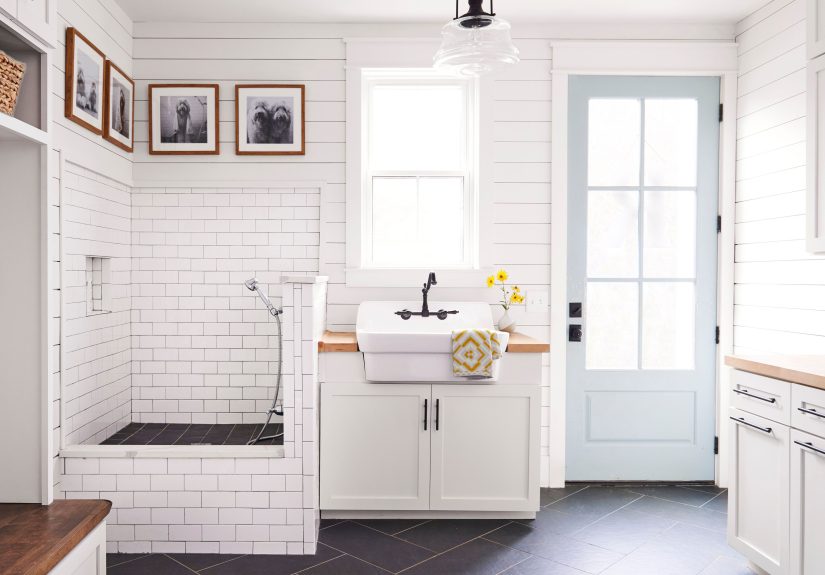
28. Paint the door a cheerful accent color. A bright back door adds energy and makes coming home feel more welcoming.
29. Add wall paneling or shiplap. Paneling gives texture and architectural interest, especially in small mudrooms that need depth.
30. Choose statement tile flooring. Patterned tile, herringbone layouts, or checkerboard looks bring style while handling heavy foot traffic.
31. Add a washable runner or indoor-outdoor rug. It softens the room and helps catch dirt, especially in a high-traffic family entry.
32. Upgrade the lighting. A pendant, flush mount, or sconces can make the mudroom feel like a designed room instead of a hallway with hooks.
Large and Multifunctional Mudroom Ideas
33. Combine the mudroom and laundry room. This is one of the most efficient layouts for busy householdsdirty uniforms and towels go straight to the washer.
34. Add a utility sink or slop sink. Ideal for gardening cleanup, soaking stained clothes, rinsing boots, or washing paintbrushes.
35. Create multiple “stations.” In a large mudroom, designate separate zones for mail, pet care, sports gear, laundry, and coats.
36. Add a pet wash station. If you have dogs, a mudroom pet shower can save your bathroom and your sanity after rainy walks.
37. Include a pet nook or feeding area. Built-in bowls, leash hooks, and a tucked-away crate make the mudroom work better for the whole family, including the furry members.
38. Add a mini desk or console workspace. A slim counter can hold mail, chargers, tools, school forms, and “I’ll deal with this later” items.
39. Create an office-mudroom combo. In flexible homes, a console desk plus storage wall can make one space do double duty beautifully.
40. Add hobby storage. Gardening supplies, pickleball paddles, ski gear, bike helmets, or craft bins can all live here if you plan the cabinetry around your lifestyle.
Design Tips for Choosing the Right Mudroom Ideas
If you’re deciding which of these mudroom ideas to use, start with the “hardworking five”: bench, hooks, shoe storage, durable floor, and catch-all tray. Those five features solve most daily entryway problems. From there, layer in upgrades like cabinets, wallpaper, pet stations, or laundry equipment.
For small mudroom ideas, prioritize vertical storage, light-reflecting finishes, and furniture that does double duty. For large mudroom ideas, avoid one giant clutter zone by dividing the room into stations. Either way, the goal is the same: a space that makes your home easier to live in.
And yes, you can absolutely make it pretty. A mudroom should be practicalbut it can also be charming, cozy, colorful, and very much “you.” Think of it as the backstage area of your home: if the backstage runs smoothly, the whole production gets better.
Experience-Based Lessons From Real Mudroom Setups (500+ Words)
In real homes, mudrooms rarely fail because of bad design tastethey fail because of bad behavior mapping. A mudroom can look gorgeous online and still become a clutter magnet in three days if it ignores how people actually move through the house. One of the most common experiences homeowners describe is this: they install beautiful hooks and a bench, but no place for small items. Within a week, keys, sunglasses, receipts, lip balm, and dog treats start colonizing every flat surface. Adding a simple tray, drawer, or labeled basket often fixes more frustration than an expensive renovation.
Families with kids often discover that “one big storage area” sounds efficient but creates chaos fast. Shared bins become junk bins. Shared hooks become coat traffic jams. The best experience tends to come from giving each person a defined home baseeven if it’s just one hook, one cubby, and one basket. Kids are far more likely to use a system when it feels like theirs. Adults, meanwhile, stop wasting time sorting through everyone else’s stuff. It’s not glamorous, but personalized zones are one of the highest-impact mudroom upgrades.
Small-space homeowners also report an important lesson: a mudroom does not need to be a room to work like one. Some of the most effective setups happen in entry corners, garage walls, hallway niches, and closet conversions. In these spaces, the biggest win usually comes from using vertical space intelligentlyhooks, shelves, and tall cabinetswhile keeping the floor as open as possible. A floating bench or narrow shoe cabinet can make a tiny area feel much easier to navigate, especially when multiple people are coming and going at the same time.
In larger homes, the opposite problem shows up: too much space without enough structure. A big mudroom can quietly become a dumping ground for sports gear, packages, laundry, seasonal decorations, and pet supplies. The homeowners who love their mudrooms long-term usually break the room into stations: one area for coats and shoes, one for laundry, one for pets, and one for mail or household paperwork. That zoning strategy makes the room feel calm, even when it’s busy.
Pet owners almost always mention the same thing after adding pet-friendly features: easy-clean surfaces matter more than cute accessories. Hooks for leashes are great, but a tile floor, washable rug, and a designated towel bin are what truly keep the mess under control. Likewise, gardeners and active families often say a utility sink becomes the surprise hero of the roomuseful for rinsing muddy hands, soaking stained clothes, cleaning tools, and handling all the tasks you don’t want in the kitchen sink.
Another recurring real-life experience is that mudrooms work best when they reflect the style of the home. People are more likely to keep a space tidy when it feels intentional and pleasant. A dramatic paint color, cheerful wallpaper, warm wood tones, or good lighting can make the room feel welcoming rather than purely utilitarian. In practice, that often means the mudroom gets used correctly because people enjoy the space instead of treating it like a temporary pile-up zone.
The biggest takeaway? Start simple, then refine. A bench, hooks, shoe storage, and one catch-all tray can immediately improve daily life. After a few weeks of use, you’ll know exactly what’s missingmore drawers, better labels, a pet station, a laundry combo, or perhaps a cabinet for the mountain of reusable shopping bags. The best mudroom ideas are not just beautiful; they evolve with the way your household really lives.
Conclusion
Whether you’re designing a compact entryway drop zone or a full-scale laundry-mudroom hybrid, the most effective mudroom ideas combine smart storage, durable finishes, and thoughtful details. Start with how your family actually uses the space, choose solutions that match your routine, and don’t be afraid to add personality. A well-designed mudroom won’t just look betterit will make the entire house run better.