Table of Contents >> Show >> Hide
- Why relaxing activities matter
- 48 relaxing activities to ease stress and support well-being
- How to choose the right relaxing activity for the moment
- What to avoid when you are trying to relax
- When stress may need more support
- Experiences that show how relaxing activities really help in everyday life
- Conclusion
Stress has a funny way of showing up uninvited. Sometimes it barges in like a marching band. Other times it slips into your day disguised as a tight jaw, a short temper, or the sudden belief that answering one more email may actually launch you into orbit. The good news is that calming down does not always require a mountain retreat, a sound bath in the desert, or a candle that costs more than dinner.
In real life, the best relaxing activities are often the ones that are simple, repeatable, and easy enough to do before your brain starts negotiating against them. A few deep breaths. A short walk. Stretching while the pasta water boils. Ten minutes with music and no notifications. Small things count. In fact, they often work better because you can actually do them on a Tuesday.
If you are looking for relaxing activities to ease stress and promote well-being, this guide rounds up practical ideas you can use at home, at work, outside, in your car before going into Target, or anywhere else life gets a little loud. Some are fast. Some are cozy. Some involve movement, creativity, nature, or people you like enough to text back. Pick a few, build your own routine, and let your nervous system unclench a little.
Why relaxing activities matter
Stress is a normal part of being human, but when it hangs around too long, it can affect sleep, mood, focus, energy, and even how your body feels day to day. That is why healthy coping habits matter. Relaxing activities do not erase responsibilities, but they can help interrupt the stress spiral, create a sense of control, and support your overall mental wellness.
The secret is not finding one magical stress relief idea that transforms you into a permanently serene woodland creature. It is building a menu of calming options that match the moment. Sometimes you need a quick reset. Sometimes you need movement. Sometimes you need quiet. And sometimes you need to laugh so hard at a ridiculous dog video that your shoulders finally drop back where they belong.
48 relaxing activities to ease stress and support well-being
Quick calming activities for busy days
- Try box breathing. Inhale, hold, exhale, and hold for the same count. It is simple, discreet, and surprisingly effective when your thoughts are doing parkour.
- Do a one-minute body scan. Notice your forehead, jaw, shoulders, hands, and stomach. Relax each area on purpose instead of waiting for your body to figure it out on its own.
- Step away from your screen. A short break from nonstop information can help your brain stop acting like every notification is a five-alarm fire.
- Stretch your neck and shoulders. Stress loves to rent space in the upper body. A few gentle rolls and shoulder drops can make a big difference.
- Drink a glass of water slowly. It is not glamorous, but slowing down for sixty seconds can be a tiny reset button.
- Write down three things bothering you. Getting worries out of your head and onto paper often makes them feel less like a haunted house and more like a to-do list.
- Practice a grounding exercise. Name five things you see, four you feel, three you hear, two you smell, and one you taste. Your senses can pull you back to the present.
- Listen to one calming song from start to finish. No multitasking. No doom-scrolling. Just one song and your full attention.
- Use positive self-talk. Replace “I am failing at everything” with “I am stressed, and I can handle one thing at a time.” Less dramatic, more useful.
- Light a candle or use a favorite scent. Familiar smells can signal comfort and help mark the shift from chaos to rest.
- Stand in the sunlight for five minutes. A little natural light and a change of scenery can help you feel more awake and less boxed in.
- Do absolutely nothing for two minutes. Not fake resting. Real resting. Sit down. Breathe. Stare at a plant if needed.
Movement-based stress relief activities
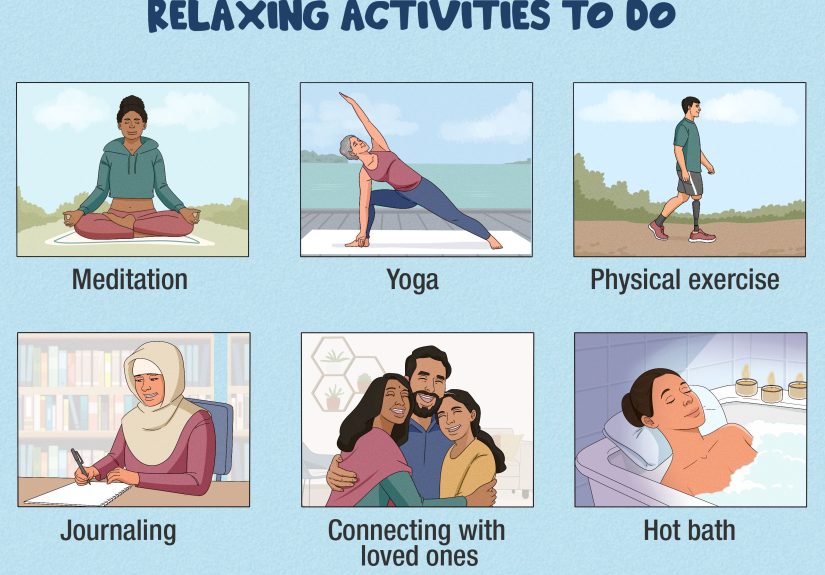
- Take a brisk walk. A short walk is one of the most accessible ways to ease tension, reset your thoughts, and shake off that stuck feeling.
- Walk in a park or green space. Nature has a way of making your problems feel a little less like the center of the universe.
- Try gentle yoga. You do not need to twist into a decorative pretzel. A beginner video and ten minutes are plenty.
- Stretch before bed. Slow movement in the evening can help transition you from “replying to messages with one eye twitching” to actual rest mode.
- Dance in your kitchen. Not performance dance. Weird, joyful, spaghetti-is-boiling dance. The best kind.
- Take a bike ride. Repetitive movement plus fresh air can feel like a brain rinse.
- Try tai chi. Its slow, flowing motions make it a great option when you want movement without intensity.
- Do a short workout video. Ten to fifteen minutes is enough to shift your energy when stress starts feeling physical.
- Walk while you talk on the phone. Turn a stationary stress session into moving relief.
- Try progressive muscle relaxation. Tighten and release muscle groups one by one. It helps you notice how much tension you are carrying around like unpaid rent.
- Go swimming if you can. Water has a built-in calming effect, and the rhythmic movement can be especially soothing.
- Do slow mobility work. Gentle hip openers, spinal twists, and ankle rolls are not flashy, but your body will send a thank-you note.
Cozy, creative, and sensory activities
- Read a few pages of a book. Choose something comforting or interesting, not a thriller that raises your heart rate like a tax audit.
- Keep a gratitude journal. Writing down a few specific good things can help shift attention away from the mental static.
- Color, sketch, or doodle. Creative activities give your mind something gentle to focus on besides worst-case scenarios.
- Work on a puzzle. Jigsaw puzzles, crosswords, or Sudoku can be oddly peaceful because they require just enough attention.
- Knit, crochet, or do another repetitive craft. The rhythm itself can be calming.
- Bake something simple. Measuring, mixing, and waiting for cookies to exist can be surprisingly therapeutic.
- Make tea and actually sit down to drink it. The ritual matters almost as much as the beverage.
- Take a warm bath or shower. Heat can help you loosen up physically and mentally.
- Listen to nature sounds or white noise. Great for unwinding when the world feels too loud.
- Declutter one tiny area. A junk drawer, one shelf, or your nightstand. Small order can create a real sense of relief.
- Try guided imagery. Close your eyes and picture a peaceful place in detail. Your mind enjoys a mini-vacation, even if your calendar does not.
- Do a slow skincare routine. Not because skincare fixes life, but because rituals can signal care, pause, and routine.
Connection, comfort, and meaning-based activities
- Call someone who feels grounding. Not every hard day needs a solution. Sometimes you just need a voice that says, “Yep, that is a lot.”
- Cuddle a pet. If you have a dog, cat, or any furry household therapist, spending time with them can be deeply comforting.
- Spend time with a friend in a low-pressure way. Think walk, coffee, porch chat, or silent coexistence with snacks.
- Laugh on purpose. Watch a funny show, stand-up clip, or ridiculous video. Laughter is not trivial; it is tension release with good timing.
- Practice saying no. Protecting your energy is a relaxing activity in disguise.
- Volunteer or do a small act of kindness. Helping someone else can make you feel more connected and less trapped inside your own stress loop.
- Pray or meditate. For many people, spiritual reflection or mindfulness creates calm, perspective, and steadiness.
- Create a better evening routine. Lower lights, mute notifications, and let your brain know the office is closed.
- Set a “worry window.” Give yourself ten minutes to worry on paper, then move on. Your mind likes boundaries more than it admits.
- Plan something enjoyable. A picnic, movie night, bookstore trip, or weekend breakfast can give you something good to look forward to.
- Sit outside with no agenda. No productivity goal, no phone, no “while I am here I should…” nonsense. Just be outside.
- Go to bed earlier. Sleep is not a luxury item. It is a stress-management strategy wearing pajamas.
How to choose the right relaxing activity for the moment
Not every relaxing activity works for every kind of stress. If your mind is racing, try breathing, grounding, journaling, or guided imagery. If your body feels tense, movement, stretching, yoga, and warm water may work better. If you feel emotionally wrung out, connection, laughter, prayer, pets, or creative hobbies can help you feel human again.
It also helps to think in categories:
- Two-minute resets: breathing, grounding, stretching, a glass of water, a short song
- Ten-minute activities: a walk, journaling, yoga, tea, a quick tidy-up, a phone call
- Longer recovery options: a bath, a craft project, time in nature, a workout, reading, or a real evening wind-down
The goal is not to become perfect at self-care. The goal is to have a few reliable tools ready before stress starts running the whole show.
What to avoid when you are trying to relax
Some habits feel soothing in the moment but make stress worse later. Endless scrolling, too much caffeine, skipping meals, sleeping at odd hours, overloading your schedule, or using alcohol as your main “relaxing activity” can backfire fast. Real relaxation usually leaves you feeling steadier, clearer, or more rested, not more frazzled once the short-term distraction wears off.
When stress may need more support
If stress starts interfering with sleep, concentration, relationships, work, or your ability to function day to day, it may be time to reach out for professional help. That does not mean you failed at relaxing. It means you are being smart. Sometimes breathing exercises and a nice cup of chamomile are helpful, and sometimes what you really need is a doctor, therapist, or other licensed mental health professional. Both things can be true.
Experiences that show how relaxing activities really help in everyday life
What makes relaxing activities so effective is not that they create a perfect life. They do not. Your inbox still exists. The laundry still reproduces in the dark. The group chat still has twelve unread messages and at least one deeply unnecessary opinion. But relaxing activities can change the way your body and mind move through the day, and that shift often feels bigger than it sounds on paper.
Think about the experience of a person who starts the morning already tense. They slept badly, rushed breakfast, and opened work messages before fully waking up. By ten o’clock, they are irritable, distracted, and somehow annoyed by the existence of other people’s keyboards. On a day like that, a twenty-minute meditation retreat may sound lovely but unrealistic. A five-minute walk outside, though? That is doable. And often, that one small decision changes the rest of the day. Their breathing slows. Their thoughts become less jumpy. They come back feeling less trapped inside their own stress.
Or consider someone caring for kids, parents, a partner, and a job all at once. For them, stress does not arrive as one dramatic event. It builds in layers. It is the noise, the decisions, the emotional labor, the constant need to remember everything for everyone. In that kind of life, relaxing activities often work best when they are woven into routines. A cup of tea after dinner. Ten minutes of stretching before bed. Music while cooking. A rule that says no phone for the first fifteen minutes after waking up. These are not glamorous wellness moments, but they are realistic, and realistic is powerful.
Many people also notice that relaxing activities affect the body before the mind catches up. You may not feel instantly happy after deep breathing, but you might notice your shoulders soften. You may not feel transformed after journaling, but you may stop replaying the same worry on a loop. A warm shower may not solve your problem, yet it can create enough calm for your brain to think clearly again. That matters. Stress often shrinks your world down to urgency. Relaxation gently widens it back out.
There is also something deeply reassuring about discovering that what helps is often ordinary. You do not need to become a different person. You do not need a new personality, a five a.m. routine, or a bamboo water feature in the living room. Maybe what works for you is a sunset walk, a puzzle, prayer, yoga videos in mismatched socks, or sitting in your car for three extra minutes before going inside. If it helps you feel calmer, kinder, more present, or more like yourself, it counts.
Over time, these experiences can add up. A single relaxing activity may feel small, but repeated often enough, it becomes a signal of safety and care. You start trusting that stress does not get the final word every day. You learn that well-being is not built only from huge breakthroughs. Sometimes it comes from tiny rituals, repeated with intention, until your nervous system learns that rest is allowed here too.
Conclusion
The best relaxing activities are the ones you will genuinely use, not the ones that look impressive in someone else’s morning routine. Start small. Pick three ideas from this list and try them this week. Maybe it is a walk, a journal, and a better bedtime. Maybe it is yoga, tea, and calling your funniest friend. However you do it, remember this: easing stress is not lazy, indulgent, or optional fluff. It is part of taking care of your mind, your body, and the version of you that has to live this life every day.