Table of Contents >> Show >> Hide
Some protests roar. Others chant. And then there are the anti-Brexit marches, which somehow turned constitutional dread into the most gloriously British stand-up set ever performed on sidewalks. While politicians argued over customs unions, backstops, extensions, and other phrases guaranteed to make normal people stare into the middle distance, marchers showed up with cardboard, markers, and the kind of dry wit that can make a national crisis sound like a mildly annoying tea spill.
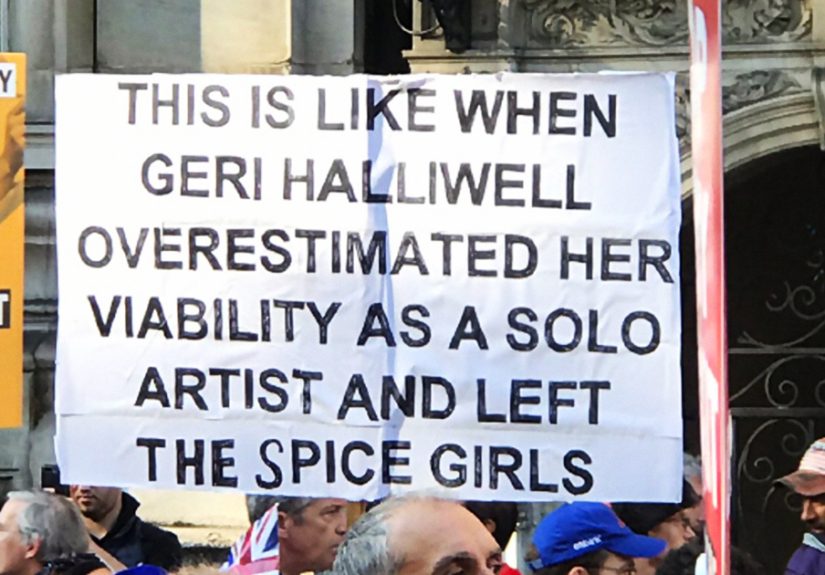
That is what made the funniest anti-Brexit signs so memorable. They were angry, yes, but rarely humorless. They mocked the chaos without flattening it. They punched up at power. They served puns with a side of panic. And most importantly, they gave the anti-Brexit march a personality that felt bigger than party politics. This was protest culture with clever slogans, visual gags, pop-culture references, dogs in tiny outfits, and the occasional sign that could have been written by Oscar Wilde after three espressos and a disappointing parliamentary debate.
If you are looking for the sharpest, weirdest, and most delightfully savage moments from the anti-Brexit march, this list rounds up the funniest sign moments, banners, props, and placards that captured the mood. Some were cheeky. Some were furious. Some were so perfectly British they practically arrived pre-apologized for. All of them proved that when political frustration meets excellent wordplay, cardboard becomes art.
Why the anti-Brexit march was such a gold mine for funny protest signs
The background matters. After the 2016 referendum, Britain spent years wobbling through Brexit negotiations, leadership crises, parliamentary defeats, and enough public confusion to power a thousand explainer threads. By 2018 and 2019, huge “People’s Vote” demonstrations in London had become a major outlet for people who wanted a second referendum or wanted Brexit halted entirely. The crowds were large, the emotions were real, and the sense of absurdity was impossible to ignore.
That absurdity is exactly why the protest signs worked so well. Marchers were responding to a political process that often felt surreal, so surreal humor became the perfect language for it. A standard slogan would not do. Not when the headlines already sounded like satire. Not when a debate about trade and sovereignty had somehow produced national arguments about passports, fish, and emergency tea. The signs were funny because the situation was not. They gave people a way to process frustration without giving up their sanity.
And that is the genius of the best Brexit protest signs: they did not just say “we disagree.” They said, “we disagree, and also please enjoy this expertly deployed cheese pun.”
45 of the funniest anti-Brexit sign moments
- “Fromage not Farage.” A protest classic. It is hard to beat a slogan that manages to insult Nigel Farage while also campaigning aggressively on behalf of cheese.
- “Less Farage, More Fromage.” Proof that one good dairy pun is never enough when the political temperature is high and the marker ink is flowing.
- “Never Gonna Give EU Up.” Rickrolling a constitutional crisis is an elite level protest move. It is catchy, petty, and weirdly hopeful all at once.
- “Stop Brexit, Have Tea.” Nothing says British political resistance like proposing a hot beverage as both a coping mechanism and a national strategy.
- “Brexit is a dog’s breakfast.” This phrase landed because it sounded polite right up until you realized it was absolutely not a compliment.
- “I’m a bit cross.” Understatement deserves its own citizenship. This sign said, “I am furious,” but in the tone of someone mildly inconvenienced by a crooked lampshade.
- “Bollocks to Brexit.” Blunt, famous, and impossible to misunderstand. Sometimes the funniest sign is the one that drops subtlety into the Thames.
- “For U.K.’s sake, stop Brexit.” A tidy wordplay sign that somehow felt both exasperated and responsible, like a pun written by your smartest aunt.
- “Our Turn for a Meaningful Vote.” Dry parliamentary humor should not work this well in a crowd, and yet here we are.
- “May I have my future back please?” The politeness made it sting more. It sounded like a child asking for homework that had been stolen by history.
- “You do not speak for us, Theresa.” Not flashy, not punny, but devastatingly clear. Sometimes the funniest thing in a protest is a perfectly timed reality check.
- “Theresa May is not on our side.” Seen on a stroller sign, this had the energy of a baby already exhausted by Westminster.
- “Ground control to Maybot.” David Bowie references plus prime minister mockery equals a nearly flawless placard ecosystem.
- “In Case of Hard Brexit, Break Glass.” Add teabags behind glass and suddenly your prop sign becomes a museum-grade artifact of national panic.
- “IKEA has better cabinets.” Brutal. Efficient. Flat-packed for maximum damage.
- “What a Clusterfuck.” Vulgar? Yes. Accurate? Also yes. It was the sort of sign that did not need extra decoration because the phrasing did all the heavy lifting.
- “There’s no bigger joke than Brexit.” A sign that understood the assignment: make people laugh and sigh at exactly the same time.
- “We shall not be Mogged!” Jacob Rees-Mogg inspired many things, including this deeply niche and very satisfying verb invention.
- “We hold ALL the cards.” The brilliance here was the callback. Marchers turned a famous Brexit promise into a punchline with no extra effort required.
- “If a democracy cannot change its mind, it ceases to be a democracy.” Not a joke exactly, but when displayed as a giant banner quoting a prominent Brexiteer back at himself, it became a form of political comedy by ambush.
- “17,410,742 people need a good spanking.” One of the most unhinged and unforgettable signs, which is exactly why people remembered it.
- “Our March Is Bigger Than Yours, Nigel.” Playground taunt meets political analysis. Childish in the best possible way.
- “Brexit is grotesque folly.” This one sounded as if an especially literary neighbor had finally snapped and made a poster after reading too much 19th-century satire.
- “One says bollocks to Brexit.” The faux-royal tone made it shine. It felt like Buckingham Palace fan fiction with excellent comedic timing.
- “I’d rather run through a field of wheat.” An all-timer because it transformed a notorious Theresa May quote into public heckling with cardio.
- “Don’t Eurinate on our future.” Lowbrow? Certainly. Effective? Also certainly. Protest humor has room for both democratic ideals and bathroom puns.
- “Pants to Brexit.” Sometimes the laundry does the talking. Strings of underpants turned into anti-Brexit installation art were wonderfully ridiculous.
- The “Breaking Point” remake using The Scream. Art parody was alive and well at the march, and this one managed to ridicule fearmongering with a single visual reference.
- “Take a break from the horror, look at this kitten.” This may be the most emotionally honest sign of the entire era.
- The pie chart showing the chances of Brexit turning out well. Spreadsheet humor has no right to be this funny in the street, yet it absolutely was.
- A dog wearing a “dog’s Brexit” sign. Dogs did not ask to be dragged into geopolitics, but they showed up looking terrific anyway.
- “Put It to the People.” More slogan than joke, but the sheer theatrical confidence of the banner made it a headline in fabric form.
- “I am not a bargaining chip.” One of the sharper signs from the wider anti-Brexit protest movement, especially for EU citizens caught in the political fallout.
- “EU Worker Making Britain Great Again.” A savage little twist on an imported slogan, with just enough bite to leave a mark.
- “Brexit and Trump: Sound the Alarm.” A transatlantic sign for people who felt one political circus was already more than enough.
- Banksy-style shredded poster jokes. Once the famous art shredding entered the cultural bloodstream, protesters wisely turned it into anti-Brexit placard material.
- The giant yellow “Bollocks to Brexit” stickers. Not technically cardboard, but impossible to leave off any list of the funniest anti-Brexit visuals.
- “Fuck Brexit.” Not nuanced, not dressed up, not pretending to be anything other than fed up.
- “Theresa, that’s enough chaos now.” Whether written exactly that way or in spirit, the funniest anti-Brexit signs often sounded like the nation trying to parent its own government.
- The Queen-banner jokes. Protesters repeatedly borrowed royal imagery because almost everything becomes funnier once it looks mildly forbidden.
- The Farage-face roast boards. The exact wording varied, but the message was consistent: if the man gave you years of headline chaos, he was getting cardboard in return.
- The emergency tea props. Again, not a standard sign, but a visual gag so good it deserved diplomatic protection.
- The “meaningful vote” jokes. Protesters took parliamentary jargon and turned it into something people actually wanted to repeat. That alone deserves applause.
- The stroller placards and child-written signs. Nothing sharpened the humor like seeing the future politely objecting to being mismanaged.
- The anti-cabinet jokes. Whether the wording was “better cabinets at IKEA” or a variation on that theme, Britain’s ministers were absolutely not surviving the sign game unscathed.
- The giant quote banners from anti-Brexit campaigners. These worked because they turned past political promises into present-day punchlines without adding a single extra adjective.
What made these Brexit protest signs so effective?
The funniest protest signs from the anti-Brexit march were not random one-liners tossed onto cardboard five minutes before the train arrived. The best of them worked because they layered humor on top of anxiety, and clarity on top of chaos. They let marchers express anger without sounding joyless. They created instant community because one smart pun can unite strangers faster than a ten-point policy brief ever will.
They were also intensely shareable. A clever anti-Brexit sign did not just work in person; it worked in photos, headlines, social posts, and gallery roundups. That mattered. In an era when political messaging travels at image speed, the most successful placards were practically built for the camera. Big letters. Fast payoff. Just enough cultural reference to make people feel in on the joke. This was grassroots communication with meme instincts.
Most of all, the signs reminded everyone that protest does not have to be dour to be serious. Humor did not weaken the anti-Brexit message. It sharpened it. A crowd laughing together is still a crowd making a point, and sometimes laughter is the most efficient way to say, “This entire situation is absurd, and we are not going to pretend otherwise.”
A longer look at the experience behind the signs
To understand why these signs hit so hard, you have to picture the full experience around them. The anti-Brexit march was not just a collection of witty placards floating through London like rogue greeting cards. It was a full sensory event. There were EU flags everywhere, bright blue and gold against gray streets and government stone. There were chants rising, fading, then rising again. There were families, retirees, students, office workers, campaign veterans, and people who looked as if they had never marched in their lives but had finally reached the point where staying home felt more ridiculous than showing up.
And then came the signs, hundreds upon hundreds of them, creating a moving wall of sarcasm. That is what people often miss when they look back at a single viral image. In person, the humor was constant. You would laugh at one sign, turn your head, and immediately see another that was either smarter, ruder, or more bizarre. One poster would make a parliamentary joke. The next would drag Nigel Farage through a fondue pot of puns. The next would feature a dog wearing something with more dignity than half the Cabinet. The crowd did not feel gloomy so much as determinedly unwilling to surrender its sense of humor.
That atmosphere matters because it changed the emotional temperature of the day. Instead of reading as purely bitter, the march felt inventive. People were angry, of course, but they were also performing a kind of civic creativity. The signs gave them a way to participate, not just attend. You did not need a megaphone, a speech slot, or a political title. You needed cardboard, a marker, and maybe one excellent joke about cheese. Suddenly you were part of the public conversation.
There is also something deeply human about seeing humor used as emotional armor. Brexit was not abstract for many of the people marching. It was about work, identity, movement, family, citizenship, and the feeling that major decisions were being made with astonishing sloppiness. That is a lot to carry. A funny sign made that weight bearable for a moment. It let people say, “I am worried,” while still sounding clever. It let them say, “I am furious,” without collapsing into despair.
That is why the funniest anti-Brexit signs still linger in memory. They were not just jokes. They were evidence of a crowd trying to stay lucid in a political drama that often seemed allergic to logic. They showed a public refusing to become numb. Even if someone disagreed with the cause, it was hard not to admire the craftsmanship of the protest humor. These signs were fast, sharp, literate, visual, and very online before “very online” became a personality type. They turned exasperation into performance and made a march feel like a living archive of wit.
Years later, that may be the most lasting image: not just the scale of the anti-Brexit march, but the sound of people laughing at signs in the middle of a very serious argument about their country’s future. It was political theater, public therapy, and national self-mockery all at once. In other words, it was painfully British and weirdly brilliant.
Conclusion
The funniest signs from the anti-Brexit march worked because they understood a simple truth: when politics becomes absurd, satire starts to feel like the most honest language available. These placards and props were not side entertainment. They were part of the message. They exposed contradictions, mocked empty promises, and translated a sprawling constitutional mess into images people could understand in two seconds flat.
That is why these anti-Brexit protest signs still hold up. They were timely, but they were also expertly made. Smart enough to sting. Funny enough to spread. And British enough to apologize for the chaos while actively making fun of it. If nothing else, the anti-Brexit march proved that even in moments of national frustration, public humor can still march at the front of the crowd.