Table of Contents >> Show >> Hide
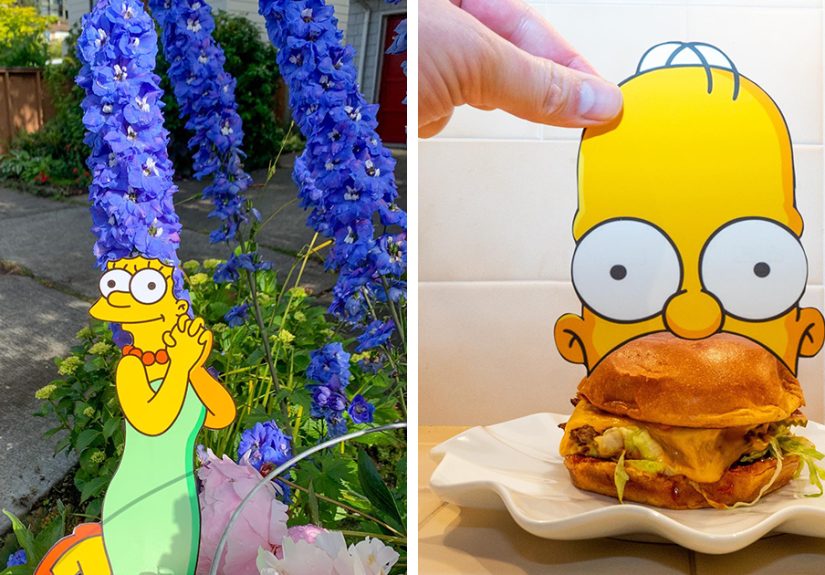
Some art hangs politely on a wall and waits for applause. Paper cutout art does not have that kind of patience. It barges into a skyline, borrows a streetlamp, steals a cloud, and turns an ordinary sidewalk into a punchline. That is the magic of paper cutouts that interact with real life: they are part drawing, part photography, part visual prank, and fully delightful.
What makes this style so irresistible is its low-tech swagger. No giant production budget. No dramatic CGI meltdown. Just paper, scissors, a sharp eye, and the kind of imagination that looks at a bridge and says, “That could absolutely be a guitar.” The result is a form of visual storytelling that feels handmade, playful, and surprisingly smart. It also taps into something older than social media: the long tradition of silhouettes, cut-paper portraiture, and artists using simple materials to create big illusions.
In modern hands, that tradition gets a very fun upgrade. Contemporary creators use cutouts to transform landmarks, sunsets, windows, coffee cups, tree branches, and random objects into scenes that seem to click into place for one perfect second. The best examples do more than look clever. They make you look twice at the world around you. Suddenly, architecture becomes a prop. Nature becomes a collaborator. A boring commute becomes a scavenger hunt for visual jokes.
Why Paper Cutouts Work So Brilliantly in Real Life
The secret is contrast. Paper is flat. Real life is not. When a black silhouette or carefully shaped cutout is held against a bright sky, a building, or a glowing sunset, the eye rushes to complete the story. That tiny gap between what is real and what is imagined is where the charm lives. It is the same mental spark that makes forced perspective photography so satisfying. Your brain knows it is a trick, but it still wants to clap.
There is also a weirdly refreshing honesty to the format. These images are often built with simple physical pieces, not endless digital effects. You can feel the craft in the edge of the paper and the precision in the alignment. That gives the work a warmth that slicker visuals sometimes lose. It feels like invention you could try at home, assuming you have scissors, patience, and the emotional resilience to redo the angle seventeen times.
Most importantly, these cutouts turn everyday places into active scenes. The world stops being background decoration and becomes part of the composition. A park bench is no longer a bench. It is now a pirate ship, a piano, a sleeping dragon, or an overworked office chair for a paper astronaut. Real life does half the drawing. The artist simply knows where to place the missing piece.
47 Brilliant Paper Cutouts That Perfectly Interact With Real Life
Landmarks That Get a Personality Upgrade
- A clock tower becomes the wristwatch of a giant paper figure strolling through the city.
- A bridge turns into the neck of a guitar, complete with a paper hand pretending to strum it.
- A domed building becomes a scoop of ice cream balanced on a paper cone.
- A monument transforms into the candle on a birthday cake no one asked the skyline to bake.
- A Ferris wheel becomes a giant lollipop held by a silhouette with excellent taste.
- A skyscraper slips perfectly into a paper zipper, as if the city is being neatly packed away.
- An arch becomes the open mouth of a cartoon whale made from a simple black cutout.
- A cathedral spire doubles as a sharpened pencil in the hand of an imaginary architect.
- A row of columns becomes piano keys under a paper musician in mid-performance.
- A tower works as the handle of an umbrella during a moody, cloud-heavy afternoon.
- A rooftop line becomes the brim of a giant paper hat tilted at a suspiciously stylish angle.
- A famous sign turns into part of a speech bubble, giving the city a voice at last.
Nature as the Ultimate Scene Partner
- A tree canopy fills the curls of a paper portrait like a wild, leafy hairstyle.
- A sunset glows through the center of a cutout lantern and suddenly the whole sky is lit on purpose.
- Clouds become steam rising from a paper coffee cup held toward the horizon.
- A flock of birds looks like notes escaping from a paper trumpet.
- A full moon becomes the scoop in a paper ice cream cone because subtlety is overrated.
- Autumn leaves finish the gown of a paper fashion sketch with effortless drama.
- A field of flowers turns into the mane of a paper lion staring proudly into the wind.
- Snow on a rooftop becomes whipped cream on a paper dessert illustration.
- A puddle completes the ocean for a paper sailboat after the rain does all the heavy lifting.
- A line of mountains becomes the teeth of a paper saw in a wonderfully ridiculous visual gag.
City Objects That Secretly Want to Be Props
- A streetlamp becomes a fishing rod for a paper figure trying to catch passing headlights.
- A traffic light transforms into dangling earrings on a giant cutout face.
- A bench becomes the seat of a paper roller coaster drawn around the surrounding street.
- A bicycle rack becomes the cage for a paper tiger with exactly zero interest in captivity.
- A fire hydrant turns into the nozzle for a paper elephant’s trunk.
- A mailbox becomes a paper robot’s chest panel, suddenly making the sidewalk feel futuristic.
- A manhole cover works as a skillet in the hands of a paper chef on the curb.
- A stop sign becomes a giant lollipop, paddle, or protest prop depending on the mood of the cutout.
- A construction crane becomes the hook for a paper pirate ship sailing through downtown.
- A row of parked scooters turns into the teeth of a paper monster with urban dental work.
Fashion, Food, and Everyday Drama
- A croissant in a cafe window becomes the hair of a paper profile with Paris-level confidence.
- A pizza slice aligns with a paper moon so perfectly it looks like the night sky skipped dinner.
- A latte foam circle completes the eye of a paper owl perched beside the mug.
- A shopping bag becomes a ball gown once a cutout silhouette frames it the right way.
- A scarf on a coat rack turns into a waterfall through the opening of a paper canyon.
- A stack of books becomes stairs for a paper explorer climbing toward a desk lamp sun.
- A hanging light bulb becomes the balloon for a paper child about to float into the kitchen.
- A pair of sunglasses finishes the face of a paper celebrity sketched into a storefront reflection.
Tiny Visual Jokes With a Big Payoff
- A paper cat appears to swipe at a real bird on a wire, turning a quiet sky into comedy.
- A paper superhero uses a flagpole as a spear while the wind does the special effects.
- A paper monster seems to eat the sun one bite at a time during golden hour.
- A paper hand pinches a distant car, because forced perspective apparently never gets old.
- A paper dancer spins with the help of a fountain spray that looks like a dramatic skirt.
- A paper dragon breathes “fire” thanks to perfectly timed neon signage in the background.
- A paper astronaut uses a round window as a helmet and instantly upgrades a bland wall.
What These Paper Cutouts Really Reveal About Creativity
These brilliant compositions are not just cute visual stunts. They reveal a deeper creative habit: seeing possibility before anyone else does. That is why this genre keeps spreading across photography, illustration, design, and social media. It teaches people to reframe their surroundings instead of waiting for a perfect studio, perfect gear, or perfect day. A cutout artist looks at what is already there and asks a better question: what else could this be?
That mindset is powerful. It makes art feel more democratic, more portable, and more playful. You do not need a gallery to make something memorable. You need observation. You need timing. You need the willingness to look mildly unhinged while holding a scrap of paper in front of a landmark until the angle finally works. Great art, as it turns out, sometimes begins with the willingness to be a little ridiculous in public.
And that is exactly why these paper cutouts stick in the mind. They do not just decorate reality. They collaborate with it. The street, the weather, the skyline, the passing light, the random object on a table, all of it becomes part of the punchline and part of the beauty. The final image feels both spontaneous and carefully engineered, like a joke that took serious discipline to land.
Experiences Inspired by “47 Brilliant Paper Cutouts That Perfectly Interact With Real Life”
Seeing this kind of work in person, or even trying it yourself, changes the way you move through the world. You stop walking past things and start mentally auditioning them. A lamppost is no longer just a lamppost. It is a microphone, a cane, a wand, a giant spoon, or the stem of a paper cherry. A cloud is not just weather anymore. It is smoke from a dragon, whipped cream on a pie, or a thought bubble over a paper face. Once your brain catches the habit, there is no going back. Reality becomes suspiciously cooperative.
That experience is part of the joy. It feels playful in a way adult life often forgets to be. Most people spend their day being practical, efficient, and mildly annoyed by email. Paper cutout art interrupts that whole routine with a very different question: what would happen if imagination got first dibs? The answer is usually something funny, a little poetic, and weirdly memorable.
There is also a tactile pleasure to the process that digital art cannot fully replace. You sketch an idea. You cut the paper. You trim a curve that looked smarter in your head. You hold it up. It fails spectacularly. You trim again. Then suddenly the edge of the cutout locks into the edge of a building, the sun lands exactly where you wanted it, and the whole thing clicks. That tiny moment of alignment feels absurdly satisfying, like solving a visual riddle that the world did not know it was asking.
Even the mistakes become part of the experience. Wind bends the paper. People walk through the shot. Light changes too quickly. Your hand cramps. You discover that what looked like a graceful swan on your desk now resembles a confused potato in public. Yet all of that trial and error makes the successful image better. The final scene carries the evidence of patience. It looks effortless only because effort has already done its job.
For viewers, the experience is different but just as rewarding. There is a split-second of confusion, then recognition, then delight. First you see the real place. Then you see the paper intervention. Then your brain snaps the two together and you get the joke. That sequence is a big reason these images are so shareable. They invite participation. The audience gets to finish the illusion mentally, and that makes the image feel interactive even on a screen.
On a more personal level, paper cutout art can make everyday life feel less repetitive. It trains attention. It rewards wandering. It makes you notice shapes, shadows, gaps, outlines, and small absurd opportunities hiding in plain sight. In a culture obsessed with bigger, faster, louder visuals, there is something refreshing about an art form that can still wow people with paper, scissors, and a sharp sense of timing. It reminds us that creativity is not always about adding more. Sometimes it is about removing just enough material for the world behind it to become the star.
That may be the best thing about these real-life paper cutouts. They do not ask us to escape the ordinary world. They ask us to look at it differently. And once you do, the ordinary world gets a lot less ordinary.
Conclusion
“47 Brilliant Paper Cutouts That Perfectly Interact With Real Life” is more than a catchy roundup title. It points to a whole way of seeing. These works succeed because they combine old-school craft with modern wit, physical materials with photographic timing, and simple silhouettes with wildly imaginative outcomes. They prove that paper is not fragile in the hands of a good idea. It is powerful. It can reshape a skyline, hijack a sunset, and make a familiar street feel brand new. Not bad for a material most people associate with grocery lists and overdue receipts.