Table of Contents >> Show >> Hide
Closet upgrades are a little like juice cleanses and trendy kitchen gadgets: they sound wildly promising, look fabulous on the internet, and sometimes make your real life slightly worse. One minute you’re dreaming of a boutique-style dressing space. The next, you’re shimmying sideways past a built-in island just to reach your black pants. Glamorous? Not exactly.
If your goal is a closet that feels bigger, works harder, and doesn’t turn every morning into a scavenger hunt, the smartest move is not always adding more. It’s choosing storage that fits your wardrobe, your square footage, and your actual habits. Professional organizers and closet designers keep coming back to the same point: the best closet organization ideas are flexible, space-saving, and easy to maintain. The worst ones are usually rigid, bulky, or designed more for a showroom than a Tuesday morning.
Below are six closet “upgrades” that can quietly waste valuable room, plus better ways to create a more functional, less frustrating space.
Why Some Closet Upgrades Backfire
People often assume that a fancier closet automatically means a better one. But a closet is not a museum exhibit for your sweaters. It is a working storage zone. That means every rod, shelf, basket, and drawer has to earn its keep.
In smaller reach-ins and modest walk-ins, wasted space usually shows up in three ways: unused vertical room, bulky built-ins that eat the floor plan, and storage components that only work for one very specific item. When that happens, the closet may look polished at first glance but perform terribly in everyday use. And performance matters. A closet that is hard to use becomes messy fast.
That’s why organizers tend to prefer adjustable shelves, slimmer hangers, double hanging zones, clearly sized bins, and layouts that can change as your wardrobe changes. In other words, the real luxury is not a closet that looks expensive. It’s a closet that doesn’t fight you before coffee.
1. Center Islands
A center island is the poster child for the dream closet. It suggests space, elegance, and the kind of life where your scarves are probably arranged by mood. But in many homes, this upgrade eats up more room than it gives back.
In a large custom walk-in, an island may make sense. In a standard walk-in or tighter dressing area, though, it can turn the middle of the closet into a traffic jam. Suddenly, the space you need for opening drawers, stepping back to see clothing, or simply moving around gets swallowed by a big block in the middle of the room.
That means the closet may feel more luxurious in theory while becoming less usable in practice. A crowded center path also makes shared closets more awkward, because one person is always trying to pass while the other is bent over looking for shoes.
What to do instead
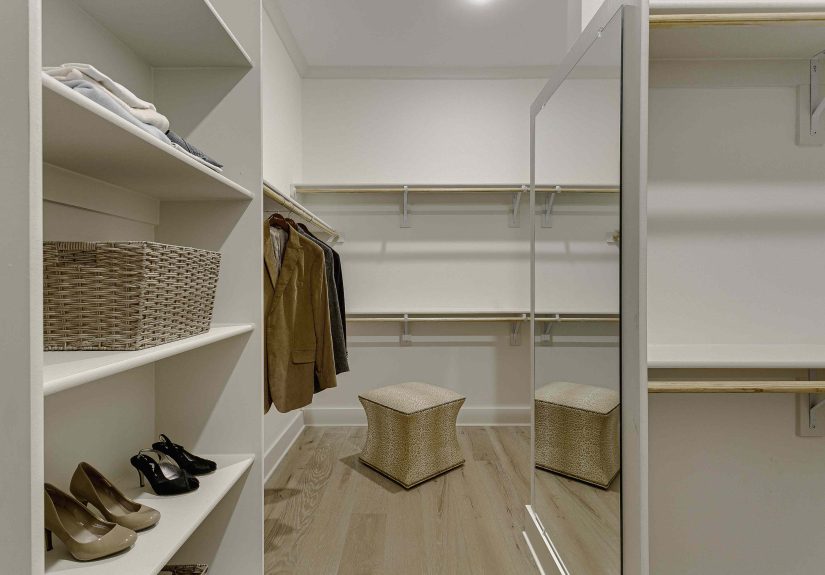
Use the center of the closet as breathing room and push storage to the perimeter. A slim dresser in the bedroom, a shallow wall-mounted organizer, or a built-in along one side often delivers more function without stealing movement space. If you want that polished custom-closet look, add better lighting, matching hangers, labeled bins, or a mirrored door. Your closet will still look elevated, just without the obstacle course.
2. Built-In Dressers
Built-in dressers sound efficient because they keep everything together in one place. In reality, they can be one of the quickest ways to lose flexible closet space. They take up a large footprint, lock you into one storage format, and often replace areas that could be used for hanging clothes, adjustable shelving, or stackable bins.
This matters because clothing storage is not one-size-fits-all. Some people fold almost nothing. Some hang nearly everything. Some rotate seasonal items constantly. A built-in dresser assumes your drawer needs will stay the same forever, which is a bold assumption for anyone who has ever gone through one lifestyle change, one move, or one online sale they slightly regret.
There’s also a maintenance problem: drawers can become black holes. Once they’re overstuffed, they stop gliding well, visibility drops, and your “organized” closet becomes the natural habitat of lost tank tops and mystery socks.
What to do instead
Keep drawer storage separate and flexible when possible. A freestanding dresser in the bedroom, stackable drawer units on a shelf, or a mix of baskets and shallow bins usually gives you more options. That setup is easier to rearrange later and lets you dedicate prime closet space to the categories that benefit most from being visible, like shirts, jackets, dresses, and everyday pants.
3. Shoe Cubbies
Shoe cubbies look neat, tidy, and deeply satisfying on social media. The problem is that shoes are gloriously inconsistent. Sneakers, ankle boots, flats, heels, and loafers do not all need the same amount of space. Yet fixed cubbies treat them as if they signed a sizing agreement beforehand.
That mismatch creates dead air. Some openings are too tall for flats, too short for boots, or just awkward enough to waste room around the edges. Multiply that across an entire closet and suddenly your “smart” shoe wall is basically a collection of tiny, expensive parking spaceshalf of them poorly sized.
Another issue is flexibility. If your shoe collection changes, fixed cubbies cannot adapt. The storage stays the same even when your needs do not. That is the opposite of good closet design.
What to do instead
Choose adjustable shoe shelves, slanted shelves, or simple stacked shoe bins sized to your actual collection. Even a low-profile shoe rack under shorter hanging garments can be more efficient than a full wall of cubbies. The key is matching storage to what you own now, not to an imaginary future where every shoe behaves identically.
4. Built-In Hampers
Built-in hampers get marketed as sleek, clean, and custom. And yes, they can look wonderfully streamlined. But that built-in status is also their weakness. Once a hamper is fixed into the system, its size and location are fixed too.
That can be a problem if your laundry habits change, your household grows, or you realize the hamper occupies a spot that would be better used for hanging storage, folded denim, or accessory bins. Some built-in hampers also hold less than people expect, which means laundry spills into baskets on the floor anyway. At that point, the closet has both less storage and a rogue laundry problem. A true overachiever.
What to do instead
Go with removable hampers, pull-out baskets, or a designated laundry zone that can shift as needed. Flexibility wins here. A hamper should serve your routine, not permanently annex one of the most useful parts of your closet.
5. Too Many Shelves
Shelves are great. Too many shelves are not. This is one of the most common custom closet mistakes because shelving feels productive. Add another shelf, and it seems like you’ve added storage. But shelves only help when the items on them remain visible, reachable, and stable.
When closets get overloaded with shelves, the result is often tall stacks of folded clothing, cramped spacing, visual clutter, and less room for hanging garments that stay neater on a rod. Sweaters topple. T-shirts blur together. Handbags get jammed into odd corners. Nothing looks calm, and nothing is easy to grab.
There’s also a bigger design issue: over-shelving can crowd out the hanging zones that keep everyday clothing tidy. Many wardrobes need more rod space than people think, especially for blouses, jackets, dresses, trousers, and even graphic tees that wrinkle less when hung.
What to do instead
Create a balanced closet layout. Use shelving for folded sweaters, jeans, bags, and a few contained accessories, but preserve enough hanging space for the items you wear most. In many closets, a double-rod setup is far more efficient than adding another shelf. A little open air between categories also makes the whole space easier to maintain.
6. Shelving You Can’t Adjust
Fixed shelves are the closet equivalent of buying pants with no waistband forgiveness. They look crisp and intentional, but the moment your needs change, the trouble begins. Maybe your handbags are taller than expected. Maybe your folded jeans need a wider stack. Maybe you switch from sandals to boots and the whole arrangement falls apart.
Non-adjustable shelving works best for a perfectly stable storage system. Most real closets are not perfectly stable. Our wardrobes change with the seasons, with work, with hobbies, with body changes, with family life, and with the occasional phase where we become extremely committed to linen for no clear reason.
When shelves cannot move, you end up storing short things in tall spaces, tall things in cramped spaces, and random overflow in whatever gap is left. That’s wasted vertical space in its purest form.
What to do instead
Choose adjustable shelves whenever possible. They make a closet more future-proof and help you maximize every inch over time. Pair them with bins that fit the shelf height and width properly, and avoid containers that are bulky, tapered, or decorative but inefficient. Good closet storage should be easy to rework, not locked into a single version of your life.
The Smarter Closet Upgrades That Actually Save Space
If you’re trying to improve closet organization without accidentally making it worse, focus on upgrades that are flexible and low bulk. Slim hangers create a more uniform hanging line and take up less rod space. Double rods multiply storage for shorter garments. Adjustable shelves help you adapt to changing needs. Properly measured bins keep small items contained without wasting shelf capacity. And rotating out-of-season clothing can instantly free up room without a single drill or dramatic declaration.
Also, do not underestimate the power of empty space. A closet does not need every inch filled to be successful. In fact, a little room to move, see, and put things back is often what makes the system last.
What People Usually Experience After These “Upgrades”
Here’s the part that feels painfully familiar to a lot of people: the closet upgrade goes in, everything looks amazing for about six days, and then reality shows up wearing boots and carrying three dry-cleaning bags.
The island becomes a drop zone for handbags, shopping bags, unopened mail, and the cardigan you wore for nine minutes because the weather lied. The built-in dresser fills with oddly folded leggings, tangled belts, and that one camisole you swear exists but can never locate. Shoe cubbies look adorable until a couple of pairs don’t fit right, a few seasonal shoes get shoved elsewhere, and the whole grid starts looking like a game of organizational Tetris gone wrong.
People also discover that fixed shelves are great right up until they aren’t. Maybe you bought more sweaters. Maybe your work wardrobe changed. Maybe you stopped commuting and suddenly own fewer blazers and more soft pants. A rigid closet system does not care. It just sits there, being expensive and inflexible while you try to make a tall shelf work for short clutches and a short shelf work for bulky knits.
One of the most common experiences, though, is visual overload. Closets with too many built-ins can feel “finished,” but not necessarily calm. When every inch is divided into a compartment, the space can start to feel crowded even when it is technically organized. That makes it harder to reset after laundry day, harder to see what you own, and much easier to give up and drape three outfits over a chair like a normal exhausted human.
On the flip side, people who simplify their closets usually notice the same happy changes. They can see more. They can reach more. They stop buying duplicates because nothing gets lost in the shuffle. Their clothes wrinkle less because garments have room to hang properly. Their shelves stay neater because they are not stacked to the ceiling like a department store during a fire sale.
There’s also a psychological benefit that doesn’t get enough credit. A closet that works well reduces friction. Getting dressed becomes faster. Putting laundry away becomes less annoying. You are more likely to maintain a system that feels intuitive than one that feels like a tiny home-improvement thesis project.
That is really the heart of good closet design: not squeezing in the most components, but creating the least resistance. The best closets are not necessarily the fanciest ones. They are the ones that make daily life easier. They leave room for change. They leave room for movement. And, blessedly, they leave room for your actual clothes instead of a bunch of bulky “upgrades” that looked better in a showroom than they ever did in your house.
So if you’re planning a closet refresh, take a beat before saying yes to every custom feature. Ask whether the piece is flexible, whether it suits your wardrobe, and whether it helps you store more without boxing you in. If the answer is no, skip the faux luxury and choose the boring-sounding solution that quietly works. In closet design, boring is often beautiful. And spacious is always in style.
Conclusion
The best closet upgrades are the ones that make your space feel lighter, not busier. Center islands, built-in dressers, rigid hampers, shoe cubbies, over-shelving, and fixed shelves can all look impressive, but they often waste the very thing you are trying to gain: usable space.
If you want a closet that stays organized for the long haul, build around flexibility. Prioritize adjustable storage, enough hanging room, thoughtfully sized bins, and layouts that match your real wardrobe. Because when a closet works with your life instead of against it, you don’t need as many upgrades. You just need better choices.