Table of Contents >> Show >> Hide
- What Makes a Pizza Healthier?
- Recipe 1: Garden Party Whole-Wheat Veggie Pizza
- Recipe 2: Mediterranean Pita Pizza with Spinach, Tomato, and Feta
- Recipe 3: Chicken Pesto Pizza with Roasted Red Peppers
- Recipe 4: Margherita-Style Tomato Basil Pizza
- Recipe 5: Cauliflower Crust Rainbow Veggie Pizza
- Recipe 6: White Pizza with Mushrooms, Arugula, and Ricotta
- Smart Tips for Making Any Pizza Healthier
- Why Homemade Healthy Pizza Beats Delivery
- Extra Experience: What Healthy Pizza Night Actually Feels Like
- Conclusion
- SEO Tags
There are two kinds of pizza nights. The first ends with a greasy cardboard box, a tiny cup of mystery ranch, and the faint feeling that your vegetables filed a missing persons report. The second starts in your kitchen, smells amazing, and somehow manages to taste indulgent and feel smart. This article is for Team Second Pizza Night.
Healthy pizza recipes do not have to mean sadness on toast. In fact, once you learn a few simple tricks, pizza becomes one of the easiest comfort foods to make lighter, fresher, and more balanced. Think whole-wheat or thin crust, colorful vegetables, sensible amounts of cheese, and proteins that do not arrive wearing a salt cape. The result is homemade pizza that is crisp, flavorful, satisfying, and far more customizable than delivery.
Below, you’ll find six healthy pizza ideas that prove a better-for-you pie can still taste like a reward. Some are classic. Some are slightly sneaky. All are built for real life, real kitchens, and real cravings. Whether you are cooking for your family, meal-prepping for the week, or just trying to avoid spending twenty bucks on a pizza that arrives lukewarm and emotionally unavailable, these recipes are ready to help.
What Makes a Pizza Healthier?
Before the toppings start flying, let’s define the mission. A healthier pizza usually checks a few boxes: a crust with more fiber or a smaller portion, a sauce that is not overloaded with sodium or sugar, plenty of vegetables, a moderate hand with cheese, and protein choices that do not bring a ton of saturated fat and sodium to the party.
That does not mean every pizza needs to be low-carb, dairy-free, joy-free, and baked under strict supervision. It simply means you build your pizza more intentionally. A thin whole-wheat crust can give you that classic chew with a little more substance. Roasted vegetables add bulk, color, and flavor. Part-skim mozzarella still melts beautifully. And when you choose ingredients with care, you can make pizza night feel a lot less like a cheat meal and a lot more like a smart favorite.
Recipe 1: Garden Party Whole-Wheat Veggie Pizza
This is the pizza that makes you feel like you have your life together, even if you are wearing socks that do not match. It is bright, colorful, and packed with vegetables, but it still delivers that melty, savory, pizza-shop satisfaction.
Why it works
A whole-wheat crust adds a nuttier flavor and more fiber, while the veggie mix gives every bite texture and freshness. Using part-skim mozzarella keeps things lighter without sacrificing the stretch factor.
Ingredients
- 1 prepared whole-wheat pizza dough or crust
- 1/2 cup no-salt-added pizza sauce
- 1 cup part-skim mozzarella, shredded
- 1/2 red bell pepper, thinly sliced
- 1/2 yellow bell pepper, thinly sliced
- 1 small zucchini, thinly sliced
- 1/2 small red onion, thinly sliced
- 1 cup mushrooms, sliced
- 1 teaspoon olive oil
- 1 teaspoon dried Italian seasoning
- Fresh basil for serving
How to make it
- Preheat your oven to 450°F.
- Toss the peppers, zucchini, onion, and mushrooms with olive oil and Italian seasoning.
- Spread the pizza sauce over the crust.
- Add the mozzarella, then pile on the vegetables.
- Bake for 12 to 15 minutes, or until the crust is crisp and the cheese is bubbly.
- Finish with torn basil and let it cool for two minutes before slicing.
Make it even better
Roast the vegetables for 8 minutes before adding them to the pizza if you want deeper flavor and less moisture. This small step can save you from the dreaded soggy middle slice.
Recipe 2: Mediterranean Pita Pizza with Spinach, Tomato, and Feta
Need healthy pizza fast? Pita pizzas are the superhero of busy weeknights. They are crisp, portion-friendly, and ready before your phone can even suggest three delivery apps.
Why it works
Whole-wheat pita makes an easy crust, and Mediterranean toppings bring big flavor from tomatoes, spinach, olives, feta, and herbs. Since the toppings are naturally punchy, you can use less cheese and still get a bold result.
Ingredients
- 2 whole-wheat pitas
- 1/3 cup tomato sauce or tomato paste thinned with a little water
- 1/2 cup baby spinach
- 1 small Roma tomato, chopped
- 2 tablespoons sliced olives
- 1/3 cup reduced-fat mozzarella
- 2 tablespoons crumbled feta
- 1 teaspoon olive oil
- 1/2 teaspoon oregano
- Black pepper to taste
How to make it
- Preheat the oven to 400°F.
- Place the pitas on a sheet pan and brush lightly with olive oil.
- Spread on the sauce, then top with spinach, tomato, olives, mozzarella, and feta.
- Sprinkle with oregano and black pepper.
- Bake for 8 to 10 minutes until crisp and golden.
Why you’ll crave it
The salty brininess of olives and feta does a lot of the heavy lifting, which means you do not need pepperoni to make the pizza interesting. It is quick, lively, and tastes like you made lunch at a cute little café instead of over your sink at 1:07 p.m.
Recipe 3: Chicken Pesto Pizza with Roasted Red Peppers
This one is for people who hear the words “lean protein” and immediately worry they are about to eat something dull. Relax. Pesto is here, and it did not come to play.
Why it works
Using a prepared whole-wheat crust keeps the process easy, while cooked chicken adds satisfying protein. Roasted red peppers and pesto bring richness and brightness, so a moderate amount of cheese is all you need.
Ingredients
- 1 whole-wheat pizza crust
- 1/3 cup basil pesto
- 3/4 cup cooked chicken breast, shredded or diced
- 1/2 cup roasted red peppers, sliced
- 3/4 cup part-skim mozzarella
- 2 tablespoons soft goat cheese or ricotta
- 1 tablespoon chopped fresh parsley or basil
How to make it
- Preheat oven to 425°F.
- Spread pesto over the crust.
- Scatter chicken and roasted peppers evenly.
- Add mozzarella and small dollops of goat cheese or ricotta.
- Bake for 10 to 12 minutes until hot and bubbly.
- Top with fresh herbs before serving.
Pro tip
If your pesto is very rich, thin it with a teaspoon of olive oil or a spoonful of water so it spreads more evenly. This keeps the pizza flavorful without becoming a green slip-and-slide.
Recipe 4: Margherita-Style Tomato Basil Pizza
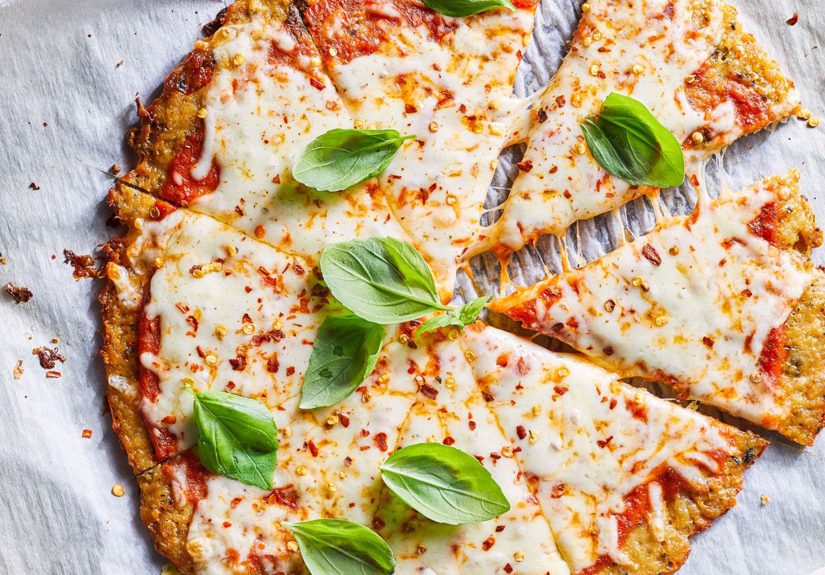
Sometimes the healthiest move is not adding more stuff. It is letting a few good ingredients shine. This Margherita-style pizza proves that fresh tomatoes, basil, garlic, and a restrained amount of cheese can still taste luxurious.
Why it works
A simpler topping list helps keep calories and sodium in check. Fresh tomato flavor, basil, and garlic make the pizza feel elegant rather than stripped down.
Ingredients
- 1 thin whole-wheat or thin-crust pizza dough
- 1/2 cup no-salt-added tomato sauce
- 1 clove garlic, minced
- 3/4 cup part-skim mozzarella or fresh mozzarella used lightly
- 2 medium tomatoes, thinly sliced
- Fresh basil leaves
- 1 teaspoon olive oil
- Pinch of red pepper flakes, optional
How to make it
- Heat oven to 450°F.
- Spread the sauce over the dough and sprinkle with garlic.
- Add the cheese in a light, even layer.
- Arrange tomato slices on top and brush them lightly with olive oil.
- Bake 10 to 14 minutes until crisp.
- Top with basil and red pepper flakes after baking.
Best use case
This is your go-to when the farmers market was feeling generous or your fridge contains tomatoes that are exactly 24 hours away from becoming “a sauce situation.”
Recipe 5: Cauliflower Crust Rainbow Veggie Pizza
Let’s clear something up: cauliflower crust is not “better” just because it exists. Some store versions are surprisingly high in calories or sodium. But a well-made cauliflower crust pizza can absolutely be delicious, especially when you want a lighter-feeling base and a mountain of vegetables on top.
Why it works
The crust feels hearty enough to hold toppings, while the rainbow of vegetables adds crunch, volume, and visual appeal. This is the pizza equivalent of cleaning up nicely for dinner.
Ingredients
- 1 prepared cauliflower crust
- 1/3 cup tomato puree or light pizza sauce
- 1/2 cup part-skim mozzarella
- 1/4 cup Parmesan, used lightly
- 1/4 cup broccoli florets, chopped small
- 1/4 cup shredded carrots
- 1/4 cup red bell pepper, diced
- 1/4 cup yellow bell pepper, diced
- 1/4 cup red onion, thinly sliced
- 1 teaspoon Italian seasoning
How to make it
- Bake the cauliflower crust according to package directions until lightly crisp.
- Top with sauce, mozzarella, vegetables, Parmesan, and Italian seasoning.
- Return to the oven for 8 to 10 minutes until the cheese melts and the vegetables soften.
Important reality check
Read the label. Not all cauliflower crusts are a nutritional slam dunk. Some are loaded with cheese, starches, or sodium. If the ingredient list reads like a chemistry exam, a simple whole-wheat crust may actually be the smarter choice.
Recipe 6: White Pizza with Mushrooms, Arugula, and Ricotta
This is the fancy-feeling pizza for nights when you want something cozy but grown-up. It skips red sauce and leans into garlic, mushrooms, creamy ricotta, and peppery arugula.
Why it works
Mushrooms bring savory depth, arugula adds freshness, and ricotta offers creaminess without needing a heavy blanket of cheese. It is rich in flavor, not excess.
Ingredients
- 1 thin whole-wheat pizza crust
- 1 teaspoon olive oil
- 1 garlic clove, minced
- 1 cup mushrooms, sliced
- 1/2 cup part-skim mozzarella
- 1/3 cup ricotta
- 1 cup arugula
- 1 tablespoon grated Parmesan
- Black pepper
- Optional squeeze of lemon
How to make it
- Preheat oven to 450°F.
- Sauté mushrooms in olive oil with garlic for 4 to 5 minutes to release moisture.
- Top the crust with mozzarella, mushrooms, and small spoonfuls of ricotta.
- Bake for 10 to 12 minutes.
- After baking, add arugula, Parmesan, black pepper, and a tiny squeeze of lemon.
Flavor note
This pizza tastes restaurant-level impressive, which is especially satisfying when you realize you made it yourself and did not tip anybody.
Smart Tips for Making Any Pizza Healthier
- Choose thin or whole-wheat crust: You get great texture with less heaviness and often more fiber.
- Load up on vegetables: Peppers, spinach, mushrooms, onions, broccoli, tomatoes, and zucchini add flavor and volume.
- Use cheese strategically: A moderate amount of flavorful cheese often tastes better than a thick blanket of blandness.
- Go easy on processed meats: Pepperoni, sausage, and bacon can add lots of sodium and saturated fat quickly.
- Watch the sauce: Choose no-salt-added or lower-sodium sauces when possible.
- Add lean protein: Chicken, beans, or a small amount of turkey can make pizza more filling.
- Pre-cook watery vegetables: Mushrooms, zucchini, and onions often taste better and keep the crust crisp.
Why Homemade Healthy Pizza Beats Delivery
Delivery has convenience, sure. But homemade healthy pizza wins on control, freshness, and creativity. You decide how much cheese goes on, which vegetables get invited, and whether the crust is thick, thin, whole-wheat, pita-based, or cauliflower-backed. You also avoid the all-too-common restaurant problem where one slice quietly contains a heroic amount of sodium and grease.
There is also the satisfaction factor. Making pizza at home turns dinner into an experience. You smell the garlic. You hear the crust crisp. You argue over whether pineapple belongs here. You feel like a person who has mastered at least one small part of adulthood. That is worth something.
Extra Experience: What Healthy Pizza Night Actually Feels Like
The funniest thing about switching to healthy homemade pizza is that nobody in the house ever reacts the way you expect. You think people will say, “Wow, what a nutritious and balanced reinterpretation of a familiar favorite.” What they actually say is, “Wait, why is this so good?” That is the moment you know you have won.
Healthy pizza night usually starts with skepticism. Someone sees spinach on the counter and assumes a crime is being committed. Someone else hears the phrase “whole-wheat crust” and acts as if you just announced dessert will now be a lecture. Then the pizza comes out of the oven, the cheese bubbles, the edges brown, the kitchen smells like garlic and basil, and suddenly everyone becomes very open-minded.
One of the best parts is how interactive it can be. If you have kids, they can top their own pita pizzas and feel like tiny celebrity chefs with absolutely no concept of cleanup. If you live alone, you can make two personal pizzas and enjoy the luxury of having leftovers that actually taste exciting the next day. If you are cooking with a partner or friends, pizza night turns into an assembly line of chopping, laughing, tasting, and arguing about olives in the most civilized way possible.
There is also something oddly empowering about learning how to build a balanced pizza. Once you figure out that a handful of arugula, some roasted vegetables, and a lighter touch with cheese can still create a deeply satisfying meal, takeout starts to lose a little of its sparkle. Suddenly, delivery feels expensive, overly salty, and weirdly limited. You realize that your own kitchen can turn out pizzas that are fresher, prettier, and more tailored to what you actually want to eat.
The experience gets even better over time because you start noticing your own patterns. Maybe you discover that mushrooms need to be sautéed first or they waterlog your masterpiece. Maybe you realize feta is powerful and should be treated like a dramatic supporting actor, not the entire cast. Maybe you find that thinly sliced red onion gives you that pizzeria flavor boost without needing processed meat. These little discoveries make each pizza night better than the last.
And then there is the practical side. Healthy pizza recipes make weeknights easier. You can prep vegetables ahead, keep whole-wheat pitas in the pantry, stash a good crust in the freezer, and use leftover chicken or extra spinach before it goes sad in the crisper drawer. Pizza becomes less of a splurge and more of a dependable meal strategy. That might not sound glamorous, but honestly, dependable meals are one of adulthood’s most underrated luxuries.
Even better, healthy pizza does not feel like diet food. It feels like real food that happens to be built intelligently. You still get crisp crust, savory sauce, creamy cheese, and all those familiar pizza flavors. The difference is that you are adding freshness, balance, and enough color to convince yourself you are thriving. Sometimes that is half the battle.
So yes, you may still order delivery once in a while. Nobody is taking away your emergency Friday night safety net. But after a few rounds of homemade veggie-loaded, flavor-packed, healthy pizza, you may find yourself reaching for the dough instead of the app. And that is when you know these recipes are doing exactly what they promised: making pizza night taste so good, delivery starts feeling optional.
Conclusion
These six healthy pizza recipes prove that you do not need to choose between comfort food and smart eating. With better crust options, flavorful vegetables, lighter cheese, and balanced toppings, homemade pizza can be every bit as craveable as takeout. Maybe even more so, because it is hot from your oven, customized to your mood, and blissfully free of delivery fees.
So the next time pizza cravings hit, skip the app. Grab a crust, raid the vegetable drawer, and make a pie that tastes like a win.