Table of Contents >> Show >> Hide
- Quick Answer: Yes, But Not Every Portable Fire Pit Is a Grill
- What Decides Whether a Portable Fire Pit Can Be Used for Cooking?
- Best Ways to Cook on a Portable Fire Pit
- What Foods Work Best on a Portable Fire Pit?
- Portable Fire Pit Cooking Safety: The Part That Actually Matters
- Common Mistakes People Make
- Portable Fire Pit vs. Portable Grill: Which One Is Better for Cooking?
- So, Can You Cook on a Portable Fire Pit?
- Field Notes: Real Experiences Cooking on Portable Fire Pits
- Conclusion
Absolutely, yes, sometimes. And that tiny word sometimes is doing a shocking amount of heavy lifting.
A portable fire pit can be a fantastic place to cook dinner, toast marshmallows, or turn a boring campsite meal into something that feels suspiciously gourmet. But not every portable fire pit is designed for cooking, and treating all of them like backyard grills is how people end up with scorched sausages, soot-covered food, or a campground host giving them the kind of stare usually reserved for raccoons stealing hot dog buns.
If you have been wondering whether you can cook on a portable fire pit, the real answer depends on three things: the fuel, the design, and the rules where you are using it. Some wood-burning and charcoal-friendly models are perfectly capable of handling burgers, foil packets, skewers, and cast-iron meals. Others are meant only for heat and ambiance. And propane fire pits, especially decorative fire tables, are often the biggest source of confusion because they look cookable while quietly whispering, “Please do not put your steak on me.”
This guide breaks down what works, what does not, what foods are best, and how to cook safely without turning dinner into a smoky chemistry experiment. If you love camping, tailgating, backyard hangs, or any meal that tastes slightly better just because you made it outside, this is for you.
Quick Answer: Yes, But Not Every Portable Fire Pit Is a Grill
You can cook on a portable fire pit if the model is designed to support cooking or can safely use a grill grate, cast-iron cookware, or manufacturer-approved cooking accessories. In general, wood-burning and charcoal-capable fire pits are the best fit for actual cooking because they create real coals and radiant heat. That makes them useful for direct grilling, indirect heat, and classic campfire cooking methods.
Portable propane fire pits are a different story. Many of them are designed mainly for warmth, smoke reduction, and convenience, not for preparing food. That does not stop people from holding a marshmallow over one and declaring themselves outdoor chefs, but there is a difference between a light roast and a full dinner service. If a propane model does not specifically say it is safe for cooking, assume it is not your dinner station.
Think of it this way: some portable fire pits are basically camp kitchens with a dramatic personality. Others are decorative flames with commitment issues.
What Decides Whether a Portable Fire Pit Can Be Used for Cooking?
1. Fuel Type Matters More Than Most People Realize
The easiest way to sort portable fire pits into the “cook on it” and “please do not” categories is by fuel type.
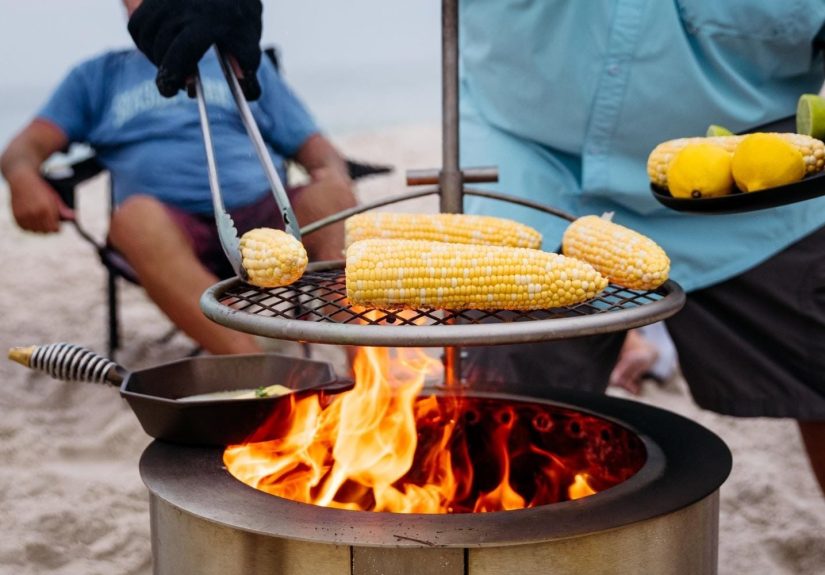
Wood-burning fire pits are often the most versatile for outdoor cooking. They create the kind of high, lively heat people associate with traditional campfire meals. Once the fire settles into hot coals, you can cook with a grate, a tripod, a Dutch oven, skewers, or a cast-iron pan. Wood also gives food that classic live-fire flavor that makes even a simple onion feel like it graduated from culinary school.
Charcoal-capable fire pits are also excellent for cooking. Charcoal tends to provide a more even and predictable heat than logs, which is helpful when you are making burgers, chicken, or vegetables and do not want one side burned while the other side still looks emotionally undercooked.
Propane fire pits are the trickiest. Some propane-based outdoor cooking products are absolutely designed for food, but many portable propane fire pits and fire tables are not. They are often certified and marketed as heating appliances, not grills. That means they may lack the proper cooking surface, grease handling, or manufacturer approval for preparing food. If you do not see explicit instructions for cooking, do not improvise just because the flame seems friendly.
2. Design Matters Just as Much as the Flame
Even if a portable fire pit burns wood or charcoal, design still matters. A cook-friendly model usually has one or more of the following:
- a stable grill grate or compatible cooking grate
- a safe way to position cookware over the heat
- enough height between flame and food for temperature control
- good airflow and stability on level ground
- manufacturer-approved accessories for grilling or cast-iron cooking
If your fire pit is basically a low bowl of flames with no practical way to support food or cookware, it may be fine for roasting hot dogs on sticks, but not ideal for cooking a real meal. That is not a flaw. It just means the product is more “campfire vibe curator” than “portable outdoor kitchen.”
3. Location Rules Can Override Everything
Here is the part many people forget: even if your portable fire pit can cook, you still have to follow local rules. National parks, state parks, beaches, campgrounds, and public lands often restrict which types of fires are allowed, when they are allowed, and where they are allowed. During dry or high-risk periods, wood and charcoal fires may be banned while propane stoves or gas fire pits remain permitted. In some places, fires are allowed only in designated fire rings or park-provided grates.
So yes, your portable fire pit may be ready to cook. The campground may still say, “Not today, chef.” Always check current fire restrictions before you pack food that depends on open flame.
Best Ways to Cook on a Portable Fire Pit
If your fire pit is truly cooking-friendly, you have several solid options.
Grill Grate Cooking
This is the most obvious method and the most satisfying when you want classic fire pit meals. With a stable grate, you can cook burgers, sausages, steaks, corn, peppers, onions, and kebabs. The trick is to cook over established heat, not giant flames. If you try grilling while the fire is still doing its dramatic inferno phase, you are not cooking dinner. You are conducting a carbonization experiment.
Cast-Iron Cooking
A cast-iron skillet or Dutch oven turns a portable fire pit into a surprisingly capable camp kitchen. You can make chili, beans, breakfast hash, cornbread, fajitas, or even fruit crisp. Cast iron handles heat beautifully, holds temperature well, and forgives a lot of outdoor chaos. Windy evening? Uneven coals? Someone forgot the tongs? Cast iron remains emotionally stable.
Foil Packet Meals
Foil packets are the low-drama heroes of portable fire pit cooking. Add sliced potatoes, onions, sausage, shrimp, chicken, or vegetables, seal tightly, and cook over coals. Cleanup is easy, portions are simple, and everyone gets to build their own meal like a tiny outdoor restaurant where the chef is also the dishwasher.
Skewers and Roasting Sticks
For quick foods, skewers are hard to beat. Hot dogs, brats, shrimp, peppers, mushrooms, pineapple, and marshmallows all work well. Just keep the food over steady heat rather than directly in heavy flames. Unless your goal is a marshmallow with a lava shell and a cold middle, patience wins.
What Foods Work Best on a Portable Fire Pit?
The best portable fire pit foods are simple, sturdy, and forgiving.
- Great choices: burgers, hot dogs, sausages, kebabs, chicken thighs, corn, bell peppers, onions, potatoes, foil packet meals, grilled fruit, and cast-iron dishes.
- Good with experience: steak, fish fillets, pizza on cast iron, breakfast skillets, and Dutch oven baking.
- More annoying than they are worth for beginners: delicate flaky fish, very sugary sauces, tiny chopped items without cookware, and anything that depends on exact oven-like precision.
If you are new to cooking over a fire pit, start with food that can survive a little uneven heat. A burger can recover from a hot spot. A paper-thin fish fillet may file a formal complaint.
Portable Fire Pit Cooking Safety: The Part That Actually Matters
Cook Over Coals, Not Wild Flames
The best cooking heat usually comes after the fire calms down. With wood, let the logs burn down into a bed of hot coals before cooking. With charcoal, wait until it is properly heated and evenly ashed over. This gives you better control and reduces the chance of blackened outsides and raw centers.
Use a Food Thermometer
Outdoor cooking is fun, but food safety is not the place to trust vibes. Use a thermometer, especially for meat. Ground beef should reach 160°F, poultry should reach 165°F, and other meats should be cooked to safe internal temperatures. Fire pit meals can look done before they actually are, especially when the outside browns quickly.
Keep Raw and Cooked Foods Separate
Do not use the same plate or tongs for raw meat and cooked food unless they have been washed. This is one of the easiest ways to ruin a perfectly good outdoor meal. Bring extra platters, utensils, wipes, soap, and a little discipline. Cross-contamination is an absurdly bad seasoning.
Manage Cold Food Like a Grown-Up
If you are camping or tailgating, cooler safety matters. Perishable foods should stay cold, and they should not sit in the temperature danger zone for long. On warm days, the clock moves faster than people think. Keep meats chilled until you are ready to cook, and do not let prepared foods lounge around in the sun like they are on vacation.
Choose the Right Setup Area
Set the fire pit on a level, stable, outdoor surface away from anything that can burn. Keep it clear of tents, dry grass, wooden railings, overhangs, and low branches. Never leave the fire unattended. When you are done, extinguish it completely and make sure ashes or coals are handled safely.
Common Mistakes People Make
Mistake number one: assuming every portable fire pit is food-safe. It is not. Check the manual and manufacturer guidance.
Mistake number two: cooking too soon. Giant flames look exciting in photos, but hot coals cook better.
Mistake number three: treating a propane fire pit like a grill. If it is not designed for cooking, do not make it your burger station.
Mistake number four: ignoring local rules. Fire bans can change fast, and some places allow gas appliances while prohibiting wood and charcoal.
Mistake number five: forgetting that fire pit cooking takes a little patience. You are not pressing a microwave button. You are working with heat, air, fuel, weather, and human optimism.
Portable Fire Pit vs. Portable Grill: Which One Is Better for Cooking?
If your main goal is cooking, a portable grill is usually easier and more efficient. It offers better heat control, cleaner cooking surfaces, and fewer surprises. If your main goal is atmosphere plus cooking, a portable fire pit can be a great choice, especially for camping, backyard evenings, and slow outdoor meals.
In other words, a portable grill is the practical friend who always shows up on time. A portable fire pit is the charming friend who arrives with stories, smoke, and great potatoes. One is efficient. The other creates memories.
So, Can You Cook on a Portable Fire Pit?
Yes, you can cook on a portable fire pit, but only when the setup is actually meant for it. Wood-burning and charcoal-capable fire pits with a stable grate or cast-iron setup are often excellent for outdoor cooking. Portable propane fire pits, especially decorative models, are usually better treated as heat sources unless the manufacturer specifically says they can be used for food.
The smartest approach is simple: check the manual, check the fuel, check the fire restrictions, and cook like someone who would prefer dinner over disaster. Do that, and a portable fire pit can become one of the most enjoyable ways to make food outdoors. It is part meal, part event, and part excuse to stand around saying things like, “I think the onions need another minute,” while feeling wildly competent.
Field Notes: Real Experiences Cooking on Portable Fire Pits
One of the best things about portable fire pit cooking is that it feels different from standard grilling in a way that is hard to fake. People usually start with something simple, like hot dogs or marshmallows, because those foods are forgiving and the stakes are low. Then confidence grows. Suddenly someone brings a cast-iron skillet, another person shows up with marinated chicken, and before long the group is talking about coal placement like they are competing on an outdoor cooking show with exactly zero prize money and a lot more mosquito spray.
A common first experience is discovering that fire pit cooking is slower than expected but more social than expected. With a portable grill, one person often becomes the designated cook while everyone else wanders around asking unhelpful questions. With a portable fire pit, people tend to gather close, watch the heat, rotate skewers, and comment on the smell of wood smoke like it is a personality trait. The cooking becomes part of the evening rather than just the step before eating.
Another frequent lesson is that the best meals usually come after the fire settles down. New users often try to cook over tall flames because it looks dramatic and feels productive. Then the outside of the food gets dark long before the inside catches up. After that, many people have the same realization: the real magic happens over glowing coals. Once that clicks, the food improves fast. Burgers cook more evenly, vegetables soften without turning into charcoal confetti, and foil packets become wildly reliable.
People who move from roasting sticks to cast iron often say it changes the whole experience. A skillet on a grate can handle breakfast potatoes, onions, bacon, quesadillas, or even a quick cobbler, and that makes the fire pit feel less like a novelty and more like a useful outdoor kitchen. Dutch oven users say something similar. Yes, it takes planning. Yes, it takes patience. But there is something deeply satisfying about lifting the lid on a pot of chili or stew while everyone nearby suddenly becomes your best friend.
There are cautionary stories, too, and they are useful. Some people buy a portable propane fire pit for convenience, assume they can cook on it, and then discover the manufacturer had entirely different plans. Others learn the hard way that a crowded cooler, weak utensils, or one lonely pair of tongs can turn outdoor dinner into a slapstick routine. Wind is another humbling teacher. It can steal heat, blow smoke in every possible direction, and make you realize that “simple camp meal” and “actual logistics exercise” are sometimes the same thing.
Still, the overall experience is why portable fire pit cooking remains so appealing. The food often tastes better not just because of smoke or flame, but because the whole process slows people down. You notice the smell of the wood, the sound of the fire, the small triumph of getting the heat right, and the hilarious way everyone claims they are “just checking” the food while sneaking extra bites. Even when the meal is basic, it rarely feels ordinary. That is the secret sauce. A portable fire pit does not just cook food when used properly. It turns dinner into an event people actually remember.
Conclusion
If you want the cleanest answer possible, here it is: yes, you can cook on a portable fire pit, but only if the fire pit, the fuel, and the location all support it. Wood-burning and charcoal-capable models with proper grates or cookware setups are often excellent for outdoor meals. Propane fire pits that are designed mainly for warmth should not automatically be treated like grills. Add in local fire restrictions, food safety rules, and a little patience, and you have the formula for a much better outdoor cooking experience.
When done right, a portable fire pit is more than a source of heat. It is a camp kitchen, a conversation starter, and a very convincing argument for eating dinner outside more often. Just do future-you a favor: bring the thermometer, pack extra tongs, and let the fire become coals before you try to impress anyone with your “rugged outdoor chef” energy.