Table of Contents >> Show >> Hide
If military airplanes were high school stereotypes, the A-10 Warthog would be the scrappy kid in steel-toe boots who shows up late, looks a little rough, and still somehow wins the fight. It was never the sleekest jet on the ramp. It was not built to flirt with radar screens or glide through glossy recruiting posters like a fifth-generation pinup. It was built to protect troops on the ground, absorb punishment, and keep flying even after a very bad day.
That is exactly why the A-10 has become one of the most beloved combat aircraft in modern American military history. It is also why its retirement has been so emotionally loaded. For years, the U.S. Air Force has argued that the Warthog is aging, expensive to sustain, and increasingly mismatched for the kind of high-end war it expects to fight in the future. Congress, veterans, maintainers, pilots, and plenty of ground troops have repeatedly answered with some version of: “Yes, but have you met the Warthog?”
Now the long goodbye is finally looking real. The Air Force pushed to accelerate retirement of the remaining fleet, while lawmakers stepped in again to slow the process. So the A-10 is still descending toward the runway, but in classic Warthog fashion, it is doing it on its own terms: noisy, stubborn, and with everyone watching.
Why the A-10 Became a Legend in the First Place
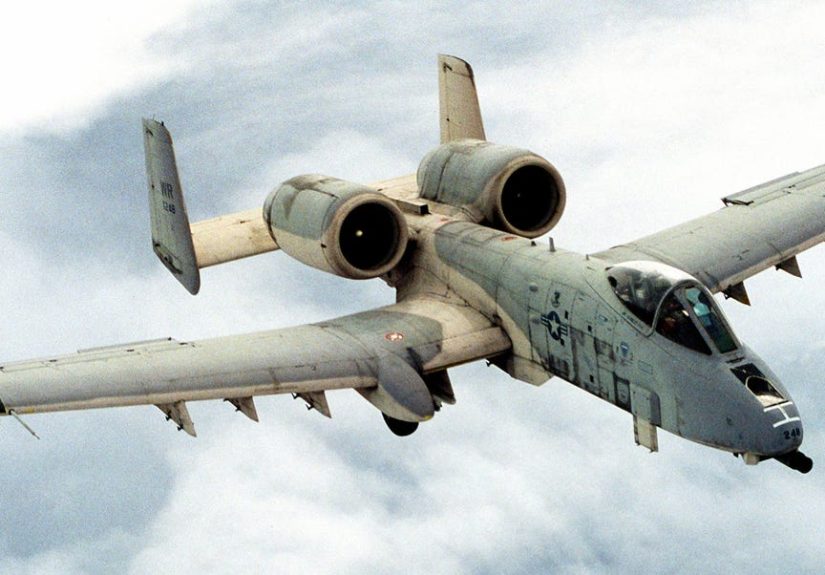
The A-10 Thunderbolt II was designed for close air support, and unlike some aircraft that get “multi-role” duties the way office workers get “other responsibilities as assigned,” the A-10 actually looked purpose-built for its mission. Twin engines were mounted high to reduce foreign object damage. The cockpit sat forward with excellent visibility. The airframe was built around the monstrous 30mm GAU-8/A cannon, a gun so central to the airplane’s identity that the rest of the jet sometimes feels like a delivery system for ammo and attitude.
The numbers helped turn the Warthog into folklore. Its cannon can fire at roughly 3,900 rounds per minute. The aircraft can carry a wide mix of bombs, missiles, and rockets. It was armored to protect the pilot and key flight systems, with redundant design features meant to keep the aircraft flying even after taking damage. In plain English: the A-10 was built like a flying toolbox that had a grudge.
Its reputation exploded during Operation Desert Storm, where the aircraft earned enormous respect for destroying tanks, vehicles, and artillery while hunting Iraqi forces in brutal battlefield conditions. Later wars and campaigns only deepened that image. In Iraq, Afghanistan, and counterterror operations elsewhere, the A-10 gained a loyal following among troops who valued quick response, long loiter time, visible presence overhead, and pilots steeped in the culture of close air support. When soldiers and Marines say they want an airplane that feels like it actually understands what is happening on the ground, they are often describing the Warthog without even naming it.
That emotional connection matters. The A-10 is not just a weapon system. It became a kind of airborne reassurance policy. If you were pinned down, tired, dusty, and having the worst afternoon of your life, the growl of an A-10 overhead could feel less like aviation and more like rescue with wings.
So Why Retire an Aircraft That Still Works?
Because warfare changes, and sentiment is not a force-planning strategy.
The Air Force’s case for retiring the A-10 has never been that the jet is useless. The argument is that the aircraft is increasingly unsuited for the most dangerous environments the United States says it must prepare to fight in. Against modern integrated air defenses, advanced surface-to-air missile networks, and peer adversaries with sophisticated sensors, the A-10’s traditional strengths become harder to exploit. Low and slow works beautifully when the sky is permissive. It gets much more complicated when the enemy has the digital equivalent of a giant “No Trespassing” sign backed by missiles.
Then there is the money. The Air Force has spent years trying to free up resources for newer systems, including the F-35, F-15EX, next-generation collaborative drones, modern munitions, and broader command-and-control upgrades. Legacy aircraft are expensive roommates. They keep asking for maintenance, depot time, manpower, and spare parts while the service tries to redecorate the entire future force.
The A-10’s retirement is also wrapped into a bigger philosophical shift. The Air Force increasingly wants aircraft that can survive in contested environments, share data across the battlespace, and perform multiple missions as part of a networked force. The Warthog, for all its charms and combat credibility, was designed in another era. A very durable era, yes. A very loud era, absolutely. But another era.
The Final Descent Is Real, But It Is Not Straight
Here is where the story gets interesting. The Air Force moved from “eventually” to “let’s do this sooner.” In its fiscal 2026 planning, the service sought to retire the remaining A-10 fleet and effectively finish the job faster than earlier expectations suggested. That was the clearest sign yet that the institution no longer saw the Warthog as a temporary debate item. It saw retirement as an overdue budget and force-structure decision.
But Congress once again grabbed the control stick.
Under the fiscal 2026 National Defense Authorization Act, lawmakers blocked the Air Force from reducing the A-10 inventory below 103 aircraft during FY2026. In other words, the service can continue shrinking the fleet, but it cannot slam the hangar door shut just yet. This keeps the Warthog alive for at least another chapter, even if the title of that chapter is something like Still Retiring, Please Stop Cheering Prematurely.
That tension captures the entire A-10 saga. The Air Force sees divestment as part of modernization. Many lawmakers see retirement as moving too fast before the mission, the people, and the replacement concepts are truly ready. The Warthog has spent years surviving enemy fire overseas and budget fire at home. Somehow, it has proved annoyingly resilient against both.
What Retirement Looks Like in Practice
Retirement is not one dramatic sunset flyby. It is administrative, incremental, and deeply local. Aircraft leave squadrons. Maintenance lines wind down. Bases transition to new missions. Communities built around the jet start rewriting their identity. In South Korea, the Air Force began withdrawing A-10s from Osan as part of a broader regional modernization approach. In Maryland, the Air National Guard’s A-10 divestment moved forward in 2025. Other units have been shifting aircraft, personnel, and long-term mission planning as the fleet contracts.
That matters because a military aircraft does not live in the abstract. It lives in hangars, on flight lines, in technical schools, and inside the careers of pilots, crew chiefs, weapons loaders, engine specialists, and operations staff. When the A-10 goes away, it takes more than an airframe with it. It takes a community of practice.
Can Anything Really Replace the Warthog?
Yes and no, which is exactly why this debate refuses to die.
If the question is whether other aircraft can deliver close air support, the answer is clearly yes. The Air Force has long argued that the F-16, F-15E, B-1, B-52, attack helicopters, remotely piloted aircraft, and especially the F-35 can all contribute to the mission depending on the scenario. Precision weapons, better sensors, improved networking, and joint integration have changed what close air support even looks like. The future does not require a single airplane to do everything the way one iconic platform did it in the past.
But if the question is whether another aircraft replicates the A-10’s exact blend of loiter time, pilot visibility, ruggedness, psychological presence, specialized training culture, and battlefield intimacy, then the answer gets a lot messier. RAND research and GAO reviews have repeatedly pointed to potential gaps in responsive close air support, forward air control airborne work, combat search and rescue support, and training if the A-10 disappears without a fully thought-through transition. The Air Force can replace functions. Replacing the whole vibe is harder.
The F-35 is often cast as the heir, but it is better understood as part of a different playbook. It is more survivable in high-threat environments, more connected, and built for a broader range of missions. It can support troops on the ground, but it does so as a stealthy, sensor-rich node in a larger system, not as a titanium bathtub with a giant cannon and an attitude problem. One is a smartphone with wings. The other is a power tool that hates tanks.
What the Warthog’s Retirement Really Means
The retirement of the A-10 is not just about age. It is about the Pentagon admitting, more clearly than before, that the wars which made the Warthog famous are not the only wars it is planning for now. Counterinsurgency and permissive-airspace support missions defined a generation of combat experience. Future planning is being shaped by the possibility of conflicts where getting anywhere near the target could be the hardest part.
That does not make the A-10 obsolete in the cultural sense. It makes it strategically expensive to keep prioritizing a platform optimized for a narrower slice of the fight. The jet is becoming a victim of changing assumptions, not a failure of performance. That distinction matters.
It also helps explain why the A-10 inspires such stubborn loyalty. The people who love it are not wrong. They are reacting to an aircraft that did exactly what it was asked to do for decades, often brilliantly, and with a level of visible toughness that modern systems rarely display so theatrically. The people trying to retire it are not necessarily wrong either. They are making a forward-looking argument about survivability, budgets, and the character of future war.
That is what makes the Warthog debate more than just another procurement quarrel. It is a debate over what kind of military memory should matter when designing the next force. Do you optimize for the war that proved the aircraft’s worth, or the war you fear is coming next? The A-10 sits right on that fault line, engine nacelles and all.
The Human Experience of the Warthog’s Goodbye
For all the budget tables and strategy memos, the retirement of the A-10 feels personal because the airplane has always felt personal. People do not usually talk about the Warthog as if it were a line item. They talk about the sound, the shape, the absurd gun, the way it seemed less like a polished machine and more like a loyal brawler.
If you ever stood near a runway when an A-10 launched, you remember it in your chest as much as in your ears. It did not slip into the sky. It announced itself. The airplane looked like it was built by engineers who were told, “Please make it ugly, durable, and slightly offended.” And somehow that made people trust it more. It looked honest. No glamour, no pretense, just business.
For maintainers, the experience was different but just as intimate. The A-10 was a working aircraft in the most literal sense. It demanded labor, familiarity, and patience. It smelled like fuel, hydraulic fluid, hot metal, and long shifts. The people who kept it alive were not caretakers of a museum piece; they were mechanics for a veteran prizefighter who still wanted one more round. When retirement comes, that kind of work culture does not simply disappear on a spreadsheet. It leaves a gap in routine, identity, and memory.
For pilots and JTACs, the Warthog represented a style of warfare built on trust. Close air support is not just dropping ordnance accurately. It is communication, timing, confidence, and the feeling that the person in the cockpit understands the geometry and stress of what is happening below. The A-10 earned its reputation because it showed up again and again in exactly those moments. That is why so many troops remember it not as “an Air Force asset” but as our airplane when things got ugly.
Even civilians felt it. At airshows, the A-10 was rarely the prettiest performer, but it was often the one that drew the most affection. Families loved it because it seemed real. Veterans loved it because it looked like a machine that knew what a bad day felt like. Kids loved it because, frankly, a plane with a giant cannon and a nickname like Warthog has an unbeatable marketing department.
That is why this retirement carries a different emotional charge than many others. The A-10 is leaving at a moment when military technology is becoming more remote, more digital, and less visibly rugged. What is fading is not just a jet, but a whole aesthetic of American airpower: mechanical, stubborn, visible, and unapologetically close to the ground fight.
So yes, the A-10’s final descent has started. It may still get waved off, delayed, or stretched by Congress for another lap in the pattern. But the direction is now unmistakable. And when the last Warthog finally taxis in for good, the silence afterward may be the strangest part of all.
Conclusion
The A-10 Warthog is retiring not because it failed, but because it succeeded in a world the Air Force believes is changing too fast for it to dominate forever. That is a bittersweet ending for a jet that became a legend by being useful, resilient, and gloriously unglamorous. The Air Force wants to move on. Congress keeps tapping the brakes. Troops, veterans, and aviation fans are still not ready to let go. All three things can be true at once.
The Warthog’s long farewell is really a story about transition: from low-and-slow certainty to networked uncertainty, from iconic specialization to multi-role flexibility, from battlefield intimacy to future-force abstraction. The A-10 may not fit the next era neatly, but it absolutely shaped the last one. And that is why its retirement feels less like an aircraft leaving service and more like the end of a very loud, very stubborn American chapter.