Table of Contents >> Show >> Hide
- Why The Crowbar Comics Feels So Instantly Relatable
- Everyday Life Is Already Halfway to a Cartoon
- The 28-Cartoon Roundup and the Art of the Twist
- What Makes The Crowbar Comics Funny Instead of Merely Strange
- The Real Star Here: Observational Humor With Teeth
- Why Readers Keep Coming Back for More
- How These 28 Cartoons Turn the Mundane Into Something Memorable
- Why Everyday Comedy Still Matters
- A Longer Reflection on Real-Life Experiences Behind This Kind of Humor
- Final Thoughts
Some comics aim for a gentle chuckle. Others go for the full spit-take, the kind of laugh that sneaks up on you right when you think you’ve figured out the joke. The Crowbar Comics lives in that second category. In this set of 28 amusing cartoons, everyday life is not simply observed; it is twisted, sharpened, and sent back at the reader with a grin that says, “You saw that coming, right?” Usually, the answer is no. That is exactly the fun of it.
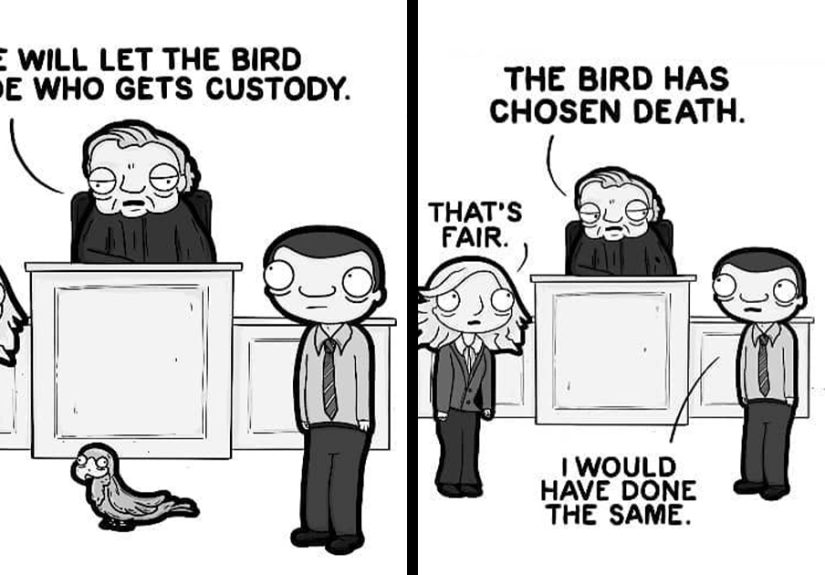
What makes these cartoons work is not just that they are funny. The internet is full of things trying very hard to be funny. What makes The Crowbar Comics stand out is the way it turns familiar situations into clever, compact bursts of absurdity. School, relationships, public speaking, work stress, family traditions, minor annoyances, and those weird little social moments we all pretend are normal all become material. The comic takes recognizable scenes from ordinary life and then gives them a crooked nudge until they become ridiculous, darkly playful, or deliciously awkward.
That is why this roundup feels so satisfying. These 28 cartoons do not depend on giant backstories or complicated lore. They rely on something much harder to fake: observation. They understand that modern life is already halfway to a punchline. The only real job of the cartoonist is to push it over the edge.
Why The Crowbar Comics Feels So Instantly Relatable
At first glance, the formula looks simple. A clean setup. A familiar situation. A line or visual beat that makes you feel settled. Then, out of nowhere, the comic yanks the rug out from under that comfort. That rhythm is the secret sauce. It mirrors how real life often feels: calm one second, absurd the next, and mildly humiliating all the way through.
The best observational humor does not need to scream for attention. It notices what everyone else walks past. The Crowbar Comics knows that a boring meeting, a strained holiday conversation, an awkward breakup, or even the universal misery of waking up to an alarm can contain the bones of a great joke. These are not massive cinematic events. They are tiny disasters, private embarrassments, and everyday inconveniences. In other words, they are perfect comic fuel.
That is also why the humor lands across different kinds of readers. You do not need to belong to a fandom or memorize an encyclopedia of references. You just need to have lived among other humans. If you have ever dreaded speaking in public, faked confidence in a social situation, suffered through a family meal, or watched a normal day veer into nonsense, you are already in on the joke.
Everyday Life Is Already Halfway to a Cartoon
There is something almost unfairly rich about ordinary life as a comedy source. Daily routines come packed with tension, repetition, expectations, and disappointment. That is basically a starter kit for humor. A comic artist does not have to invent a bizarre universe from scratch when the real one already includes confusing etiquette, bad timing, impossible standards, and people who say things like, “This meeting should only take five minutes,” while holding a 42-slide presentation.
The Crowbar Comics thrives in that territory. It understands that the funniest moments are often the ones that begin in total normalcy. A person tries to do the right thing. Someone makes a casual remark. A routine task should be easy. Then logic collapses like a folding chair at a backyard barbecue. That sudden collapse is where the laugh happens.
What is especially smart about these cartoons is that they are not merely random. Randomness can get a quick laugh, but it rarely sticks. These jokes feel constructed. The absurdity grows out of a recognizable emotional truth: anxiety, annoyance, insecurity, laziness, pride, fear, or wishful thinking. Readers laugh because the premise is ridiculous, but they stay with the comic because the feeling underneath it is real.
The 28-Cartoon Roundup and the Art of the Twist
A good roundup of funny cartoons should feel like a plate of snacks, not a lecture. One joke should lead naturally to the next, each with a slightly different flavor. That is exactly the pleasure of these 28 pieces. Some hit with dry wit. Some lean into visual absurdity. Some creep in with a harmless setup before revealing a much darker or stranger punchline. Together, they create a rhythm that keeps the reading experience lively.
And that rhythm matters. Comedy gets stale fast when every joke wears the same outfit. The Crowbar Comics avoids that trap by moving between different slices of life. One strip might turn a common household frustration into a bizarre escalation. Another might target the strange rules of relationships. Another could take a polite social convention and reveal the chaos simmering underneath it. The effect is variety without losing a consistent voice.
That voice is what ties the whole collection together. It is observant, a little mischievous, slightly mean in the way good jokes often are, and refreshingly unafraid of weirdness. Not every cartoon tries to be cute. Some are sharp. Some are awkward. Some feel like they were written by the part of your brain that notices how deeply odd people are but usually has the manners not to say it out loud.
What Makes The Crowbar Comics Funny Instead of Merely Strange
1. Strong setups
Even the weirdest joke needs a doorway. These cartoons usually begin with a situation that makes immediate sense. That clarity is crucial. The reader is welcomed in before the comic starts moving furniture around in their brain.
2. Tight wording
One of the pleasures of short-form cartoon humor is efficiency. The best lines do not wander. They arrive, do damage, and leave. The Crowbar Comics is especially good at using concise dialogue so the punchline feels sharp instead of overexplained.
3. Everyday emotional truth
Underneath the silliness, there is usually a familiar feeling: dread, annoyance, social panic, overconfidence, or low-grade existential confusion. That emotional realism gives the jokes weight.
4. A taste for dark edges
This is not sunshine-and-puppies humor. The comic often brushes against darker, stranger, or more uncomfortable territory, which gives it bite. It is still playful, but it is never too polished to be interesting.
5. Visual economy
A good cartoon does not need a circus of detail if the idea is strong. These strips let the concept breathe. The image supports the joke instead of smothering it under decoration.
The Real Star Here: Observational Humor With Teeth
Lots of funny content online depends on noise. It gets louder, faster, more exaggerated, and more desperate for attention with every swipe. The Crowbar Comics works differently. Its humor is rooted in observation, which tends to age better than trend-chasing. Observational comedy notices the absurd structures we quietly agree to live inside, then points at them until they become impossible to ignore.
That is why everyday-life cartoons can be so effective. They are democratic. Everyone has awkward mornings. Everyone has been trapped in tedious conversations. Everyone has witnessed a simple task somehow becoming an epic saga. When a comic captures one of those moments accurately, it feels less like a performance and more like recognition. It says, “Yes, this is ridiculous, and yes, we have all been pretending otherwise.”
The Crowbar Comics adds another ingredient to that formula: surprise. Recognition alone gets a smile. Recognition plus a sharp twist gets a real laugh. That combination is what makes these cartoons easy to share and easy to remember.
Why Readers Keep Coming Back for More
Funny cartoons succeed when they create anticipation. Readers begin to trust that the next panel, the next image, or the next one-liner will reward their attention. With The Crowbar Comics, that trust comes from unpredictability. You know the comic will probably begin in ordinary territory, but you do not know whether it will end in irony, absurdity, darkness, or some gloriously dumb detour that makes perfect nonsense.
That unpredictability is part of the brand. It keeps the work from feeling formulaic. Even when the basic structure is familiar, the comic’s perspective is not sleepy. It is alert to life’s tiny contradictions. The result is humor that feels active rather than automatic.
There is also something satisfying about the comic’s confidence. The jokes are not padded with explanation, and they do not beg for approval. They trust the reader to meet them halfway. That usually makes the laugh stronger because discovering the joke feels a little like solving it.
How These 28 Cartoons Turn the Mundane Into Something Memorable
The word “mundane” gets a bad reputation, but for comedy it is gold. The mundane is where habits live, and habits are where people reveal their weirdness. A person trying to wake up, survive class, navigate a relationship, manage a holiday, or get through the workday is already standing on a comedic trapdoor. All it takes is one sideways thought to swing it open.
That is what this collection delivers. It takes ordinary material and refuses to treat it as small. A joke about reading for class is not just about homework; it is about the gap between what people say education is and how it sometimes feels. A joke about public speaking is not just about stage fright; it is about the deep terror of being perceived. A joke about relationships is not just about romance; it is about negotiation, misunderstanding, and all the ridiculous scripts people inherit without reading the fine print.
In other words, these cartoons are light on their feet but not empty-headed. They pull from familiar life because familiar life contains the whole human mess in miniature. That is why a compact cartoon can sometimes reveal more about us than a page of serious commentary. It has to choose one detail, one angle, one line. When the choice is right, it hits hard.
Why Everyday Comedy Still Matters
It is easy to dismiss funny cartoons as disposable, especially online where everything seems designed to vanish by tomorrow afternoon. But comedy built from daily life has a quiet kind of durability. It records how people talk, what they dread, what annoys them, what they pretend not to notice, and what kinds of nonsense feel normal in a given era.
That gives a collection like this more value than a passing laugh. It also becomes a small archive of modern anxieties and habits. The best comedy does not just entertain; it reveals. It reveals how fragile our routines are, how strange our social rules can be, and how often people cope with discomfort by pretending everything is fine while standing ankle-deep in absurdity.
The Crowbar Comics understands that tension. It never turns into a lecture, and that is part of its charm. But behind the punchlines, you can feel a sharp eye working. The comic notices the awkward mechanics of being a person in the world and turns them into something playful enough to enjoy.
A Longer Reflection on Real-Life Experiences Behind This Kind of Humor
One reason comics like these connect so strongly is that they mirror experiences people rarely describe as “funny” while they are happening. In the moment, an awkward family dinner is just uncomfortable. A disastrous presentation is just sweaty. A misunderstanding with a partner is just annoying. The alarm clock at 6:12 a.m. is not comedy; it is a crime. But later, once the panic fades and the dignity grows back a little, those same moments become stories. That transformation is at the heart of everyday comedy.
Think about how many ordinary experiences already come with built-in dramatic structure. You make a plan. You believe the plan is reasonable. Another person enters the scene, usually with confidence they do not deserve. The plan immediately falls apart. Now you are improvising, trying to preserve your pride while the universe quietly laughs. That is not just real life. That is practically a finished comic strip.
Most people know this feeling from work. There is always an email that sounds harmless and ends in chaos. There is always a meeting where somebody says the exact wrong thing in the exact wrong tone. There is always one task that should take two minutes but somehow develops a trilogy. When a cartoon exaggerates that experience just enough, it does not feel false. It feels honest in a more concentrated way.
The same thing happens in relationships and family life. People love each other, care about each other, and still manage to communicate like squirrels fighting over a power cord. A simple question can turn into a debate. A holiday can become a pressure cooker with side dishes. A thoughtful gesture can land like a prank gone wrong. These are frustrating experiences when you are living through them, but they are rich material for comedy because the emotions are real and the logic is often gloriously broken.
Even private insecurities become funnier once they are framed properly. Nearly everyone has rehearsed a conversation in their head, imagined a worst-case scenario, or tried to look calm while internally collapsing like a folding table. Cartoons that capture that hidden inner drama feel personal because they expose something recognizable. They remind readers that the most absurd person in the room may, in fact, be themselves. Strangely, that is comforting.
That is why everyday humor has staying power. It does not need explosions, celebrities, or complicated references. It only needs human beings behaving exactly the way human beings always do: overthinking, underperforming, panicking politely, hoping for the best, and stumbling into punchlines they never meant to write. The Crowbar Comics understands that deeply. It takes the stuff we survive every day and turns it into something lighter, sharper, and much easier to love once it has been transformed into a joke.
Final Thoughts
Turning Everyday Life Into Comedy: 28 Amusing Cartoons By The Crowbar Comics works because it does not chase laughs with gimmicks. It finds them in the overlooked corners of ordinary existence. That is a harder trick than it looks. Plenty of humor is loud; not all of it is observant. Plenty of jokes are weird; not all of them are true. These cartoons manage to be both strange and recognizable, which is a big reason they leave a mark.
If you enjoy funny cartoons, observational humor, darkly amusing webcomics, and the weird poetry of everyday inconvenience, this collection delivers. It reminds us that daily life is full of comic material, even when it feels mostly like paperwork, awkward eye contact, and emotional damage from group chats. Sometimes all you need is the right artist to point at the mess and say, “Look again. This is hilarious.”