Table of Contents >> Show >> Hide
- Why the Laundry Room Deserves a Redesign
- Start With the Laundry Room Layout
- Storage: The Secret Ingredient in a Functional Laundry Room
- The Folding Station: Small Feature, Big Upgrade
- Drying Options That Save Space and Protect Clothes
- Energy-Smart Laundry Habits
- Surfaces That Can Handle Real Life
- Lighting: The Unsung Hero of Laundry Room Design
- Make It Stylish Without Losing Function
- Small Laundry Room Ideas That Actually Work
- Safety and Maintenance Matter, Too
- Personal Experience: What Really Makes a Laundry Room Better
- Conclusion: Give Your Laundry Room a Fresh Spin
The laundry room used to be the home’s most ignored little workhorse: a place where socks disappeared, detergent bottles multiplied, and everyone pretended the lint trap was someone else’s responsibility. But today, the laundry room is getting a serious glow-up. Homeowners are turning this once-forgotten corner into a stylish, efficient, and surprisingly pleasant space that works harder than ever without looking like a utility closet having a bad day.
A new spin on the laundry room is not just about buying prettier baskets or hiding the mystery pile behind a cabinet door. It is about creating a smart system for washing, drying, folding, sorting, storing, and sometimes even managing backpacks, pet supplies, cleaning tools, or household overflow. Whether you have a spacious laundry suite, a hallway closet, a basement nook, or a compact apartment setup, the goal is the same: make laundry easier, faster, safer, and less annoying.
The best modern laundry room design blends practical storage, durable finishes, energy-conscious appliances, and personality. Think folding counters over front-load machines, vertical shelving, labeled bins, wall-mounted drying racks, a utility sink, cheerful wallpaper, and enough lighting to tell navy socks from black ones before Monday morning betrayal strikes.
Why the Laundry Room Deserves a Redesign
Laundry is one of those chores that never really ends. You finish a load, feel victorious for 12 seconds, and then someone appears with a hoodie they “forgot” was under the bed. Because laundry is repetitive, the design of the room matters more than many people realize. A poorly planned laundry area adds steps, clutter, frustration, and lost time. A well-planned one turns a routine chore into a smoother household rhythm.
Modern laundry room ideas focus on workflow. Instead of treating the washer and dryer as the entire room, the smartest designs consider the full journey of clothing: dirty items arrive, get sorted, washed, dried, folded, hung, and returned to their homes. When each step has a dedicated zone, laundry stops feeling like a pile-based lifestyle and starts feeling manageable.
Start With the Laundry Room Layout
Before choosing paint colors or cute jars for detergent, look at the layout. The best laundry room layout depends on the size of the space, appliance type, plumbing, ventilation, and how your household actually uses the room.
Side-by-Side Appliances
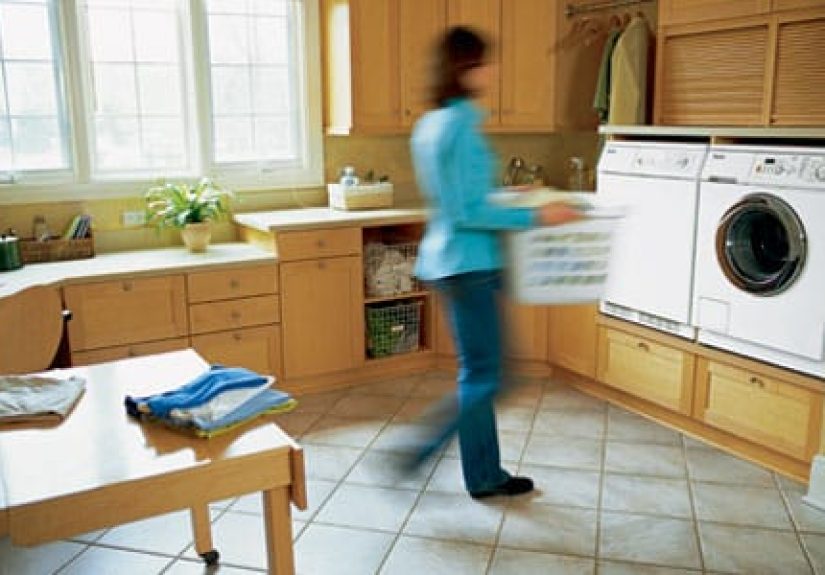
Side-by-side washers and dryers are ideal when you have enough wall width. This layout allows you to install a countertop above front-loading machines, creating an instant folding station. That single counter can change everything. Suddenly, clean towels have a landing spot, socks can be paired without migrating to the dining table, and the top of the dryer is no longer serving as an unstable shelf for half the house.
Stacked Washer and Dryer
A stacked washer and dryer is a smart choice for small laundry rooms, closets, apartments, and narrow utility spaces. Stacking frees up floor area for a tall cabinet, rolling hamper, broom closet, or pull-out storage tower. In a compact home, every square inch has to audition for its role, and stackable appliances usually get the part.
Laundry Room and Mudroom Combo
If the laundry room sits near an exterior door, it can double as a mudroom. Add hooks for coats, cubbies for shoes, a bench for taking off muddy boots, and a washable rug that forgives real life. This setup is especially useful for families, pet owners, gardeners, and anyone whose home receives regular deliveries of dirt, sports gear, and “I only stepped in one puddle” excuses.
Storage: The Secret Ingredient in a Functional Laundry Room
Beautiful laundry rooms are nice. Beautiful laundry rooms that actually store things are better. Storage is the difference between a space that looks good for one photo and a space that works every Tuesday night when three loads are waiting and someone needs clean jeans.
Use Vertical Space
Walls are prime real estate. Install floating shelves, upper cabinets, pegboards, or tall pantry-style cabinets to keep supplies off the floor and counters. In small laundry rooms, vertical storage is especially important because it creates order without stealing walking space.
Mix Open and Closed Storage
Open shelves are perfect for items used daily, such as detergent, stain remover, wool dryer balls, and clothespins. Closed cabinets are better for bulk supplies, cleaning products, extra paper goods, and anything that makes the room look like a warehouse aisle. A balanced mix keeps essentials handy while hiding visual clutter.
Add Baskets, Bins, and Labels
Baskets are not just decorative; they are tiny managers with handles. Use them to sort whites, colors, towels, delicates, uniforms, cleaning cloths, and “belongs to no known human” items. Labels help everyone in the house understand the system, even the people who claim they “didn’t know where it went” while standing directly in front of the labeled bin.
The Folding Station: Small Feature, Big Upgrade
A folding station is one of the most useful laundry room upgrades. If you have front-loading appliances, a countertop above them can serve as a durable work surface. If your appliances are top-loading, consider a nearby wall-mounted drop-leaf table, a narrow counter, or a rolling cart with a flat top.
The ideal folding area should be close to the dryer, well-lit, and free of random clutter. Add a small basket for loose change, receipts, hair ties, and the tiny plastic dinosaurs that somehow survive every wash cycle. A hanging rod above or beside the folding station is also helpful for air-drying shirts, hanging school uniforms, or staging clothes before they go back to closets.
Drying Options That Save Space and Protect Clothes
A modern laundry room should include more than one drying method. While dryers are convenient, not every item loves heat. Sweaters, activewear, delicate fabrics, and certain dark garments often last longer when air-dried.
Wall-mounted drying racks are excellent for small spaces because they fold away when not in use. Ceiling-mounted racks work well in rooms with height. A hanging rod gives shirts and dresses a wrinkle-reducing pause before they move to closets. Even a slim collapsible rack can make a big difference if you regularly wash delicate items.
For energy-conscious households, air-drying can also reduce dryer use. When using a dryer, choose sensor-dry settings when available, clean the lint filter after each load, and avoid over-drying. Clothes should come out dry, not toasted.
Energy-Smart Laundry Habits
A new spin on the laundry room is not only about design. It is also about how the room performs. Energy-efficient laundry habits can help lower utility use, protect fabrics, and extend the life of appliances.
Wash With Cold Water More Often
Modern washers and detergents are much better than the laundry setups of the past. For everyday clothing, cold water is often enough, especially when paired with proper detergent and stain treatment. Cold washing can help preserve colors, reduce shrinking, and lower the energy used to heat water.
Run Full, Balanced Loads
Running half-empty loads wastes water and energy, while overstuffing the machine prevents clothing from moving freely. Aim for full but not packed loads. Clothes need room to tumble, rinse, and escape the tragic fate of coming out still smelling like gym class.
Choose Efficient Appliances
When replacing a washer or dryer, look for efficient models with useful features such as automatic water sensing, high spin speeds, moisture sensors, and energy-saving cycles. A washer that removes more water during the spin cycle can help reduce drying time. A dryer with moisture sensing can stop when clothes are dry instead of continuing until your T-shirts feel like parchment.
Surfaces That Can Handle Real Life
Laundry rooms deal with water, detergent, heat, dust, lint, and the occasional surprise marker in a pocket. This is not the place for delicate materials that panic at the first splash. Choose surfaces that are durable, washable, and moisture-resistant.
Porcelain tile, luxury vinyl plank, sealed concrete, and water-resistant flooring are popular options because they can handle spills and foot traffic. For counters, consider quartz, laminate, butcher block with proper sealing, or a sturdy plywood surface finished for durability. A backsplash behind the sink or appliances can protect walls while adding color or texture.
Lighting: The Unsung Hero of Laundry Room Design
Good lighting changes everything. Laundry rooms are often placed in basements, interior hallways, closets, or corners with limited natural light. Without proper lighting, stains are missed, colors are misread, and that one navy sock sneaks into the black pile like a tiny textile spy.
Use bright overhead lighting for general visibility, then add task lighting under cabinets or above the folding station. If the room has a window, make the most of natural light with simple window treatments that provide privacy without blocking brightness. A stylish fixture can also make the space feel more intentional and less like a mechanical room with detergent.
Make It Stylish Without Losing Function
Laundry room decor has become more adventurous, and that is a good thing. Since the room is usually smaller than a kitchen or living room, it is a great place to try bold design choices. Wallpaper, patterned tile, painted cabinets, brass hardware, a cheerful rug, framed art, or a playful wall color can give the space personality.
The trick is to keep style connected to function. Choose washable rugs, wipeable wall finishes, easy-clean cabinet fronts, and hardware that can handle daily use. A laundry room can be pretty, but it still has a job. Think of it as the home’s stylish intern who also knows how to run a spreadsheet.
Small Laundry Room Ideas That Actually Work
Small laundry rooms can be incredibly efficient when planned well. The key is to reduce floor clutter, use wall space, and create flexible work surfaces.
Try These Small-Space Upgrades
- Install shelves above the washer and dryer for detergent and baskets.
- Use a slim rolling cart between appliances or beside the wall.
- Add hooks for mesh bags, lint rollers, and cleaning brushes.
- Mount an ironing board inside a cabinet or behind a door.
- Use stackable appliances to free floor space.
- Choose matching bins to reduce visual clutter.
- Add a fold-down drying rack or wall-mounted folding table.
Even a laundry closet can become more functional with the right plan. Paint the inside a fresh color, add shelves above the machines, hang a small rod, and use containers that fit the exact depth of the closet. The goal is not to make it huge. The goal is to make every inch behave.
Safety and Maintenance Matter, Too
A better laundry room should also be a safer laundry room. Keep detergent, bleach, cleaning sprays, and pods stored securely, especially in homes with children or pets. Avoid piling products directly on top of the dryer, where heat and vibration can create problems. Store heavy items on lower shelves and keep frequently used supplies at a comfortable height.
Dryer maintenance is especially important. Clean the lint filter after every load, check the dryer vent regularly, and make sure the area around the machines stays free of dust and clutter. A clean laundry room is not just prettier; it helps appliances work better and reduces avoidable risks.
Personal Experience: What Really Makes a Laundry Room Better
After seeing and testing many laundry room setups, one lesson stands out: the best laundry room is not always the biggest or most expensive one. It is the one that matches the household’s habits. A gorgeous room with marble counters will not help much if there is nowhere to sort muddy soccer socks. A tiny closet, on the other hand, can work beautifully if it has shelves, hooks, a folding surface, and a clear system.
One of the most practical experiences comes from reorganizing a small laundry area that had become a dumping ground for detergent, batteries, reusable shopping bags, pet towels, and one lonely flip-flop. The first step was not shopping. It was removing everything and deciding what actually belonged in the room. Half the items had no connection to laundry at all. Once those objects left, the space instantly felt bigger, which was both satisfying and slightly embarrassing.
The biggest improvement was adding a counter above the front-loading washer and dryer. Before the counter, clean clothes were folded on beds, sofas, and occasionally on top of the dryer while it was vibrating like a caffeinated robot. After the counter, folding happened right where the clothes came out. That one change reduced piles around the house and made the whole routine feel less scattered.
Another helpful upgrade was using three labeled hampers: lights, darks, and towels. This sounds almost too simple, but it changed the flow completely. Instead of sorting a giant mountain on laundry day, the sorting happened naturally throughout the week. The labels also removed the household’s favorite excuse: “I didn’t know where to put it.” There it was, printed in plain English. A beautiful moment for accountability.
A wall-mounted drying rack also proved more useful than expected. It handled workout clothes, sweaters, reusable cleaning cloths, and shirts that needed to avoid the dryer. Because it folded flat, it did not steal space when empty. This is the kind of upgrade that feels small at first but becomes part of the routine almost immediately.
Lighting made a surprising difference, too. Replacing one dim overhead bulb with brighter lighting helped with stain checking, matching socks, and simply making the room feel less gloomy. Laundry may never become a thrilling hobby, but it is much easier to tolerate when the room does not feel like a storage cave.
The final lesson is to leave a little empty space. It is tempting to fill every shelf with jars, baskets, and backup supplies, but laundry rooms need breathing room. You need space for an unexpected load, a wet towel, a sweater drying flat, or a basket of clean clothes waiting to be put away. Empty space is not wasted space. It is future sanity.
Conclusion: Give Your Laundry Room a Fresh Spin
A new spin on the laundry room means turning a hardworking space into one that is organized, efficient, attractive, and easier to use every day. You do not need a massive renovation to make a difference. Start with the basics: improve the layout, add storage, create a folding zone, brighten the lighting, choose durable surfaces, and build habits that save energy and protect clothing.
The modern laundry room is no longer just a place to wash socks and question where all the hangers went. It can be a smart household hub, a mudroom, a cleaning station, a pet-care corner, or simply a calm little room that makes a never-ending chore feel less dramatic. Give it shelves, give it light, give it a counter, and maybe give it wallpaper with personality. Your laundry may still pile up, but at least it will do so in a room with excellent taste.