Table of Contents >> Show >> Hide
- Why the Maldives Feels Like a Dream You Can Swim In
- Where Cereal Magazine and Remodelista Meet: Travel as a Visual Mood
- Stop 1: “Our Bedroom” The Maldives Resort Room as a Tiny Architectural Fantasy
- Stop 2: Conrad Maldives and a Lunch on Stilts
- The Reef: Snorkeling, Diving, and the Part We Need to Protect
- Beyond the Water Villas: A Quick (Real) Taste of Maldivian Life
- Planning the Real Trip (or a Better Virtual One)
- Design Takeaways You Can Steal for Home (Yes, Really)
- Extra: of Maldives-Adjacent Experiences (Without Leaving Your House)
- Conclusion: The Best Trips Change Your Eye, Not Just Your Location
- SEO Tags
Some destinations don’t feel like real places so much as a suspiciously perfect desktop wallpaper.
The Maldives is one of them: a scatter of tiny coral islands, turquoise water in every direction,
and sunsets that look like they were edited by someone who’s emotionally attached to warm tones.
But here’s the twistyour “trip” doesn’t have to start with a boarding pass. It can start with a story,
a photo series, and a good-enough imagination to hear waves through your laptop speakers.
That’s why Remodelista’s “virtual trip” featuring Cereal Magazine still hits so well.
It’s travel through a design lens: calm, curated, and quietly obsessive about details (in the best way).
Think less “do-it-all itinerary,” more “notice the light on the deck boards at 4:17 p.m.”
If your idea of fun includes both a beach and typography that behaves itself, welcomethis is your kind of vacation.
Why the Maldives Feels Like a Dream You Can Swim In
The Maldives is an island nation made up of coral islands grouped into atollsmeaning the geography isn’t just pretty,
it’s geologically dramatic. These islands sit extremely low above sea level, so the ocean is never a “view.”
It’s the main character. Even the “streets” of some islands feel like thin pauses between lagoon and sky.
What makes this place so visually hypnotic is the palette: white sand, shallow aqua, deeper sapphire, and then
that impossible gradient where the sea meets the horizon like it’s trying not to cry. Add in palm silhouettes and
the occasional dhoni (traditional boat) gliding by, and you’ve basically entered a screensaver with better snacks.
Atolls, Light, and the Maldives “Minimalism” Effect
If you’ve ever wondered why Maldives photos look “clean,” it’s not just editing. It’s the environment.
Flat land, open sky, reflective water, and a lack of visual clutter create a natural minimalismlike nature
decided to try Scandinavian design for a while. No surprise that design-forward travel media loves it.
Where Cereal Magazine and Remodelista Meet: Travel as a Visual Mood
Cereal Magazine built its reputation on quiet, considered travelless frantic bucket list, more “sit down,
look closely, and take notes.” Remodelista’s feature follows that same rhythm, spotlighting the founders
and their Maldives stopovers as a kind of calm visual narrative rather than a conventional guide.
In the Remodelista story, the trip moves between resorts (including a start at LUX* and then onward to
Conrad Maldives on Rangali Island), but the real through-line is atmosphere: bedrooms that feel like
floating lofts, decks that make you forget what shoes are for, and dining spaces that seem to hover over water
like they’re trying not to disturb the lagoon.
Stop 1: “Our Bedroom” The Maldives Resort Room as a Tiny Architectural Fantasy
Resort rooms in the Maldives aren’t just places to sleep. They’re tiny, high-performing sets for the daily ritual of:
wake up, stare at water, wonder if you should be the kind of person who journals, and then fail beautifully.
The Remodelista/Cereal perspective lingers on textures and layoutbecause the room isn’t separate from the destination.
It’s part of the experience design.
- Indoor-outdoor flow: sliding doors, decks, and water access that makes “going outside” optional.
- Material choices: light woods, breezy fabrics, and surfaces that don’t compete with the view.
- Purposeful emptiness: rooms that feel spacious because they don’t shout for attention.
The unspoken luxury here is psychological: when your surroundings are calm, your brain stops sprinting.
Or at least it switches from sprinting to a light jog, which is basically healing in 2025.
Stop 2: Conrad Maldives and a Lunch on Stilts
Remodelista highlights a lunchtime scene at Mandhoo Restaurant, described as set on stilts out over the ocean.
That detail matters because it captures the Maldives magic: you’re not “near” the wateryou’re on it.
The setting turns a meal into a viewpoint, the way a lookout turns a simple walk into a moment.
Mandhoo: The Overwater Restaurant as a Wellness Vibe
Mandhoo is positioned as a naturally inspired dining spot, located over the lagoon near the resort’s spa retreat.
Translation: you’re supposed to eat something that makes you feel virtuous, while being surrounded by water
so blue it could qualify as a motivational quote.
Even if you never make it there in person, it’s a useful travel lesson:
in the Maldives, the “where” is half the flavor. The architecture does some of the seasoning.
Ithaa: When Dinner Comes with a Side of Ocean Science
If Mandhoo is “serene,” Ithaa Undersea Restaurant is “hold my snorkel.”
It’s famously located several meters below the surface, with curved glass giving you panoramic reef views
while you eat. The concept sounds like a theme park pitch, but it’s also a reminder of what makes the Maldives
special: the reef isn’t background sceneryit’s a living system, close enough to watch, and fragile enough to worry about.
The Reef: Snorkeling, Diving, and the Part We Need to Protect
The Maldives is legendary for reef experiencessnorkeling right off resort house reefs, dive trips to channels,
and sightings that can range from “cute fish” to “I just made eye contact with a manta ray, am I engaged now?”
Travel writers often point out how water clarity and marine life can define the whole trip.
But reef travel now comes with a responsibility clause. Global coral bleaching has been widely confirmed in recent years,
with NOAA reporting the world is in the midst of a major global bleaching event. That doesn’t mean “don’t go.”
It means go smarter: choose operators that support reef health, avoid touching coral, and treat the ocean like
the irreplaceable infrastructure it is.
How to Be a Better Guest in a Coral-Reef Nation
- Look, don’t touch: coral is alive, even when it looks like rock.
- Skip the souvenirs that come from the sea: shells and coral fragments belong in the ecosystem.
- Be sunscreen-aware: reef-safe choices matter in high-traffic lagoons.
- Choose resorts and guides with reef programs: restoration and monitoring are real work, not marketing confetti.
Beyond the Water Villas: A Quick (Real) Taste of Maldivian Life
The Maldives is more than resorts, even though resorts get the spotlight because they photograph like celebrities.
There’s the capital, Malé, where daily life is dense, busy, and very different from the “deserted beach” fantasy.
And there are inhabited islands where guesthouses and community-based tourism have grown over time,
giving travelers options beyond private-island bubbles.
Food That Makes Sense in the Middle of the Ocean
Island cuisine is practical in a way that becomes deeply comforting: seafood, coconut, and straightforward seasoning
that tastes like it belongs near salt air. One classic dish that shows up repeatedly in travel and food writing is
mas huni, a common breakfast mix of tuna, coconut, onion, and chilesoften served with flatbread.
It’s the kind of meal that makes you understand why people can live on islands and still wake up optimistic.
If you’re doing this trip virtually, you can still steal that experience:
mash tuna with grated coconut, mince red onion, add a little chile and lime, and eat it with warm flatbread.
Suddenly your kitchen has a sea breeze. (Or at least you’ll forgive it for not having one.)
Planning the Real Trip (or a Better Virtual One)
Best Time to Visit: Sunshine vs. Shoulder-Season Savings
Many guides describe the Maldives as having two main seasonal patterns: a drier period typically associated
with the northeast monsoon (often November through April) and a wetter stretch linked to the southwest monsoon
(often May through October). Dry season tends to bring calmer seas and more predictable beach weather,
while shoulder months can offer better value with some trade-offs in rain and humidity.
Getting There: Transfers Are Part of the Plot
One thing first-time visitors don’t always realize: reaching your resort may involve a domestic flight, speedboat,
and/or seaplane transfer. Seaplanes are iconic (and wildly photogenic), but they can also be priceyand typically
aren’t something you “pay for with points” in the simple way people hope. A smart plan includes budgeting for transfers
and understanding timing, luggage rules, and daylight-dependent schedules.
Practical Travel Notes for U.S. Travelers
U.S. travel guidance emphasizes basics that matter in island nations: medical care outside Malé can be limited,
water activities come with real safety risks, and local laws and customs should be respected.
It also notes that alcohol rules differ between resort islands and inhabited islands, and that travelers should
stay aware of safety updates and advisories.
Design Takeaways You Can Steal for Home (Yes, Really)
A Remodelista-style virtual trip always sneaks in a design lessonbecause once you’ve seen a space that makes you
feel calm, you want to recreate that calm in your own zip code.
- Go lighter: choose airy textiles and a restrained palette that doesn’t fight your natural light.
- Let one view win: in your home, that might be a window, a plant corner, or even a well-styled shelf.
- Make “barefoot living” possible: simplify pathways, reduce clutter, and pick materials that feel good to move through.
- Lean into quiet luxury: fewer objects, better quality, and space to breathe.
The Maldives isn’t just a place; it’s a lesson in editing. And if you’ve ever opened a junk drawer and felt personally attacked,
you already know why editing is valuable.
Extra: of Maldives-Adjacent Experiences (Without Leaving Your House)
Let’s be honest: the most reliable part of travel is the feeling. The Maldives feeling is a blend of slowness, water,
and small rituals that make time behave. So if you’re stretching this virtual trip into something you can actually live with
for a weekhere are experience-style upgrades that don’t require negotiating with an airline.
Start with a “lagoon morning.” Wake up 30 minutes earlier than usual and do something radically rebellious:
don’t immediately check messages. Make tea or coffee, open a window if the weather allows, and eat a breakfast that matches the story.
If you can swing it, do a mas huni-inspired bowl (tuna, coconut, onion, chile, lime) with warm flatbread.
The goal isn’t authenticity perfection; it’s the sensory cue that you’re in a different rhythm. Bonus points if you eat slowly,
like you’re watching the tidebecause you are, emotionally.
Next: recreate the “Cereal Magazine gaze.” Pick one ordinary corner of your home and photograph it as if it’s a boutique hotel.
Clear the clutter. Let the light do the work. Choose a single objectceramic mug, linen napkin, a bowl of fruitand make it the hero.
What you’re practicing is the same thing design travel teaches: attention. The Maldives looks magical partly because people
pay attention to small, clean moments (and because the ocean is doing some heavy lifting, sure).
Then build a “stilted-lunch” ritual. No stilts requiredjust a deliberate setting. Eat somewhere you don’t usually eat:
a balcony, a porch, near a sunny window, even on the floor picnic-style. Play ocean sounds if you want, but keep it subtle.
The idea is to turn a meal into a place. That’s what Mandhoo and other overwater dining spaces dothey make the environment
part of the taste. Your version might be simpler, but the psychology is the same: you remember meals that feel like events.
For the Ithaa effect, swap “underwater restaurant” for “underwater attention.” Watch a short reef documentary clip,
or live ocean cam footage, and learn three things: what coral bleaching is, why reefs matter, and how humans can do less harm.
This matters because the Maldives fantasy is inseparable from reef reality. A beautiful lagoon is not a propit’s a living system.
Even a virtual trip can leave you more informed and more careful about what “paradise” costs to maintain.
Finally, end your day with the Maldives’ most underrated activity: doing nothing, on purpose. Take a shower, use a salt scrub,
put on comfortable clothing, and sit with a book or a magazine without multitasking.
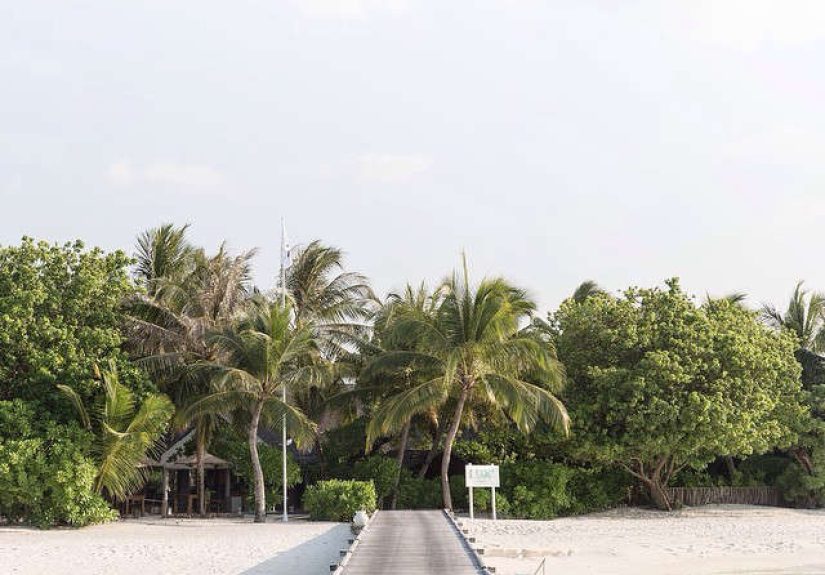
The whole Remodelista/Cereal vibe is permission to slow down and be intentionallike you’re walking the path to the beach,
except the beach is your couch and the sunset is whatever color the sky feels like being today.
It’s not the Maldives, but it’s closer than doomscrolling. And that’s a measurable improvement.
Conclusion: The Best Trips Change Your Eye, Not Just Your Location
Remodelista’s virtual trip with Cereal Magazine works because it’s not trying to sell you a checklist.
It’s showing you a way of seeing: how light hits water, how architecture frames calm, how a meal becomes a moment,
and how a place can feel both impossibly luxurious and quietly vulnerable.
Whether you eventually book the real Maldives or keep it as a beautifully curated daydream,
take the takeaway that matters most: travel is also a practice. Practice attention. Practice slowness.
Practice respecting places that look effortless, because they rarely are.