Table of Contents >> Show >> Hide
- The Soul of the Shop Starts With the Wood
- A Tuscan Workshop With a Distinct Design Identity
- Why the Cutting Boards Became Icons
- The Beauty of Imperfection in Rustic Woodworking
- From Workshop Practice to a Broader Woodworking Philosophy
- What Interior Designers and Homeowners Can Learn
- Conclusion: A Rustic Workshop That Feels Timeless
- Extended Reflections: The Experience of Andrea Brugi's Rustic Woodworking Shop
Some workshops look like factories with better lighting. Andrea Brugi’s rustic woodworking shop looks more like a conversation between a tree, a craftsman, and a Tuscan breeze that wandered in uninvited and decided to stay for lunch. That is part of the charm. The place is not polished in the glossy, showroom sense of the word. It is polished in the human sense: thoughtful, patient, shaped by time, and stubbornly allergic to mass production.
For design lovers, cooks, collectors, and anyone who has ever picked up a handmade cutting board and thought, “Well, this makes my store-bought one look emotionally unavailable,” Andrea Brugi’s work has long represented a rare balance. It is rustic without feeling rough, refined without feeling fussy, and deeply connected to the landscape of Tuscany without becoming a costume version of country living. His workshop became known not simply because it produced beautiful wooden objects, but because it offered a clear point of view: let the material speak first, and let design follow its lead.
This is what makes Andrea Brugi’s rustic woodworking shop so compelling. It is not just a place where wood is cut, carved, and sanded. It is a place where old olive wood, reclaimed beams, and weathered timber are transformed into useful objects with soul. In an era obsessed with speed, uniformity, and “artisanal” products that sometimes feel about as handmade as airport sushi, that philosophy still feels refreshingly honest.
The Soul of the Shop Starts With the Wood
If you want to understand Andrea Brugi’s style, start with the wood itself. His workshop is closely associated with salvaged olive wood, reclaimed timber, and pieces that already carry visual history before the first tool touches them. Instead of treating knots, cracks, curved edges, and irregular grain as flaws to be corrected, the shop treats them as clues. Every bend and line becomes part of the final design.
That approach matters because rustic woodworking can go wrong in two very dramatic directions. One path gives you furniture so aggressively distressed it looks like it survived three pirate attacks and a minor flood. The other path sands everything down until it loses the very character that made it interesting. Andrea Brugi’s rustic woodworking shop lands in the sweet spot between those extremes. The objects feel natural, but never careless. They feel old in spirit, but not tired. They feel sculpted, not manufactured.
This is especially clear in the pieces most associated with the studio: cutting boards, serving boards, spoons, small kitchen tools, stools, benches, and one-off furniture. Many have architectural silhouettes, soft curves, and unfinished live edges that preserve the original gesture of the tree. The result is not generic rustic decor. It is functional sculpture that just happens to be useful when serving cheese, slicing bread, or making your kitchen look far more sophisticated than your weekday leftovers deserve.
A Tuscan Workshop With a Distinct Design Identity
Part of the enduring appeal of Andrea Brugi’s rustic woodworking shop comes from its setting. Tuscany is not merely a backdrop here; it is part of the design language. Olive groves, old farm structures, reclaimed beams, worn stone, sun-faded surfaces, and the quiet dignity of rural life all seem to show up in the work. You can almost see the landscape in the grain.
But the shop’s identity is not purely Tuscan. A key part of its style comes from the creative partnership between Andrea Brugi and Samina Langholz. Their aesthetic has often been described as a blend of Tuscan warmth and Scandinavian restraint. That combination helps explain why the work feels so current. The forms are simple, but not sterile. The surfaces are aged, but not messy. The mood is rustic, but the editing is disciplined.
That balance is harder to achieve than it looks. Plenty of rustic interiors drown in sentimentality. Plenty of minimalist interiors forget that humans enjoy texture, memory, and imperfections. Andrea Brugi’s workshop avoids both traps. It gives you pieces that look right at home in a farmhouse kitchen, a pared-down city apartment, or a design magazine spread where someone has managed to make turnips look glamorous.
Why the Cutting Boards Became Icons
Let’s talk about the cutting boards, because ignoring them would be like writing about jazz and forgetting the saxophone. Andrea Brugi’s olive wood boards have become some of the most recognizable objects associated with the workshop. They are beloved not only because they are practical, but because they turn an everyday kitchen essential into a design statement.
These boards often have generous proportions, hand-carved shapes, fluid handles, and edges that feel alive rather than machine-perfect. The grain of olive wood is especially dramatic, full of movement and tonal variation, which gives each piece a unique visual rhythm. Some boards read as rustic serving pieces; others feel almost ceremonial, like they deserve their own shelf, spotlight, and tiny velvet rope.
What makes them memorable is that they do not chase perfection. The beauty lies in asymmetry, proportion, and the sense that each board emerged from the wood instead of being forced onto it. That is why they photograph so well, but also why they work in real life. They make simple food look better. Bread looks more artisanal. Cheese looks more expensive. Even a tomato sandwich begins to feel like an event.
Utility Meets Character
There is an important lesson in that success. Great woodworking does not have to choose between utility and emotion. In Andrea Brugi’s rustic woodworking shop, practical objects are not downgraded to second-class design citizens. A board, spoon, stool, or salt dish can carry as much personality as a chair or table. That philosophy elevates the daily ritual of living at home. Suddenly, the humble act of chopping herbs becomes a small aesthetic pleasure instead of another chore standing between you and dinner.
The Beauty of Imperfection in Rustic Woodworking
One reason people respond so strongly to Andrea Brugi’s work is that it embraces imperfection without turning it into a gimmick. The workshop is built on the idea that wood has a life before it becomes an object and a life after. Cracks may need stabilizing. Grain may dictate shape. Old timber may suggest a bench rather than a shelf, or a serving board rather than a chair leg. The maker listens instead of dominates.
That attitude has deep appeal in today’s design culture. Consumers are tired of things that feel disposable, generic, or over-engineered. They want homes with texture and individuality. They want objects that age well and still feel honest after trends move on to whatever social media has declared life-changing this week. Rustic woodworking, at its best, answers that desire. Andrea Brugi’s rustic woodworking shop shows how to do it without becoming precious or theatrical.
There is also something quietly sustainable about this mindset. Reclaimed wood, retired olive trees, and rescued timber all suggest an ethic of respect for material. The workshop’s pieces are not asking you to consume faster. They are asking you to buy fewer things and choose better ones. That is not just good design language. It is a useful antidote to the modern habit of filling our homes with objects that arrive quickly, disappoint immediately, and wobble by Thursday.
From Workshop Practice to a Broader Woodworking Philosophy
The influence of Andrea Brugi’s rustic woodworking shop extends beyond the objects themselves. The studio’s ideas reached a wider audience through woodworking instruction and design storytelling that translated the workshop’s philosophy into approachable projects for the home. That matters because the shop was never only about selling finished goods. It also helped articulate a way of seeing craft.
At the center of that philosophy is a simple but powerful belief: good craftsmanship begins with attention. Attention to grain. Attention to weight. Attention to where an object will live and how a hand will hold it. Attention to whether a curve is elegant or merely decorative. In a handmade shop, nothing meaningful is accidental, even when the final form still feels spontaneous.
That is why the workshop resonates with both serious design enthusiasts and casual admirers. You do not need to understand joinery techniques or carving traditions to appreciate the finished pieces. You just need to recognize that they feel different. They carry the visual quietness that comes from restraint and the emotional warmth that comes from touch.
Why the Shop Still Matters
Plenty of brands now borrow the language of handmade design. They use words like authentic, organic, artisanal, or timeless until those words feel as worn out as a bad café chalkboard. Andrea Brugi’s rustic woodworking shop stands out because the work genuinely supports the language. The forms, materials, and surfaces all tell the same story. Nothing feels pasted on for marketing purposes. The authenticity is in the object itself.
What Interior Designers and Homeowners Can Learn
There is a reason Andrea Brugi’s pieces have appeared in stylish kitchens, design shops, and editorial features. They solve a common decorating problem: how to make a room feel layered and warm without cluttering it. A single hand-carved board leaning against a backsplash can do more for a kitchen than an army of decorative signs announcing that someone, somewhere, loves coffee.
For homeowners, the lesson is clear. Rustic style works best when it is edited. Choose objects with real texture, strong silhouettes, and material integrity. Let wood show its age and variation. Mix useful pieces with sculptural ones. Avoid fake distressing and overly themed decor. A room does not need to shout “farmhouse” to feel grounded. Often, one beautifully made object can do the job better than ten trendy ones.
For designers, Brugi’s work is a reminder that contrast is everything. Rough and smooth. Old and clean-lined. Weathered and elegant. Tuscan warmth and Scandinavian simplicity. That tension is what gives the pieces range. They do not belong to one narrow look. They are adaptable because they are rooted in material truth rather than trend formulas.
Conclusion: A Rustic Workshop That Feels Timeless
Andrea Brugi’s rustic woodworking shop endures in the imagination because it represents more than handmade wood products. It represents a slower, more observant way of making. It turns olive wood, reclaimed beams, and rescued timber into objects that feel useful, sculptural, and deeply human. It proves that rustic design can be elegant, that imperfection can be refined, and that a workshop can express a worldview as clearly as any gallery or showroom.
In a home filled with shortcuts, synthetic finishes, and disposable trends, Brugi’s work offers something sturdier: presence. A cutting board becomes a conversation piece. A bench becomes a record of the tree it came from. A spoon becomes evidence that beauty can live in small, daily rituals. That is the lasting magic of Andrea Brugi’s rustic woodworking shop. It does not just furnish a home. It changes the way a home feels.
Extended Reflections: The Experience of Andrea Brugi’s Rustic Woodworking Shop
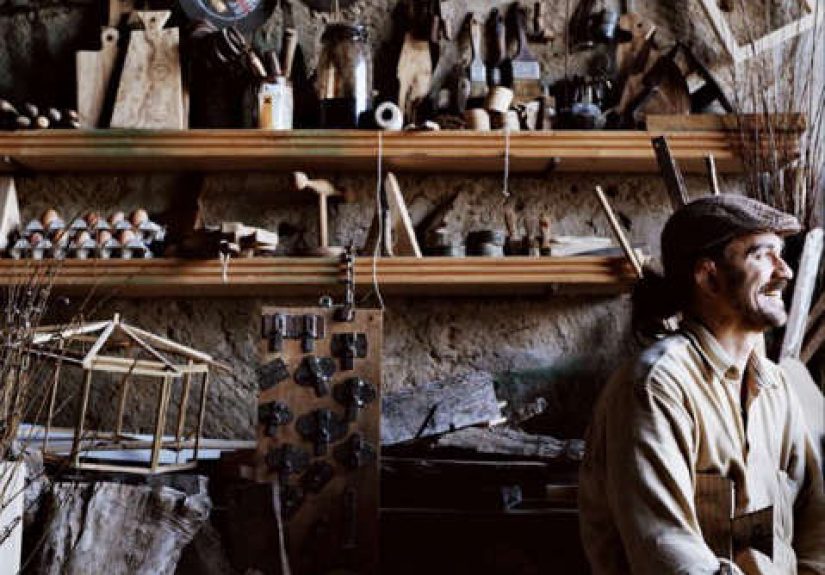
To imagine Andrea Brugi’s rustic woodworking shop is to imagine entering a space where time slows down just enough for your senses to catch up. First comes the smell: warm wood, dry sawdust, a faint trace of oil, and the earthy memory of olive groves. Then comes the light, probably landing unevenly across boards, tools, and timber with the kind of honesty only a working studio can get away with. Nothing in the room feels staged, yet everything feels composed. That is the difference between a set and a real workshop. One is arranged for appearance. The other is shaped by use.
There is a particular pleasure in being around handmade objects before they become “products.” A board is not yet a board; it is still partly a branch, partly an idea. A bench is still negotiating with its future self. In that setting, design feels less like a top-down decision and more like a collaboration with material. You begin to understand why the finished pieces have such calm authority. They were not rushed into existence. They were allowed to arrive.
That experience also changes the way you think about home. After spending time with work like this, even mentally, you notice how many objects in modern life are designed to be invisible. They function, but they do not deepen your attention. Brugi’s world does the opposite. It asks you to notice grain, weight, touch, irregularity, and age. It makes you aware that usefulness can be beautiful and that beauty can be sturdy enough for everyday life.
Perhaps that is why people feel attached to these pieces. They are not just attractive; they are reassuring. They suggest continuity. A wooden spoon can outlast trends. A cutting board can gather meals, holidays, knife marks, and stories. A stool can move from kitchen to studio to porch and still make sense in every setting. In a culture that often rewards the new, there is something profoundly satisfying about objects that seem ready to grow old with dignity.
So the real experience of Andrea Brugi’s rustic woodworking shop is not limited to the workshop itself. It continues wherever the objects go. It lives in a kitchen where a hand-carved board leans against plaster walls. It lives in a dining room where a simple wooden bench softens a polished table. It lives in the tiny pause before serving dinner, when someone reaches for a board or spoon and feels, however briefly, connected to the material, the maker, and the landscape behind it all. That is not nostalgia. It is good design doing what good design does best: making everyday life feel richer, quieter, and more alive.