Table of Contents >> Show >> Hide
- What Exactly Is the “MR Chair”?
- Why the MR Chair Was a Big Deal (And Still Is)
- “Antique” MR Chair: A Reality Check (Without Killing the Vibe)
- A Quick MR Timeline You Can Actually Use While Shopping
- How to Spot an Authentic MR Chair (Without Becoming a Full-Time Detective)
- Buying an “Antique” MR Chair: The Checklist That Saves Wallets
- Restoration: What’s Normal, What’s Risky, and What’s a Dealbreaker
- How to Style an MR Chair Without Making Your Room Look Like a Museum Gift Shop
- Value and Pricing: What Drives the Number on the Tag?
- Common “Antique MR Chair” Myths (Busted Gently)
- Living With an Antique (or Vintage) MR Chair: of Real-World Experience
- Conclusion
There are chairs you sit in, and chairs you meet. The Mies van der Rohe MR Chair is the second kindcool, confident, and somehow still polite about it. One look at that continuous loop of tubular steel and you can practically hear it whisper, “Less is more,” while your living room immediately starts behaving itself.
If you’re here because you saw an “antique MR chair” listing and felt your pulse do a little Bauhaus sambasame. But the MR world has a few twists: multiple models (MR10, MR20, and friends), decades of licensed production, an ocean of lookalikes, and the deliciously confusing fact that something designed in 1927 can be “vintage,” “mid-century,” “late 20th century,” and “antique” depending on who’s talking (and what they’re trying to charge).
Let’s make it simple. This guide breaks down what the MR Chair is, what “antique” can realistically mean for it, how to spot an authentic example, and how to buy one without accidentally adopting a poorly disguised imposter in chrome.
What Exactly Is the “MR Chair”?
“MR” doesn’t stand for “Mostly Regal” (though it could). It’s the name attached to a family of cantilevered tubular-steel chairs designed by Ludwig Mies van der Rohe around 1927–1929. The most commonly discussed members are:
- MR10: typically an armless side chair variant (often seen as a dining chair).
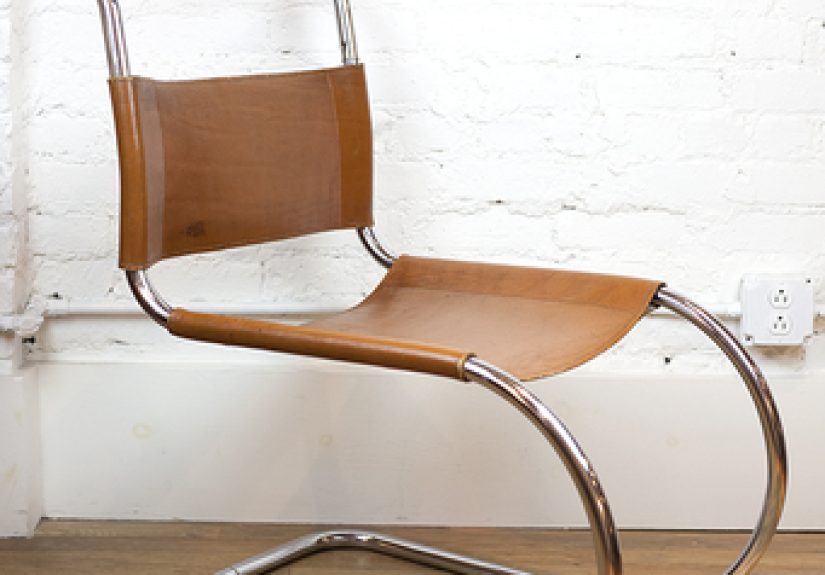
- MR20: the armchair version many people picture firstcantilevered, with arms, and often with cane/rattan or leather slings.
- MR Side Chair / MR Armchair: modern catalog names you’ll see from licensed production, offered in cane/rattan or cowhide/leather.
- MR Chaise: the dramatic lounge cousinlong, sleek, and absolutely not shy.
Museum references often focus on the MR20 Armchair (1927) with chrome-plated tubular steel and cane. In retail and collector marketplaces, you’ll see MR chairs described with cane/rattan, leather straps, or cowhide slingsdepending on the version, era, and manufacturer.
The Signature Look (and Why It Still Works)
The MR Chair’s “aha” moment is its cantilever form: no back legs. Instead, the seat and your very mortal body weight are supported by a continuous tubular-steel frame that flexes slightly. The result is a gentle bounce that feels… oddly reassuring. Like the chair is saying, “I’ve got you,” but in a crisp black turtleneck.
Why the MR Chair Was a Big Deal (And Still Is)
In the late 1920s, tubular steel wasn’t just a materialit was a statement. Industrial, modern, and newly fashionable in design circles, it allowed designers to draw lines in space the way wood furniture simply couldn’t. The MR series rode that wave and helped define what modern seating could look like: light, structural, and visually “floating.”
The MR chairs also sit in a real historical conversation about early cantilever designs. Design history often credits the invention of the cantilever chair concept to modernist experimentation in the 1920s, and museum descriptions point to earlier cantilever ideas as part of the design lineage that Mies refined into something elegant and enduring.
Design nerd translation: the MR Chair is where engineering and elegance agree to share a cab.
“Antique” MR Chair: A Reality Check (Without Killing the Vibe)
In strict terms, “antique” often implies 100+ years old. Since the MR designs date to 1927, the earliest original production examples are only now approaching true antique age. That means many listings using “antique” are really describing one of these:
- Early / pre-war examples (rare, highly collectible, and typically very well documented)
- Post-war licensed production (commonly associated with mid-century and later interiors)
- Vintage or late 20th-century runs that sellers label “antique” because “vintage” doesn’t sound as dramatic
- Unlicensed replicas (some decent, many… not)
If you want to buy smart, treat “antique” as a claim, not a fact. The good news: even if your MR chair isn’t truly antique, it can still be an authentic licensed piece with real design pedigree and long-term value.
A Quick MR Timeline You Can Actually Use While Shopping
- 1927: MR chairs are introduced in the late-1920s modernist context; notable MR20 examples are documented as 1927 designs.
- Late 1920s–1930s: early manufacturing occurs in Europe; later, broader production ramps up through established furniture makers.
- Post–World War II: the design returns through licensed manufacturing and distribution, including production in the United States.
- 1950s onward: modern licensed production becomes the most common “authentic” MR chair you’ll encounter in the market.
Translation: the “antique” MR unicorn exists, but most authentic MR chairs on the market are vintage licensed piecesstill desirable, just not necessarily 1927 original-era.
How to Spot an Authentic MR Chair (Without Becoming a Full-Time Detective)
Authenticity matters because MR chairs are heavily copied, and the real ones are priced accordingly. When in doubt, aim for a combination of maker markings, construction quality, and provenance.
1) Look for Maker Marks Where They Actually Belong
Licensed production examples commonly include a manufacturer stamp and designer signature on the frame/base area. If a seller claims it’s licensed and there’s no marking at all, that doesn’t automatically mean it’s fakebut it should lower your confidence and raise your questions.
- Stamped signature + logo: Many modern licensed MR chairs are stamped with a logo and Mies’s signature on the frame.
- Labels/tags: Upholstery tags or labels may exist depending on era and model, but they’re easier to fake than steel.
Pro tip: Ask for close-up photos of the stamp and also wide shots that show exactly where it is on the chair. A random photo of a stamp floating in space is not the same as a stamp on that chair.
2) Examine the Tubular Steel Like You’re Judging a Bake-Off
The MR chair looks simple, which means the finishing has nowhere to hide. On higher-quality licensed pieces you’ll typically see:
- Clean bends with consistent tube diameter
- Neat welds (not bulky globs or rough seams)
- Even plating (chrome should look intentional, not like it survived a minor shipwreck)
- Stable glides/feet that sit evenly and don’t wobble like a newborn giraffe
Condition note: chrome pitting is common on older chairs. It doesn’t always kill value, but it affects priceand replating can be expensive.
3) Check the Seat Material and Attachments
Many MR versions are seen with cane/rattan or leather/cowhide slings. The key isn’t just the materialit’s the way it’s attached. On licensed examples, the sling is typically tensioned cleanly, and leather laces/straps look purposeful and durable rather than improvised.
If it’s cane/rattan: look for tight, consistent weave and secure edges. If it’s leather: look for thick, quality hide and robust lacing (not flimsy ties that look like they came from a craft store panic aisle).
4) Compare Dimensions (Yes, Really)
Museums publish dimensions for specific MR20 examples, and licensed manufacturers publish dimensions for current production models. If a “MR20” is noticeably off in proportionstoo tall, too shallow, oddly narrowtreat it as a red flag. Counterfeits often miss the subtleties that make the chair look balanced.
Buying an “Antique” MR Chair: The Checklist That Saves Wallets
Before you commit, ask these questions (and don’t feel awkwardthis chair has survived almost a century of opinions; it can handle yours):
Documentation & Provenance
- Do you have a receipt, appraisal, or prior auction listing?
- Has the chair been in a known collection, estate, or dealer inventory?
- Is the model identification consistent (MR10 vs MR20 vs “MR style”)?
Condition & Restoration
- Any repairs to the frame? (Welding changes can affect value.)
- Any replating? If yes, when and by whom?
- Seat material replaced or original? (Re-caning/re-slinging can be normal, but price should reflect it.)
Photos You Should Request
- Close-ups of stamps/marks
- Joints and welds
- Underside and glides/feet
- Side profile (shows the cantilever curve clearly)
If the seller can’t provide these, your safest move is to price it like an “MR-inspired chair,” not a collectible design object. Confidence should cost extra, and uncertainty should come with a discount.
Restoration: What’s Normal, What’s Risky, and What’s a Dealbreaker
Restoration is common in the MR world because these chairs are meant to be usedand chrome, cane, and leather all have opinions about time. Here’s the practical breakdown:
Chrome
- Normal aging: light scratches, mild dulling, small pits
- Risky: deep rust, structural weakening, visible bends from impact
- Restoration note: replating can make a chair look stunning, but it may reduce “original finish” appeal for some collectors.
Cane / Rattan
- Normal aging: slight darkening, minor fraying at stress points
- Risky: brittle cane cracking across large areas (replacement likely)
- Restoration note: professional re-caning can be excellent, but it should be disclosed and priced accordingly.
Leather / Cowhide Slings
- Normal aging: patina, softening, light creases
- Risky: tearing near attachment points, dry rot, stretched slings that sag dramatically
- Restoration note: replacing slings can improve usability, but originality matters for high-end collectors.
How to Style an MR Chair Without Making Your Room Look Like a Museum Gift Shop
The MR chair is famously versatile because it’s visually light. It doesn’t crowd a room; it edits it. A few styling ideas that work in real homes:
Warm It Up
Chrome can read cool, so pair it with warm woods, textured rugs, or a soft throw. Think walnut table, wool rug, linen curtains. The chair stays sharp; the room stays inviting.
Make It a “Quiet Flex”
One MR chair at the end of a dining table or tucked into a reading nook looks intentional. Six MR chairs in a row can look like you’re about to host a design history exam.
Use Contrast Like a Designer
MR chairs sing next to organic shapesrounded ceramics, curved sofas, big leafy plants. The straight-and-sleek frame makes everything around it look more alive.
Value and Pricing: What Drives the Number on the Tag?
MR chair prices swing widely. The big drivers are:
- Authenticity & maker: licensed examples tend to command higher prices than unverified “MR style” chairs.
- Age/era: earlier documented examples typically cost more, especially with strong provenance.
- Material: cane/rattan vs leather slings; rarer configurations may carry a premium.
- Condition: especially chrome and seat integrity.
- Pairs/sets: matching pairs can sell better than singles (people love symmetry almost as much as they love bargains).
If you’re shopping auction results or high-end resale platforms, you’ll see everything from “attainable vintage” to “architectural artifact pricing.” The smart move is to decide what you’re buying: a daily-use design icon, or a collector-grade object you’ll treat like it’s allergic to fingerprints.
Common “Antique MR Chair” Myths (Busted Gently)
Myth 1: “If it’s chrome and cantilevered, it’s an MR.”
Cantilever chairs are a whole category. The MR has specific proportions, bends, and seat construction. Similar silhouette ≠ same chair.
Myth 2: “A stamp guarantees everything.”
A legitimate stamp is a strong signalbut provenance, construction, and dimensions still matter. If something feels off, investigate.
Myth 3: “Antique automatically means better.”
Earlier isn’t always more livable. Some vintage examples have sturdier seat replacements and more practical condition for daily life. Buy the chair that matches your goals, not just your adjectives.
Living With an Antique (or Vintage) MR Chair: of Real-World Experience
Here’s the part no product listing tells you: the MR chair changes the way you move through a room. Owners often describe this funny little moment when someone sits down for the first time and instinctively braces for the “no back legs” situationlike the chair is about to reveal itself as an elaborate prank. Then the frame flexes, the seat gives a gentle bounce, and the guest’s face shifts from suspicion to delight. It’s the furniture equivalent of a well-timed mic drop, only quieter and with better posture.
In day-to-day use, the MR chair feels surprisingly human for something so minimal. The cantilever has a tiny springiness that makes long dinners easierespecially if you’re the kind of person who fidgets while talking. And because the frame is visually light, the chair doesn’t “hog” space the way chunky upholstered pieces can. People love placing an MR chair where they want a seat without sacrificing openness: a bedroom corner, a hallway landing, a reading spot near a window.
The flip side of that airy elegance is that the MR chair is honest. Chrome shows fingerprints. Cane/rattan quietly collects life’s little crumbs (it’s basically a stylish strainer). Leather slings develop patina that can be gorgeousuntil someone with a sharp belt buckle introduces it to the concept of “unexpected abrasion.” If you have kids, pets, or a rotating cast of friends who treat your furniture like rental equipment, you’ll want to think about how precious you plan to be. Many owners land on a happy compromise: use the chair regularly, but keep a soft cloth nearby and accept that “perfect” was never the point.
There’s also the temperature factor. Chrome is cool to the touch in the morning and cold in winterlike shaking hands with a very polite robot. People who love the material tend to enjoy that crisp sensation; people who don’t will throw a light cushion on the seat and move on with their day. Either way, the chair still looks fantastic doing absolutely nothing. And that’s part of the MR charm: even when it’s unoccupied, it reads like sculpture.
If you’re buying on the secondary market, the “experience” starts before you ever sit down. Collectors talk about the thrill of the huntzooming into listing photos to inspect welds, asking for underside shots like a polite detective, and learning to distinguish “patina” from “please do not touch this without gloves.” When the right chair finally arrives, there’s a distinct satisfaction in knowing you didn’t just buy a seatyou adopted a piece of design history that still functions beautifully in modern life. The MR chair doesn’t demand a whole room devoted to it. It just asks for one good spot, a little respect, and maybe the occasional wipe-down so it can keep looking like it belongs in a museum… while living comfortably in your actual home.
Conclusion
The antique Mies van der Rohe MR chair sits at a rare intersection: museum-grade design history that still works as everyday furniture. The key is buying with clarityknow which MR model you’re looking at, treat “antique” as a claim to verify, and prioritize authenticity signals you can trust: maker marks, construction quality, dimensions, and provenance.
Get it right, and you’re not just buying a chair. You’re bringing home a lightweight, bouncy, chrome-lined reminder that good design doesn’t age outit just picks up better stories.