Table of Contents >> Show >> Hide
Some people spend six months choosing a tattoo. They build mood boards, text three best friends, annoy one patient tattoo artist, change the size seventeen times, then finally whisper, “Maybe a little smaller?” Others walk into a studio, shrug like a movie outlaw, and say, “Surprise me.” That second group is exactly why the idea of free surprise tattoos has become so fascinating.
The concept is simple, bold, and just a little unhinged in the best way: a tattoo artist offers free ink, or heavily discounted ink, if the client gives up creative control. No endless revisions. No debate over fonts that somehow all look “kind of wrong.” No committee meeting disguised as a consultation. The artist chooses the design, and the client agrees to trust the process.
That arrangement sounds reckless at first. After all, a tattoo is not a throw pillow. You cannot rotate it seasonally. You cannot return it because the vibe changed after lunch. But the popularity of artist’s choice tattoos, blind tattoos, mystery tattoos, and surprise tattoo events shows that plenty of people are drawn to exactly that risk. It is part performance art, part trust exercise, part personal dare, and part rebellion against the idea that every meaningful thing must be overexplained.
In the tattoo world, this trend works because it flips the usual power balance. Instead of the client commissioning a permanent design like a very tiny Renaissance patron, the artist becomes the creative lead. The result is often more spontaneous, more visually confident, and more memorable than a design that has been revised into polite exhaustion. In other words, surprise tattoos are popular for the same reason chef’s tasting menus work: when the expert has room to cook, the meal usually gets more interesting.
The Real Story Behind Free Surprise Tattoos
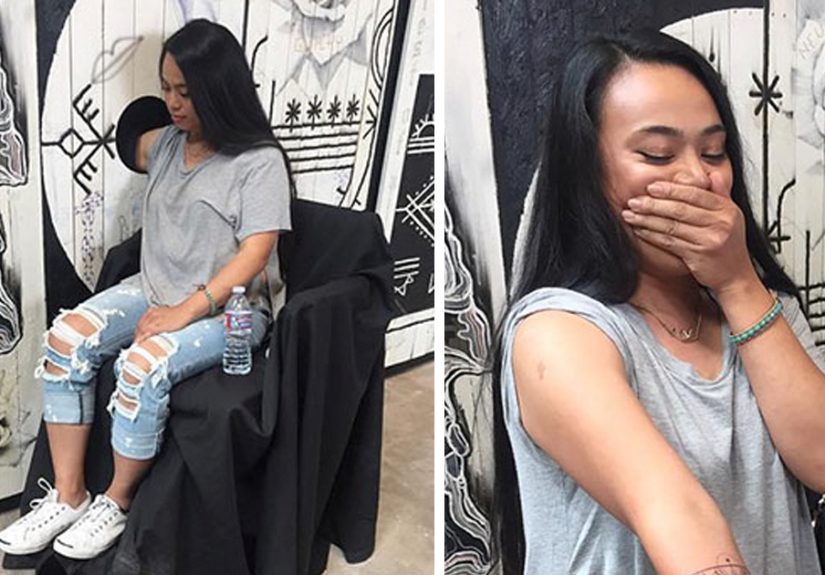
One of the most famous real-life examples of this idea came from artist Scott Campbell, whose “Whole Glory” project turned mystery tattooing into a cultural event. Participants were chosen by lottery, placed an arm through a wall, and received a tattoo without seeing the design beforehand. The artist worked anonymously, and the clients walked away with a story almost as permanent as the ink itself.
That project helped push surprise tattoos into wider public conversation, but the underlying idea has existed in tattoo culture for years. Many artists have long preferred working from flash, from pre-drawn designs, or from loosely defined concepts rather than from hyper-specific customer instructions. Some clients want total authorship. Others want something better: a strong piece made by someone who actually knows what belongs on skin.
That distinction matters. Skin is not paper, and tattoos are not just illustrations pasted onto a body. A talented tattoo artist thinks about shape, movement, visibility, aging, skin tone, body contour, and how the image will read from across the room. Sometimes the best design is not the one the client imagined while half-awake at 1:12 a.m. with a Pinterest board and too much confidence.
Why Artists Like the Arrangement
From the artist’s perspective, free surprise tattoos can be creative oxygen. Tattooing is personal work, but it is still client service. Many artists spend large chunks of their day answering messages, redrawing requested changes, and trying to politely explain why the phrase “tiny, detailed realism with watercolor and micro lettering” may not be the miracle the client thinks it is.
When an artist gets full or near-full freedom, the work can become looser, stronger, and more original. That freedom lets them make choices based on composition rather than customer panic. It also creates opportunities to experiment, sharpen a signature style, and produce work that actually belongs in a portfolio instead of hiding there like an awkward family photo.
Free tattoos also function as marketing, of course. Studios know that people love a dramatic concept. “Come get a good tattoo” is a fine message. “Come let me permanently surprise you” is a much better headline. Surprise tattoo events generate buzz, social sharing, waiting lists, and the irresistible energy of a gamble that most people would never take but absolutely want to watch.
Why Clients Say Yes Anyway
So why would anyone volunteer for mystery ink? First, trust. Many clients only say yes when they already admire the artist’s work. They are not handing over their arm to a random stranger with a machine and a dream. They are betting on a specialist whose line work, style, and taste they already respect.
Second, surprise tattoos can feel liberating. A lot of people get stuck trying to force deep symbolism into every design. Does the bird represent freedom? Does the flower represent growth? Does the tiny dagger represent resilience, heartbreak, hot girl summer, or all three? At a certain point, some clients become exhausted by trying to make a tattoo explain their entire inner life. A surprise tattoo cuts through that pressure. It allows a person to get something beautiful, bold, and emotionally honest without writing a thesis about it first.
Third, there is the thrill. Mystery tattoos create a feeling that ordinary appointments cannot. The anticipation is part fear, part excitement, part “I cannot believe I am doing this,” and part “well, this will definitely make dinner conversation less boring.” That emotional charge turns the tattoo into an event, not just a service.
Finally, some clients are drawn to surprise tattoos precisely because they produce a better story. A standard tattoo story is often, “I booked an appointment and got a snake.” A surprise tattoo story is more like, “I put my arm through a wall, trusted a tattoo legend, and came out with a skull holding flowers.” One of those stories politely nods. The other one kicks the door open.
The Psychology of the Mystery Tattoo Trend
There is something deeply modern about surprise tattoos. We live in an era of obsessive personalization. Algorithms recommend what to watch, what to buy, what to eat, and probably what shade of beige best reflects our emotional brand. Against that background, giving up control can feel almost luxurious. It is a rare chance to stop curating and let an experience happen.
That does not mean clients become passive. In the best surprise tattoo arrangements, trust is structured, not blind in a foolish way. A smart client may say yes to artist control while still setting boundaries around subject matter, placement, or size. That creates a useful balance: freedom inside guardrails. The artist still gets space to make strong work, and the client avoids accidentally walking home with a face tattoo of a medieval shrimp.
There is also a social dimension. Surprise tattoos tap into the same appeal as blind boxes, mystery drops, and tasting menus. People love suspense when they believe the person in charge has better taste than average. The key ingredient is credibility. Nobody wants random chaos. People want curated unpredictability. They want surprise with standards.
What Can Go Wrong
Now for the less glamorous part: surprise tattoos are still tattoos. They can be exciting, artistic, and unforgettable, but they are also permanent body modifications with real risks. That means the romance of surrendering control should never outrun common sense.
The first obvious risk is regret. A tattoo can be well executed and still feel wrong for the person wearing it. Maybe the imagery does not match their taste. Maybe the placement feels too visible. Maybe the joke stops being funny by Tuesday. A surprise tattoo is not automatically a bad tattoo, but it does increase the odds that the emotional reaction afterward will be complicated.
The second risk is practical: health and safety. Tattooing breaks the skin, which means sanitation, sterile equipment, clean ink, and proper aftercare matter every single time. A great concept does not excuse sloppy procedures. The same adrenaline that makes a surprise tattoo feel thrilling should never distract from basic studio standards.
There is also the issue of mismatch between artist and client. Not every artist’s style belongs on every person. A client who secretly wants delicate fine-line florals should not sign up for a mystery session with someone known for aggressive blackwork and demonic panthers. That is not fate. That is poor research wearing a leather jacket.
How to Be Smart Before Saying “Surprise Me”
If the idea of a free surprise tattoo sounds tempting, the smartest move is not to avoid it. It is to approach it like an adult with good instincts and a functioning frontal lobe. Research the artist. Study healed work, not just fresh social media photos. Understand the style. Know the studio’s hygiene standards. Confirm that fresh needles, clean equipment, and reputable inks are non-negotiable.
Then set boundaries clearly. Say no face tattoos, no neck tattoos, no partner names, no hate symbols, no explicit imagery, no giant pieces, and no placements you cannot live with professionally or personally. Some clients also give a soft yes-no list: yes to animals, plants, abstract symbols, and traditional imagery; no to text, portraits, and pop culture references. That still leaves room for surprise while protecting against disaster.
After the tattoo, follow aftercare instructions like they are the final exam. A surprise tattoo should not come with surprise infection. Redness, mild flaking, and tenderness can be normal during healing. Fever, worsening pain, spreading redness, or unusual drainage are not. Permanent art deserves temporary discipline.
Why the Trend Keeps Growing
Surprise tattoos keep spreading because they sit at the intersection of three powerful forces: trust in individual artists, the hunger for unique experiences, and the internet’s love of dramatic reveal moments. On social media, a reveal is content gold. There is tension, mystery, a final reaction shot, and a permanent outcome. It is basically reality television with better line work.
But beyond the spectacle, there is a real artistic argument in favor of these sessions. When clients choose artists for their vision instead of using them like human printers, tattooing feels more like collaboration and less like order fulfillment. That shift can lead to bolder compositions, cleaner ideas, and tattoos that look more alive on the body.
Free surprise tattoos also expose something funny about human behavior: many people say they want control, but what they really want is confidence. If an artist appears skilled, decisive, and trustworthy, clients will sometimes happily trade certainty for style. The bargain is not irrational. It is aesthetic faith.
Are Free Surprise Tattoos Actually Worth It?
Sometimes yes. Sometimes absolutely not. The answer depends on the artist, the client, and the boundaries. If the artist is exceptional, the studio is reputable, and the client genuinely appreciates the artist’s style, a surprise tattoo can become one of those rare experiences that is both thrilling and meaningful without trying too hard to be either.
But if the client is indecisive, overly anxious, deeply attached to controlling every detail, or only half-likes the artist’s work, then a mystery session is probably a terrible idea disguised as a fun anecdote. There is no shame in wanting a say over the permanent decor of your own body. Heroism is overrated when laser removal is expensive.
In the end, the appeal of free surprise tattoos is not just that they are free. It is that they turn tattooing into a leap of faith. They ask whether the client is willing to stop micromanaging and whether the artist is good enough to deserve that trust. When both answers are yes, the result can feel electric. When either answer is no, the smartest tattoo is the one that never happened.
That is why this trend continues to fascinate people. It is not merely about getting ink for free. It is about surrendering control in a culture addicted to customization. It is about letting art happen to you a little. And yes, it is also about being able to say, at some future party, “You know what? I once let a tattoo artist choose for me.” That sentence alone is worth at least one raised eyebrow and two follow-up questions.
Experiences Related to “Artists Gives Free Tattoos If You Agree For A Surprise”
The most memorable experiences around surprise tattoos usually share one thing: the emotion starts long before the needle does. People describe the waiting as a weird cocktail of confidence and panic. They feel brave in line, philosophical during the paperwork, and suddenly extremely aware that skin is, in fact, attached to them the moment the machine starts buzzing. Even people who love tattoos often say a mystery session feels different from a normal appointment. A regular tattoo asks, “Do you like this design?” A surprise tattoo asks, “Do you trust this person, your own instincts, and future-you all at once?” That is a much louder question.
For first-timers, the experience often feels like jumping into the deep end rather than politely testing the water with a toe. Some report that giving up the design decision actually makes the day easier. They do not have to overthink symbolism, defend a choice to friends, or revise a sketch until all personality has been sanded off. Instead, they show up, breathe, and commit. Strangely enough, that can feel calmer. The stress of deciding disappears, and what remains is the raw, cinematic thrill of not knowing.
For heavily tattooed clients, the appeal is slightly different. They often say surprise sessions remind them why they loved tattoos in the first place. After years of collecting ink, some people get tired of treating every appointment like a brand strategy meeting for their forearm. A mystery tattoo returns the experience to instinct. It gives the process an edge again. It feels less like buying a service and more like participating in something alive, collaborative, and a little dangerous in the artistic sense.
Artists also describe these sessions as unusually intimate. That may sound odd, considering some surprise tattoo events are anonymous, but anonymity can heighten focus. Without long conversations, artists pay closer attention to body language, skin, shape, and mood. They rely on intuition more than instructions. Many say the work feels freer, and clients often pick up on that energy. Even when the final design is small, the experience can feel huge because both sides are operating on trust instead of control.
Of course, not every experience is magical. Some people love the adrenaline in theory and then realize halfway through that they are simply anxious people making adventurous choices in public. Others are thrilled by the finished tattoo but surprised by how emotional the process felt. Relief, laughter, pride, and mild existential confusion can all arrive in the same hour. Permanent art has a talent for making a person feel like both the main character and the cautionary tale.
Still, the stories that endure are rarely about regret alone. They are about nerve. About saying yes to a moment that could not be fully controlled. About leaving with a tattoo and a story braided together so tightly that one no longer makes sense without the other. That is the real power of the surprise tattoo experience. The design matters, of course. But the memory of surrendering control, surviving the suspense, and seeing the reveal for the first time is often what people carry most vividly. The tattoo stays on the skin. The experience stays in the personality.