Table of Contents >> Show >> Hide
- Why an Old Desk Makes a Great Kitchen Island
- How to Choose the Right Desk for the Makeover
- Plan the Makeover Like a Smart DIYer, Not a Chaotic Optimist
- Tools and Materials You May Need
- Step-by-Step: Turn an Old Desk Into a Kitchen Island
- Design Ideas That Make the Makeover Look Custom
- Common Mistakes to Avoid
- Is This Budget Makeover Actually Worth It?
- What the Real-Life Experience Feels Like
- Conclusion
If your kitchen feels like it needs more prep space, more storage, and maybe just a little more personality, there is a wonderfully scrappy solution hiding in plain sight: that old desk collecting dust in the garage, guest room, or “I’ll-deal-with-it-later” corner of the house. A DIY kitchen island from an old desk makeover idea is one of those rare home projects that is equal parts practical, affordable, and oddly satisfying. You get a custom piece with charm, a story, and hopefully fewer mystery cords than the desk had in its former life.
Repurposing an old desk into a kitchen island is not just about saving money, though that certainly helps. It is also about using what you already have, turning a forgotten furniture piece into a hardworking kitchen feature, and creating a layout that feels more custom than cookie-cutter. With the right prep, paint, countertop, and a few smart upgrades, an old desk can become the stylish little island that finally makes your kitchen feel complete.
Why an Old Desk Makes a Great Kitchen Island
Desks are surprisingly good candidates for kitchen island makeovers. Many already have drawers, legroom, open storage, and a useful footprint. That means you are not starting from scratch like you would with a full cabinet build. Instead, you are upgrading an existing frame and tailoring it to your kitchen’s needs.
The beauty of this makeover is flexibility. A narrow desk can become a compact prep station in a smaller kitchen. A chunky executive desk can turn into a statement island with serious storage. A simple writing desk can be dressed up with a butcher block top, shelves, hooks, and stools until it looks like it was always meant to live next to your stove.
And let’s be honest: a repurposed kitchen island has more soul than a generic flat-pack cart. It brings a collected, lived-in feel that works especially well in farmhouse, cottage, vintage, transitional, and eclectic kitchens.
How to Choose the Right Desk for the Makeover
Look for Solid Bones
Before you fall in love with a desk’s cute drawers or dramatic little legs, check the structure. The best old desk for a kitchen island makeover feels sturdy, level, and capable of holding more than a lamp and a stack of unopened mail. Solid wood is ideal, but strong wood veneer pieces can also work if the frame is sound.
Give it the classic wiggle test. If it rocks, twists, or sounds like it is negotiating its own collapse, move on or plan for reinforcement. A kitchen island deals with daily bumps, shifting weight, countertop materials, appliances, groceries, and the occasional elbow-heavy conversation over coffee.
Think About Size Before You Commit
In a dream world, every kitchen island would be huge, beautiful, and dramatic enough to deserve its own zip code. In the real world, it needs to fit. Measure your space carefully before bringing the desk home or dragging it out of storage. You want the island to add function, not turn your kitchen into an obstacle course.
A compact desk can be perfect for smaller kitchens, while larger spaces may handle a wider or deeper piece. If you plan to add seating, an overhang on the countertop matters. If you plan to cook around the island, clear walking space matters even more.
Choose a Desk Shape That Works for Kitchen Life
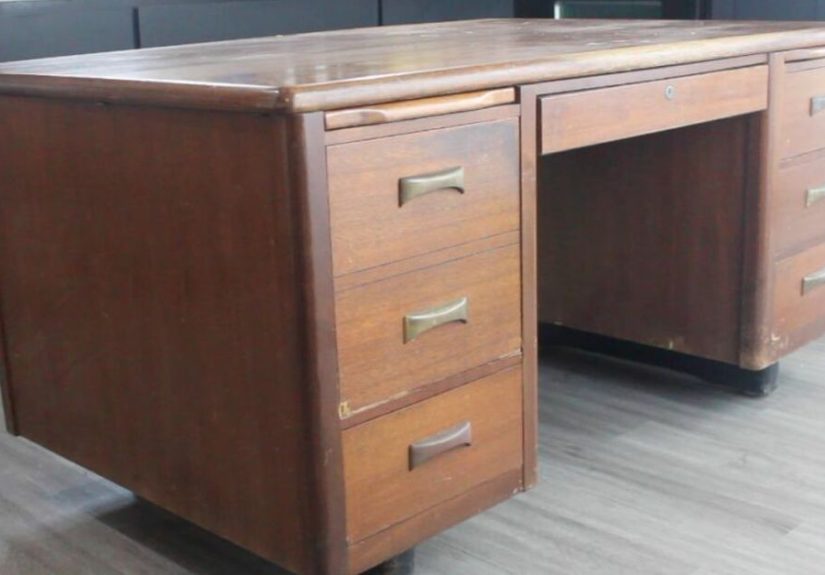
Some desks need only a cosmetic refresh. Others need a full makeover montage. A desk with drawers on one side and open leg space on the other can be especially useful because it naturally creates a seating nook. A partner desk with drawers on both sides offers more storage. A writing desk with a simple top may need added shelves or baskets underneath to earn its place in the kitchen.
Avoid desks with flimsy backs, delicate decorative trim, or tops that cannot handle moisture and wear. Kitchens are not gentle environments. Steam, splashes, crumbs, and cleaning products all show up uninvited.
Plan the Makeover Like a Smart DIYer, Not a Chaotic Optimist
Before you sand a single inch, decide what you want the finished island to do. Is it mainly prep space? A breakfast perch? Extra storage? A coffee station? The answer affects everything from height and top material to shelving, hardware, and whether you add casters.
Height and Comfort Matter
Most kitchen islands work best around standard counter height, so compare your desk height to your existing counters. If the desk is too low, you may be able to add height with a thicker countertop, feet, or casters. If it is too tall, trimming legs may be possible, but that takes precision and confidence. This is not the moment for “close enough” energy.
Clearance Is Not Optional
Leave enough room around the island for doors, drawers, and people to move comfortably. A beautiful island that traps the dishwasher door or forces family members to sidestep like crabs is not a success story. Comfort and flow should always win over squeezing in a bigger piece.
Think Through Storage
This is where the desk can shine. Existing drawers can store utensils, linens, baking tools, or all those random clips you swear are important. The open underside can hold stools, baskets, bins, or a lower shelf for cookbooks and mixing bowls. You can also add towel bars, side hooks, or a narrow spice rack to maximize every inch.
Tools and Materials You May Need
Your exact supply list depends on the desk and the style you want, but many makeovers include sandpaper, wood filler, primer, paint, a durable topcoat, new hardware, screws, wood glue, a drill, a screwdriver, and a countertop material such as butcher block. Some DIYers add beadboard, trim, shiplap-style panels, furniture feet, corbels, casters, or peel-and-stick accents for extra charm.
If you plan to use the top for food prep, choose a finish that makes sense for that purpose. If the countertop is mainly decorative or used with cutting boards and trays, your finishing choices open up more. Either way, moisture resistance matters. Kitchens are splash zones disguised as gathering spaces.
Step-by-Step: Turn an Old Desk Into a Kitchen Island
1. Clean It Thoroughly
Old furniture carries history, and sometimes that history is sticky. Start by removing hardware, emptying drawers, vacuuming dust, and cleaning every surface well. Grease, wax, grime, and mystery residue can ruin paint adhesion faster than you can say “why is this peeling?”
2. Repair and Reinforce the Structure
Tighten loose screws. Reglue joints if needed. Fill dents or holes with wood filler. If the desk has a thin or damaged back, reinforce it. If the top is weak, consider removing it and replacing it entirely. This is also the time to add support under the future countertop if you are installing something heavier.
3. Sand for a Better Finish
Light sanding helps remove glossy finishes, smooth rough patches, and give primer something to grip. You do not need to sand the piece into another dimension, but you do want a clean, dull, ready-to-paint surface. Wipe away dust carefully afterward, because paint and dust together create the kind of texture nobody asks for.
4. Prime, Then Paint
A good primer helps with adhesion, durability, and blocking old stains or wood tones. After priming, paint in thin, even coats. Two light coats usually look better than one heavy one. Let the paint dry fully between coats. Then seal it with a durable protective finish suited for furniture that will see daily use.
Color-wise, you have options. White makes the island feel fresh and classic. Navy, charcoal, forest green, and deep black create contrast. Soft sage, warm greige, and muted blue keep things airy. If your kitchen already has a lot going on, a calm neutral may be the best wingman.
5. Upgrade the Countertop
This is the step that takes the piece from “cute desk in the kitchen” to “actual kitchen island.” Butcher block is a favorite because it adds warmth, can be cut to size, and suits many design styles. A thicker wood top can also visually balance a lightweight desk base. For a more dramatic look, some DIYers use stone remnants or durable prefab surfaces.
If you want seating, plan for an overhang on one side. If not, you can keep the top flush for a tidy footprint. Just make sure the finished proportions still look intentional. A giant countertop on a tiny desk can read less “designer custom” and more “hat on a cat.”
6. Add Storage Extras
Now the fun begins. Line the drawers. Add baskets underneath. Install side hooks for towels or utensils. Attach a narrow rail for dish towels. Slip in a lower shelf if the frame allows. This is the point where your repurposed furniture island starts earning applause from both your practical side and your inner stylist.
7. Decide Between Fixed Feet or Casters
If you want mobility, locking casters can turn the island into a rolling workstation. That is especially useful in smaller kitchens or multipurpose spaces. If you want a more built-in look, fixed feet or a furniture base may feel more polished. Either way, stability matters. A wobbly island is charming only if it is in a pirate movie.
Design Ideas That Make the Makeover Look Custom
Farmhouse Style
Paint the base a soft white or muted green, add a warm butcher block top, switch in cup pulls or antique brass hardware, and tuck baskets underneath. This look feels homey without trying too hard.
Modern Cottage Style
Choose a creamy neutral paint color, simple matte black hardware, and clean-lined stools. Add one open shelf for cookbooks or ceramics. The result feels collected and calm.
Vintage Character
Let the desk’s original details shine. Keep carved drawer fronts, preserve unique legs, and use a lightly distressed finish. Pair with old-school bin pulls and a darker wood top.
Bold Statement Piece
Paint the island a saturated color like navy or deep olive while keeping the surrounding cabinets light. This creates contrast and gives the room a focal point without a full renovation.
Common Mistakes to Avoid
The first mistake is choosing a desk based only on appearance. Pretty is nice. Sturdy is necessary. The second is skipping prep work. Cleaning, sanding, priming, and reinforcing are not glamorous, but they are what make the final result last.
Another common mistake is ignoring proportions. If the island is too deep, too tall, too low, or too bulky for the kitchen, daily life gets annoying fast. And finally, do not forget about the countertop finish. A beautiful wood surface that is not properly protected will show wear quickly in a hardworking kitchen.
Is This Budget Makeover Actually Worth It?
In many cases, absolutely. If you already own the desk or score one secondhand, your biggest costs may be paint, primer, hardware, and the new top. That can still be significantly more affordable than buying a large premade island or paying for custom cabinetry. Plus, you end up with a one-of-a-kind piece that fits your space and style.
There is also the satisfaction factor, which is hard to price. Turning an outdated desk into a beautiful kitchen island feels like winning an argument against waste, bland furniture, and your own unfinished project pile all at once.
What the Real-Life Experience Feels Like
One of the best parts of a DIY kitchen island from an old desk makeover idea is that the transformation keeps paying you back after the paint dries. At first, the project feels like a practical decision. You need more storage. You need more prep room. You do not want to spend a small fortune. So you start looking at that old desk and thinking, “You know what? You might have one more career left in you.”
Then the makeover begins, and it becomes oddly personal. You notice the little details in the wood. You find old scratches, maybe a coffee ring, maybe a drawer that sticks for no logical reason except tradition. As you clean, sand, repair, and paint, the desk slowly stops looking like leftover furniture and starts looking like possibility. That is the part many people do not talk about enough. A repurposing project changes the way you see your home. Instead of shopping first, you begin noticing what can be reimagined.
Once the island is in place, daily kitchen life gets easier in small but meaningful ways. Suddenly there is a spot for chopping vegetables without taking over the entire counter. There is room to set down groceries, mix batter, stage dinner plates, or let someone sit and talk while you cook. The drawers hold useful things instead of random paperclips and old charging cables from 2012. It feels efficient, but it also feels warm, like the kitchen has learned a new trick.
There is usually a moment when someone walks in and says, “Wait, that used to be a desk?” That reaction is half the fun. A good makeover feels surprising in the best way. It does not scream homemade. It whispers custom. It makes the room feel more layered and intentional, especially when the finish, hardware, and countertop tie into the rest of the kitchen.
Of course, the project is not always perfectly smooth. Maybe one drawer needs adjusting three times. Maybe the paint color looks different in your kitchen than it did in the can. Maybe installing the countertop reminds you that measuring is less of a suggestion and more of a life skill. But those little frustrations often become the stories you laugh about later. They are also what make the finished island feel earned.
Another real-life perk is flexibility. A repurposed desk island can evolve with your needs. Today it might be a coffee station and prep zone. Next year it might hold baking supplies, schoolwork, or holiday serving dishes. Add stools, remove stools, switch out hardware, repaint it, or style it for the season. It is not precious. It is useful. That is a very good combination in a kitchen.
Most of all, there is pride in knowing that the piece is yours in a way a store-bought island never could be. You chose the desk. You imagined the makeover. You fixed what was tired, highlighted what was beautiful, and gave it a new purpose in the busiest room of the house. That is more than decorating. That is storytelling with wood, paint, and a little stubborn optimism.
So if you have an old desk and a kitchen that needs help, this makeover idea is more than doable. It is practical, stylish, budget-friendly, and just plain fun. Not bad for a piece of furniture that was probably one junk-drawer away from retirement.
Conclusion
A DIY kitchen island from an old desk makeover idea is one of the smartest ways to add storage, prep space, and character without committing to a massive renovation. The trick is choosing a sturdy desk, planning the proportions carefully, using durable finishes, and upgrading the top so the final piece feels intentional. Done right, this project can look custom, function beautifully, and save money while giving old furniture a genuinely useful second life.
If you love budget-friendly home improvement ideas with personality, this one checks every box. It is part makeover, part problem-solving, and part creative victory lap. In other words, it is exactly the kind of DIY project that makes you admire your kitchen just a little longer every time you walk by.