Table of Contents >> Show >> Hide
- What “Liver Function Tests” Really Measure (And Why the Name Is a Little Cheeky)
- What At-Home Liver Function Tests Are (And What They Aren’t)
- How the At-Home Process Typically Works
- What’s Usually Included in an At-Home Liver Panel
- How At-Home Liver Function Tests Can Help: 7 Practical Use Cases
- 1) Establishing a baseline
- 2) Monitoring mild abnormalities
- 3) Supporting lifestyle-change feedback (without the drama)
- 4) Bringing better info to a medical appointment
- 5) Convenience for people with scheduling barriers
- 6) Monitoring when you’re on medications that can affect the liver (with clinician guidance)
- 7) Spotting “silent” problems earlier
- How to Interpret Results Without Spiraling
- Limitations and Pitfalls (A.K.A. Why Your Liver Isn’t a Mood Ring)
- Who Should Consider At-Home Testingand Who Shouldn’t
- How to Choose a Legit At-Home Liver Test
- What to Do After You Get Your Results
- How to Support Liver Health Between Tests (No Weird Cleanses Required)
- Quick FAQ
- Real-World Experiences With At-Home Liver Function Tests (About )
- Conclusion
Your liver is basically your body’s “quiet coworker” who does a ton of behind-the-scenes work and almost never complainsuntil it really, really needs attention.
The problem? A lot of liver issues can stay silent for a long time. That’s why liver function tests (often called a “liver panel” or “LFTs”) matterand why at-home liver function tests have gotten so popular.
If you’ve ever thought, “I’d like to check in on my liver… without taking a half-day off work, sitting in a waiting room, and accidentally learning three strangers’ life stories,” you’re the target audience.
At-home liver tests can be a convenient way to spot potential red flags, track trends, and bring better data to your next doctor visit.
But they’re not magic, not perfect, and not a substitute for medical care when something feels wrong.
What “Liver Function Tests” Really Measure (And Why the Name Is a Little Cheeky)
“Liver function tests” is a common label, but it’s slightly misleading. Many of these tests don’t measure “function” the way a car inspection measures whether the engine turns on.
Instead, they often measure markers that suggest liver cell irritation or injury, bile flow issues, or how well the liver is producing certain proteins.
Common categories of liver-related blood markers
- Enzymes that rise when liver cells are irritated or injured: ALT and AST are the best-known examples.
- Markers linked to bile flow: alkaline phosphatase (ALP) and sometimes GGT can rise when bile ducts are inflamed or blocked.
- Markers of processing and “output”: bilirubin can rise when the liver can’t process or move it efficiently.
- Markers of “synthetic function”: albumin and clotting measures like PT/INR can reflect how well the liver is making proteins the body needs.
In other words: your liver panel is less like a single “grade” and more like a dashboard with multiple warning lights.
One light flickering doesn’t always mean the engine is toastbut it does mean you should pay attention.
What At-Home Liver Function Tests Are (And What They Aren’t)
Most at-home liver function tests work like this: you collect a small blood sample at home (often a finger-prick), mail it to a laboratory, and receive results through an online portal.
Some services include clinician review depending on the company and your state.
What they are: a convenient way to measure common liver-related biomarkers without an in-person blood draw appointment.
What they aren’t: a complete liver evaluation, a diagnosis, or an emergency tool.
If you have serious symptomsyellowing of the skin or eyes, very dark urine, severe abdominal pain, confusion, fainting, uncontrolled vomiting, or signs of significant illnessskip the mailbox plan and seek urgent medical care.
Home tests are for monitoring and early detection, not crisis management.
How the At-Home Process Typically Works
Step 1: Choose the right test panel
Some kits focus on a basic liver panel. Others bundle liver markers inside broader panels (like a comprehensive metabolic panel).
If your goal is liver tracking specifically, confirm the panel includes the key markers you care about (more on those in a minute).
Step 2: Collect your sample
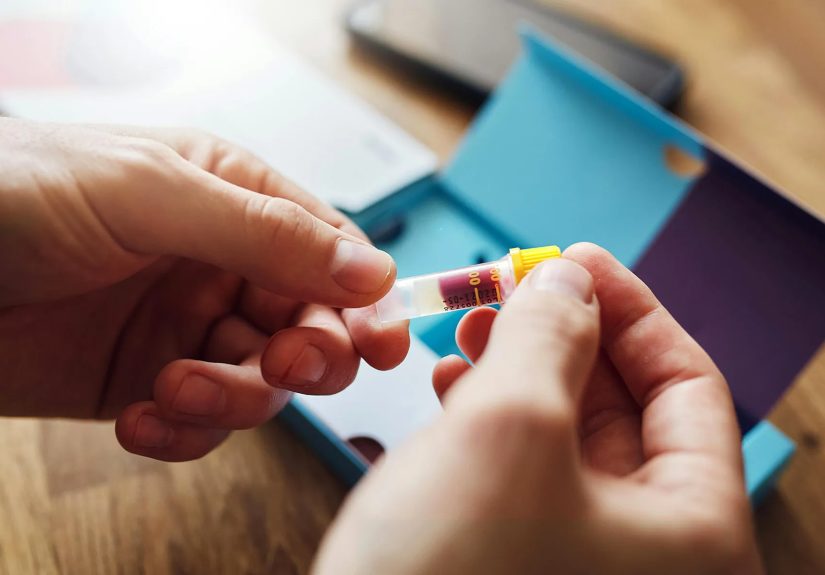
Most kits use a finger-prick and collect capillary blood. You may place drops into a small tube or onto special collection paper, depending on the method.
The biggest “secret” to getting a useful result is not mystical biohackingit’s following the collection instructions carefully so the sample is usable.
Step 3: Ship it to a lab and get results
Samples are mailed to a lab for analysis. In the U.S., reputable services use laboratories that meet federal standards (for example, laboratories operating under CLIA requirements).
Turnaround times vary, but you’ll typically see results within days after the lab receives your sample.
What’s Usually Included in an At-Home Liver Panel
Panels vary, but many include a mix of these markers:
- ALT (alanine aminotransferase): often rises with liver cell injury or inflammation.
- AST (aspartate aminotransferase): can rise with liver injury but also with muscle injury, so context matters.
- ALP (alkaline phosphatase): can rise with bile duct problems (and also bone-related issues).
- GGT (gamma-glutamyl transferase): can support interpretation of bile flow issues and enzyme patterns.
- Total bilirubin (sometimes with direct bilirubin): relates to bile processing and excretion.
- Albumin and total protein: reflect protein production and overall protein status.
Some traditional liver assessments also look at PT/INR (clotting time), which can be important when evaluating liver synthetic function,
but not all at-home kits include it.
Always check exactly what you’re buyingbecause “liver test” can mean a lot of different menus.
How At-Home Liver Function Tests Can Help: 7 Practical Use Cases
1) Establishing a baseline
If you’ve never had liver labs done (or can’t remember the last time you did), an at-home test can create a baseline.
That baseline can be useful laterbecause trends over time are often more informative than a single snapshot.
2) Monitoring mild abnormalities
Mildly elevated liver enzymes are common and can happen for many reasons.
Sometimes they normalize on repeat testing, especially when elevations are small.
If a clinician has already evaluated you and recommended rechecking, an at-home test may be a convenient way to track whether values are trending up, down, or staying stubborn.
3) Supporting lifestyle-change feedback (without the drama)
People working on weight, nutrition, metabolic health, or overall wellness sometimes use liver markers as one piece of feedback.
For example, fatty liver disease can be associated with elevated ALT and AST, and improved metabolic health may improve those labs over time.
It’s not a “before-and-after photo” for your liverbut it can be a data point.
4) Bringing better info to a medical appointment
At-home testing can help you show up to a doctor visit with more than “I feel… kind of off?”
A liver panel can help guide the conversation about what to investigate nextespecially if results are clearly abnormal.
5) Convenience for people with scheduling barriers
Not everyone can easily get to a lab. Rural access, mobility limitations, caregiving responsibilities, or work schedules can make routine blood draws a hassle.
At-home testing can lower that barrier.
6) Monitoring when you’re on medications that can affect the liver (with clinician guidance)
Some prescription medications require periodic monitoring of liver-related labs.
If your clinician is comfortable with home testing for follow-up checks, it may help you stay consistent.
The key phrase is “with clinician guidance”because medication monitoring often requires specific timing and additional labs beyond a basic panel.
7) Spotting “silent” problems earlier
Many liver conditions can be quiet early on. A liver panel can sometimes catch abnormalities before symptoms show up.
That doesn’t mean every abnormal result is seriousbut it can prompt appropriate follow-up.
How to Interpret Results Without Spiraling
If you’ve ever typed a lab value into a search bar and immediately convinced yourself you’re a medical mystery destined for a documentary series
congratulations, you’re human.
Here’s a calmer approach.
Look at patterns, not just a single number
Clinicians often interpret liver tests by the overall pattern:
elevations mostly in ALT/AST suggest a “hepatocellular” pattern (liver cell irritation),
while elevations in ALP and bilirubin can suggest a more “cholestatic” pattern (bile flow issues).
Mixed patterns exist too.
Remember: “normal” ranges aren’t universal
Reference ranges vary by lab, method, age, and other factors. Use the range provided with your report.
Also, some guidelines discuss that “healthy normal” ALT values may be lower than what many labs listanother reason interpretation should be individualized.
Don’t assume “normal” means “nothing is going on”
Liver enzymes can be normal even when someone has liver disease, depending on the condition and stage.
That’s why clinicians may use additional toolsrisk scores, imaging (like ultrasound), hepatitis testing, iron studies, or other labswhen warranted.
Use repeat testing wisely
Mild elevations sometimes improve on repeat, especially if there were temporary factors (recent intense exercise, illness, or certain supplements/medications).
But repeated abnormal resultsespecially if trending upwarddeserve real follow-up, not just “I’ll retest forever until the universe gives me the result I want.”
Limitations and Pitfalls (A.K.A. Why Your Liver Isn’t a Mood Ring)
At-home liver function tests can be helpful, but they have limitations you should know before you treat your portal login like a fortune teller.
Sample collection issues can affect accuracy
Finger-prick samples can be sensitive to collection technique and shipping conditions.
If the sample is too small, contaminated, or improperly stored, results may be delayed or unreliable.
Reputable services provide clear instructions for a reasonfollow them like they’re IKEA directions for your health.
A liver panel doesn’t diagnose a specific cause
Abnormal results can happen for many reasons, including common and treatable ones.
That’s why abnormal labs often trigger additional evaluation rather than a single definitive answer.
Some markers aren’t liver-specific
AST can rise with muscle injury. ALP can rise from bone sources. Even bilirubin can vary for reasons that aren’t dangerous.
Context is everything, and a one-number panic rarely helps.
It’s not a substitute for a full evaluation
If a clinician is concerned about liver disease, they may recommend additional testing, imaging, and history-based evaluation.
At-home testing can be a first stepjust not the finish line.
Who Should Consider At-Home Testingand Who Shouldn’t
At-home testing may be a good fit if you:
- Need a convenient way to check liver markers as part of routine monitoring (with clinician awareness).
- Want a baseline liver panel to bring to a healthcare appointment.
- Have previously discussed follow-up testing for mildly abnormal labs.
- Have barriers to getting to a lab (time, transportation, access).
At-home testing may NOT be the right move if you:
- Have alarming symptoms (jaundice, very dark urine, severe abdominal pain, significant weakness, confusion, fainting, persistent vomiting).
- Need urgent evaluation or you’re very sick.
- Have complex medical conditions where timing and additional labs matter (ask your clinician first).
How to Choose a Legit At-Home Liver Test
The at-home testing world ranges from excellent to “this feels like it was invented during a group project the night before it was due.”
A few quality signals to look for:
- Clear lab standards: Look for testing performed by laboratories meeting U.S. clinical lab requirements (such as CLIA-regulated labs).
- Transparent biomarkers: The company should clearly list exactly which markers are included.
- Actionable reporting: Results should include reference ranges and explain what “out of range” may mean.
- Clinician support (when available): Some services include clinician review or consult options.
- Reasonable claims: Avoid any kit promising to “detox your liver” or “reverse damage instantly.” Your liver is powerful, but it’s not a movie montage.
What to Do After You Get Your Results
If results are in range
Greatstore the report, note the date, and consider it a baseline.
If you have risk factors or ongoing concerns, discuss appropriate screening or follow-up with a healthcare professional.
If results are mildly out of range
Don’t panic. Mild elevations are common.
Consider whether temporary factors could apply (recent strenuous exercise, acute illness, new supplements, medication changes).
Many clinicians recommend repeating testing when elevations are mildespecially if you feel wellthen deciding next steps based on trends and risk factors.
If results are clearly abnormal or worsening
Contact a healthcare professional.
Depending on the pattern and level, evaluation may include additional labs (like viral hepatitis testing), iron studies, clotting tests, and imaging such as ultrasound.
The point isn’t to “prove you’re sick”it’s to identify what’s happening and treat it early if needed.
How to Support Liver Health Between Tests (No Weird Cleanses Required)
- Focus on metabolic health: Balanced nutrition, movement, and gradual weight management can support liver healthespecially for fatty liver risk.
- Use medications wisely: Take medicines only as directed and talk with a clinician before mixing supplements or high-dose products.
- Be cautious with alcohol: If you drink, keep it moderate and avoid binge patterns. (If you’re underage, the safest choice is not drinking at all.)
- Stay up to date on vaccines: Hepatitis vaccination can prevent certain viral infections that affect the liver.
- Don’t ignore symptoms: If you notice jaundice, dark urine, major fatigue, or persistent abdominal pain, get evaluated.
Quick FAQ
Can an at-home liver test diagnose liver disease?
No. It can show abnormal markers that suggest liver irritation or dysfunction, but diagnosis usually requires additional evaluation and clinical context.
How often should I test?
It depends on your goals and medical situation. If you’re monitoring a known issue, follow a clinician’s plan.
For general tracking, it’s usually better to test occasionally and focus on trends rather than turning it into a weekly hobby.
What’s the biggest benefit of at-home testing?
Convenienceand the ability to catch potential issues early or track improvement over time, especially when access to in-person testing is difficult.
Real-World Experiences With At-Home Liver Function Tests (About )
To make this topic feel less like a lab textbook and more like real life, here are examples of experiences people commonly report when using at-home liver function tests.
These are illustrative scenarios (not medical advice), meant to show how at-home results can guide smarter next steps.
“I felt fine… but my numbers weren’t”
One of the most common stories is someone who feels totally normal and orders an at-home panel out of curiosityonly to find mildly elevated ALT or AST.
The first reaction is often a full-body stress response plus a sudden urge to Google “ALT 68 am I doomed.”
But after talking with a clinician, the outcome is frequently more practical:
repeat the test, review medications and supplements, and check for common causes.
Sometimes the repeat test comes back closer to normal, especially if the first test followed a heavy workout week or a recent illness.
The experience people take away is that the at-home test didn’t “diagnose” anythingit provided a nudge to follow up thoughtfully instead of ignoring the possibility.
“I used it to track progressand it kept me motivated”
Another common experience: people making lifestyle changes (often related to weight, nutrition, or metabolic health) use a liver panel as one metric of improvement.
They might test, work on consistent habits for a few months, then test again.
When numbers move in a healthier direction, it feels like proof that the boring stuffwalking, balanced meals, better sleepactually matters.
Even when the numbers don’t change fast, the testing can help set realistic expectations: the liver responds over time, and progress is often measured in trends, not dramatic overnight flips.
Many people say the biggest benefit was bringing objective data to their clinician and having a clearer, calmer conversation about next steps.
“It reduced friction, so I stopped putting it off”
A lot of people don’t avoid liver testing because they’re anti-health; they avoid it because scheduling is a pain.
At-home kits remove barriers like transportation, lab hours, childcare coordination, or time off work.
People commonly describe at-home testing as “finally doable,” which matters because consistency is often the hardest part of monitoring.
The tradeoff is that at-home sampling requires care: you have to follow instructions, collect the right amount of blood, and ship the sample correctly.
Still, many users say the convenience outweighed the hassle, especially when the alternative was “I’ll do it someday” (which usually means “never”).
“My results were abnormaland it pushed me to get proper care”
Perhaps the most important experience: someone gets a clearly abnormal result and realizes this is not a “wait and see” moment.
They contact a clinician, who orders confirmatory labs anddepending on the patternadditional testing.
Sometimes the cause ends up being treatable and relatively straightforward, and the at-home test simply accelerated the timeline to evaluation.
People often describe feeling grateful that they didn’t stay in guesswork mode for months.
The at-home test didn’t replace the healthcare system; it acted like an early alert that encouraged timely follow-up.
Conclusion
At-home liver function tests can be genuinely useful when you treat them as a smart toolnot a final verdict.
They can help you establish a baseline, monitor trends, and identify when it’s time to have a deeper medical conversation.
The best approach is simple: choose a reputable test, follow the instructions carefully, interpret results in context, and use what you learn to make sensible next steps.
Your liver may not send push notifications, but with the right testing strategy, you can still stay ahead of problemswithout turning your life into a constant lab refresh page.