Table of Contents >> Show >> Hide
- A quick safety note (because your body deserves fine print)
- The “Snack Formula” that works in real life
- Your Visual Portion Guide (a.k.a. “How much is too much?”)
- The Visual Snack Gallery: “What it looks like” + why it works
- 1) Apple slices + peanut butter
- 2) Greek yogurt + berries + chia
- 3) Veggies + hummus
- 4) Cottage cheese + tomato + pepper
- 5) Hard-boiled egg + baby carrots
- 6) A small handful of nuts
- 7) Tuna packet + cucumber “coins”
- 8) Edamame (steamed or dry-roasted)
- 9) Whole-grain crackers + cheese
- 10) Chia pudding (make-ahead)
- 11) Air-popped popcorn
- 12) Avocado “boats”
- Snack swaps: same craving, better blood-sugar vibe
- On-the-go snacks that don’t require a kitchen (or hope)
- A simple “snack check” before you eat
- Common snack mistakes (and easy fixes)
- FAQ: Quick answers people actually want
- Conclusion: Your snack doesn’t have to be perfectjust purposeful
- Real-life experiences people report (and what tends to work) 500-word add-on
Snacking with type 2 diabetes shouldn’t feel like defusing a bomb every afternoon at 3 p.m. The goal isn’t “never eat snacks.”
The goal is snack on purpose: choose foods that help you feel satisfied, support steadier blood sugar, and actually taste like food (not punishment).
This visual guide is built around what diabetes educators and major U.S. health organizations commonly recommend: balance carbs with protein/fat, prioritize fiber, and keep portions realistic.
A quick safety note (because your body deserves fine print)
Everyone’s blood sugar response is different. Your best snack depends on your medications, activity level, meal timing, and targets from your care team.
If you use insulin or medications that can cause low blood sugar, snack choices (and timing) matter a lotask your clinician what they want you to do for lows and pre-exercise snacks.
This article is educational, not medical advice.
The “Snack Formula” that works in real life
If you remember one thing, make it this: fiber + protein + (optional) smart carbs.
This combo tends to slow digestion and helps you stay full longeraka fewer snack spirals.
Use this simple build:
- Start with a protein (egg, Greek yogurt, cottage cheese, tuna, edamame, nuts).
- Add fiber (berries, veggies, beans, whole grains, chia, popcorn).
- If you want carbs, choose “slower” carbs (fruit, beans, whole grains) and keep portions modest.
Visual carb rule of thumb (no calculator required)
Many diabetes meal plans treat one “carb serving” as about 15 grams of carbohydrate.
That doesn’t mean you must eat exactly 15g per snacksome people do better with less, others use that range intentionallyespecially if the snack is replacing part of a meal.
The key is consistency and label awareness.
Your Visual Portion Guide (a.k.a. “How much is too much?”)
Portion creep is real. A “handful” can become a “handful times three” if you’re eating straight out of the bag while scrolling.
Here are easy visuals that work without measuring cups:
Portion visuals you can picture instantly
- Nuts: 1 small handful (about 1/4 cup). If it looks like “a snack for a hiking trip,” it’s probably too much.
- Nut butter: 1–2 tablespoons (think “thinly painted,” not “spackled on”).
- Cheese: 1–2 ounces (about 1–2 thumb-sized pieces).
- Hummus: 1/4–1/3 cup (a generous scoop, not a soup bowl).
- Berries: about 1 cup (a small bowl).
- Popcorn: a few cups air-popped (a big bowl can still be reasonable if it’s mostly air).
The Visual Snack Gallery: “What it looks like” + why it works
Below are snack “cards” you can screenshot mentally. Each one includes a visual, a quick why, and smart tweaks.
(Carb counts vary by brand and portionalways check labels if you track carbs.)
1) Apple slices + peanut butter
Looks like: 1 small apple, sliced, with 1–2 tbsp peanut butter for dipping.
Why it works: Fiber from the apple + fat/protein from nut butter can be more satisfying than fruit alone.
Upgrade: Add cinnamon. It feels like dessert without becoming dessert.
2) Greek yogurt + berries + chia
Looks like: A small bowl of plain Greek yogurt topped with berries and a sprinkle of chia.
Why it works: Protein + fiber combo. Choose unsweetened yogurt to avoid surprise sugar.
Upgrade: Add chopped walnuts for crunch and staying power.
3) Veggies + hummus
Looks like: A cup of crunchy raw veggies (carrots, cucumbers, peppers) + 1/4–1/3 cup hummus.
Why it works: Fiber (veggies + chickpeas) plus a little protein and fat.
Upgrade: Sprinkle paprika or everything-bagel seasoning on top.
4) Cottage cheese + tomato + pepper
Looks like: A small bowl of cottage cheese with sliced tomatoes, cracked pepper, and herbs.
Why it works: High protein, minimal prep, and surprisingly satisfying.
Upgrade: Add cucumber or a few whole-grain crackers if you want carbs.
5) Hard-boiled egg + baby carrots
Looks like: 1–2 hard-boiled eggs + a side of crunchy carrots.
Why it works: Protein-forward with a fiber “sidekick.”
Upgrade: Add a spoon of mustard or Greek-yogurt dip for flavor without much sugar.
6) A small handful of nuts
Looks like: 1/4 cup unsalted almonds, walnuts, pistachios, or mixed nuts.
Why it works: Protein + healthy fats help with satiety; low in carbs for many people.
Watch: Portionsnuts are nutritious, but they’re also calorie-dense.
7) Tuna packet + cucumber “coins”
Looks like: A single-serve tuna packet eaten with a fork + sliced cucumber.
Why it works: Protein-heavy, zero cooking, very “I have my life together” energy.
Upgrade: Add lemon pepper or hot sauce.
8) Edamame (steamed or dry-roasted)
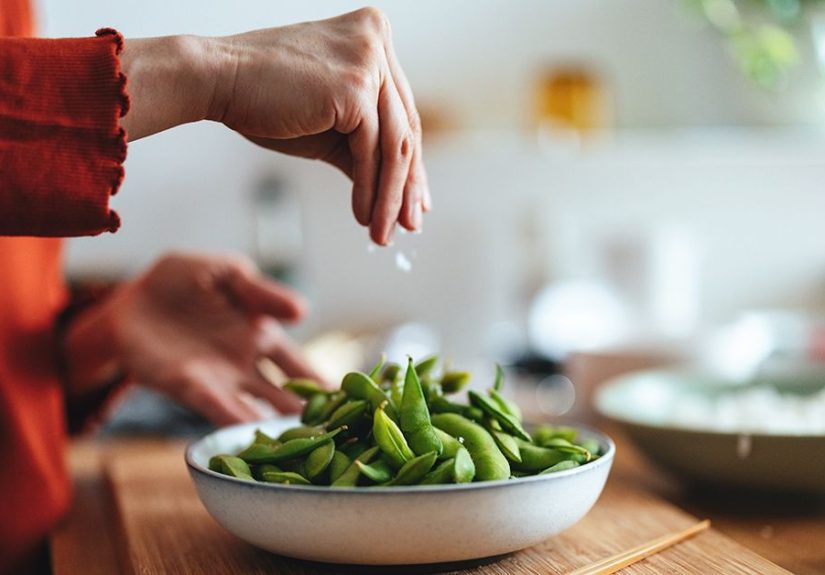
Looks like: A small bowl of shelled edamame with a pinch of salt.
Why it works: Plant protein + fiber. Great when you want something snacky but not sugary.
Upgrade: Toss with chili flakes or garlic powder.
9) Whole-grain crackers + cheese
Looks like: A small serving of whole-grain crackers with 1–2 ounces of cheese.
Why it works: Carbs + protein/fat can be steadier than crackers alone.
Watch: Crackers vary a lotcheck portion sizes and sodium.
10) Chia pudding (make-ahead)
Looks like: Chia seeds soaked in milk (dairy or unsweetened soy) until thick, topped with berries.
Why it works: Fiber-forward and surprisingly filling.
Upgrade: Add vanilla and cinnamon. Your taste buds will file a formal complaint if you don’t.
11) Air-popped popcorn
Looks like: A big bowl of air-popped popcorn with herbs or nutritional yeast.
Why it works: Whole grain, volume snack, and the crunch factor is undefeated.
Watch: Butter-heavy or sugary coatings can turn popcorn into a stealth dessert.
12) Avocado “boats”
Looks like: Half an avocado with lemon, salt, and optional salsa.
Why it works: Healthy fats + fiber; minimal carbs for many people.
Upgrade: Add canned salmon or a chopped boiled egg on top.
Snack swaps: same craving, better blood-sugar vibe
Managing type 2 diabetes isn’t about never craving crunchy, salty, or sweet. It’s about having a Plan B that doesn’t taste like cardboard.
If you want crunchy…
- Instead of chips: popcorn, roasted chickpeas, or nuts (portion-controlled).
- Instead of crackers-only: crackers + cheese or hummus.
- Instead of pretzels-only: whole-grain option + a protein dip.
If you want sweet…
- Instead of cookies: berries + Greek yogurt, or apple + nut butter.
- Instead of ice cream nightly: chia pudding, cottage cheese with cinnamon, or a small portion paired with protein (talk with your clinician if you count carbs tightly).
- Instead of “sugar-free” mystery snacks: check labelssome have lots of carbs, fats, or sugar alcohols that don’t agree with everyone.
On-the-go snacks that don’t require a kitchen (or hope)
- Single-serve nuts (unsalted or lightly salted)
- String cheese or cheese sticks
- Tuna or salmon packets
- Roasted edamame
- Jerky (choose lower-sugar options; watch sodium)
- Plain Greek yogurt cup (check added sugar)
- Whole fruit (small apple, orange) + a nut butter packet
A simple “snack check” before you eat
Ask yourself these 4 questions
- Am I hungryor bored/tired/stressed? (No shame. Just information.)
- Does this snack have protein or fiber? If not, can I add one?
- What portion am I actually eating? (Bag snacks are sneaky.)
- How will I feel in an hour? The best snack is the one that doesn’t make you hungrier later.
Common snack mistakes (and easy fixes)
Mistake: “It’s healthy” means “unlimited”
Nuts, granola, trail mix, and dried fruit are nutritiousbut it’s easy to overshoot portions.
Fix it by pre-portioning into small containers.
Mistake: Sweetened yogurt masquerading as a health food
Many flavored yogurts are basically dessert with a yoga mat nearby.
Fix it by choosing plain yogurt and adding your own fruit/cinnamon.
Mistake: Carbs alone
Crackers alone, fruit alone, pretzels alonesometimes these spike and drop you into “why am I starving again?” territory.
Fix it by pairing carbs with protein/fat (cheese, nuts, yogurt, hummus).
FAQ: Quick answers people actually want
Do I have to snack if I have type 2 diabetes?
Not necessarily. Some people do great with three balanced meals. Others need snacks to prevent overeating later,
manage medication timing, or support activity. The “right” pattern is the one you can stick with and that supports your numbers and energy.
Are “low-carb” snacks always best?
Low-carb snacks can be helpful, but they’re not automatically superior. Some people feel better with a small amount of carbs plus protein/fiber,
especially between meals or before a workout. If you track carbs, aim for consistency and choose higher-fiber options when possible.
What’s a good bedtime snack?
If your care team recommends a bedtime snack, many people do well with something protein-forward and not overly sugary
(for example: Greek yogurt, cottage cheese, nuts, or an egg). Your best choice depends on your evening readings and medicationsfollow clinician guidance.
Conclusion: Your snack doesn’t have to be perfectjust purposeful
The best snacks for type 2 diabetes are the ones you’ll actually eat consistently: satisfying, balanced, and portion-smart.
If you build snacks around protein and fiber (and keep carbs intentional), you’ll stack the deck in your favorwithout feeling like you’re “on a diet.”
Keep a few go-to options at home, at work, and in your bag. Future-you will be grateful. Hungry-you will be quiet. Everyone wins.
Real-life experiences people report (and what tends to work) 500-word add-on
When people start improving snacks for type 2 diabetes, the first surprise is usually emotional, not nutritional:
“Oh… I’m allowed to eat.” Many folks come in thinking the “good” plan is to white-knuckle hunger until dinner.
But in real life, that often backfiresskipping snacks can turn dinner into a competitive sport. People commonly report that a balanced snack
(protein + fiber) makes them calmer around meals, less likely to overeat, and more consistent day to day.
Another frequent experience: the snack that looks small can be mighty. A hard-boiled egg and a cup of veggies doesn’t sound thrilling
until you notice you’re still satisfied an hour later. On the flip side, plenty of people discover that “healthy” snack foods can be surprisingly chaotic:
a giant smoothie with sweetened yogurt, juice, and granola can behave like a milkshake in disguise. A common turning point is learning to check
labels for added sugars and serving sizes, then building a snack from simpler ingredients: plain yogurt + berries, crackers + cheese, apple + peanut butter.
People also talk about the “crunch problem.” Stress hits, and suddenly crunchy food feels like therapy.
The fix isn’t willpowerit’s strategy. Keeping crunchy options that are easier on blood sugar (air-popped popcorn, roasted chickpeas, nuts in a measured portion)
scratches the itch without sending the day off the rails. Many find that pre-portioning snacks is the single biggest “effort-to-reward” upgrade.
When snacks are already portioned, you’re not negotiating with a full bag of trail mix like it’s a hostage situation.
Another theme is timing. People often notice that the same snack can “hit different” depending on what else is happening.
An apple alone might feel fine after lunch but spike a little if it’s the only thing eaten after a long gap. Pairing it with protein or fat
(nut butter, cheese, yogurt) tends to feel steadier and more satisfying. Some people who walk after meals also report that their afternoon snack needs
shift on active dayssometimes they do better with a small carb portion plus protein before activity, and a protein-forward snack after.
Finally, there’s the mindset win: building a short list of “default snacks”. The people who stick with changes rarely reinvent the wheel daily.
They keep 5–7 snacks they genuinely like, rotate them, and make them easy to grab. That consistency often brings the biggest payoff:
fewer blood sugar surprises, fewer cravings, and less decision fatigue. The best snack plan isn’t the most impressive oneit’s the one you can repeat on a busy Tuesday.