Table of Contents >> Show >> Hide
- What Counts as a Bruise That Won’t Go Away?
- Why Bruises Happen in the First Place
- Common Causes of a Bruise That Lingers
- 1. The Bruise Is Bigger or Deeper Than It Looks
- 2. Aging Skin and Sun Damage
- 3. Medications and Supplements
- 4. Vitamin Deficiencies and Poor Nutrition
- 5. Platelet Problems and Bleeding Disorders
- 6. Liver Disease or Other Medical Conditions
- 7. A Hidden Hematoma
- 8. Rare but Important: Blood Cancers and Serious Illness
- When Should You Be Concerned?
- How Doctors Evaluate a Bruise That Won’t Go Away
- Treatment: What Helps and What Doesn’t
- Can You Prevent Persistent Bruising?
- Frequently Asked Questions
- Experience-Based Examples: What Persistent Bruising Can Feel Like in Real Life
- Final Takeaway
Most bruises are the overachievers of minor injuries: dramatic for a few days, then gradually less interesting. They change color, fade, and eventually stop demanding your attention in the shower mirror. But what about a bruise that seems to settle in like a bad houseguest? If you have a bruise that won’t go away, keeps coming back, grows larger, or shows up without a clear reason, it’s worth paying closer attention.
A stubborn bruise is not always a sign of something serious. Sometimes it is simply larger, deeper, or located in an area that heals slowly. Other times, it can point to medication side effects, aging skin, nutritional gaps, a bleeding disorder, liver problems, or a blood-related condition that needs medical care. In other words, your body may be saying, “Hey, can we investigate this instead of pretending it’s modern art?”
This guide explains why a bruise may linger, when to worry, what treatments may help, and how doctors typically evaluate unexplained bruising. It is educational, not a diagnosis, but it can help you decide when a bruise deserves more than a shrug and an ice pack.
What Counts as a Bruise That Won’t Go Away?
A typical bruise happens when small blood vessels under the skin break and leak blood into surrounding tissue. The result is discoloration that may begin red or purple, then shift to blue, green, yellow, or brown before fading away. Many ordinary bruises improve in about two weeks, though larger bruises can take longer. Some may last up to three weeks or even a bit more, especially if they are deep, large, or located in areas that get bumped repeatedly.
A bruise may be worth a closer look when it:
- Lasts longer than expected and shows very little improvement
- Gets larger instead of smaller
- Feels unusually painful, firm, or swollen
- Appears for no obvious reason
- Happens often or in several places at once
- Comes with bleeding gums, nosebleeds, fatigue, fever, or other symptoms
“Won’t go away” does not mean “still faintly visible after two weeks.” It usually means the bruise is lingering far beyond a normal healing timeline, behaving oddly, or arriving with suspicious company.
Why Bruises Happen in the First Place
Bruises form when blood vessels break under the skin after trauma, pressure, or vessel fragility. Sometimes the cause is obvious, like walking into the coffee table you have somehow failed to learn from for the third year in a row. Sometimes the trigger is subtle: vigorous exercise, a tight bag strap, carrying boxes, or a minor bump you barely noticed.
Small bruises near the surface usually heal faster. Larger bruises, deeper tissue injuries, muscle contusions, and hematomas can take longer because there is more leaked blood for the body to break down and clear away.
Common Causes of a Bruise That Lingers
1. The Bruise Is Bigger or Deeper Than It Looks
Some bruises are not just skin-deep. A deeper injury can involve muscle, connective tissue, or even bone. A hematoma, which is a larger collection of blood under the skin or in tissue, may feel swollen or firm and can take much longer to resolve than a standard bruise. Muscle bruises and bone bruises may also hurt more and heal more slowly.
If the bruise developed after a major fall, sports injury, car accident, or direct blow, slower healing may reflect a more significant tissue injury rather than a simple surface bruise.
2. Aging Skin and Sun Damage
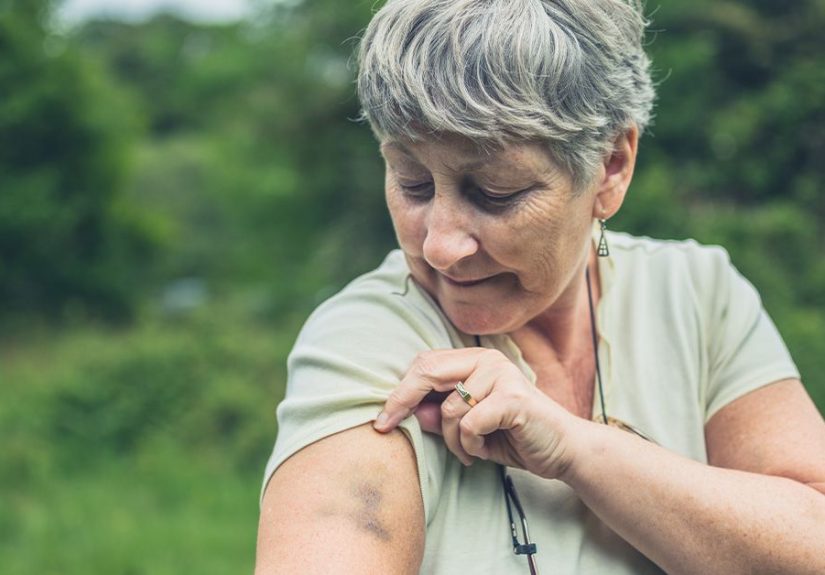
As skin ages, it becomes thinner and loses some of the supportive tissue that protects blood vessels. Years of sun exposure can make this worse. That means a small knock that once would have caused no mark at all may now leave a dramatic purple souvenir. Older adults often bruise more easily, especially on the forearms and hands.
This kind of easy bruising can be common and sometimes harmless, but if it is new, severe, or paired with other bleeding symptoms, it still deserves medical attention.
3. Medications and Supplements
One of the most common reasons for frequent or slow-healing bruises is medication. Blood thinners, aspirin, antiplatelet medicines, corticosteroids, and some anti-inflammatory drugs can all increase bruising. Certain supplements, such as ginkgo, garlic, ginger, and fish oil, may also increase bleeding tendency in some people.
This does not mean you should stop any prescription medication on your own. It means your medication list matters. If you are bruising more than usual, bring every prescription, over-the-counter drug, vitamin, and supplement to your healthcare appointment. Yes, even the “natural” capsule living in the back of your kitchen cabinet.
4. Vitamin Deficiencies and Poor Nutrition
Nutritional deficiencies can make bruising more likely. Vitamin C helps support blood vessel integrity, while vitamin K plays an important role in clotting. Inadequate intake, malabsorption issues, or chronic illness can all contribute to easy bruising.
This is more likely when bruising appears alongside other clues such as gum bleeding, poor wound healing, fatigue, or an overall limited diet. A doctor may recommend blood work if diet-related bruising seems possible.
5. Platelet Problems and Bleeding Disorders
Platelets help blood clot. If your platelet count is low, or if the platelets do not work properly, you may bruise more easily or bleed longer than expected. Conditions such as thrombocytopenia, immune thrombocytopenia, and inherited bleeding disorders can all show up with easy bruising.
Other bleeding disorders, including von Willebrand disease or clotting factor deficiencies, may cause a pattern of bruising along with frequent nosebleeds, heavy periods, gum bleeding, or prolonged bleeding after dental work, surgery, or minor injuries.
6. Liver Disease or Other Medical Conditions
The liver helps make proteins needed for clotting. When liver function is impaired, bruising and bleeding can become more common. Autoimmune conditions, chronic illnesses, and some infections can also affect blood vessels or clotting.
That does not mean every lingering bruise points to liver disease. It does mean bruising makes more sense when viewed as part of the whole picture, not just as a single patch of purple skin.
7. A Hidden Hematoma
A bruise that feels raised, tense, warm, or especially tender may actually involve a hematoma. These can happen after trauma and may take much longer to improve than a typical bruise. Larger hematomas sometimes need imaging or medical treatment, especially if they limit movement, keep expanding, or press on nearby tissue.
8. Rare but Important: Blood Cancers and Serious Illness
Unexplained bruising can occasionally be linked to serious blood disorders, including leukemia and other bone marrow conditions. Usually, bruising is not the only symptom. It may occur with unusual fatigue, frequent infections, fevers, pallor, night sweats, or bleeding from the gums or nose.
This is not the most common explanation for a stubborn bruise, but it is one reason doctors take persistent, unexplained bruising seriously.
When Should You Be Concerned?
You should not panic over every bruise. But you also should not ignore one that seems to be rewriting the rules. Get medical advice sooner rather than later if you notice any of the following:
- A bruise that is still large, dark, painful, or unchanged after several weeks
- Bruising that keeps happening without remembered injury
- Frequent nosebleeds, bleeding gums, or very heavy periods
- Tiny red or purple dots on the skin along with bruising
- Severe swelling, numbness, or increasing pain
- A bruise after a head injury
- Bruising while taking blood thinners, especially if it is unexplained or worsening
- Fatigue, fever, weight loss, or recurring infections along with bruising
- Blood in stool, urine, or vomit, or black stool
Seek urgent care or emergency care if bruising comes with severe trauma, trouble breathing, chest pain, fainting, signs of internal bleeding, or rapidly worsening swelling and pain.
How Doctors Evaluate a Bruise That Won’t Go Away
If you see a clinician for persistent bruising, the visit usually starts with the basics: when the bruise appeared, whether it followed an injury, how often you bruise, what medications you take, and whether you have a personal or family history of bleeding problems.
The exam may look simple, but the questions matter. A doctor may ask whether you bleed heavily after dental work, get nosebleeds often, or have unusually heavy menstrual bleeding. That history can point toward clotting or platelet issues.
Depending on the pattern, testing may include:
- A complete blood count to check platelets and other blood cells
- Clotting studies such as PT and PTT
- Liver testing
- Additional tests for platelet disorders or inherited bleeding conditions
- Imaging if a deep hematoma, fracture, or muscle injury is suspected
If the bruise is isolated and clearly related to a known injury, you may not need extensive testing. If bruising is unexplained, recurrent, or paired with other symptoms, evaluation becomes much more important.
Treatment: What Helps and What Doesn’t
Early Home Care
If the bruise is new, basic first aid can help limit bleeding into the tissue:
- Ice the area for short intervals during the first day or two
- Elevate the affected body part when possible
- Rest the area and avoid repeated impact
- Use gentle compression if advised and appropriate for the injury
These steps will not erase a bruise overnight, sadly. If they did, frozen peas would have a much stronger public relations team. But they may reduce swelling and discomfort and help the bruise heal more efficiently.
Later Care
As the bruise improves, warm compresses may help some people feel more comfortable. Gentle movement can help if stiffness is part of the problem, but aggressive massage is a bad idea, especially early on or when a hematoma is possible.
Use pain relief carefully. If you bruise easily, ask your clinician which options are safest. Medicines that affect clotting may make bruising worse in some situations.
Treat the Underlying Cause
If the bruise is linked to medication side effects, a doctor may review the dose or discuss alternatives. If it is related to a vitamin deficiency, treatment may involve improving diet, addressing absorption problems, or taking supplements. If testing reveals a platelet or bleeding disorder, treatment depends on the diagnosis and may involve specialist care.
That is the key point: treating the bruise itself is only part of the story. When bruising is a symptom, the real fix is finding out what is driving it.
Can You Prevent Persistent Bruising?
You cannot prevent every bruise unless you plan to spend life wrapped in bubble wrap, which is impractical and noisy. But you can reduce the odds of frequent bruising by:
- Reviewing medications and supplements with a healthcare professional
- Eating a balanced diet that includes vitamin-rich foods
- Protecting aging or fragile skin from repeated knocks
- Using sun protection to help reduce long-term skin damage
- Wearing protective gear for sports or physically demanding work
- Getting evaluated if bruising becomes frequent, unexplained, or comes with bleeding
Frequently Asked Questions
How long is too long for a bruise to last?
Many bruises improve within about two weeks, and some larger ones may last up to three weeks or slightly longer. If a bruise is not clearly fading, remains very painful, or behaves unusually, it is reasonable to get it checked.
Can stress cause bruising?
Stress itself is not a classic direct cause of bruising, but chronic stress can affect sleep, nutrition, and general health. Those factors may indirectly make problems more noticeable. Unexplained bruising still deserves a medical explanation rather than a guess.
Is a bruise that changes colors normal?
Yes. Color changes are part of normal healing. A bruise often shifts from red or purple to blue, green, yellow, and brown before fading.
Can cancer cause unexplained bruising?
Sometimes, yes, particularly blood cancers that affect platelets or bone marrow. But unexplained bruising is far more often caused by less serious issues such as trauma, medication, aging skin, or a mild bleeding tendency. The important thing is not to self-diagnose from a search result. Get evaluated if the bruising pattern is persistent or accompanied by other symptoms.
Experience-Based Examples: What Persistent Bruising Can Feel Like in Real Life
The following scenarios are composite, educational examples based on common real-world patterns people describe when they finally decide a bruise deserves medical attention.
One person notices a dark bruise on the thigh after moving furniture over the weekend. At first, it seems ordinary. A few days later, it looks worse instead of better, and sitting down makes the area ache. Two weeks pass, and the bruise is still deep purple with a firm lump underneath. The person assumes the body is just “taking its sweet time,” but the lingering tenderness turns out to be the clue. What looked like a basic bruise was more like a deeper soft-tissue injury with a hematoma. The lesson is simple: if a bruise feels unusually hard, swollen, or painful, it may not be routine.
Another person starts noticing random bruises on the arms and shins. There is no memorable injury, no new exercise routine, no dramatic run-in with furniture. At first, the bruises are easy to dismiss. Maybe it happened while carrying groceries. Maybe the dog jumped up. Maybe the laundry basket fought back. But then nosebleeds become more common, and brushing teeth starts to leave more blood in the sink. What felt like a cosmetic annoyance becomes a pattern. In situations like this, the bruise is not the whole story. The real issue may be platelets, clotting, or a medication effect that needs review.
A third experience is especially common in older adults: bruises seem to appear out of nowhere on the forearms and hands. The marks can look dramatic, but the pain is minimal. Often, the person later remembers bumping into a door frame or reaching into a crowded closet. Age-related skin thinning and sun damage make blood vessels easier to injure, so minor contact leaves a much bigger mark than expected. Even when this turns out to be benign, many people feel relieved after getting confirmation that it is fragile skin rather than something more dangerous.
Some people connect the dots only after a medication change. A new blood thinner, daily aspirin, corticosteroid, or supplement routine can make bruises appear faster and last longer. In these cases, the bruising may not signal a new disease; it may be a side effect of treatment. Still, it is worth reporting, especially if bruises are large, frequent, or appear with bleeding from other areas. A medication can be important and still require monitoring. Those two facts can absolutely coexist.
Then there is the experience that prompts the fastest appointment: bruising with fatigue. A person feels unusually tired, looks paler than usual, and notices several bruises that seem out of proportion to daily life. Maybe there are also recurrent infections, night sweats, or gum bleeding. This combination tends to feel different because it is different. The bruise is no longer an isolated skin issue; it becomes one clue in a larger health puzzle. When bruising arrives with whole-body symptoms, it deserves prompt medical attention.
What many people share, no matter the cause, is hesitation. They do not want to overreact. They worry about sounding dramatic. They wait for “just one more day” or “one more week” to see whether the bruise finally fades. That instinct is understandable. But persistent bruising is one of those symptoms where paying attention is wise, not alarmist. Most causes are manageable, and many are minor. The goal is not panic. The goal is clarity.
Final Takeaway
A bruise that will not go away is often caused by something familiar: a deeper injury, fragile skin, medication effects, or slow healing. But persistent, frequent, or unexplained bruising can also be your body’s way of signaling a clotting issue, platelet problem, vitamin deficiency, liver-related condition, or another illness that deserves attention.
The good news is that bruising patterns usually come with useful clues. Duration, location, swelling, other bleeding symptoms, and changes in your overall health all help point toward the cause. If a bruise is lingering, recurring, or behaving in a way that feels off, trust that instinct and get it checked. Your body is allowed to send notifications. You are allowed to read them.