Table of Contents >> Show >> Hide
- What Is CBD, and Why Is It Showing Up in Hair Products?
- What the Research Says About CBD for Hair Growth
- Potential Benefits of CBD for Hair Growth
- Where CBD Probably Will Not Help Much
- Side Effects, Safety, and Common-Sense Warnings
- Tips for Trying CBD for Hair Growth the Smart Way
- Real-World Experiences: What Trying CBD for Hair Growth Often Feels Like
- Final Verdict
If the hair-growth aisle had a personality, it would be part science fair, part magic show, and part late-night infomercial. One bottle promises thicker strands. Another swears your hairline will “bounce back.” Then along comes CBD, looking calm, cool, and botanical, like it brought a yoga mat to the scalp-care party. Naturally, people want to know: can CBD actually help with hair growth, or is it just another trendy ingredient wearing a lab coat for Halloween?
The honest answer is more interesting than a simple yes or no. Research on CBD for hair growth is still limited, but there are a few small human studies, plus lab and skin-science research, suggesting that cannabinoids may affect the scalp, inflammation, and hair-follicle behavior. That said, hair loss is not one problem with one cause. Stress shedding, pattern hair loss, autoimmune hair loss, scalp inflammation, and scarring alopecia are all very different beasts. Some are temporary. Some need medical treatment fast. And some will laugh in the face of your expensive scalp serum.
So instead of treating CBD like a miracle in a dropper bottle, it makes more sense to ask better questions: What does the science actually say? What benefits are realistic? What side effects matter? And how should adults think about using a CBD scalp product without getting swept away by marketing copy that sounds like it was written during a candlelit sound bath?
What Is CBD, and Why Is It Showing Up in Hair Products?
CBD, short for cannabidiol, is one of the many compounds found in the cannabis plant. Unlike THC, it is not the compound known for causing a “high.” In beauty and wellness products, CBD is often added to oils, serums, shampoos, scalp treatments, and masks aimed at calming the skin or supporting healthier-looking hair.
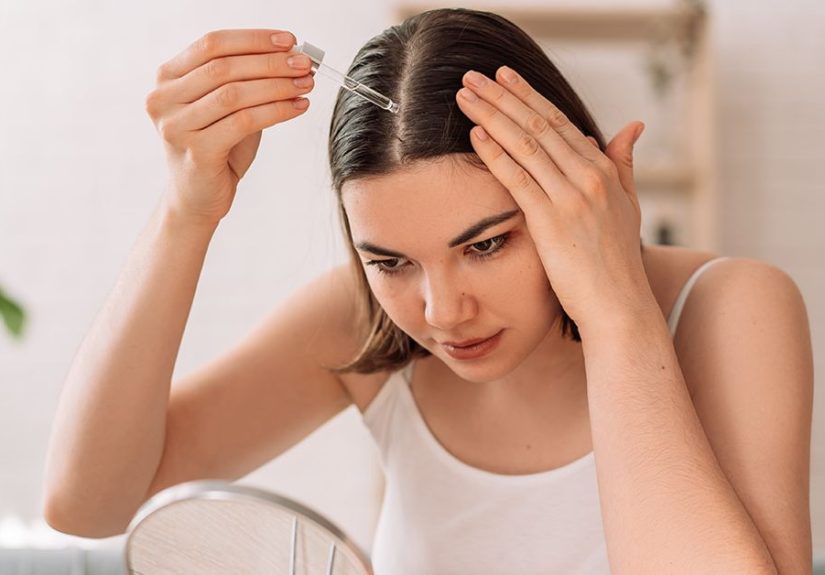
The theory behind topical CBD is pretty simple. Your skin has a complex signaling network sometimes referred to as the endocannabinoid system. Hair follicles and surrounding skin cells appear to respond to cannabinoid-related signaling, which is one reason researchers are interested in whether CBD could affect inflammation, oil balance, irritation, and even the hair-growth cycle. In plain English: scientists think the scalp is not just passive dirt where hair happens. It is an active environment, and CBD may influence some of the processes happening there.
That theory is what makes CBD sound promising for people with itchy scalps, irritated skin, or shedding that seems tied to inflammation. But promising biology is not the same as proven regrowth. Plenty of ingredients look brilliant in the lab and then deliver all the drama of room-temperature oatmeal in real life.
What the Research Says About CBD for Hair Growth
The Most Important Reality Check
Right now, the evidence is early. There is not a large body of high-quality clinical research proving that CBD is an established treatment for hair loss. If you were hoping for “mystery solved,” science is still somewhere closer to “work in progress, please do not shake the table.”
Small Human Studies Have Been Encouraging
The most talked-about research involves small studies of topical hemp or CBD-rich formulas in people with androgenetic alopecia, also known as male or female pattern hair loss. In one small study, 35 adults used a once-daily topical hemp extract formulation for six months. Researchers reported a large increase in non-vellus hair count. A later follow-up case series also suggested meaningful regrowth with a topical hemp formula containing CBD along with other cannabinoids and ingredients.
Those findings are intriguing, especially because pattern hair loss is common and stubborn. But the design matters. These were small studies, not large randomized, placebo-controlled trials. Some formulas also included other active ingredients, which makes it harder to say, with total confidence, “Yep, that was definitely the CBD doing the heavy lifting.”
Lab and Skin Research Suggests Plausible Benefits
Reviews of cannabinoid research in skin and hair science suggest that CBD may have anti-inflammatory and antioxidant effects. Some papers also discuss its possible influence on pathways related to hair-follicle cycling and scalp health. This matters because the scalp is not just a hair holder. It is skin, and healthier skin can create a better environment for hair.
Still, “may help the scalp environment” is not the same thing as “will regrow hair.” If your follicles are permanently scarred, for example, no trendy oil is going to stage a resurrection.
Potential Benefits of CBD for Hair Growth
1. It May Support a Healthier Scalp Environment
A calm scalp is often a happier scalp. Because CBD is being studied for anti-inflammatory skin effects, it may help reduce the kind of irritation that makes hair care feel like punishment. If someone has a tight, itchy, or reactive scalp, a well-formulated topical product may feel soothing. That does not prove dramatic hair regrowth, but it can make a routine more comfortable and potentially reduce the urge to scratch, pick, or overload the scalp with harsh products.
2. It May Be Helpful for Some People With Pattern Hair Loss
The strongest hair-growth-specific interest in CBD is for pattern hair loss. That is where the existing small human studies have focused, and where people may be most tempted to try a topical CBD serum. If you have gradual thinning, a widening part, a thinner ponytail, or a receding hairline, this is the category people usually mean when they talk about CBD and regrowth.
But realistic expectations matter. A promising signal in early research does not mean a guaranteed comeback tour for your hairline. Think “possible support,” not “instant lion mane by Labor Day.”
3. It Could Complement a Broader Hair-Care Strategy
For some adults, a CBD scalp product may fit into a larger plan that includes gentle cleansing, reduced heat and traction, stress management, better treatment adherence, and dermatologist-guided care. In other words, the value may be less “CBD saved the day” and more “CBD became one useful supporting character in a cast that also included patience, consistency, and fewer aggressive ponytails.”
4. It May Improve the Feel of the Routine
This sounds minor, but it matters. Hair-loss routines are easier to stick with when they feel manageable. If a CBD serum leaves the scalp feeling less dry or irritated, that can make the whole process feel less like a chore and more like a realistic habit. And in hair care, consistency usually beats enthusiasm followed by abandonment.
Where CBD Probably Will Not Help Much
This is the part marketers tend to whisper through clenched teeth: CBD will not solve every type of hair loss.
If you are dealing with alopecia areata, which is autoimmune, you may need medical treatment targeted to that condition. If the issue is telogen effluvium, often triggered by stress, illness, hormonal changes, or nutritional strain, the hair usually grows back when the trigger is addressed. If you have folliculitis, infection, or significant scalp disease, the answer is not “buy a fancier bottle.” And if you have scarring alopecia, getting diagnosed early matters because damaged follicles may not grow back once scarring sets in.
That is why one of the smartest things you can do is figure out what kind of hair loss you actually have. Hair shedding and hair loss are not always the same thing. And a product that might help one person can be completely irrelevant for another.
Side Effects, Safety, and Common-Sense Warnings
CBD often gets marketed with a halo effect, as if “plant-based” automatically means “risk-free.” Nature, however, also gave us poison ivy, so let’s stay grounded.
Possible CBD Side Effects
Oral CBD has been associated with side effects such as nausea, fatigue, and irritability. It can also interact with medications because it affects liver enzyme systems involved in drug metabolism. That is especially important for adults taking blood thinners, anti-seizure drugs, immunosuppressants, and some other prescription medications.
Topical CBD is generally discussed differently from oral CBD because systemic absorption is not the same. Even so, the product itself can still cause problems. A scalp formula may include essential oils, fragrance, preservatives, or botanicals that irritate sensitive skin. So if a product makes your scalp red, stingy, flaky, or extra itchy, that is not your follicles “waking up.” That is your skin filing a complaint.
Product Quality Is a Big Deal
One of the most annoying parts of the CBD market is quality inconsistency. Some products may not contain the amount of CBD listed on the label. Others may contain unwanted compounds. That means choosing a product is not just about vibes, sleek packaging, or a leaf printed in tasteful earth tones. It is about transparency and testing.
Adults Only, and Extra Caution for Certain Groups
This topic is best understood as an adult wellness and scalp-care issue. Children and teens should not experiment with CBD for hair growth unless a qualified clinician specifically recommends it. Extra caution also matters during pregnancy, breastfeeding, or when taking multiple medications. When in doubt, ask a healthcare professional before starting anything that sounds harmless but acts less harmless once it meets your liver and prescription list.
Tips for Trying CBD for Hair Growth the Smart Way
1. Start With the Diagnosis, Not the Bottle
If you have sudden shedding, patchy bald spots, scalp pain, burning, visible inflammation, or rapid thinning, get checked by a dermatologist. Hair loss is easier to treat when you know the cause. Guessing is not a strategy. It is just expensive improvisation.
2. Choose a Third-Party-Tested Product
Look for adult products that provide a recent certificate of analysis from an independent lab. You want to know what is in the bottle, how much CBD it contains, and whether testing checked for contaminants. If the brand becomes weirdly silent when asked for proof, that is your cue to leave like a person who just saw a raccoon in the pantry.
3. Patch Test First
Before applying a new CBD scalp serum everywhere, test a small amount on a small area of skin. Wait to see whether redness, itching, or irritation shows up. Your scalp deserves this courtesy.
4. Keep Expectations Realistic
Hair grows slowly. Even evidence-based treatments like minoxidil usually need months, not days. If a CBD product helps, the timeline is likely to be measured in consistent use over time, not a dramatic “before lunch / after lunch” transformation.
5. Do Not Abandon Proven Options
For pattern hair loss, dermatologist-backed options such as topical minoxidil have much stronger evidence than CBD. Some adults may also be candidates for prescription treatments. If CBD is part of your routine, think of it as a potential add-on, not a replacement for everything with better data behind it.
6. Track Progress Like a Grown-Up Scientist
Take baseline photos in good lighting. Repeat them monthly. Note shedding, scalp comfort, and changes in density around the temples, crown, or part line. Memory is terrible at hair evaluation. One day you feel optimistic, the next day you see one extra strand in the sink and assume civilization has collapsed.
Real-World Experiences: What Trying CBD for Hair Growth Often Feels Like
One reason CBD for hair growth keeps getting attention is that the experience of using it often feels appealing even before the hair results become clear. Many adults who try CBD scalp products say the first thing they notice is not magical regrowth, but the ritual itself. Massaging an oil or serum into the scalp can feel relaxing, and a calmer routine can make hair care less stressful. That matters more than people think, because hair concerns are emotional. When your hair is thinning, every shower can feel like a tiny breakup. A product that makes the process feel gentler can have real value, even if that value is not immediate follicle fireworks.
In the first few weeks, people often expect dramatic change and then feel disappointed when nothing obvious happens. That is normal. Hair grows slowly, and scalp products usually work on a long timeline. Some adults describe early changes that are more about feel than visible density: less dryness, less tightness, less itch, and hair that seems softer or easier to style. Those experiences can be encouraging, but they are not the same as proving new growth. This is where a lot of confusion begins. A product can feel luxurious and still be mediocre at regrowing hair.
Another common experience is uncertainty. CBD products are often mixed with other ingredients like peppermint oil, menthol, botanical extracts, and carrier oils. So when someone says, “My scalp felt better after two weeks,” it can be hard to know what deserves the credit. Was it the CBD? The massage? The moisturizing base? The fact that they stopped using a harsh shampoo at the same time? Hair care is messy that way. Real life rarely runs clean experiments.
Adults who stay happiest with CBD for hair growth usually seem to have one thing in common: realistic expectations. They do not expect a miracle. They use the product consistently, watch for irritation, take progress photos, and give it time. They also tend to do better when CBD is part of a broader plan that includes stress reduction, gentle styling, and evidence-based treatment where appropriate. In that setting, CBD may feel like a supportive teammate instead of the overhyped star player who shows up late and forgets the game plan.
There is also the opposite experience, and it deserves airtime. Some people try CBD for a month, see no difference, and quit. Others discover that the product irritates their scalp, feels greasy, weighs down fine hair, or simply costs too much to justify the experiment. Those experiences are valid too. Hair care is personal, and not every scalp product earns a permanent spot on the bathroom shelf.
Then there is the emotional side. Hair thinning can shake confidence in a sneaky, daily way. A few extra hairs on the pillow, a wider part in bright light, a ponytail that suddenly feels smaller, and now you are zooming into old photos like a detective in a prestige crime drama. In that context, trying CBD can feel hopeful. Hope is not silly. It just works best when paired with evidence, patience, and a willingness to pivot if something is not helping.
The healthiest mindset is probably this: CBD may improve the scalp experience, may support a healthier routine, and may even help some adults with pattern hair loss, but it is not a universal answer. If it works for you, great. If it does not, that is not a personal failure or a sign that your hair is stubborn out of spite. It just means your scalp, your follicles, and your hair-loss type are telling a different story.
Final Verdict
So, is CBD for hair growth worth the hype? Not the full hype, no. But not zero hype either.
The current research suggests that CBD is a legitimately interesting ingredient for scalp care and possibly for some cases of pattern hair loss. Small studies have produced encouraging signals, and the biology behind cannabinoid signaling in the skin and follicles makes the idea plausible. But the evidence is still limited, the product market is uneven, and the cause of hair loss matters more than internet enthusiasm ever will.
If you are an adult curious about CBD, the smartest approach is to treat it as a cautious experiment, not a guaranteed cure. Choose a quality-tested product. Patch test. Track progress. Keep expectations realistic. And if your hair loss is sudden, painful, patchy, or worsening, skip the guessing game and see a dermatologist. Your scalp is not asking for blind optimism. It is asking for strategy.
In other words, CBD may earn a seat at the hair-growth table. It just should not be allowed to flip the table over and declare itself king.