Table of Contents >> Show >> Hide
- Why Chevron Works So Well on a Bench
- Pick Your Makeover Style Before You Pick Up a Brush
- Materials and Tools
- Step-by-Step: The Chevron Bench Makeover
- 1) Take the Bench Apart (Just a Little)
- 2) Clean Like Paint Depends on It (Because It Does)
- 3) Repair the “Character” (A.K.A. Damage)
- 4) Sand to Dull the Shine, Not to Suffer
- 5) Prime (Especially If the Finish Is Slick or Stain Is Dark)
- 6) Paint the Base Coat
- 7) Plan Your Chevron Pattern (Measure Twice, Tape Once)
- 8) Tape the Chevron (Crisp Lines Live Here)
- 9) Paint the Chevron Color
- 10) Peel Tape at the Right Time
- 11) Touch Up Like a Calm, Serious Artist
- 12) Seal It for Real Life
- Optional Upgrade: Add (or Rebuild) a Bench Cushion Without Sewing
- Troubleshooting: Common Chevron Bench Makeover Problems
- Design Ideas: Chevron Variations That Look Custom
- Time and Cost Reality Check
- of Real-World “Chevron Bench Makeover” Experience
- Final Thoughts
Every house has that bench. The one that’s technically furniture, but mostly acts as a
temporary mail shelf, shoe avalanche catcher, and occasionallyif you’re feeling bravea place to sit.
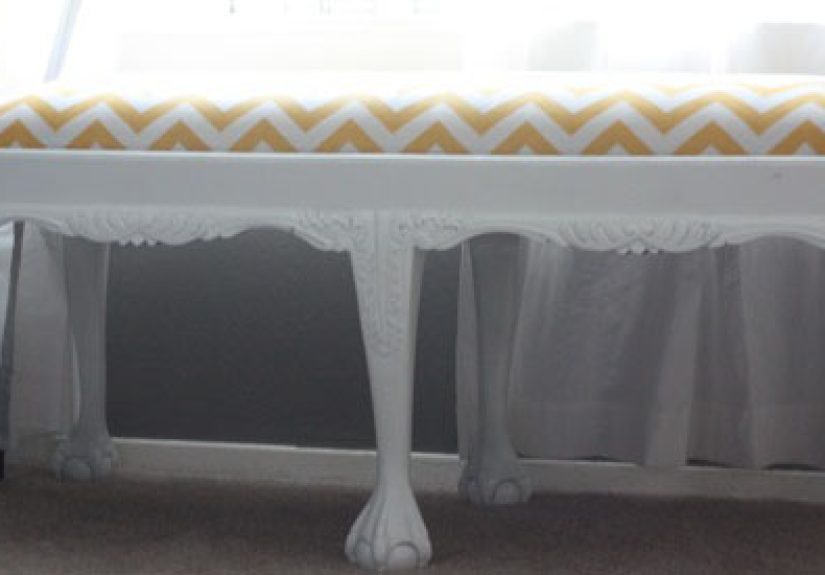
The good news: a chevron bench makeover is one of the fastest ways to turn “sad plank with legs”
into “wow, where did you buy that?” (You didn’t buy it. You rescued it. Like a DIY superhero.)
This guide walks you through transforming a plain or beat-up bench with a crisp chevron pattern,
a durable painted finish, and optional cushion upgrades. We’ll cover the practical stuffprep, tape,
paint, topcoatsplus the real-life “why is my tape betraying me?” moments that happen on basically
every furniture makeover.
Why Chevron Works So Well on a Bench
Chevron is the design equivalent of putting on a blazer: it instantly makes things look intentional.
On a bench, chevrons also do a few sneaky little magic tricks:
- It adds movement to a long, flat surface (no more “wooden rectangle energy”).
- It hides imperfections like minor dents, patched holes, and “mystery scratches.”
- It’s customizablebold black-and-white, soft neutrals, beachy blues, or modern earthy tones.
- It photographs beautifully, which is important if you plan to casually “forget” to mention you made it yourself.
Pick Your Makeover Style Before You Pick Up a Brush
Chevron can go a lot of directions. Decide your “bench personality” first, because it affects everything
from paint sheen to topcoat durability.
Option A: Modern Graphic
Think high-contrast (black/white, navy/cream, charcoal/sand) with crisp lines and a smooth protective topcoat.
Great for entryway benches and dining benches that get used daily.
Option B: Cozy Cottage
Softer contrast (sage/ivory, warm gray/white), slightly distressed edges, and maybe a cushion. This look
loves a lived-in vibelike it’s always been there (even if you met the bench last Tuesday at a thrift shop).
Option C: Outdoor-Friendly
If this bench lives on a porch or patio, choose exterior-rated paint or a tough topcoat, and prioritize
easy cleaning. Your bench will face pollen, rain mist, and the occasional “someone sat down holding a popsicle.”
Materials and Tools
You don’t need a professional workshop. You need a few reliable basics and the emotional strength to sand something.
Prep & Paint
- Cleaner/degreaser (or mild soap and water) and rags
- Sandpaper or sanding sponge (medium grit and fine grit)
- Tack cloth or a damp lint-free cloth
- Wood filler + putty knife (if needed)
- Primer (bonding primer is helpful for glossy finishes)
- Paint (acrylic/latex, furniture paint, or cabinet-grade paint all work)
- Quality brush + small foam roller (for a smoother finish)
- Painter’s tape (delicate surface tape is great for crisp lines)
- Measuring tape, pencil, straightedge/ruler
- Optional: level or laser level
Protective Finish
- Water-based clear topcoat (great for light colors and less yellowing)
- Fine grit sandpaper for between coats (very light sanding)
Optional Cushion Upgrade
- Plywood/MDF (if making a removable cushion base)
- High-density foam cut to size
- Batting (wrap layer to soften edges)
- Fabric (durable upholstery-weight is easiest for beginners)
- Spray adhesive (optional but helpful)
- Staple gun + staples
Step-by-Step: The Chevron Bench Makeover
1) Take the Bench Apart (Just a Little)
Remove anything removable: cushions, screw-on seats, rubber feet, decorative hardware. If the seat is separate,
you’ve basically won the DIY lotterypainting a flat panel is easier than wrestling around legs and braces.
2) Clean Like Paint Depends on It (Because It Does)
Benches live hard lives. Shoes, hands, spills, dust, and that one sticky spot no one admits to making.
Clean thoroughly and let it dry completely. Paint hates grease. Paint holds grudges.
3) Repair the “Character” (A.K.A. Damage)
Fill deep dents, gouges, and old nail holes with wood filler. Let it dry, then sand smooth.
Don’t chase perfectionchevron is forgivingbut do knock down anything that would show through paint.
4) Sand to Dull the Shine, Not to Suffer
If your bench has a glossy finish, your goal is to scuff it so primer and paint can grip.
You usually don’t need to sand down to bare wood. Focus on making the surface evenly dull.
Wipe away dust with a tack cloth or lint-free cloth. Dust is the tiny villain that causes gritty paint texture.
5) Prime (Especially If the Finish Is Slick or Stain Is Dark)
Primer is the “insurance policy” step. It helps with adhesion and blocks stains/wood tannins from bleeding through.
Apply a thin coat, let it dry, and lightly sand if it feels rough. Wipe dust again.
6) Paint the Base Coat
Choose the color you want behind your chevrons. Apply thin, even coats. A foam roller helps reduce brush marks
on flat surfaces. Let the base coat dry fully before tapingthis is not the moment to rush unless you enjoy
peeling off tape and taking half your paint with it.
7) Plan Your Chevron Pattern (Measure Twice, Tape Once)
A clean chevron pattern starts with a plan. Here’s an easy approach that works on most bench tops:
- Measure the length of the seat and mark the center point.
- Decide your chevron “width” (common ranges: 2–4 inches per stripe on a bench seat).
- Mark evenly spaced points along the front and back edges of the seat.
- Connect marks diagonally to form V-shapes that meet neatly at the center line.
If math makes your eye twitch, keep it simple: wider stripes are easier to tape and look great on a bench.
Tiny, skinny chevrons are beautiful, but they require patience and excellent snack breaks.
8) Tape the Chevron (Crisp Lines Live Here)
Lay painter’s tape along your pencil lines. Press the tape down firmlyespecially along edges. Use a plastic scraper,
an old gift card, or your fingernail (the DIY classic) to seal the tape.
Pro trick: If you want extra-crisp lines, paint a thin layer of your base color along the tape edges first.
That seals the edge so the next color is less likely to bleed underneath. Let that seal coat dry briefly.
9) Paint the Chevron Color
Apply your chevron color with light coats. Don’t flood the tape edge with paintheavy paint is more likely to seep.
A small foam roller is your best friend here for smooth coverage without puddles.
10) Peel Tape at the Right Time
The sweet spot is usually when the paint is set but not fully curedthink “dry to the touch, not rock-hard.”
Peel tape back on itself at a low angle, slowly. If you wait too long, the paint can form a film that tears.
If you peel too soon, you can smudge. This is why we breathe.
11) Touch Up Like a Calm, Serious Artist
Even with careful taping, you may get a tiny bleed or a slightly uneven edge. Use a small angled brush for touch-ups.
The secret is to do it with minimal paint on the brushtiny corrections, not a whole second mural.
12) Seal It for Real Life
Benches are high-traffic: people sit, shoes kick, bags scrape, pets launch themselves like furry missiles.
A protective finish matters. Water-based clear coats are popular for painted furniture because they’re durable,
easier to clean, and tend to stay clearer on light colors.
- Apply thin coats.
- Let dry between coats.
- Lightly sand between coats for a smoother finish (then remove dust).
- Allow a cure period before heavy usepaint may feel dry long before it’s fully hardened.
Optional Upgrade: Add (or Rebuild) a Bench Cushion Without Sewing
A painted chevron bench looks great. A painted chevron bench that’s actually comfortable?
That’s how you get promoted to “Favorite Person in the House.”
Simple No-Sew Cushion Method
- Cut a base from plywood/MDF to match the bench seat (or slightly smaller for a clean edge).
- Attach foam to the base (spray adhesive helps keep it from sliding).
- Wrap batting around foam for softer edges; staple batting under the board.
- Center your fabric over the cushion; flip and staple the fabric to the underside.
- Fold corners neatly like wrapping a present. Pull fabric taut as you staple.
- Mount it using screws from underneath, or make it removable with non-slip pads or ties.
If you’re new to upholstery, benches are one of the easiest projects because they’re mostly straight lines.
Curves are where people start bargaining with the universe.
Troubleshooting: Common Chevron Bench Makeover Problems
“My paint bled under the tape.”
- Press tape edges down harder (burnish them).
- Seal tape edges with the base color before painting the chevrons.
- Use lighter coats and avoid “pooling” paint at edges.
“The tape pulled up my base coat.”
- Let the base coat dry longer before taping (especially in humid weather).
- Use delicate-surface painter’s tape if your paint is prone to lifting.
- Remove tape slowly at a low angle.
“My finish feels rough.”
- Dust is usually the culpritclean more thoroughly between coats.
- Lightly sand between coats with fine grit and wipe clean.
- Roll or brush in thin coats; thick coats dry unevenly.
“It looks dry, but it dents easily.”
That’s curing time. Many paints and topcoats harden over days (sometimes longer). Treat your bench gently
until it fully curesno dragging, no heavy stacks, no interpretive dance rehearsals on the seat. Yet.
Design Ideas: Chevron Variations That Look Custom
Two-Tone Classic
Use a light base and a darker chevron for crisp contrast. Pair it with simple black hardware or wood knobs.
Stain + Paint Combo
Keep the legs or frame stained and only chevron the seat. This looks especially sharp on entryway benches
and gives you that “boutique furniture store” vibe.
Soft Neutral Chevron
Use a warm white base with greige, taupe, or muted clay chevrons. It’s chevron, but whispering.
Metallic Accent Moment
Paint the bench in a calm color scheme, then add a thin metallic chevron stripe (or a metallic top edge)
for a little “yes, I am fancy” energy.
Time and Cost Reality Check
A chevron bench makeover can be a weekend project, but it’s not because the work is hardit’s because
drying time is a thing, and paint refuses to be bullied.
- Time: 1–2 days including dry time (more if you’re doing a cushion too).
- Cost: Often budget-friendly if you already have basics; cushions and foam add cost fast.
- Effort: Light-to-moderate, with sanding as the main “why did I start this?” moment.
of Real-World “Chevron Bench Makeover” Experience
Here’s what the experience usually feels like (and what you’ll learn) when you actually do a chevron bench makeover.
Not the glossy highlight reelthe real thing.
First, you’ll feel wildly confident during the cleaning stage. You’ll wipe down the bench and think,
“Wow. This is easy. I could renovate a lighthouse.” Then sanding happens. Sanding is where time becomes
a philosophical concept and you start noticing every tiny flaw like you’re auditioning for a furniture
detective show. The good news is you don’t need perfectionyou need a surface that paint can grip.
The better news is that chevrons are basically a distraction strategy for furniture. A very stylish distraction strategy.
Next comes base coat painting, which feels satisfying… until you realize “dry to the touch” and “ready for tape”
are not the same thing. If you tape too soon, the paint can lift and you’ll invent new words. If you wait long enough,
you’ll become the kind of person who owns three hobbies: painting, staring at paint, and explaining paint to people
who didn’t ask. This is normal.
The taping stage is equal parts meditation and mild panic. You’ll measure. You’ll mark. You’ll step back and squint
like an art director. Then you’ll realize one of your V-shapes is a little… enthusiastic. (Chevron should look like a crisp
zigzag, not like it’s trying to escape the bench.) The fix is usually simple: adjust the tape, trust your center line,
and remember that most people will never notice a 1/8-inch differenceunless you point at it dramatically.
Painting the chevrons is the moment you’ll feel like a genius. It’s also the moment you’ll be tempted to use too much paint.
Resist that urge. Thin coats win. Tape edges behave better. Your future self will thank you. And thentape removal.
This is the “big reveal,” like a reality TV makeover episode, except you’re the host, the crew, and the person yelling
“DON’T TOUCH IT” to everyone walking by. Pulling tape back slowly at a low angle is weirdly thrilling. When the lines are crisp,
you will want to text someone immediately.
Finally, topcoating teaches patience. Your bench might look finished, but it’s still soft underneath. Give it time to cure.
During curing, you will develop the urge to “just test it” by setting something on it. Don’t. Let it harden fully.
When it finally does, you’ll have a bench that looks custom, cleans easily, and makes your whole space feel more pulled together.
And every time someone compliments it, you’ll get to say the most powerful sentence in DIY history: “Oh, that old thing? I made it.”
Final Thoughts
A chevron bench makeover is one of those projects that looks complicated but is mostly about good prep and smart taping.
Clean, scuff, prime, base coat, measure, tape, paint, peel, protectthen enjoy a bench that finally earns its place in your home.