Table of Contents >> Show >> Hide
- What Is Clutter Creep, Exactly?
- Why Clutter Creep Happens
- How Clutter Creep Sabotages Your Home
- Common Signs You Have a Clutter Creep Problem
- How to Get Rid of Clutter Creep for Good
- Start with the worst visibility zones
- Use the “put it away, not down” rule
- Create realistic homes for everyday items
- Declutter before you buy organizers
- Try micro-decluttering instead of marathon sessions
- Use a one-in, one-out rule
- Keep a donation bag in active zones
- Reset your home in short daily bursts
- Room-by-Room Clutter Creep Fixes
- How to Stop Clutter Creep Before It Starts Again
- Real-Life Experiences with Clutter Creep
- Conclusion
Clutter creep is sneaky. It does not kick down your front door wearing combat boots. It slips in quietly through unopened mail, a chair that becomes a part-time closet, a kitchen counter that starts “holding things for now,” and that one decorative basket that somehow turns into a black hole for batteries, receipts, and mystery keys. One day your home feels fine. The next day it feels like your stuff has unionized and taken over the living room.
If your home looks messy even after you clean it, clutter creep may be the real culprit. This slow build-up of everyday items can make your space feel smaller, busier, and more stressful than it needs to be. The good news is that you do not need a picture-perfect pantry or color-coded sock drawer to fix it. You just need a smarter system, a few better habits, and a willingness to stop treating every flat surface like free parking.
In this guide, you will learn what clutter creep is, why it keeps coming back, where it hides, and how to get rid of it without turning your weekend into a dramatic breakup montage with old takeout menus.
What Is Clutter Creep, Exactly?
Clutter creep is the gradual return of disorder after you have already cleaned, organized, or decluttered. It is not one giant mess. It is a hundred tiny decisions that pile up over time. You set the mail on the counter instead of sorting it. You leave a sweater on the dining chair “just for tonight.” You buy a storage bin before you have even decided what deserves to stay. Suddenly, your home is technically furnished but emotionally giving “overwhelmed garage.”
This is why clutter creep feels so frustrating. It makes people think they are bad at organizing, when the real problem is usually a broken system. If your home does not have clear drop zones, realistic storage, and easy daily reset habits, clutter will come back no matter how motivated you felt during your last big clean-out.
Why Clutter Creep Happens
1. You are tidying, not actually reducing stuff
Many people move items around instead of removing them. That creates the illusion of progress, but it does not solve volume. If your cabinets, closets, and drawers are already packed, even a small amount of new stuff can push your home right back into chaos.
2. Your things do not have real homes
If you need to think hard about where something belongs, that item probably does not have a true home. When everyday items lack assigned places, they end up floating from room to room like tiny, annoying tourists.
3. Your systems are too complicated
Beautiful organization is useless if it is hard to maintain. If folding towels requires geometry skills or putting away snacks means opening six lidded containers, your household will rebel. Good home organization should work on your laziest Tuesday, not just on your most ambitious Sunday.
4. Buying habits are feeding the mess
Clutter creep often starts at the point of entry. Clearance finds, duplicate toiletries, trendy gadgets, random decor, and “I might use this someday” purchases can outpace even the best decluttering efforts. You cannot organize your way out of over-acquiring forever.
5. You ignore the small buildup zones
Clutter rarely begins in the middle of the floor. It starts in predictable hotspots: entryway tables, bathroom counters, kitchen islands, bedroom nightstands, junk drawers, and the chair. There is always a chair. These areas collect the overflow of life, which is why they need fast, repeatable systems.
How Clutter Creep Sabotages Your Home
Clutter does more than make a room look untidy. It changes how your home functions and how you feel inside it. A cluttered space can slow you down, create visual stress, and make ordinary tasks harder than they should be. Cooking is more annoying when counters are full. Getting dressed takes longer when the closet is jammed. Leaving the house feels chaotic when keys, bags, and paperwork are scattered in three different places.
It can also affect how your home feels emotionally. When every surface is busy and every drawer is overstuffed, your space stops feeling restorative. Home should be the place where your shoulders drop. Instead, clutter creep makes it the place where your brain starts a low-grade panic soundtrack.
That is why getting rid of clutter is not just about aesthetics. It is about making your home easier to live in. A decluttered home supports routines, saves time, reduces frustration, and helps rooms do the jobs they were meant to do.
Common Signs You Have a Clutter Creep Problem
- You clean often, but your home still feels messy.
- Flat surfaces disappear under mail, bags, products, and random extras.
- You own storage bins, baskets, and organizers that are also overflowing.
- You buy duplicates because you cannot find what you already have.
- You have at least one “deal with later” pile in every major room.
- You avoid opening certain closets or drawers because they are one sneeze away from an avalanche.
- You feel annoyed by your stuff, even when the room is technically clean.
If you nodded at three or more of those, congratulations: your clutter is not a personality trait. It is a solvable systems issue.
How to Get Rid of Clutter Creep for Good
Start with the worst visibility zones
If you want fast results, begin where clutter shouts the loudest. Focus on entryways, kitchen counters, coffee tables, bathroom vanities, and bedroom surfaces. Clearing visible clutter gives you immediate relief and momentum. It also helps your home look calmer before you have touched every hidden storage area.
Do not overthink the process. Remove obvious trash, relocate items that belong elsewhere, and group the strays by category. Pens with pens. Chargers with chargers. Mail with mail. Once similar items are together, it becomes much easier to see what you have too much of.
Use the “put it away, not down” rule
This one habit can change your home more than a heroic eight-hour purge. The difference between putting something down and putting it away is the difference between a temporary action and a future problem. Shoes, bags, jackets, beauty products, paperwork, and kitchen tools all need to go back to their assigned homes right away.
At first, this feels annoyingly responsible. Then it starts feeling magical. The less often you create mini-messes, the less often you need full cleanups.
Create realistic homes for everyday items
Your home organization system should follow your actual life, not some fantasy version of you who labels spices for fun. Store things where you naturally use them. Keep keys near the exit. Put daily skincare where you can reach it without an obstacle course. Store lunch containers near the prep zone, not in a random cabinet exiled across the kitchen.
If an item keeps landing in the same wrong spot, do not just scold yourself. Ask why. That “wrong spot” may be revealing the right storage location.
Declutter before you buy organizers
This is where many people get tricked. Buying baskets feels productive, but extra containers do not solve excess stuff. In some cases, they just help your clutter look more coordinated. Declutter first. Measure later. Then buy only the storage you actually need.
The best organizers are simple, accessible, and easy to maintain. Open bins for pantry categories, drawer dividers for small items, hooks for high-traffic gear, and closed storage for visual calm often work better than fussy, highly segmented systems.
Try micro-decluttering instead of marathon sessions
You do not need to declutter the entire house in one dramatic weekend. In fact, that approach often leads to burnout, decision fatigue, and one giant donation pile living in your trunk until further notice. A better strategy is micro-decluttering: one drawer, one shelf, one category, ten or twenty minutes at a time.
This works especially well if you struggle to start. A five-minute bathroom reset or a ten-item kitchen purge is easier to repeat, and repetition is what keeps clutter creep from staging a comeback tour.
Use a one-in, one-out rule
This classic rule still works because it tackles clutter at the source. When a new mug, sweater, toy, or beauty product comes in, one similar item should leave. It is simple, practical, and surprisingly effective for categories that love to multiply when you are not looking.
You can make the rule stricter in problem areas. For example, if your closet is packed or your pantry is always crowded, try one-in, two-out for a few months to reset the balance.
Keep a donation bag in active zones
Put a donation bin or bag where clutter naturally reveals itself, such as the closet, mudroom, laundry room, or bedroom. That way, when you notice a shirt you never wear or a gadget you never use, you can move it out immediately. The easier it is to remove things, the less likely they are to hang around out of guilt and inertia.
Reset your home in short daily bursts
Ten minutes can do a shocking amount of damage to clutter. Set a timer at the end of the day and reset the main living areas. Put away shoes, fold blankets, clear counters, toss junk mail, return mugs, and corral rogue items. This is not deep cleaning. It is maintenance. Think of it like brushing your teeth, but for your house.
Morning resets can help too, especially in bedrooms and kitchens. Making the bed, clearing the bathroom counter, and starting with an empty sink can create instant visual calm that keeps the rest of the day from sliding off the rails.
Room-by-Room Clutter Creep Fixes
Entryway
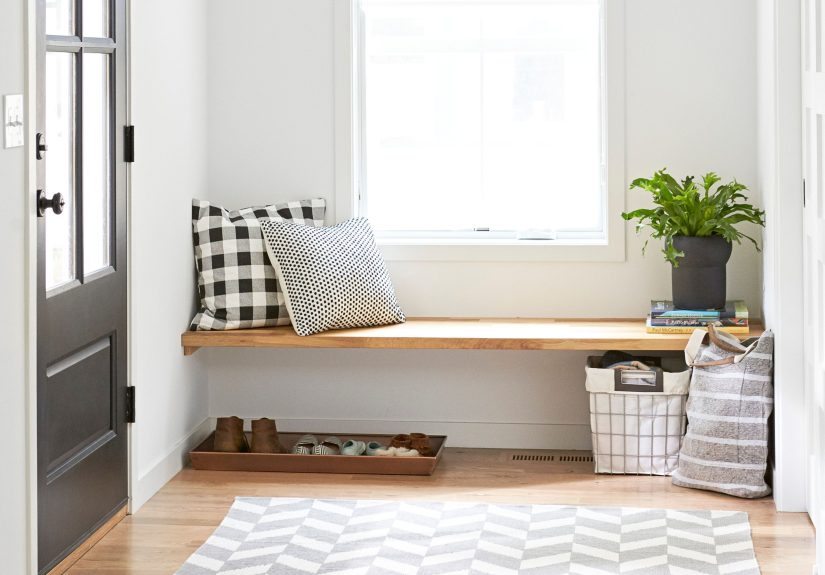
The entryway is where clutter often clock-ins for its shift. Use hooks for bags and coats, a tray for keys and sunglasses, and a basket or cabinet for shoes. Limit what lives here to current-use items only. If winter scarves are still hanging around in late spring, it is time for a seasonal edit.
Kitchen
Kitchen clutter creeps in fast because this room does everything. Keep counters as clear as possible. Store only the appliances you use regularly. Toss expired food, reduce duplicate utensils, and group pantry items by category. If your junk drawer is breeding paper clips and soy sauce packets, contain it with small dividers and stricter standards.
Living room
Living rooms collect hobbies, blankets, devices, remotes, books, mail, and yesterday’s water glass. Use baskets for soft items, trays for small essentials, and storage furniture for visual relief. Most important, decide what this room is for. If it is a place to relax, stop letting it double as a random warehouse.
Bedroom
Bedrooms feel most peaceful when surfaces stay minimal. Keep nightstands edited to true essentials. Limit “not clean, not dirty” clothing by using hooks or a designated basket. And if your closet is jammed, stop blaming the hangers. The problem is probably too many clothes, not too little space.
Bathroom
Bathrooms get cluttered with duplicates and expired products at record speed. Keep daily-use items accessible, but move extras elsewhere. Edit samples, half-used lotions, and mystery products you have not touched since the last presidential election. A calmer vanity makes the whole room feel cleaner.
How to Stop Clutter Creep Before It Starts Again
The secret is not perfection. It is maintenance. The most organized homes are not always cleaner; they are just easier to reset because the systems are simple and the volume is under control.
- Pause before buying anything new and ask where it will live.
- Schedule quick weekly resets for clutter hotspots.
- Declutter by category every season, especially clothes, paper, and toiletries.
- Keep donation containers available year-round.
- Make “finish the last step” a household habit, like returning scissors, chargers, and shoes to their spots.
That last point matters more than it seems. Clutter creep thrives on incomplete tasks. The mug is not done until it is in the dishwasher. The mail is not handled until it is sorted. The jacket is not dealt with until it is hung up. Finish the last step, and your home gets lighter almost immediately.
Real-Life Experiences with Clutter Creep
One of the most common experiences people describe is the feeling that they are always cleaning but never really getting ahead. The kitchen gets wiped down, but the counters are still crowded. The living room gets vacuumed, but the side tables are still piled with chargers, receipts, and three cups that somehow migrated there like they were searching for spiritual meaning. This is classic clutter creep: the room is technically cleaned, but it is not reset.
Another familiar pattern happens in bedrooms. A person declutters a closet, buys matching hangers, folds a few shelves beautifully, and feels unstoppable for about six days. Then life resumes. Laundry comes in faster than decisions go out. A hoodie lands on the chair. Shoes gather near the bed. Two impulse purchases sneak into the closet without any old items leaving. Within a month, the space is crowded again, and the person assumes the decluttering “didn’t work.” In reality, the problem was not the effort. It was the lack of a maintenance habit.
Families often see clutter creep in shared zones first. The entryway becomes mission control for backpacks, packages, sports gear, and shoes. Paper multiplies on the counter. Water bottles begin appearing in odd habitats around the house. Someone leaves a return item by the door for so long that it gains legal residency. What helps in these cases is not a massive organizing product haul. It is creating fewer decisions. A hook for each person, one basket for outgoing items, one tray for keys, and a short nightly reset can make the area feel normal again.
People who work from home often experience another version of clutter creep: the desk that slowly turns into a mixed-use habitat for office supplies, snacks, unopened mail, skincare, and random cables from devices nobody can identify. The clutter is not always dramatic, but it makes focus harder because the workspace stops feeling intentional. Even a quick reset at the end of the day can help the brain distinguish between “I am working” and “I am drowning in sticky notes.”
There is also the emotional side. Many people feel embarrassed by clutter creep because the mess seems too small to justify how stressful it feels. But small visible messes create constant visual reminders of unfinished decisions. That is exhausting. Once people start using tiny systems, like a donation bag in the closet, a tray on the entry table, or a rule that mail gets sorted immediately, they often notice something surprising: they feel calmer long before the house is perfect. That is the real win. Decluttering is not about making your home look like a showroom. It is about making daily life less annoying, less noisy, and a lot easier to manage.
Conclusion
Clutter creep is not a dramatic disaster. It is a slow leak. But slow leaks can still wreck the house. The fix is not to become a minimalist overnight or spend a fortune on matching bins. The fix is to reduce what you keep, assign real homes to what stays, and build small habits that stop clutter from regrowing like a very rude houseplant.
Start small. Clear one visible surface. Set a ten-minute timer. Put things away instead of down. Keep a donation bag nearby. And remember: the goal is not a perfect home. The goal is a home that supports your life instead of quietly sabotaging it.