Table of Contents >> Show >> Hide
- 15 Unexpected Hollywood Firsts That Changed the Movies
- 1. Barry Nelson was Bond before Sean Connery ever ordered a martini
- 2. The first movie kiss caused more commotion than some modern thrillers
- 3. The Jazz Singer did not invent sound, but it changed everything
- 4. Becky Sharp made color feel like the main event
- 5. Snow White and the Seven Dwarfs proved feature animation was not “Disney’s Folly”
- 6. Wings became the first Best Picture winnerand the only silent one
- 7. Bwana Devil kicked off Hollywood’s color 3D craze
- 8. Red Dawn was the first movie released with a PG-13 rating
- 9. Jaws became the first $100 million summer blockbuster and changed release strategy forever
- 10. Toy Story made computers the stars behind the stars
- 11. Hattie McDaniel became the first Black person to win a competitive Oscar
- 12. Sidney Poitier became the first Black man to win Best Actor
- 13. Halle Berry opened a historic Best Actress door that still feels too narrow
- 14. Kathryn Bigelow became the first woman to win Best Director
- 15. Barbra Streisand did not just break one barriershe broke several
- Why These Hollywood Firsts Still Feel Personal to Movie Fans
- Conclusion
Hollywood loves to sell us the polished version of history. A legend arrives, a star explodes, and suddenly the story feels neat, tidy, and gift-wrapped for awards season. But film history is rarely that clean. For every famous “first” people remember, there is usually a stranger, earlier, or delightfully awkward version hiding in the wings like an underpaid extra waiting for a close-up.
That is exactly what makes Hollywood firsts so fun. They reveal the moments when the movie business changed shape: when sound crashed the party, when color stopped being a novelty, when ratings shifted, when animation grew up, and when barriers in front of women and Black performers were challenged one gold statuette at a time. These milestones were not always glamorous in the moment. Some looked risky, some looked weird, and some probably made studio executives sweat through very expensive shirts.
And yes, the title fact is true: Sean Connery was not the first Bond. He became the first big-screen Bond and the one who turned 007 into a global icon, but he was not the first actor to play the character on screen. That honor belongs to someone many casual movie fans have never even heard of. Welcome to the wonderfully sneaky side of movie trivia.
15 Unexpected Hollywood Firsts That Changed the Movies
1. Barry Nelson was Bond before Sean Connery ever ordered a martini
Sean Connery may be the face most people picture when someone says “James Bond,” but the first actor to play Bond on screen was Barry Nelson in a 1954 live television adaptation of Casino Royale. Even better, this early Bond was Americanized as “Jimmy Bond,” which sounds less like a superspy and more like a guy who sells insurance but has very strong opinions about poker.
This forgotten version matters because it proves how slippery pop-culture memory can be. Connery made Bond cinematic, sleek, and immortal in Dr. No, but Barry Nelson got there first. Hollywood history is full of stories like that: the person who becomes iconic is not always the person who opened the door.
2. The first movie kiss caused more commotion than some modern thrillers
In 1896, May Irwin and John C. Rice appeared in The Kiss, a tiny film that captured what is widely recognized as the first kiss on film. The clip was short, simple, and scandalous enough to upset parts of the public. Imagine causing national pearl-clutching with a runtime shorter than a coffee order.
That moment showed how quickly movies could stir emotions and public debate. Long before social media outrage cycles, cinema already knew how to get people talking. Hollywood had discovered one of its oldest tricks: if audiences react strongly, you are probably onto something.
3. The Jazz Singer did not invent sound, but it changed everything
The Jazz Singer from 1927 is often treated like the movie that flipped the switch from silent films to talkies. More precisely, it became the first feature-length film with synchronized dialogue, and that was enough to rattle the entire industry. Suddenly, movie stars needed voices that matched their faces, theaters needed new equipment, and the silent era started hearing the footsteps of its own exit.
The film’s legacy is bigger than one technical breakthrough. It marked the moment Hollywood stopped treating synchronized dialogue as a novelty and started treating it as the future. Once audiences heard it, there was no going back to a world where title cards did all the talking.
4. Becky Sharp made color feel like the main event
Color had flirted with cinema before, but 1935’s Becky Sharp became the first Technicolor feature release and helped push color filmmaking toward mainstream respectability. It was not just a technical trick. It was proof that color could be used across a full feature and not merely as a flashy sideshow attraction.
Hollywood learned a valuable lesson here: audiences do not just watch movies, they experience them. Rich color opened the door for a more immersive kind of spectacle, and the industry sprinted through it. Eventually, you get everything from The Wizard of Oz to blockbuster fantasy worlds drenched in visual excess. Basically, Becky Sharp walked so modern CGI kingdoms could dramatically run.
5. Snow White and the Seven Dwarfs proved feature animation was not “Disney’s Folly”
When Walt Disney pushed ahead with Snow White and the Seven Dwarfs, plenty of people thought a feature-length animated movie would bore audiences silly. Instead, the 1937 film became Disney’s first feature-length animated film and a landmark in Hollywood storytelling. It was also a powerful argument that animation could carry emotion, humor, suspense, and box-office muscle for more than just a few cartoon minutes.
This was a massive turning point for the industry. Without Snow White, the idea of animated features as prestige entertainment might have taken much longer to catch on. That means no easy path to the worlds of Pixar, DreamWorks, or the modern family blockbuster. One forest cottage changed a lot.
6. Wings became the first Best Picture winnerand the only silent one
At the first Academy Awards, Wings won what became known as Best Picture. Even more impressively, it remains the only silent film ever to claim that prize. That makes it both the first and the holder of a record no future film is likely to steal unless Hollywood invents time travel and gets really weird with release strategy.
The win captures a transitional moment in film history. Silent cinema was still artistically powerful right before sound changed the rules. Wings stands as proof that early Hollywood was already capable of large-scale spectacle, emotional storytelling, and awards-season swagger before anyone had to worry about microphone placement.
7. Bwana Devil kicked off Hollywood’s color 3D craze
Long before modern audiences wore plastic glasses for superhero sequels, Bwana Devil arrived as the first color, full-length film to use 3D technology in a major way. It helped ignite a brief but influential 1950s 3D wave, when Hollywood tried every trick it could think of to keep viewers excited about theatrical spectacle.
This matters because 3D was never just about objects flying at your face like a baseball with anger issues. It was about exhibition, novelty, and competition. Studios understood that if television was going to keep people home, movies had to offer something bigger, louder, and harder to imitate in a living room.
8. Red Dawn was the first movie released with a PG-13 rating
Here is a rating-system curveball: Red Dawn was the first movie released with a PG-13 rating in 1984. That may sound like trivia reserved for the kind of person who alphabetizes DVDs for fun, but it marked a real shift in how Hollywood handled audience expectations.
The PG-13 label emerged after debates over films that felt too intense for a PG but not extreme enough for an R. Once that middle lane existed, studios gained more flexibility in making crowd-pleasers with sharper edges. In other words, the modern blockbuster adolescence of “not quite for kids, not fully adults only” finally had its own official badge.
9. Jaws became the first $100 million summer blockbuster and changed release strategy forever
Hollywood had big hits before 1975, but Jaws helped define a new business model by becoming the first $100 million summer blockbuster. It also turned the summer movie season into a battleground for event films, national marketing campaigns, and massive audience anticipation.
That shift cannot be overstated. Jaws helped teach studios that a movie could be more than a release; it could be a cultural happening. From that point on, summer stopped being just a warm season and became a business plan. Every giant franchise release today owes at least a little beach sand to Spielberg’s shark.
10. Toy Story made computers the stars behind the stars
In 1995, Toy Story became the world’s first CG animated feature film, and Hollywood never looked at animation the same way again. The movie was a technical milestone, but it also succeeded for the hardest reason of all: audiences actually cared. A tech demo can impress people for five minutes. A great movie makes them laugh, cry, and buy suspicious amounts of merchandise.
That is why Toy Story was such a breakthrough. It proved computer animation was not merely the future because it was new; it was the future because it could tell a heartfelt story. Buzz Lightyear did not just go to infinity and beyond. He dragged an entire industry with him.
11. Hattie McDaniel became the first Black person to win a competitive Oscar
In 1940, Hattie McDaniel made Academy Awards history by becoming the first Black person to be nominated for and win a competitive Oscar, taking Supporting Actress for Gone with the Wind. It was a landmark achievement in an industry that had long marginalized Black performers while still benefiting from their talent.
Her victory was historic, but it also came wrapped in the harsh contradictions of Hollywood’s racial history. That is part of why the moment remains so powerful. It was not just a win; it was a breakthrough that exposed both progress and exclusion at the same time.
12. Sidney Poitier became the first Black man to win Best Actor
Sidney Poitier’s Best Actor win for Lilies of the Field was more than overdue recognition for a brilliant performer. It made him the first Black man to win in that category, and the significance rippled far beyond a single ceremony. Poitier represented a new kind of leading man in American movies: dignified, intelligent, complex, and impossible to reduce to old stereotypes.
His win changed what major stardom could look like in Hollywood. It also gave future actors proof that prestige and popular impact did not have to live in separate rooms.
13. Halle Berry opened a historic Best Actress door that still feels too narrow
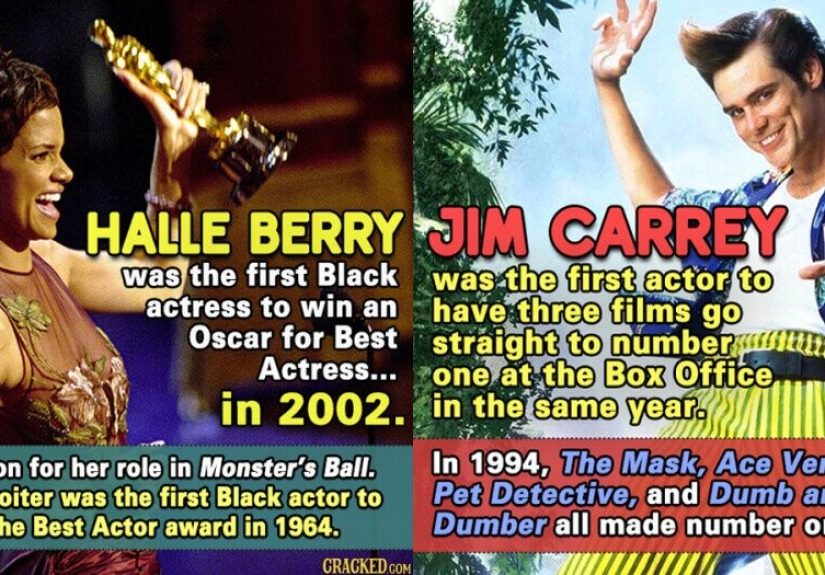
When Halle Berry won Best Actress for Monster’s Ball in 2002, she became the first Black woman to do it. Her acceptance speech remains one of the most emotional Oscar moments because the significance was obvious in real time. This was not merely a personal victory. It was a moment that carried generations of exclusion on its shoulders.
The uncomfortable part is that the milestone still feels alarmingly singular. That only makes Berry’s win more important. It stands as both a triumph and a reminder of how slowly Hollywood can move, even while congratulating itself for moving at all.
14. Kathryn Bigelow became the first woman to win Best Director
It took until 2010 for the Academy to award Best Director to a woman, when Kathryn Bigelow won for The Hurt Locker. Considering how long women had been directing films, that delay says a lot about the industry’s blind spots. Bigelow’s victory was not symbolic fluff; it was a clear statement that one of cinema’s most prestigious categories had been overdue for a correction.
Her win also helped expose how often Hollywood confuses tradition with merit. Sometimes “the way things have always been” is just a fancier sentence for “we got comfortable being wrong.”
15. Barbra Streisand did not just break one barriershe broke several
Barbra Streisand’s Hollywood resume is basically overachiever fan fiction written by someone who refused to calm down. She became the first woman to earn an Academy Award for composing music, thanks to “Evergreen,” and she also became the first woman in Hollywood history to write, produce, direct, and star in a major studio film with Yentl.
That kind of creative control matters because it redefined what power could look like for women in Hollywood. Streisand was not waiting politely to be handed the right project. She helped build it herself, then walked into history carrying all the job titles at once.
Why These Hollywood Firsts Still Feel Personal to Movie Fans
What makes these unexpected Hollywood firsts so satisfying is that they change the way we experience movies we thought we already understood. Once you learn that Sean Connery was not the first Bond, you never look at franchise history the same way again. Once you find out Wings is still the only silent Best Picture winner, silent cinema stops feeling like dusty homework and starts feeling like a lost superpower. These facts do not just update your trivia bank. They rearrange your emotional map of film history.
There is also something deeply fun about realizing that Hollywood has always been making it up as it goes. Today, studios act like they have perfected the science of moviegoing, yet the industry was built on experiments, gambles, near disasters, and ideas that sounded ridiculous until they worked. A feature-length cartoon? Risky. A talking movie? Odd. A shark movie released as a national summer event? Possibly unhinged. And yet those risks became landmarks.
For longtime movie lovers, these firsts can feel almost personal because they mirror the way fandom grows. You start with the polished version of cinema historythe big stars, the giant franchises, the famous acceptance speeches. Then, little by little, the hidden corridors open up. You discover the rough draft before the masterpiece, the prototype before the empire, the overlooked pioneer before the legend who got the lunchbox. That process is part of the joy. It feels like finding secret rooms inside a house you thought you knew by heart.
There is another reason these stories stick: they remind us that progress in Hollywood is never automatic. Technical breakthroughs happen because someone believes audiences are ready for something new. Cultural milestones happen because artists push forward in an industry that often resists change until resistance becomes embarrassing. Hattie McDaniel, Sidney Poitier, Halle Berry, Kathryn Bigelow, and Barbra Streisand are not memorable simply because they were first. They matter because being first usually means succeeding while carrying expectations, doubts, and unfair scrutiny that others did not have to face.
That is why film history is at its best when it is not treated like a museum label. It is a living conversation between audiences and the people who make movies. Every “first” opens a path, but it also raises a question: who got remembered, who got erased, and who made the future possible without getting the loudest applause? Sometimes the answer is glamorous. Sometimes it is messy. Usually, it is both.
So the next time someone confidently declares that Sean Connery was the first Bond, you can smile with the serene energy of a person holding excellent trivia. Then you can go one better and explain that Hollywood’s real history is much more entertaining than the simplified version. It is full of false starts, overlooked pioneers, and breakthroughs that looked strange before they looked inevitable. Honestly, that is part of what makes movies magical. The screen shows us the final cut, but the history behind it is the real behind-the-scenes epic.
Conclusion
Hollywood history is not a straight line from “old thing” to “famous thing.” It is a maze of experiments, breakthroughs, forgotten pioneers, and moments that only seem obvious in hindsight. Connery was not the first Bond, just as many of cinema’s most famous achievements were not born as polished legends. They arrived awkwardly, boldly, and sometimes hilariously ahead of their time.
That is what makes these 15 movie milestones worth revisiting. They are not just fun facts for film buffs. They show how the industry evolvesthrough risk, reinvention, and the occasional plot twist that makes accepted movie history wobble in its seat. And really, if Hollywood cannot handle a dramatic reveal, what are we even doing here?