Table of Contents >> Show >> Hide
- Before the Video: Billy Squier Was Already a Rock Heavyweight
- The MTV Problem: When Image Became Part of the Song
- 5 Ways One Awful Music Video Ended Billy Squier’s Career Momentum
- Was the Video Really the Only Reason?
- Why Cracked’s “One Hit Blunders” Angle Still Works
- What Modern Creators Can Learn From Billy Squier’s Video Disaster
- Experience Notes: The Real-World Feeling Behind the “Rock Me Tonite” Lesson
- Conclusion
In the early 1980s, Billy Squier looked like a man with a backstage pass to rock immortality. He had the voice, the riffs, the swagger, the radio hits, and the kind of arena-rock momentum that made record executives smile like they had just discovered a second wallet in their old jeans. Then came one music video, four minutes of pastel sheets, awkward dancing, and image confusion so intense it practically needed its own emergency meeting.
The video was for “Rock Me Tonite,” the lead single from Squier’s 1984 album Signs of Life. The song itself was not a flop. In fact, it became one of his biggest pop singles and performed strongly on rock radio. But the video became infamous for all the wrong reasons. It has since been discussed, mocked, defended, re-examined, and filed under the grand cultural category of “What were they thinking?”
Cracked’s “One Hit Blunders” take on Billy Squier highlights a strange truth about the MTV era: sometimes the song was only half the product. The other half was the image. And if the image went sideways, the audience could disappear faster than a drummer asked to help load the van.
Before the Video: Billy Squier Was Already a Rock Heavyweight
To understand why the “Rock Me Tonite” video became such a career legend, you first have to understand that Billy Squier was not some random guy who briefly wandered into MTV wearing the wrong shirt. He was already a major rock act.
His 1981 album Don’t Say No turned him into a staple of album-oriented rock radio. Songs like “The Stroke,” “In the Dark,” “My Kinda Lover,” and “Lonely Is the Night” gave him a muscular, guitar-driven identity. He was not trying to be mysterious art-pop. He was not selling ironic cool. He was selling big drums, big hooks, big guitars, and the kind of vocal delivery that sounded best when blasted from a Camaro with questionable suspension.
Then came Emotions in Motion in 1982, which kept his momentum rolling. By the time he prepared Signs of Life, Squier had the look of someone ready to make the leap from rock-radio star to full-on 1980s institution. The pressure was real. MTV had changed the rules, and artists could no longer rely on sound alone. They had to look like the fantasy their audience had already built in its head.
The MTV Problem: When Image Became Part of the Song
MTV launched in 1981 and quickly made music videos a central part of pop promotion. Before that, rock credibility could survive on album covers, radio interviews, tour posters, and the occasional grainy TV appearance. After MTV, every artist needed a visual identity that could survive repeated viewing in living rooms, dorms, bars, and electronics stores where every television was somehow always tuned to the same channel.
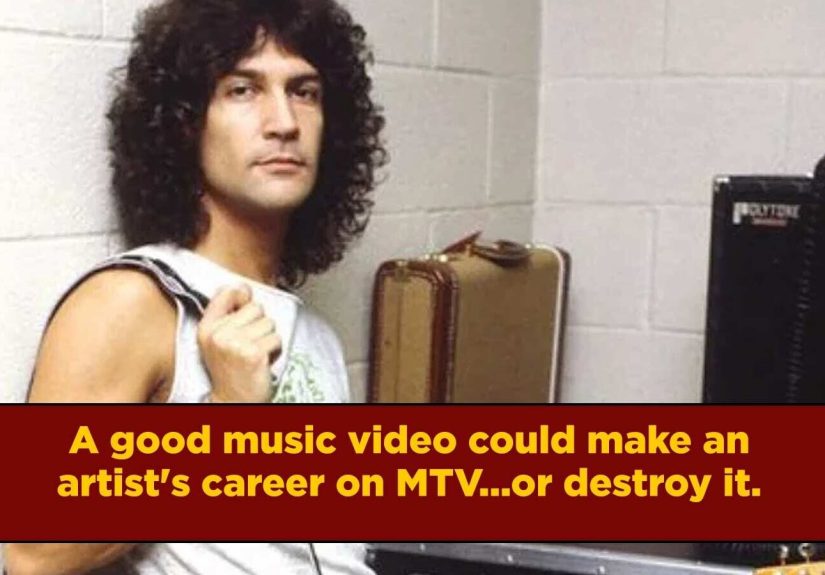
That was dangerous territory. A great video could make an artist feel larger than life. A bad one could make a strong song feel ridiculous. A mismatched one could do something worse: it could make fans question whether they had misunderstood the artist all along.
That is what happened with “Rock Me Tonite.” The song aimed for a slicker, more pop-friendly version of Squier’s sound. That alone was not fatal. Many rock artists were adding synths, dance grooves, and shinier production in the mid-1980s. The real problem was that the video did not translate Billy Squier’s existing appeal. It replaced it with something soft, theatrical, and confusingly choreographed. For an artist whose audience expected tough arena-rock charisma, the clip felt like a sudden costume change in the middle of a boxing match.
5 Ways One Awful Music Video Ended Billy Squier’s Career Momentum
1. It Broke the Contract Between Artist and Audience
Every popular artist has an unspoken agreement with fans. The fans say, “We believe you are this kind of performer.” The artist says, “Yes, and here is more of that thing you like.” Billy Squier’s agreement with his audience was based on hard-rock confidence: tight jeans, loud guitars, raspy vocals, and songs that sounded like they were built for stage lights, not satin bedding.
The “Rock Me Tonite” video disrupted that contract. Instead of a performance clip that showed Squier in command of a band or stage, viewers got a bedroom set, pastel visuals, and solo movement that felt more like musical-theater rehearsal than arena rock. The result was not just “bad dancing.” Plenty of rock stars have danced badly and survived. The issue was brand whiplash.
In marketing terms, Squier’s core audience experienced a positioning crisis. In human terms, a lot of fans probably stared at the screen and muttered, “Wait, is this the same guy?” That is never the sound you want your audience making unless you are a magician pulling a rabbit from a Marshall stack.
2. It Turned a Hit Song Into a Punchline
“Rock Me Tonite” was not a commercial failure on its own. The single charted well and had the ingredients of an MTV-era hit: a catchy chorus, a modernized sound, and a big-name artist behind it. But once the video became the conversation, the song lost control of its own reputation.
This is one of the cruelest things that can happen in pop culture. A piece of work stops being judged as itself and becomes attached to a joke. The song was no longer just “Rock Me Tonite.” It became “that Billy Squier video.” That shift matters because audiences often remember embarrassment more vividly than quality. A good riff can fade. A questionable dance move lives forever, especially when cable television insists on replaying it between Duran Duran and Van Halen.
The video also arrived during a period when music fans were learning to judge artists visually. MTV made image feel immediate. You did not have to read a review or hear industry gossip. You could watch the clip yourself and form an opinion in real time. Unfortunately for Squier, many viewers formed the same opinion: this did not fit.
3. It Made Squier Look Out of Control of His Own Image
One reason the video became such a powerful cautionary tale is that it made a confident rock star look strangely powerless. Whether the final clip reflected Squier’s original idea, the director’s interpretation, label pressure, or some chaotic mixture of all three, the public only saw the result. And the result made it look as if nobody in the room had asked the most important question: “Will this help Billy Squier?”
That question sounds obvious now, but the early MTV years were full of experimentation. Labels wanted videos. Artists wanted exposure. Directors wanted concepts. Nobody had a perfectly tested manual for how to protect a rock star’s image while also making television-friendly content. In that environment, one wrong creative decision could escape the editing room and become national evidence.
Squier later blamed the video for damaging his career, and the story has often been framed as a betrayal by collaborators. Other observers have argued that the decline was more complicated. Still, perception matters. Once fans and industry insiders started treating the video as a disaster, the narrative became hard to reverse. In show business, a bad story can travel faster than a good single.
4. It Hit at the Worst Possible Career Moment
If a minor artist releases a bad video, most people never notice. If a legend releases a bad video, fans may forgive it as eccentricity. Billy Squier’s problem was timing. He was big enough for the video to matter, but not so untouchable that he could shrug it off.
By 1984, he was at a crossroads. He had major success behind him and huge expectations ahead of him. Signs of Life needed to confirm that he could keep growing in a changing market. Instead, the “Rock Me Tonite” video created doubt. It made critics, fans, and possibly promoters wonder whether Squier’s instincts were still aligned with the audience that had built him.
That is why the video became more than an embarrassing clip. It became a symbol of a career shift. When later albums failed to match the commercial force of Don’t Say No and Emotions in Motion, the video offered an easy explanation. Was it the only reason? Probably not. Was it the most memorable reason? Absolutely. Pop history loves a single dramatic object. For Billy Squier, that object happened to be a pastel bedroom set.
5. It Created a Comeback Problem
The hardest thing about a public image disaster is not the initial embarrassment. It is the comeback. Once an artist becomes associated with a humiliating moment, every future release has to fight the old joke before it can make a new impression.
Squier continued to make music after “Rock Me Tonite.” He also continued to have rock-radio activity. The idea that he vanished completely is too simple. But his mainstream pop momentum never fully recovered. Instead of being discussed as one of the dominant rock stars of the decade, he became attached to a warning label: beware the bad music video.
That is brutal because Squier’s catalog deserves more than one punchline. His rhythm tracks later became important to hip-hop sampling culture, especially through “The Big Beat.” His early 1980s albums still contain sharp, durable rock songs. But cultural memory is lazy. It likes shortcuts. And for many casual listeners, the shortcut became this: Billy Squier was the guy whose career got wrecked by a video.
Was the Video Really the Only Reason?
The honest answer is no. Careers rarely rise or fall because of one single event. Music tastes were changing. Rock radio, pop radio, MTV, glam metal, new wave, dance-pop, and later hip-hop were all reshaping the market. Squier was also moving into a slicker sound that may have confused some fans even without the video.
There is also a strong counterargument: if the video truly destroyed Squier’s credibility with rock audiences, why did he continue to land rock-radio hits afterward? That detail complicates the myth. It suggests that the pop audience may have moved on faster than the rock audience, and that the video became a convenient symbol for a broader commercial cooling.
Still, symbols matter. The video may not have single-handedly ended Billy Squier’s career, but it helped define the way people talked about his decline. In entertainment, the story around the work can become as powerful as the work itself. Once the public decides that a moment represents failure, the artist has to spend years arguing with a ghost.
Why Cracked’s “One Hit Blunders” Angle Still Works
The reason this story remains so clickable is simple: it feels impossible and yet believable. Could one awful music video really damage a career? In the MTV era, yes, at least partly. It was a time when artists were learning that visual branding could amplify music or sabotage it. The “Rock Me Tonite” video is not just funny because it looks dated. It is fascinating because it reveals how fragile fame can be when the audience’s emotional investment depends on image.
Cracked’s framing works because it treats the video like a pop-culture crime scene. There is the victim: Billy Squier’s momentum. There is the weapon: a deeply misjudged music video. There are suspects: the director, the label, management, MTV expectations, 1980s gender norms, and possibly the dangerous confidence of everyone involved. And there is the lingering mystery: was this really a career-ending disaster, or just the most memorable moment in a decline that had several causes?
The answer is probably both. The video did not erase Squier’s talent. It did not erase his previous hits. It did not stop his songs from being sampled, rediscovered, or respected by musicians. But it did change the conversation around him. For a performer whose appeal depended on rock-star confidence, becoming a punchline was expensive.
What Modern Creators Can Learn From Billy Squier’s Video Disaster
The Billy Squier story is not just an old MTV anecdote. It is a modern branding lesson wearing a pink tank top. Today, musicians, YouTubers, TikTok creators, podcasters, streamers, authors, and small businesses all face the same basic challenge: your audience does not only consume what you make. They consume what your work says about you.
If your visual presentation clashes too sharply with your promise, people notice. A fitness coach who posts chaotic, low-effort videos may lose trust. A luxury brand with cheap-looking product photos may feel less premium. A serious musician who suddenly releases a confusing, off-brand clip may make fans wonder whether the old magic was accidental. The platform has changed, but the psychology has not.
Another lesson is that creative risk needs a safety net. Risk is good. Nobody remembers perfectly polished boredom. But risk should still understand the audience. Billy Squier could have evolved visually. He could have become more theatrical, more stylish, or more pop-friendly. The problem was not change itself. The problem was change without a bridge. The video asked fans to jump from arena-rock toughness to bedroom choreography in one leap. Many did not make it across.
There is also a lesson about approval. When a project feels wrong in your gut, do not ignore that feeling just because professionals are standing nearby with clipboards. Experts can help shape a vision, but they can also misunderstand the core of what makes an artist valuable. If a creative decision affects your name, your face, and your future, you cannot treat it like someone else’s problem. The public will not blame the meeting. The public will remember you.
Experience Notes: The Real-World Feeling Behind the “Rock Me Tonite” Lesson
Anyone who has ever published something online can understand a tiny version of the Billy Squier experience. You work hard on a project. You believe in the idea. You polish the headline, the image, the edit, the tone, the timing. Then the audience reacts to the one thing you did not expect them to focus on. Maybe the thumbnail looks weird. Maybe the intro joke lands badly. Maybe the outfit distracts from the message. Maybe the lighting makes your serious announcement look like a hostage video filmed in a dentist’s office.
That is the uncomfortable truth behind this story: creative work is judged as a total package. The audience may not separate the song from the video, the article from the headline, the product from the packaging, or the message from the delivery. Creators often wish people would focus only on the “real work,” but presentation is part of the real work. In the MTV era, that meant music videos. Today, it means thumbnails, short-form clips, profile photos, captions, podcast covers, livestream backgrounds, and the first three seconds of anything.
The experience is especially painful when the mistake feels out of proportion. Billy Squier did not forget how to sing. He did not forget how to write hooks. He did not suddenly become less musical because of one video. Yet public perception can be wildly unfair. A single awkward presentation can become the doorway through which casual audiences exit. That is why creators should treat launch materials as seriously as the main product. The wrapper may not be the candy, but if the wrapper looks cursed, fewer people will bite.
Another experience many creators recognize is the danger of trusting a concept simply because it sounds bold in a meeting. “Let’s show a more vulnerable side.” “Let’s break the old image.” “Let’s surprise people.” These phrases can lead to brilliant work. They can also lead to a rock singer rolling around a pastel bedroom while fans wonder who changed the channel. The difference is whether the surprise still feels connected to the artist’s core identity.
The best creative evolution feels like a new chapter, not a mistaken address. Madonna, David Bowie, Prince, and many other visual risk-takers changed constantly because transformation was part of their promise. Billy Squier’s audience had a different expectation. They wanted grit, power, and rock confidence. The “Rock Me Tonite” video gave them something else without preparing them for it.
For modern brands and creators, the practical takeaway is simple: before releasing anything public, ask three questions. Does this match what people trust me for? Does it expand my image without breaking it? If this becomes the only thing people remember, will I be okay with that? Those questions may sound dramatic, but the internet is basically MTV with infinite channels and a shorter attention span. One bad upload probably will not end a career, but it can create a nickname you never asked for.
Billy Squier’s story endures because it is funny, sad, and useful all at once. It reminds us that talent matters, but context matters too. A great song can survive a bad video, but an artist’s momentum may not. And sometimes the most important creative decision is not whether something is interesting. It is whether it is interesting in a way your audience can follow.
Conclusion
The “Rock Me Tonite” video did not erase Billy Squier from music history. His best songs still punch hard, his early albums remain important to 1980s rock, and his drum breaks found surprising new life in hip-hop. But the video did damage something precious: the clean line between Squier’s image and his audience’s belief in him.
That is why the story still matters. It is not merely about bad dancing, questionable wardrobe choices, or the dangers of satin sheets under studio lights. It is about how quickly a brand can crack when image, timing, and audience expectation collide. In the MTV era, video could make the radio star. In Billy Squier’s case, it also showed how video could wound one.