Table of Contents >> Show >> Hide
- What Is a Cyst on the Forehead?
- Common Causes of a Cyst on the Forehead
- Symptoms: How to Recognize a Forehead Cyst
- Cyst on Forehead vs. Pimple: What Is the Difference?
- When Should You See a Doctor?
- How Doctors Diagnose a Forehead Cyst
- At-Home Care: What You Can Safely Do
- What Not to Do: Please Do Not Pop It
- Medical Treatment Options for a Cyst on the Forehead
- Will a Forehead Cyst Go Away on Its Own?
- Can a Forehead Cyst Be Dangerous?
- How to Prevent Forehead Cysts
- Scarring and Cosmetic Concerns
- Real-Life Experiences: What People Often Notice With a Forehead Cyst
- Conclusion
Medical note: This article is for educational purposes only and should not replace advice from a qualified healthcare professional. Any new, painful, fast-growing, infected, or unusual forehead lump should be checked by a doctor or dermatologist.
A cyst on the forehead has a special talent for appearing at the worst possible time: before school photos, a job interview, a wedding, or the exact week you decide to “drink more water and fix your life.” The good news is that most forehead cysts are benign, slow-growing, and treatable. The less glamorous news is that they are not usually the kind of bump you should attack with fingernails, tweezers, or the bathroom mirror bravery that arrives at midnight.
In medical terms, many forehead cysts are epidermoid cysts or epidermal inclusion cysts. These are small sacs under the skin that often contain keratin, a protein found naturally in skin, hair, and nails. They can look like firm, round bumps beneath the skin and may be skin-colored, yellowish, white, or slightly red if irritated. Some have a tiny dark opening in the center, called a punctum, which is basically the cyst’s very unhelpful “front door.”
Because the forehead is highly visible and constantly exposed to sweat, sunscreen, hair products, hats, helmets, and curious fingers, a cyst in this area can feel more dramatic than one hidden on the back or shoulder. But appearance alone does not tell the full story. A forehead lump may be a cyst, acne nodule, lipoma, dermoid cyst, swollen pore, insect bite, scar tissue, or another skin growth. That is why diagnosis matters before treatment.
What Is a Cyst on the Forehead?
A cyst is a closed pocket of tissue that forms beneath the skin. It may contain fluid, dead skin cells, keratin, or other material depending on the type. On the forehead, the most common cyst-like bumps are usually related to blocked pores, trapped skin cells, or inflammation around hair follicles.
An epidermoid cyst on the forehead usually develops when skin cells that should naturally shed from the surface become trapped under the skin. Instead of leaving politely, those cells keep producing keratin inside a small sac. Over time, the sac expands and becomes a noticeable bump. It is not your skin being dramatic; it is your skin building a tiny storage unit nobody asked for.
These cysts are often slow-growing and painless. Many people notice them only when washing their face, applying makeup, shaving near the hairline, or seeing their reflection under lighting that should be illegal. A cyst may stay the same size for months or years, shrink slightly, or become inflamed and tender.
Common Causes of a Cyst on the Forehead
1. Trapped Skin Cells
The most common cause of an epidermoid cyst is trapped surface skin cells. When these cells move deeper into the skin instead of shedding outward, they can multiply inside a sac and produce keratin. This process may happen after minor skin injury, irritation, acne, or simply because skin biology enjoys keeping dermatologists employed.
2. Blocked Hair Follicles or Pores
The forehead contains many hair follicles and oil glands. Sweat, oil, dead skin cells, sunscreen, makeup, and hair products can contribute to blocked pores. While not every clogged pore becomes a cyst, repeated blockage or inflammation may encourage cyst-like bumps to form.
3. Acne and Deep Inflammation
Some people describe any large forehead bump as a “cyst,” but not all are true cysts. Cystic acne can create deep, painful nodules that feel like lumps under the skin. These bumps may be red, swollen, and tender. Unlike a classic epidermoid cyst, cystic acne is usually part of an inflammatory acne pattern and may appear with other pimples, blackheads, or whiteheads.
4. Skin Trauma
A scratch, cut, piercing, burn, or repeated friction from hats, helmets, or headbands may push skin cells below the surface. This can sometimes lead to an epidermal inclusion cyst. The forehead is not exactly a quiet neighborhood; it gets sun, sweat, facial expressions, and the occasional accidental bump into cabinet doors.
5. Genetics
Some people are simply more prone to epidermoid cysts. If family members tend to develop cysts, you may have a higher chance of getting them too. Genetics can influence skin structure, oil production, follicle behavior, and how your skin responds to inflammation.
6. Sun Damage and Aging Skin
Long-term sun exposure may affect the skin’s texture and healing patterns. Since the forehead is one of the most sun-exposed areas of the face, years of ultraviolet exposure may contribute to clogged follicles, roughened skin, and cyst-like growths in some people.
Symptoms: How to Recognize a Forehead Cyst
A typical cyst on the forehead may have several recognizable features:
- A round or dome-shaped bump under the skin
- A firm but movable lump
- Slow growth over time
- Skin-colored, pale, yellowish, or slightly reddish appearance
- A small central pore or dark dot
- Mild tenderness if irritated
- Thick white or yellow material if it ruptures
Most uncomplicated epidermoid cysts are not painful. Pain, warmth, redness, swelling, drainage, or a sudden increase in size may suggest inflammation or infection. When a cyst becomes inflamed, it can look angry enough to deserve its own customer service complaint. But inflammation does not always mean bacterial infection, which is why antibiotics are not automatically needed for every red cyst.
Cyst on Forehead vs. Pimple: What Is the Difference?
A forehead pimple usually develops closer to the skin surface and may come to a head within days. It often improves with acne treatments such as benzoyl peroxide, salicylic acid, or prescription topical medications. A cyst, on the other hand, is usually deeper, firmer, and longer-lasting. It may sit under the skin for weeks, months, or even years.
Cystic acne can blur the line because it also forms deep under the skin. The key difference is that cystic acne often appears with other acne lesions and tends to be more inflamed. A true epidermoid cyst usually feels like a separate, rounded sac beneath the skin. If you are unsure, do not start a detective drama with your pores. A dermatologist can usually tell by examination and may recommend treatment based on the type of bump.
When Should You See a Doctor?
You should see a healthcare provider if a forehead cyst:
- Grows quickly
- Becomes painful, warm, red, or swollen
- Drains pus or foul-smelling material
- Bleeds or repeatedly breaks open
- Returns after previous drainage
- Interferes with glasses, hats, helmets, or daily activities
- Causes cosmetic concern or emotional discomfort
- Feels fixed, hard, irregular, or unusual
It is especially important to get medical advice for a new forehead lump that changes rapidly or does not behave like a typical cyst. While most cysts are benign, some skin cancers or other growths can mimic harmless bumps. A professional exam gives you clarity instead of guesswork.
How Doctors Diagnose a Forehead Cyst
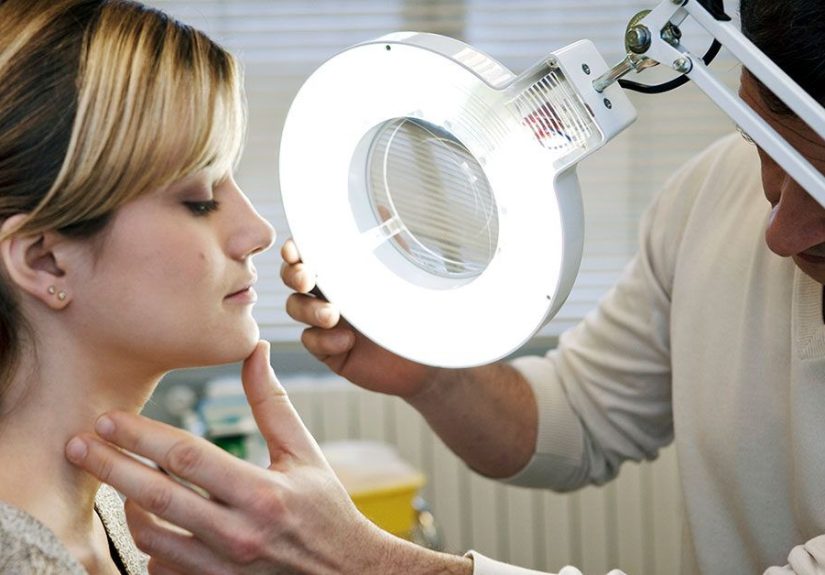
In many cases, a doctor or dermatologist can diagnose a cyst by looking at it and feeling it. They may ask how long it has been there, whether it has changed, whether it hurts, and whether it has drained before. They may also ask about acne, previous skin injuries, family history, medications, and skincare habits.
If the cyst is removed, the tissue may be sent to a lab for confirmation. This is especially useful if the lump looks unusual, recurs, or has features that make the diagnosis uncertain. Testing is not about panic; it is about being precise. Skin deserves receipts.
At-Home Care: What You Can Safely Do
Use Warm Compresses
A warm compress may help soothe discomfort and encourage natural drainage if the cyst is inflamed. Use a clean washcloth soaked in warm water, apply it gently for 10 to 15 minutes, and repeat a few times daily if needed. The key word is gently. Your forehead is not a stress ball.
Keep the Area Clean
Wash your face with a mild cleanser. Avoid harsh scrubs, alcohol-heavy toners, or aggressive exfoliation over the cyst. Irritating the area can worsen redness and swelling.
Avoid Heavy Hair Products
Pomades, oils, gels, and thick styling products can clog pores near the hairline. If your cyst is close to your hairline, consider switching to non-comedogenic products and keeping hair off the forehead when possible.
Protect Your Skin From the Sun
Sun exposure can worsen skin inflammation and dark marks after irritation. Use a broad-spectrum sunscreen that works well with your skin type. If sunscreen seems to clog your pores, try a lightweight, oil-free, non-comedogenic formula.
What Not to Do: Please Do Not Pop It
Trying to pop a forehead cyst is one of those ideas that feels productive for about four seconds and regrettable for several weeks. Squeezing can rupture the cyst wall under the skin, pushing keratin and inflammatory material into surrounding tissue. This may lead to more swelling, pain, infection, scarring, and recurrence.
Even if material comes out, the cyst wall often remains. When the sac is still present, it can refill later. That is why “I drained it myself” often turns into “why is it back, and why is it angrier?” A forehead cyst is not a balloon; it is more like a tiny pouch. Unless the pouch is properly removed, the problem may return.
Medical Treatment Options for a Cyst on the Forehead
1. Watchful Waiting
If the cyst is small, painless, and not changing, your doctor may recommend leaving it alone. Many cysts do not need treatment. This can be the best option when the cyst is stable and not bothering you. In skincare, sometimes the most powerful move is not poking the thing.
2. Steroid Injection
If a cyst is inflamed but not clearly infected, a dermatologist may inject a corticosteroid medication into the cyst. This can reduce swelling, tenderness, and redness. It may not remove the cyst permanently, but it can calm a flare and make the area look and feel better.
3. Incision and Drainage
If the cyst is very swollen, painful, or filled with fluid-like material, a clinician may make a small opening and drain it. This can relieve pressure quickly. However, incision and drainage may not remove the cyst wall, so the cyst can come back. Think of it as emptying the trash but leaving the trash can.
4. Complete Surgical Excision
The most definitive treatment for an epidermoid cyst is surgical excision, where the healthcare provider removes the cyst and its wall. Removing the full cyst lining lowers the chance of recurrence. For the forehead, cosmetic planning matters because the area is visible. Dermatologists, dermatologic surgeons, plastic surgeons, and some trained primary care clinicians may perform cyst removal depending on the cyst’s size, location, and complexity.
5. Antibiotics
Antibiotics may be used if there are signs of bacterial infection, such as spreading redness, warmth, increasing pain, pus, fever, or surrounding cellulitis. However, not every inflamed cyst is infected. Inflammation can happen when keratin leaks into surrounding tissue, and antibiotics alone may not fix the underlying cyst sac.
Will a Forehead Cyst Go Away on Its Own?
Some cysts shrink or become less noticeable, but many do not disappear completely because the cyst wall remains under the skin. A cyst may stay quiet for a long time and then flare after irritation, pressure, or rupture. If the cyst is small and harmless, monitoring it may be reasonable. If it keeps returning, growing, or bothering you, removal may be the better long-term solution.
Can a Forehead Cyst Be Dangerous?
Most forehead cysts are not dangerous. They are usually benign and more annoying than medically serious. The main problems are inflammation, infection, discomfort, drainage, scarring, and cosmetic concern. Rarely, a lump that looks like a cyst may be something else. That is why persistent, changing, or unusual forehead bumps deserve professional evaluation.
How to Prevent Forehead Cysts
You cannot prevent every cyst, especially if genetics or previous skin trauma plays a role. However, good skin habits may reduce clogged pores and irritation.
- Wash your face daily with a gentle cleanser.
- Remove makeup before bed.
- Choose non-comedogenic sunscreen, moisturizers, and cosmetics.
- Keep hair products away from the forehead when possible.
- Clean hats, helmets, headbands, and pillowcases regularly.
- Treat acne early instead of squeezing deep bumps.
- Avoid picking at scabs, pimples, or healing skin.
Prevention is not about having perfect skin. Perfect skin is mostly lighting, genetics, filters, and suspiciously expensive serum. The realistic goal is reducing irritation and catching changes early.
Scarring and Cosmetic Concerns
Because the forehead is so visible, many people worry about scarring after cyst removal. A skilled clinician can often place an incision carefully and use techniques that minimize scarring. Still, any procedure that cuts the skin can leave a mark. The size of the cyst, whether it is inflamed, your skin type, your healing pattern, and aftercare all affect the final result.
Removing a calm cyst is often easier than removing an inflamed or infected one. When a cyst is actively swollen, tissue planes can be harder to separate, and the chance of incomplete removal or scarring may be higher. Your provider may calm the inflammation first, then schedule removal later.
Real-Life Experiences: What People Often Notice With a Forehead Cyst
Many people first discover a forehead cyst by accident. They are washing their face, applying moisturizer, or leaning close to the mirror to investigate one eyebrow hair that has apparently chosen a career in architecture. Suddenly, there it is: a small bump under the skin. It may not hurt. It may not even be red. But because it is on the forehead, it feels like it has rented billboard space.
One common experience is the “wait and watch” phase. A person notices a pea-sized bump near the hairline and assumes it is a deep pimple. They try acne spot treatments for a week or two. Nothing happens. They exfoliate harder. Still nothing. Then they press it, which makes it sore, and now the original bump has recruited redness, swelling, and regret. This is often when people realize the bump may not be ordinary acne.
Another typical story involves a cyst that stays quiet for months. It becomes part of the face’s background scenery, like a tiny speed bump. Then a hat rubs against it, a helmet presses on it, or a skincare product irritates the area. Suddenly the cyst becomes tender and more noticeable. This does not always mean infection. Sometimes the cyst wall has become inflamed, or keratin has irritated the surrounding skin. A warm compress may help mild discomfort, but worsening pain or spreading redness should be checked.
Some people feel embarrassed about forehead cysts because they are difficult to hide. Makeup may not cover the raised shape. Bangs may help, but they can also trap oil and hair products against the skin. This creates a frustrating loop: the person hides the cyst with hair, the area gets more irritated, and the bump becomes even more obvious. In these cases, a dermatologist can help decide whether the lump is a cyst, acne nodule, or another condition.
People who have had cyst removal often describe the procedure as less dramatic than expected. In many cases, it is done with local anesthesia, meaning the area is numbed while the person stays awake. The clinician makes a small incision, removes the cyst contents and wall, and closes the skin if needed. The most important part is removing the cyst lining. If only the contents are drained, the cyst may refill later. That is why professional removal can be more effective than repeated squeezing or temporary drainage.
Recovery experiences vary. Some people have mild swelling or bruising for a few days. Others need stitches and a follow-up visit. The forehead may feel tight because facial expressions constantly move the area. Even raising your eyebrows can feel like the skin is saying, “Excuse me, we are healing here.” Following aftercare instructions matters: keeping the area clean, avoiding picking, protecting it from sun, and not applying random internet remedies.
A final common experience is relief. Not just because the cyst is gone, but because the mystery is solved. A forehead lump can create unnecessary anxiety when someone does not know what it is. Getting a diagnosis turns the situation from “What is this thing?” into “Here are my options.” That clarity is often the best treatment starter of all.
Conclusion
A cyst on the forehead is usually a benign skin bump, often an epidermoid or epidermal inclusion cyst filled with keratin. It may develop from trapped skin cells, blocked follicles, acne-related inflammation, minor trauma, genetics, or irritation. While many cysts do not need urgent treatment, forehead cysts can be uncomfortable, inflamed, infected, or cosmetically frustrating because they sit right in the spotlight.
The safest approach is simple: do not pop it, do not dig at it, and do not turn your bathroom into a surgical suite. Use gentle skincare, warm compresses for mild irritation, and see a healthcare provider if the cyst grows, hurts, drains, changes, or bothers you. Treatment may include monitoring, steroid injection, incision and drainage, antibiotics for true infection, or complete surgical excision. For long-term results, removing the cyst wall is usually the key.
Your forehead deserves better than panic and tweezers. With the right diagnosis and treatment plan, most forehead cysts can be managed safely, effectively, and with far less drama than your mirror initially suggested.