Table of Contents >> Show >> Hide
- Why Apple Event 2020 Still Matters
- September 2020: “Time Flies” and the Rise of Health Tech
- October 2020: “Hi, Speed” and the iPhone 12 Era
- November 2020: “One More Thing” and the Birth of M1 Macs
- The Big Themes Behind Apple Event 2020
- What Apple Event 2020 Meant for Everyday Users
- Buying Lessons From Apple Event 2020
- Experiences Related to Apple Event 2020
- Conclusion: Apple Event 2020 Was a Turning Point
Note: This article is written from synthesized public information reported by Apple Newsroom and reputable U.S. technology and business publications, including coverage of Apple’s September, October, and November 2020 events.
The phrase Apple Event 2020 does not point to just one shiny keynote with dramatic music, perfectly lit product shots, and executives strolling through Apple Park like they are introducing the future from a very expensive spaceship. In 2020, Apple turned its product season into a three-act tech drama: September’s “Time Flies” event, October’s “Hi, Speed” iPhone event, and November’s “One More Thing” Mac event.
And what a year it was. While the world was adjusting to video calls, home offices, remote workouts, and the strange new art of pretending not to be in pajama pants during meetings, Apple delivered one of its most important launch cycles in years. The company introduced the Apple Watch Series 6, Apple Watch SE, redesigned iPad Air, Apple Fitness+, Apple One, the iPhone 12 lineup with 5G, HomePod mini, MagSafe accessories, and the first Macs powered by Apple’s own M1 chip.
In plain English: Apple Event 2020 was not just about new gadgets. It was about Apple tightening the screws on its ecosystem, moving deeper into health and services, preparing the iPhone for the 5G era, and changing the Mac forever. No pressure, just a casual reshaping of personal technology.
Why Apple Event 2020 Still Matters
Apple events always attract attention, but 2020 was different. The company was operating during a global pandemic, so its presentations became polished virtual broadcasts instead of live stage events. There were no cheering crowds, no awkward applause pauses, and no journalists sprinting to hands-on tables. Instead, Apple leaned into cinematic production, drone-like transitions across Apple Park, and tightly edited product storytelling.
That format worked surprisingly well. In fact, many fans considered Apple’s 2020 virtual events cleaner, faster, and more focused than traditional keynotes. The company could control every second of the experience, from camera movement to product close-ups. The result felt less like a corporate presentation and more like a premium documentary about devices people were about to preorder before finishing their coffee.
More importantly, Apple Event 2020 gave us three major strategic signals. First, Apple Watch was becoming a serious health and wellness platform. Second, the iPhone was entering the 5G era, even if many 5G networks were still learning how to behave. Third, Apple Silicon was no longer a future promise. With M1, it arrived inside real Macs that people could buy.
September 2020: “Time Flies” and the Rise of Health Tech
The September Apple Event 2020 was called “Time Flies”, a name that practically screamed Apple Watch before the show even started. Unlike many September events, this one did not introduce a new iPhone. That alone made it unusual. Instead, Apple focused on wearables, iPads, fitness, and subscriptions.
Apple Watch Series 6: Blood Oxygen and Better Health Tracking
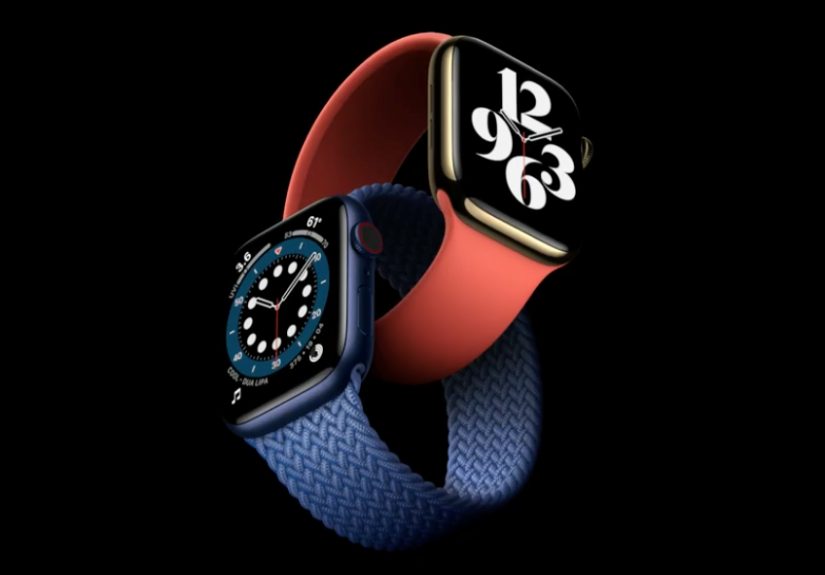
The Apple Watch Series 6 was one of the headline announcements. Its standout feature was a blood oxygen sensor, designed to give users more insight into their general wellness. Apple also improved performance with the S6 chip and added a brighter always-on display, making the watch easier to read outdoors. In typical Apple fashion, it also came in new colors, because apparently even health sensors deserve a fashion moment.
The Series 6 showed how Apple was positioning the Watch as more than a notification screen on your wrist. It was becoming a personal health companion. With heart rate monitoring, ECG functionality in supported regions, fall detection, sleep tracking through watchOS 7, and now blood oxygen measurement, the Apple Watch was moving closer to the intersection of consumer tech and preventive wellness.
Apple Watch SE: A More Affordable Door Into the Ecosystem
Apple also introduced the Apple Watch SE, a lower-cost model that kept many core Apple Watch features while leaving out some premium sensors. It was a classic Apple move: make the product family wider so more people can enter the ecosystem. The Apple Watch SE gave users a more budget-friendly way to access fitness tracking, notifications, Family Setup, emergency features, and the overall Apple Watch experience.
This mattered because Apple Watch was no longer just an accessory for tech fans. It was becoming a mainstream device for parents, older adults, students, athletes, and anyone who wanted to close those activity rings before midnight. The SE helped Apple reach people who liked the idea of a smartwatch but did not necessarily want to pay flagship prices.
iPad Air 2020: A Major Redesign With A14 Bionic
The redesigned iPad Air was another major September announcement. It adopted a more modern, all-screen design with a 10.9-inch Liquid Retina display, USB-C, support for Apple Pencil and Magic Keyboard, and Touch ID built into the top button. Inside, it featured the A14 Bionic chip, making it one of the most powerful tablets in Apple’s lineup at the time.
The iPad Air 2020 was important because it blurred the line between the standard iPad and the iPad Pro. It looked modern, performed extremely well, and offered enough power for students, creators, and casual professionals. For many buyers, it became the “just right” iPad: not too basic, not too expensive, and definitely not boring.
Apple Fitness+ and Apple One: Services Take Center Stage
September also brought Apple Fitness+, a workout service built around Apple Watch. The idea was simple but clever: users could follow studio-style workouts on iPhone, iPad, or Apple TV while their Apple Watch metrics appeared on-screen. It turned Apple’s hardware into a connected fitness system, which was especially relevant in a year when many gyms were closed or operating under restrictions.
Apple also introduced Apple One, a bundle that combined services such as Apple Music, Apple TV+, Apple Arcade, iCloud storage, Apple News+, and Apple Fitness+ depending on the plan. This was not just a convenience feature. It was a business strategy wrapped in a tidy subscription bow. Apple wanted users to think less about buying one service and more about living inside the Apple ecosystem.
October 2020: “Hi, Speed” and the iPhone 12 Era
The October Apple Event 2020 carried the tagline “Hi, Speed”, and yes, Apple was absolutely talking about 5G. This was the event many people had been waiting for because it introduced the iPhone 12 family: iPhone 12 mini, iPhone 12, iPhone 12 Pro, and iPhone 12 Pro Max.
iPhone 12 and iPhone 12 Mini: 5G Goes Mainstream
The iPhone 12 and iPhone 12 mini brought 5G support to Apple’s mainstream smartphone lineup. The iPhone 12 featured a 6.1-inch display, while the iPhone 12 mini packed similar core technology into a smaller 5.4-inch design. For people who missed compact phones, the mini felt like Apple had finally heard their cries from the land of one-handed texting.
Both models used Super Retina XDR OLED displays, a flat-edge design inspired by earlier iPhones, the A14 Bionic chip, improved dual-camera systems, and Ceramic Shield front cover technology for better drop performance. Apple also introduced MagSafe for iPhone, a magnetic accessory and wireless charging system that made cases, chargers, and wallets snap into place with satisfying precision.
5G was the marketing star, but the iPhone 12 was compelling for more than network speed. The display upgrade, design refresh, camera improvements, and MagSafe ecosystem made it feel like a meaningful step forward from the iPhone 11 generation.
iPhone 12 Pro and Pro Max: Cameras, LiDAR, and Premium Design
The iPhone 12 Pro and iPhone 12 Pro Max targeted users who wanted more advanced photography and video features. Both offered stainless steel designs, Super Retina XDR displays, 5G, A14 Bionic performance, improved camera systems, and LiDAR scanners for better augmented reality experiences and faster autofocus in low light.
The iPhone 12 Pro Max received the most capable camera hardware in the lineup, including sensor-shift optical image stabilization and a larger sensor for improved low-light performance. Apple also introduced Apple ProRAW, giving photographers more flexibility when editing images. For mobile creators, the iPhone 12 Pro models were not just phones. They were pocket-sized production tools with a monthly carrier bill attached.
HomePod Mini: Apple’s Smaller Smart Speaker
Before unveiling the iPhones, Apple introduced HomePod mini, a compact smart speaker designed to make Apple’s smart home experience more accessible. It featured Siri, computational audio, smart home controls, and deep integration with iPhone and other Apple devices.
HomePod mini was smaller and more affordable than the original HomePod, which made it a more realistic option for kitchens, bedrooms, offices, and desks. It also supported features like Intercom, allowing family members to send voice messages across HomePods and Apple devices. In other words, Apple found a way to make “dinner is ready” sound more futuristic.
The Charger Controversy
One of the most debated decisions from the iPhone 12 launch was Apple’s removal of the power adapter and wired EarPods from the iPhone box. Apple framed the decision as an environmental move, pointing to reduced packaging and the large number of customers who already owned chargers. Critics argued that buyers still needed charging accessories and that the decision conveniently lowered shipping and packaging costs.
Whether people loved it or side-eyed it, the move influenced the smartphone industry. After Apple removed chargers, other manufacturers began making similar decisions. The iPhone 12 box became slimmer, but the online arguments became much, much thicker.
November 2020: “One More Thing” and the Birth of M1 Macs
The November Apple Event 2020 was called “One More Thing”, a phrase with deep Apple history. This time, the “one more thing” was not just another device. It was the beginning of a new Mac era.
Apple M1: The Chip That Changed the Mac
Apple introduced M1, its first system on a chip designed specifically for Mac. Instead of relying on Intel processors, Apple began moving the Mac lineup to its own silicon, based on years of chip design experience from iPhone, iPad, and Apple Watch.
The M1 combined CPU, GPU, Neural Engine, memory architecture, and other components into one highly efficient chip. Apple emphasized performance per watt, which became the real magic trick. The new Macs were not just faster in many everyday tasks; they also delivered impressive battery life and ran cooler than many Intel-based predecessors.
MacBook Air, 13-Inch MacBook Pro, and Mac Mini
The first M1 Macs were the MacBook Air, 13-inch MacBook Pro, and Mac mini. The MacBook Air became especially interesting because it offered strong performance without a fan. For students, writers, remote workers, and everyday users, it was quiet, fast, and portable. The 13-inch MacBook Pro added active cooling and longer sustained performance for heavier workloads. The Mac mini gave desktop users an affordable way to try Apple Silicon.
These machines did not introduce radical exterior redesigns. From the outside, they looked familiar. But inside, they represented one of the biggest shifts in Mac history. Apple also relied on Rosetta 2 to help Intel-based apps run on Apple Silicon, easing the transition for users and developers.
Why M1 Was Bigger Than a Speed Upgrade
The M1 launch mattered because it gave Apple more control over the Mac’s future. By designing its own chips, Apple could optimize hardware and software together. That meant better battery life, faster wake times, smoother app performance, and tighter integration across iPhone, iPad, and Mac.
It also changed expectations. Before M1, many people thought thin laptops had to choose between performance and battery life. After M1, that compromise looked outdated. Apple did not simply refresh the Mac. It reset the conversation around what a laptop could feel like in daily use.
The Big Themes Behind Apple Event 2020
1. Apple Went All-In on Ecosystem Thinking
Every major announcement in 2020 connected to a larger Apple ecosystem. Apple Watch connected to Fitness+. iPhone connected to MagSafe and HomePod mini. Apple One bundled services into a single subscription. M1 Macs made the Mac feel more connected to iPhone and iPad architecture.
This is Apple’s greatest strength: the products are good individually, but they become stickier together. Once someone owns an iPhone, Apple Watch, AirPods, iPad, Mac, iCloud storage, and a few subscriptions, leaving the ecosystem feels less like switching brands and more like moving apartments during a thunderstorm.
2. Health Became a Core Product Category
Apple Watch Series 6 and Apple Fitness+ showed how seriously Apple was taking health and wellness. The company was not trying to replace doctors, but it was giving users more data, more motivation, and more ways to stay active. In 2020, that message landed strongly because people were paying closer attention to wellness, home workouts, and everyday health habits.
3. Apple Prepared for the Future of Connectivity
The iPhone 12 lineup made 5G a mainstream Apple feature. At launch, 5G coverage and real-world speed varied widely, especially in the United States. For many users, 5G was more about future-proofing than immediate transformation. Still, Apple’s adoption pushed carriers, accessory makers, app developers, and competitors to treat 5G as the new normal.
4. The Mac Got Its Biggest Shift in Years
The M1 transition was arguably the most important Apple announcement of 2020. The iPhone 12 was commercially huge, but M1 changed Apple’s computer strategy. It proved that Apple could build Macs around its own chips and deliver excellent performance, battery life, and software integration.
What Apple Event 2020 Meant for Everyday Users
For everyday buyers, Apple Event 2020 offered something for nearly everyone. Fitness-focused users got a more advanced Apple Watch and a new workout service. Budget-conscious smartwatch buyers got Apple Watch SE. Students and creative users got a powerful redesigned iPad Air. iPhone users got a refreshed design, 5G, OLED displays, better cameras, and MagSafe. Mac users got the first taste of Apple Silicon.
That broad product range made 2020 feel like a full ecosystem refresh rather than a single launch cycle. Apple was not just saying, “Here is the new iPhone.” It was saying, “Here is how your watch, phone, tablet, computer, speaker, workouts, subscriptions, and accessories can all work together.” Subtle? Not exactly. Effective? Absolutely.
Buying Lessons From Apple Event 2020
Looking back, one clear lesson from Apple Event 2020 is that first-generation transitions can be surprisingly strong when Apple controls both hardware and software. Many buyers were cautious about M1 Macs because chip transitions can bring app compatibility issues. But the first M1 machines quickly earned praise for speed, battery life, and quiet operation.
Another lesson is that headline features are not always the only reason to upgrade. The iPhone 12’s 5G support received most of the attention, but many users benefited more from the OLED display, improved cameras, MagSafe, Ceramic Shield, and new design. The same goes for Apple Watch Series 6: blood oxygen was the flashy feature, but the faster chip, brighter display, and broader watchOS improvements shaped the daily experience.
Finally, Apple Event 2020 showed that services were becoming just as important as devices. Apple Fitness+ and Apple One were not side notes. They were part of Apple’s long-term plan to create recurring value beyond hardware sales.
Experiences Related to Apple Event 2020
Watching Apple Event 2020 felt different from watching earlier Apple keynotes. There was no crowd reaction, no live demo applause, and no audience full of people trying to photograph the same slide. Instead, the experience was calm, cinematic, and almost strangely intimate. Apple Park became the stage, and viewers moved from room to room, lab to lab, and product scene to product scene as if they had been invited into a secret technology museum where everything was spotless and nobody ever misplaced a charging cable.
For many users, the most relatable experience from 2020 was deciding which Apple announcement actually mattered to their daily life. The Apple Watch Series 6 appealed to people who cared about wellness and wanted more health insights. The Apple Watch SE appealed to families and first-time smartwatch buyers. The iPad Air attracted students, digital note-takers, casual artists, and people who wanted something more exciting than the entry-level iPad but less expensive than an iPad Pro.
The iPhone 12 launch created a different kind of excitement. The flat-edge design felt familiar but fresh, like Apple had taken a beloved older design language and given it a modern haircut. The iPhone 12 mini sparked enthusiasm among people tired of phones that felt like small cutting boards. Meanwhile, the iPhone 12 Pro Max became the obvious choice for users who wanted the best camera and did not mind carrying a device large enough to qualify as emotional support hardware.
In real-world use, the 5G story was mixed at first. Some users saw faster speeds, while others discovered that 5G coverage depended heavily on location. For many people, the better everyday upgrades were the brighter OLED display, improved low-light photos, faster performance, and MagSafe charging. MagSafe was especially fun because it made accessories feel more intentional. Snapping a charger onto the back of an iPhone had a small but satisfying “yes, this is how it should work” quality.
The M1 Macs created perhaps the strongest user experience shift. People who bought the M1 MacBook Air often noticed how quiet and responsive it felt. Apps opened quickly, battery life stretched impressively, and the fanless design made the machine feel almost invisible during writing, browsing, studying, or video calls. For remote work and online learning, that mattered. A laptop that could last through long sessions without sounding like a tiny airport runway was a genuine quality-of-life improvement.
Apple Event 2020 also changed how people thought about product launches. The virtual format made the events easier to watch, easier to replay, and easier to understand. Instead of waiting for live blogs to catch every detail, viewers could see Apple’s message directly, polished to a mirror shine. Of course, that polish also made some viewers more skeptical. Apple events are marketing, after all, and Apple is extremely good at making aluminum, glass, and silicon feel like destiny.
Still, the lasting experience of Apple Event 2020 was momentum. Even in a difficult year, Apple managed to make its product ecosystem feel active, ambitious, and connected. The events gave users new reasons to upgrade, developers new platforms to optimize for, and competitors new headaches to quietly pretend they did not have.
Conclusion: Apple Event 2020 Was a Turning Point
Apple Event 2020 was one of the company’s most important product seasons because it combined short-term upgrades with long-term strategy. The Apple Watch became more health-focused. The iPad Air became more powerful and modern. Apple services became easier to bundle. The iPhone entered the 5G era. HomePod mini made Apple’s smart home ambitions more accessible. And most importantly, M1 began a new chapter for the Mac.
Looking back, the biggest story was not any single product. It was Apple’s ability to connect everything. Hardware, software, chips, services, accessories, and content all moved closer together. The result was an ecosystem that felt more complete, more convenient, and, yes, harder to leave.
Apple Event 2020 proved that even without a live audience, Apple could still create a launch season full of energy and consequence. The applause was missing, but the impact was loud enough.