Table of Contents >> Show >> Hide
- What Is ModuCoil?
- Why Modular Coils Matter In Motors And Generators
- How ModuCoil Works
- ModuCoil For Generator Projects
- ModuCoil For Motor Projects
- Best Uses For ModuCoil
- Design Considerations Before Building
- Advantages Of ModuCoil
- Limitations Of ModuCoil
- Practical Example: A Small Modular Generator Concept
- Safety Tips For ModuCoil Projects
- Build Experiences And Lessons From ModuCoil-Style Projects
- Conclusion
ModuCoil is one of those ideas that makes electronics people lean closer to the workbench and say, “Wait, why didn’t we make this modular in the first place?” At its heart, ModuCoil is a modular, 3D-printable coil holder designed for motor and generator experiments. Instead of building a fixed stator or winding coils into a structure that is hard to repair, test, or recycle, the concept breaks the electromagnetic coil into repeatable modules.
That may sound simple, but simple is often where the best engineering mischief begins. Motors and generators both depend on the relationship between copper coils, magnetic fields, motion, and timing. A generator converts mechanical energy into electrical energy. A motor does the reverse, turning electrical energy into movement. ModuCoil gives makers, students, engineers, and renewable-energy tinkerers a flexible way to explore both sides of that equation without having to commit to one permanent design too early.
The project has attracted attention because it combines several modern maker-world trends: desktop 3D printing, open prototyping, small-scale renewable energy, modular repairability, and hands-on electromagnetic learning. In plain English: it lets you build, test, break, improve, and repeat without throwing away the whole thing every time your first idea behaves like a sleepy refrigerator magnet.
What Is ModuCoil?
ModuCoil is a modular coil form intended for electric motor and generator projects. The design uses a 3D-printed structure that holds copper magnet wire and often includes ferromagnetic hardware, such as steel screws and nuts, to help concentrate the magnetic field. The coil can be used as part of a stator in a generator, as an electromagnet in a motor, or as a test component in electromagnetic experiments.
The important word here is “modular.” Traditional motor and generator stators are often built as single assemblies. Once wound, glued, pressed, or laminated, they can be difficult to take apart. If one coil fails, if one geometry performs poorly, or if you simply want to test a different number of turns, you may end up rebuilding much of the machine. ModuCoil changes the workflow by turning the coil into a removable, repeatable unit.
For hobbyists and educators, that is a big deal. A modular coil lets you compare winding counts, wire gauges, core materials, air gaps, magnet spacing, and rotor layouts one variable at a time. That is not just convenient; it is how real engineering gets done. The magic is not in guessing correctly on the first try. The magic is in building a system that lets you be wrong quickly, cheaply, and safely.
Why Modular Coils Matter In Motors And Generators
Electric machines are basically organized arguments between magnets and copper. When a magnetic field changes near a coil, voltage is induced in the wire. When current flows through a coil, it creates a magnetic field. This is the shared foundation behind alternators, wind turbine generators, brushless motors, solenoids, relays, speakers, and many other devices.
In a generator, magnets moving past copper coils create changing magnetic flux, producing voltage. In a motor, controlled current through coils creates magnetic fields that push and pull against rotor magnets or magnetic steel. The shape, spacing, and strength of those fields determine how well the machine performs.
That is where modular design becomes useful. A coil is not just “some wire wrapped around a thing.” Its behavior depends on several details:
- Number of wire turns
- Wire gauge and resistance
- Core material and magnetic permeability
- Air gap between coil core and rotor magnet
- Magnet strength and arrangement
- Coil shape and winding pattern
- Thermal management
- Mechanical alignment
With a modular coil system, each of those variables becomes easier to test. You can swap one coil for another, compare output voltage, measure current under load, observe heating, and refine the design. That kind of experimentation is especially valuable for small wind turbines, hand-cranked generators, educational kits, axial-flux generator prototypes, and low-voltage motor experiments.
How ModuCoil Works
The 3D-Printed Coil Holder
The 3D-printed body acts as the bobbin or coil former. It gives the copper wire a consistent shape and keeps the winding organized. Without a coil holder, hand-wound coils can become messy fast. Anyone who has tried to wind magnet wire by hand knows the experience: one moment you are building a generator, the next moment you are negotiating with a copper spaghetti monster.
A printed coil holder helps solve that by defining the winding space. It also makes the coil repeatable. Repeatability matters because one test coil does not tell you much unless you can compare it with another coil built in nearly the same way.
Copper Windings
The copper magnet wire is where the electrical action happens. More turns generally increase voltage in generator applications, but they also increase resistance. Thicker wire can carry more current with less resistance, but fewer turns may fit into the same space. Thinner wire allows more turns, but it heats more easily and limits current.
This tradeoff is one reason ModuCoil is interesting. Instead of arguing online for six hours about the “best” winding, you can wind different modules and test them. The meter will humble everyone equally, which is part of its charm.
Ferromagnetic Screws And Core Material
Many ModuCoil-style designs use steel screws, nuts, or similar ferromagnetic parts to improve magnetic field concentration. Iron and steel conduct magnetic flux far better than air, which is why motor and generator cores often use magnetic materials. A good magnetic path can increase flux through the coil and improve performance.
However, core material is not magic seasoning. The shape of the core, the air gap, saturation, eddy currents, and mechanical arrangement all matter. A steel screw may improve a prototype, but a refined motor or generator often benefits from laminated steel, soft iron, ferrite, or carefully chosen core geometry. In other words, the screw may get you started, but the magnetic circuit still wants respect.
ModuCoil For Generator Projects
Generator projects are a natural fit for ModuCoil. Small generators often use permanent magnets on a rotor and stationary coils on a stator. As the magnets pass the coils, the changing magnetic field induces voltage. This is the same basic principle used in many alternators and direct-drive wind generator designs, though professional machines are far more optimized.
In a small ModuCoil generator, each coil module can be arranged around a rotating magnet disk or rotor. Builders can experiment with single-phase or three-phase layouts, different coil spacing, magnet polarity arrangements, and series or parallel wiring.
For example, connecting coils in series can increase voltage, while connecting them in parallel can increase current capacity. A three-phase arrangement can produce smoother output than a single coil or simple single-phase setup. Add rectifiers, smoothing capacitors, and charge-control circuitry, and a small experimental generator can become a useful educational platform for renewable energy concepts.
That said, expectations should remain realistic. A desktop 3D-printed generator is not going to power your house unless your house is a very tiny LED with excellent manners. Early ModuCoil tests reported modest voltage from a single coil, which is normal for a proof-of-concept design. The value is not that one module instantly produces huge power. The value is that the design makes testing and scaling easier.
ModuCoil For Motor Projects
ModuCoil can also be used in motor experiments. In a motor configuration, current is supplied to the coils to create magnetic fields. Those fields interact with permanent magnets or ferromagnetic rotor parts to produce torque.
For simple experiments, ModuCoil modules can demonstrate attraction, repulsion, commutation, and timing. For more advanced builds, they can help explore brushless DC motor principles, stepper-like motion, axial-flux motor designs, or custom actuator concepts.
The biggest challenge in motor use is timing. A generator can produce voltage as magnets pass coils, but a motor must energize coils at the right time and in the right direction. That usually requires switching electronics, sensors, a microcontroller, or a driver circuit. If the timing is off, the motor may stutter, lock, buzz, heat up, or perform the classic “I am technically alive but emotionally unavailable” bench-test wiggle.
Best Uses For ModuCoil
STEM Education
ModuCoil is excellent for teaching electromagnetism because students can see and touch the parts. Instead of treating motors and generators as sealed mystery cans, learners can wind a coil, place a magnet nearby, spin a rotor, measure voltage, and immediately connect theory with results.
DIY Renewable Energy Experiments
Small wind, water, and hand-crank generator projects benefit from modularity. A builder can test different coil counts or magnet arrangements without remaking the entire stator.
Rapid Prototyping
For makers with 3D printers, ModuCoil supports quick iteration. Print a holder, wind a coil, test it, adjust the design, and print again. That loop is exactly why desktop fabrication has become so powerful for engineering experiments.
Repairable And Recyclable Designs
Modular systems are easier to take apart. If a coil burns out, the failed module can be replaced. If the design is retired, copper, magnets, fasteners, and printed parts can be separated more easily than in a glued assembly.
Design Considerations Before Building
Wire Gauge
Choose wire based on your target voltage, current, and available winding space. Fine wire fits more turns and may increase voltage, but it has higher resistance. Thicker wire handles current better but may limit turns. For low-voltage experiments, many builders test several gauges rather than relying on guesswork.
Heat
Coils heat up when current flows through resistance. In motor mode, overheating can soften printed plastic, damage enamel insulation, or make your workshop smell like regret. Use current limits, short test runs, and temperature checks.
Air Gap
The air gap between magnets and coil cores is critical. Smaller air gaps usually improve magnetic coupling, but mechanical clearance must be maintained. A rotor scraping your stator is not “high performance friction tuning.” It is a rebuild invitation.
Core Shape
Magnetic performance improves when flux has a good path. Screws and nuts can help, but more advanced designs may use soft iron, laminated steel, or ferrite cores. The goal is to guide magnetic flux through the coil instead of letting it wander through air like it forgot its GPS.
Mechanical Strength
Spinning magnets can be dangerous. Secure magnets properly, balance rotors, and use guards when testing. Neodymium magnets are strong, brittle, and very committed to pinching fingers.
Advantages Of ModuCoil
- Easy experimentation: Swap coil modules without rebuilding the entire machine.
- Lower prototyping cost: Failed designs waste less material.
- Educational value: Makes electromagnetic principles visible and measurable.
- Repairability: Damaged coils can be replaced individually.
- Scalability: Multiple modules can be arranged for different motor or generator layouts.
- Customization: Builders can adjust geometry, wire, cores, and mounting patterns.
Limitations Of ModuCoil
ModuCoil is promising, but it is not a shortcut around physics. 3D-printed plastic is not as thermally robust as metal. Air-core or poorly coupled magnetic designs may produce weak output. Steel screws can help, but they do not automatically create an optimized magnetic circuit. Coil resistance, heating, rotor balance, magnetic drag, and load behavior all need testing.
Another limitation is efficiency. Commercial motors and generators use carefully engineered laminations, tight tolerances, optimized windings, and advanced materials. A ModuCoil prototype may not match that performance, but that is not necessarily the point. Its strength is exploration, not instant industrial-grade efficiency.
Practical Example: A Small Modular Generator Concept
Imagine a small axial-flux generator using a printed rotor disk with alternating north-south neodymium magnets. Around the stator ring, you install six or nine ModuCoil modules. Each coil is wound with magnet wire and fitted with a ferromagnetic core. As the rotor spins, each magnet passes a coil and induces voltage.
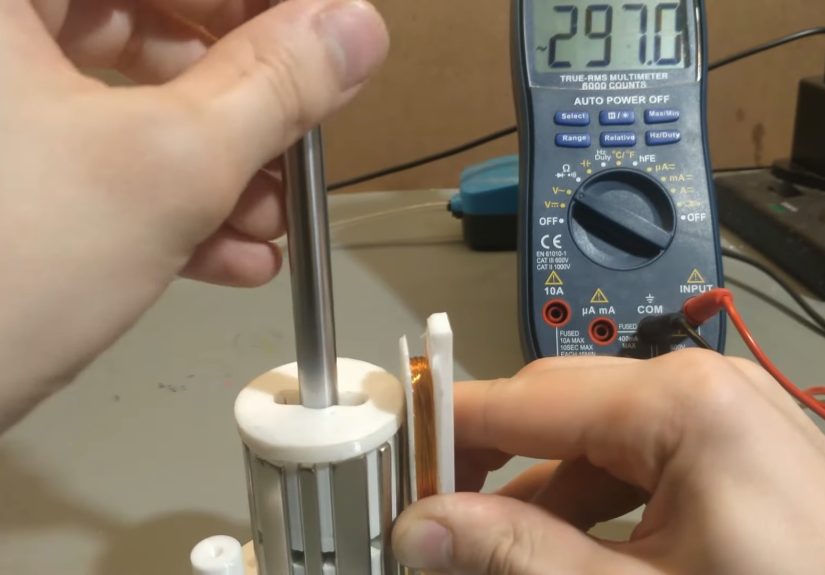
Now the fun begins. You can test output with three coils, then six coils, then nine. You can compare series wiring against parallel wiring. You can measure open-circuit voltage, voltage under load, current into a resistor, and RPM. You can try a smaller air gap, a different wire gauge, or a stronger magnet. Every test teaches something.
That makes ModuCoil especially useful for people who want to understand generators beyond the textbook diagram. The design turns electromagnetic theory into a bench-top conversation between magnets, copper, plastic, and your multimeter.
Safety Tips For ModuCoil Projects
Most ModuCoil experiments are low-voltage, but low voltage does not mean zero risk. Coils can become hot, batteries can deliver high current, magnets can fly loose, and rotating parts can injure hands or eyes. Use eye protection, current-limited power supplies, fuses, insulated connections, and physical guards around spinning rotors.
Avoid connecting experimental coils directly to large batteries without current control. Do not test homemade generators on household wiring. Do not spin rotors at high speed without containment. And if a coil starts smoking, treat it as feedback from the universe. Turn it off.
Build Experiences And Lessons From ModuCoil-Style Projects
One of the most useful experiences with modular coil projects is learning that the first build is rarely the best build. That is not failure; that is engineering wearing work boots. A ModuCoil-style prototype often begins with a simple printed holder, a spool of magnet wire, a few steel fasteners, and a confident plan. Then the first voltage reading appears, and the plan immediately becomes “version two.”
During winding, consistency matters more than many beginners expect. A loose winding can reduce repeatability, waste space, and make the coil harder to mount. A tight, neat winding usually gives better packing density and more predictable resistance. Counting turns is also important. If one coil has 250 turns and the next has 312 because someone got distracted by coffee, the output will not match well in a multi-coil generator.
Testing teaches patience. Open-circuit voltage may look exciting, but voltage under load tells a more useful story. A coil might show a promising reading on a multimeter, then drop sharply when connected to an LED or resistor. That does not mean the design is useless. It means internal resistance, magnetic coupling, rotor speed, and load matching need attention.
Air gap experiments are especially revealing. Moving the magnet rotor just a few millimeters closer to the coil can noticeably change output. However, the closer the rotor gets, the more careful the alignment must be. A slight wobble can lead to scraping, vibration, or broken printed parts. The sweet spot is close enough for good flux coupling but far enough for safe mechanical clearance.
Core experiments are another memorable lesson. A coil without a good magnetic path may produce weak results even with many turns of wire. Adding ferromagnetic material can improve performance, but the shape and placement matter. Builders quickly discover that magnetics is not just “add more metal.” The magnetic path needs to be intentional, and the field must pass through the coil in a useful way.
Heat is the quiet teacher. In generator mode, heating may be modest unless the load current is significant. In motor mode, coils can warm quickly, especially if powered continuously. Printed plastics such as PLA can soften at relatively low temperatures compared with engineering materials, so short test cycles are wise. PETG, ABS, nylon, or other higher-temperature materials may be better for more demanding experiments, depending on the printer and application.
The biggest practical advantage is psychological: modular coils make experimentation less intimidating. When every coil is removable, mistakes feel smaller. You can try a new winding pattern without sacrificing the whole machine. You can label modules, measure resistance, compare results, and build a small library of test coils. That turns the project from a single risky build into an organized learning system.
For educators, this is gold. Students can form teams and each wind a different coil. One team can test wire gauge, another can test core material, and another can test magnet spacing. At the end, everyone compares data. Suddenly Faraday’s law is not just a sentence in a physics book; it is sitting on the table, connected to a meter, making numbers appear.
For renewable-energy hobbyists, ModuCoil is a reminder that decentralization starts small. A bench-top generator may not run a refrigerator, but it can teach the design principles behind larger systems. It can show why wind turbine generators use carefully arranged magnets and coils, why direct-drive designs need large diameters, why copper losses matter, and why repairable design deserves more attention.
In the end, the best experience with ModuCoil is not just getting voltage from a coil. It is understanding why that voltage appeared, why it changed, and what to improve next. That is the real power output of the project: practical knowledge, one winding at a time.
Conclusion
ModuCoil is a smart, maker-friendly approach to motor and generator experimentation. By turning the electromagnetic coil into a modular component, it makes prototyping easier, repair more practical, and learning far more hands-on. It will not replace commercial electric machines, but it does not need to. Its real value is in education, experimentation, and small-scale innovation.
For anyone interested in DIY generators, 3D printed motors, renewable energy prototypes, or electromagnetic design, ModuCoil offers a flexible starting point. It invites builders to test real variables: wire turns, current, voltage, flux, air gaps, cores, speed, and load. It also encourages a healthier engineering mindset: build the first version, measure honestly, improve the next one, and keep the smoke inside the components whenever possible.
Note: This article is for educational and low-voltage hobby experimentation. Always use proper electrical protection, current limits, eye protection, secure mechanical mounting, and safe testing practices when working with coils, magnets, batteries, motors, or generators.