Table of Contents >> Show >> Hide
- Why Make a Wall Clock From Pallet Boards?
- Before You Start: Choose Safe Pallet Wood
- Tools and Materials You Will Need
- Step 1: Break Down the Pallet Carefully
- Step 2: Clean and Dry the Boards
- Step 3: Plan the Clock Size and Shape
- Step 4: Join the Boards Into a Clock Face
- Step 5: Cut the Clock Shape
- Step 6: Sand Without Erasing the Character
- Step 7: Drill the Center Hole
- Step 8: Add Numbers or Hour Markers
- Step 9: Stain, Paint, or Seal the Wood
- Step 10: Install the Clock Movement
- Step 11: Add Hanging Hardware
- VIDEO: What to Show in a Pallet Board Wall Clock Tutorial
- Design Ideas for Your Pallet Wood Clock
- Common Mistakes to Avoid
- My Experience Building a Wall Clock From Pallet Boards
- Conclusion
A wall clock made from pallet boards is the kind of DIY project that looks like it came from a cozy farmhouse shop, even if it was built on a folding table in the garage while someone yelled, “Where did the pencil go?” It is rustic, useful, affordable, and wonderfully forgiving. If one board has a knot, a nail hole, or a little weathered personality, that is not a flaw. That is what designers politely call “character,” and what the rest of us call “free decoration.”
This project turns reclaimed pallet wood into a handmade wall clock using basic tools, a simple clock movement kit, and a little patience. The video-friendly process is easy to follow: choose safe pallet boards, clean and sand them, join them into a clock face, cut or shape the design, install the clock mechanism, add numbers or markers, finish the wood, and hang it proudly where everyone can see it.
Whether you love farmhouse decor, industrial interiors, recycled wood projects, or weekend crafts that do not require a second mortgage, this pallet board wall clock is a satisfying build. It gives old wood a second life and gives your wall something better to do than stare back at you.
Why Make a Wall Clock From Pallet Boards?
A DIY pallet wood clock offers three big wins: it is budget-friendly, environmentally thoughtful, and visually unique. Pallet boards already have natural distressing, color variation, rough grain, small cracks, and nail marks. Instead of hiding those details, this project celebrates them.
Store-bought rustic wall clocks can be surprisingly expensive, especially large wooden ones. But pallet boards are often inexpensive or free if sourced responsibly from local businesses, warehouses, garden centers, or construction sites. Always ask permission before taking pallets. “It was sitting there” is not a receipt, and it will not impress anyone if you have to explain your new clock to security.
Because each pallet is different, no two clocks look exactly alike. One clock may have pale pine tones and clean edges. Another might have dark knots, saw marks, and weathered streaks. That natural variation is the reason pallet projects remain popular in farmhouse decor, garage workshops, cabins, home offices, and cozy kitchens.
Before You Start: Choose Safe Pallet Wood
The most important part of this project happens before you cut anything. Not all pallets are suitable for indoor DIY projects. Look for pallets that are clean, dry, odor-free, and marked with an “HT” stamp, which means the wood was heat-treated. Avoid pallets marked “MB,” which indicates methyl bromide fumigation. Also skip pallets with oil stains, chemical smells, mold, excessive dirt, or mystery spills. Mystery is great in novels, not in wall decor.
For an indoor clock, choose boards that are straight enough to sit flat and strong enough to hold screws or brad nails. A little roughness is fine. Deep rot, powdery wood, or boards that crumble at the edges are not worth saving. Pallet wood can be charming, but it should not behave like a granola bar.
Tools and Materials You Will Need
Basic Materials
- 4 to 6 pallet boards, depending on clock size
- Two thin backing strips or a plywood backing panel
- Wood glue
- Brad nails, screws, or small finish nails
- Quartz clock movement kit
- Clock hands sized for your clock face
- Clock numbers, stencils, paint, vinyl decals, or wood markers
- Wood stain, paint wash, or clear finish
- D-ring hanger, sawtooth hanger, or keyhole hanging hardware
Helpful Tools
- Hammer, pry bar, or pallet breaker
- Jigsaw, circular saw, miter saw, or handsaw
- Drill and drill bits
- Random orbital sander or sanding block
- Clamps
- Tape measure and pencil
- Compass, string-and-pencil circle guide, or large round template
- Safety glasses, work gloves, hearing protection, and dust mask or respirator
Safety gear deserves a real mention. Pallet boards can hide splinters, old nails, staples, and stubborn dirt. Sanding wood creates dust, so work in a ventilated area and use eye and respiratory protection. Your lungs are not a dust collection system, no matter how committed you are to the rustic lifestyle.
Step 1: Break Down the Pallet Carefully
Start by dismantling the pallet. Use a pry bar, hammer, or pallet breaker to lift the boards away from the support runners. Work slowly to avoid splitting the wood. If a board cracks slightly but still looks interesting, you may still be able to use it as part of the design. If it splits completely, save it for smaller decorative pieces or kindling only if you are certain the wood is untreated and safe to burn.
Remove nails and staples with pliers or a nail puller. Run your hand near the surface, not directly across it, to check for hidden metal. Better yet, use a magnet or metal detector if you have one. A forgotten nail can damage a saw blade, and your saw will complain in a language nobody wants to hear.
Step 2: Clean and Dry the Boards
Brush off dirt and loose debris. If the boards are grimy, wipe them with a damp cloth and mild soapy water, then let them dry completely. Do not rush this stage. Wood that is still damp can warp, trap moisture under finish, or make glue bonds weaker.
If the boards smell musty or chemical-like after cleaning, do not use them indoors. Good reclaimed wood should smell like wood, dust, and maybe a little garage nostalgia. It should not smell like a science experiment.
Step 3: Plan the Clock Size and Shape
A round pallet wall clock between 18 and 30 inches wide works well for most rooms. Smaller clocks are easier to cut and hang, while larger clocks make a bold statement over a sofa, mantel, dining nook, or entryway table.
Lay the pallet boards side by side and arrange them by color and grain. Mix light and dark boards for a patchwork effect, or group similar tones for a cleaner farmhouse look. Once you like the layout, mark the back of each board with numbers so you can reassemble the pattern later.
For a round clock, use a large compass, a string tied to a pencil, or a round object as a template. Mark the circle across the boards. For a square or rectangular clock, simply trim the ends evenly. A round clock feels classic, while a square clock looks modern and slightly unexpected.
Step 4: Join the Boards Into a Clock Face
Flip the boards face down in the same order. Apply wood glue along the edges if the boards meet cleanly. Then attach two thin backing strips across the rear, one near the top and one near the bottom. Secure them with screws or brad nails, making sure the fasteners are not so long that they poke through the front.
If your boards are uneven or fragile, use a thin plywood backing panel instead. This gives the clock extra stability and makes it easier to mount the clock movement. The trade-off is a little extra weight, so choose hanging hardware that can handle the finished piece.
Clamp the boards while the glue dries. If you do not have clamps, place weight evenly across the surface. Books work, paint cans work, and that mysterious box of cables you keep for “just in case” finally gets its big moment.
Step 5: Cut the Clock Shape
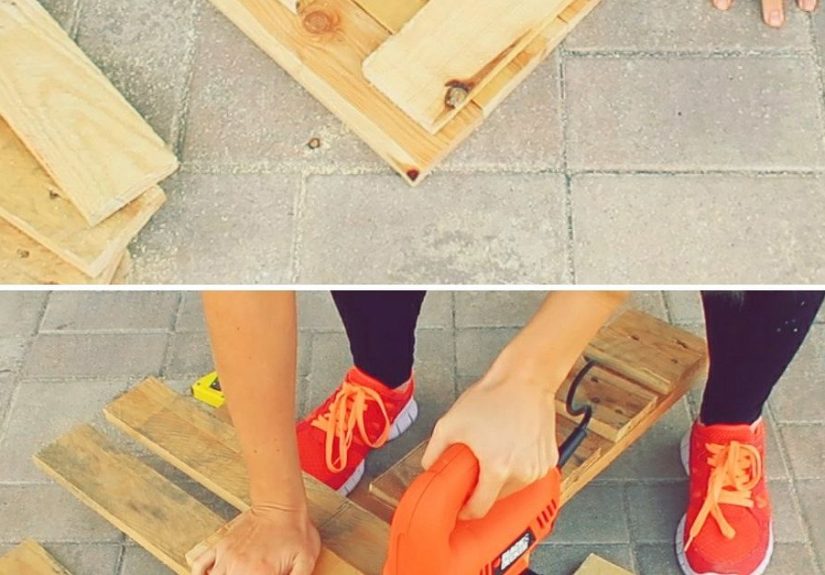
Once the panel is secure, cut the marked shape. A jigsaw is ideal for a round clock because it can follow curves. Keep the saw moving slowly and steadily. Do not force it. Pallet boards can have knots, grain changes, and old nail holes that make cutting less predictable.
After cutting, sand the edges to soften rough spots. If you want a perfectly round clock, sand carefully along the perimeter until the curve looks smooth. If you prefer a more handmade style, leave a little irregularity. Rustic projects do not need to look factory-made. That is the whole point.
Step 6: Sand Without Erasing the Character
Sanding pallet wood is a balancing act. You want to remove splinters and roughness, but you do not want to erase every weathered mark. Start with a medium grit if the boards are rough, then move to a finer grit for the face and edges. A common approach is to begin around 80 or 120 grit and finish around 150 or 220 grit, depending on how smooth you want the clock to feel.
Use light pressure and let the sander do the work. Pressing too hard can create swirl marks, dips, or uneven patches. Sand the edges by hand so they remain slightly rounded and pleasant to touch. After sanding, vacuum the surface and wipe it with a tack cloth or clean rag before applying stain or finish.
Step 7: Drill the Center Hole
Find the center of the clock face. For a round clock, measure across the widest point in two directions and mark where the lines cross. Drill a hole sized for the shaft of your clock movement. Most quartz clock kits include instructions that specify the correct hole diameter.
The thickness of your clock face matters. The threaded shaft on the clock movement must be long enough to pass through the wood and still allow the mounting nut to tighten on the front. If your pallet clock face is thick, either choose a longer-shaft movement or recess the movement into the back by carving or routing a shallow pocket.
This is one of the most common DIY clock mistakes. The clock looks beautiful, the numbers are straight, the finish is glowing, and then the shaft is too short. That is the woodworking version of making a sandwich and realizing you forgot the bread.
Step 8: Add Numbers or Hour Markers
There are several ways to mark the hours. Large metal numerals give the clock a farmhouse-industrial feel. Painted Roman numerals look classic. Small wood blocks, upholstery tacks, burned-in marks, or simple dots can create a minimalist style. You can also leave the clock number-free for a clean decorative look, though guests may stare at it a little longer while pretending they know the time.
To place numbers accurately, mark the 12, 3, 6, and 9 positions first. Then divide the spaces between them for the remaining hour marks. A paper template can help. Print a clock face guide, center it over the wood, and transfer the marks lightly with a pencil.
If painting numbers, use a stencil and a dry brush technique to prevent bleeding under the edges. For a vintage look, sand lightly over the painted numbers after they dry. This makes the markings appear aged rather than freshly stamped.
Step 9: Stain, Paint, or Seal the Wood
The finish sets the mood of the entire clock. A clear matte finish keeps the raw pallet look. A walnut or espresso stain adds warmth and depth. A whitewash creates a coastal farmhouse style. A gray stain gives the clock a weathered barnwood effect. Test your finish on a scrap piece first because pallet boards can absorb stain unevenly.
For smoother color, apply a pre-stain wood conditioner, especially if the pallet boards are softwood. Brush or wipe stain with the grain, let it penetrate, then remove excess with a clean cloth. Once dry, apply a protective topcoat. A water-based polyurethane, polycrylic, or clear matte sealer works well for indoor wall decor.
Avoid overly glossy finishes unless you want the clock to look more polished. Rustic wood usually looks best with matte, satin, or low-sheen protection. It should catch the eye, not reflect the entire kitchen.
Step 10: Install the Clock Movement
Insert the movement shaft through the center hole from the back. Add the washer and mounting nut on the front, then tighten gently. Do not over-tighten, especially on uneven pallet wood, because it can stress the face or make the movement sit crooked.
Attach the hour hand first, then the minute hand, and finally the second hand if your kit includes one. Make sure the hands are parallel and do not touch each other. If they rub, the clock may stop or lose time. Rotate the hands manually through a full 12-hour cycle to confirm they move freely.
Install the battery, set the time, and watch your pallet board clock come alive. It is a small moment, but it feels good. You turned old shipping wood into a working object. That deserves at least one dramatic nod.
Step 11: Add Hanging Hardware
Because pallet clocks can be heavier than typical plastic or MDF clocks, use strong hanging hardware. A sawtooth hanger may work for a small clock, but larger pieces benefit from D-rings and picture wire, a keyhole hanger, or a French cleat. Mount the hardware into the backing strips or plywood backing, not just into a thin pallet board.
Before hanging, check the balance. The clock should sit level and not lean away from the wall. If the battery compartment sticks out, small felt pads on the lower back corners can help the clock rest evenly.
VIDEO: What to Show in a Pallet Board Wall Clock Tutorial
If you are creating a video for this project, keep the pacing practical and visual. Start with a quick reveal of the finished wall clock, then show the pallet boards before cutting. Viewers love seeing the transformation from “rough wood pile” to “I would actually hang that in my house.”
Suggested Video Segments
- Finished clock reveal and project overview
- How to identify safer pallet boards
- Breaking down and cleaning the pallet
- Arranging boards for the best grain pattern
- Joining, cutting, and sanding the clock face
- Drilling the center hole and checking movement shaft length
- Adding numbers, stain, and protective finish
- Installing the quartz clock mechanism
- Final wall-hanging shot
Keep close-up shots of the sanding, staining, and clock hand installation. Those details help beginners understand the process. Add a quick troubleshooting section too: hands touching, shaft too short, boards uneven, numbers not aligned, or finish looking blotchy. These are common issues, and solving them makes the tutorial more useful.
Design Ideas for Your Pallet Wood Clock
Farmhouse Kitchen Clock
Use whitewashed pallet boards, black Roman numerals, and simple black clock hands. This style looks great in kitchens, breakfast nooks, and dining rooms.
Industrial Garage Clock
Choose darker stain, metal numbers, and oversized hands. Leave nail holes visible and use a matte clear coat. This version fits workshops, man caves, studios, and modern loft spaces.
Coastal Weathered Clock
Apply a pale gray or blue-gray wash, then sand the edges lightly. Use simple white hour markers and slim hands for a beach-house feel.
Minimalist Reclaimed Wood Clock
Skip the numbers and let the wood grain do the talking. Add thin brass, black, or white hands depending on your wall color and room style.
Common Mistakes to Avoid
The first mistake is using unsafe or questionable pallet wood. If the pallet is stained, smelly, moldy, or chemically treated, walk away. There are always more pallets in the world.
The second mistake is over-sanding. Pallet wood should feel safe to touch, but it does not need to look like brand-new lumber. Keep some saw marks, nail holes, and grain variation.
The third mistake is buying the wrong clock movement. Measure the thickness of the clock face before ordering or installing the mechanism. The threaded shaft must extend far enough for the nut and hands to attach correctly.
The fourth mistake is placing numbers by eye. Your eyes are talented, but they are also optimistic. Use a template or careful measurements to avoid a clock where the 4 looks nervous and the 8 is trying to escape.
The fifth mistake is weak hanging hardware. A pallet board clock can be heavy. Secure it properly so it stays on the wall and does not make a surprise midnight appearance on the floor.
My Experience Building a Wall Clock From Pallet Boards
The first time I made a wall clock from pallet boards, I thought it would be a quick afternoon project. That was adorable. The clock itself was simple, but the pallet had other plans. One board came off cleanly, one split like it had been waiting years for drama, and one nail refused to move with the confidence of a tiny metal king.
The best lesson from that build was this: choose your boards carefully before you fall in love with the idea. I originally wanted a perfectly round clock with alternating light and dark boards. After dismantling the pallet, I realized only half the boards were flat enough. The others were twisted, cracked, or full of nail holes in places that would interfere with the clock face. Instead of forcing the original plan, I switched to a slightly smaller design. That decision saved the project.
Sanding was the next surprise. Pallet wood can look rough in a charming way, but rough charm becomes less charming when it leaves splinters in your palm. I used a random orbital sander for the face and hand-sanded the edges. The trick was stopping before the wood became too clean. The nail holes, dark streaks, and dents were what made the clock interesting. Once those details started fading, I knew it was time to put the sander down and back away like it was a plate of cookies before dinner.
For the finish, I tested three options on scrap pieces: dark walnut stain, gray wash, and clear matte sealer. The dark stain looked beautiful but hid too much of the grain. The gray wash looked stylish but did not match the room. The clear matte finish won because it kept the pallet character visible. That test board step felt unnecessary at first, but it prevented me from turning the entire clock into something that looked like a sad cutting board.
Installing the clock movement taught me another practical lesson. The pallet boards plus backing strips were thicker than I expected. The first movement shaft was just barely long enough, and “barely” is not a great word in clock making. I ended up recessing the movement slightly into the back so the nut could tighten properly on the front. If I made the project again, I would measure the total thickness first and buy the correct long-shaft movement from the start.
Placing the numbers also took more patience than expected. I tried eyeballing the positions, stepped back, and immediately saw that the 12 and 6 were not exactly aligned. It was not terrible, but it was the kind of not-terrible that becomes very visible after hanging. I erased the marks, made a paper template, and started over. The second attempt looked much cleaner.
The most satisfying moment was installing the hands and adding the battery. A handmade clock feels different from a shelf or sign because it actually moves. The second hand started ticking, and suddenly the project was not just decorative; it was functional. It had a job. A small job, yes, but still more responsibility than some furniture in the house.
The finished pallet board clock looked warm, imperfect, and personal. Visitors noticed it right away, not because it was flawless, but because it had texture and a story. That is the real appeal of pallet wood projects. They do not look mass-produced. They look handled, rescued, and reimagined.
If you are trying this project for the first time, give yourself room to adjust. Your pallet boards may not match the tutorial exactly. Your circle may not be perfectly round. Your stain may absorb differently across each board. That is normal. The goal is not to create a factory-perfect clock. The goal is to make something useful and beautiful from wood that might otherwise be discarded.
And when someone asks where you bought it, you get to say, “I made it.” Try not to say it too smugly. Or do. You earned it.
Conclusion
A wall clock from pallet boards is a practical, stylish, and beginner-friendly woodworking project that combines recycling with home decor. It does not require expensive lumber or advanced joinery, but it does reward careful planning. Choose safe pallet wood, clean it well, sand it thoughtfully, measure the clock movement correctly, and use strong hanging hardware.
The beauty of this DIY pallet wood clock is that imperfections become part of the design. Nail holes, color shifts, saw marks, and weathered grain all help create a piece that feels warm and handmade. With the right finish and clock hands, a few discarded boards can become a rustic centerpiece for your kitchen, living room, workshop, or office.
In a world full of plastic decor and identical store shelves, making your own pallet board wall clock is a small but satisfying rebellion. It saves wood, saves money, and gives you a conversation piece that actually tells time. Not bad for something that started life carrying boxes.