Table of Contents >> Show >> Hide
- Why Dwayne Johnson’s A24 Transformation Became Such A Big Moment
- What Is The Smashing Machine About?
- Benny Safdie’s Solo Vision Gives The Film Its Edge
- The Prosthetics: How The Rock Became Mark Kerr
- Johnson’s Physical Transformation Was Not Just “Get Bigger”
- Why Fans Were Shocked By The First Look
- Mark Kerr’s Story Gives The Film Emotional Weight
- A24’s Role In Johnson’s Career Pivot
- Critical Buzz And Awards Conversation
- Experience Section: Why This Transformation Feels Bigger Than A Movie Makeover
- Conclusion: The Rock’s Most Unexpected Role Yet
- SEO Tags
Dwayne “The Rock” Johnson has built one of the most recognizable faces, bodies, eyebrows, and entrance-energy levels in modern entertainment. So when fans saw him transformed for A24’s The Smashing Machine, the reaction was immediate: wait, is that really The Rock?
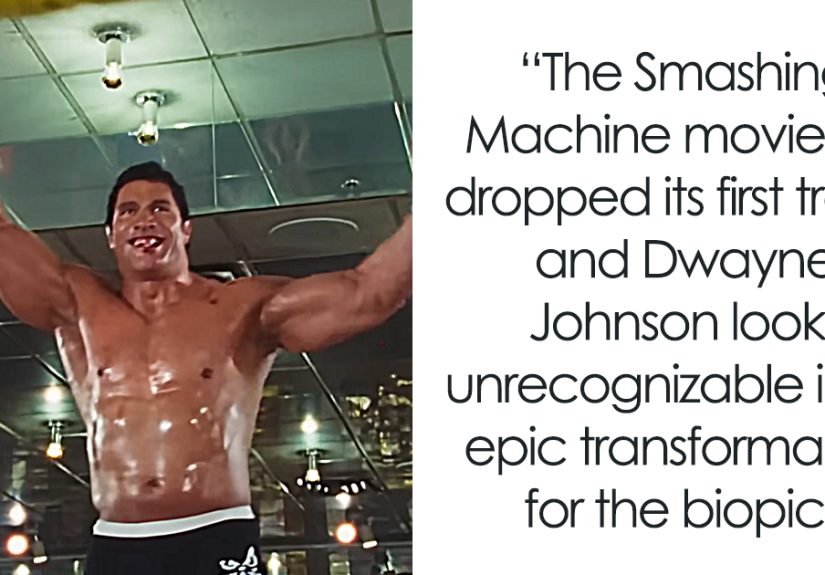
The answer is yesbut not the version audiences know from Fast & Furious, Jumanji, Moana, or a thousand gym selfies that make dumbbells look nervous. In Benny Safdie’s sports biopic, Johnson plays Mark Kerr, the legendary mixed martial arts and UFC fighter whose brutal dominance in the ring hid a far more fragile personal life. With facial prosthetics, a wig, scars, a heavier frame, and a noticeably softer emotional presence, Johnson does not simply look different. He looks like he is trying to disappear into someone else.
That is exactly why the first-look images and trailer created such a loud response. For years, Johnson’s star persona has been built on being larger than life. In The Smashing Machine, he is still large, obviouslythis is not a man who suddenly became a Victorian poetbut the energy is different. The smile is muted. The eyes are tired. The body looks powerful yet punished. It is not superhero muscle. It is fighter muscle, the kind that comes with bruises, swelling, pressure, and silence.
Why Dwayne Johnson’s A24 Transformation Became Such A Big Moment
Celebrity transformations are nothing new in Hollywood. Actors gain weight, lose weight, wear prosthetics, shave their heads, grow strange mustaches, and occasionally convince themselves that suffering equals art. But Johnson’s transformation stood out because his brand is unusually fixed. He is not just an actor. He is a walking franchise: confidence, discipline, charisma, and the ability to sell both tequila and family adventure movies without blinking.
That is what makes The Smashing Machine such an interesting pivot. This is Johnson stepping into the A24 lane, a space usually associated with riskier, quieter, stranger, and more emotionally raw films. Instead of playing the indestructible hero, he plays a man whose victories come with private costs. Instead of delivering one-liners after explosions, he has to carry scenes built on discomfort, addiction, love, shame, and the pressure to remain unbeatable when the human body is begging for mercy.
The “unrecognizable look” is not just a makeup headline. It is a signal. It tells audiences that Johnson is not relying on the usual Rock toolkit. The bald head is gone. His famous tattoos are covered. His facial structure is altered to better resemble Kerr. His voice, posture, and emotional rhythm are adjusted. Even his screen presence feels less polished, as if the movie deliberately sanded away the celebrity shine.
What Is The Smashing Machine About?
The Smashing Machine tells the story of Mark Kerr, one of the most powerful and influential figures from the early era of mixed martial arts. Kerr was known for his devastating fighting style, his wrestling background, and his dominance in competitions that were far less polished and far more chaotic than today’s mainstream UFC spectacle.
The film focuses not only on Kerr’s athletic rise but also on the emotional and physical toll of that rise. His public image was built around strength, but his private life involved addiction, painkiller dependency, a complicated relationship with Dawn Staples, and the crushing pressure of being expected to win again and again. In other words, this is not a “punch, cheer, repeat” sports movie. It is a portrait of what happens when the machine starts breaking down from the inside.
Emily Blunt plays Dawn Staples, bringing another layer of emotional intensity to the story. Her casting also reunites her with Johnson after Jungle Cruise, though this project is about as far from jungle banter and Disney adventure as a protein shake is from a birthday cake. The supporting cast includes figures connected to the fight world, helping the film lean into authenticity rather than glossy sports-movie fantasy.
Benny Safdie’s Solo Vision Gives The Film Its Edge
The film is written and directed by Benny Safdie, best known as one half of the Safdie brothers, whose work on Good Time and Uncut Gems became famous for anxiety, tension, and characters who always seem two bad decisions away from disaster. The Smashing Machine marks a major solo directorial step for Benny Safdie, and that matters.
Safdie is not the obvious filmmaker for a traditional inspirational sports biopic, and that is a good thing. Mark Kerr’s life does not fit neatly into the standard “train hard, fall down, get up, win trophy” structure. His story is more complicated, more painful, and more human. Safdie’s style is well suited to people under pressure, people who perform confidence while quietly unraveling, and people trapped inside systems that reward damage until the damage becomes impossible to hide.
That approach gives Johnson room to do something he has rarely been asked to do on this scale: underplay. The movie does not need him to dominate every scene with charm. It needs him to show the cost of domination. That is a very different assignment, and it is one reason fans and critics paid such close attention to the first footage.
The Prosthetics: How The Rock Became Mark Kerr
One of the biggest talking points around The Smashing Machine has been the prosthetic work. Johnson’s transformation reportedly involved extensive makeup pieces designed to reshape his face and capture the essence of Kerr. The work included changes around the eyes, nose, ears, scars, and overall facial texture. The goal was not to bury Johnson under a rubber mask. The goal was subtler and harder: make one of the most famous people alive believable as a real person without losing the actor’s ability to express pain, fear, and vulnerability.
That balance is crucial. Bad prosthetics can turn a serious drama into a wax museum with dialogue. Good prosthetics help the viewer forget the trick. In Johnson’s case, the challenge was enormous because his face is part of his brand. Audiences know his smile, his head shape, his eyebrow lift, and even the way he holds his jaw. Transforming him required more than changing features. It required changing the audience’s expectations.
That is why the look became news. Fans were not merely reacting to a wig. They were reacting to the rare sight of a movie star trying to erase the most profitable parts of his screen identity.
Johnson’s Physical Transformation Was Not Just “Get Bigger”
It may sound funny to say Dwayne Johnson had to get bigger, because this is a man who already looks like he was assembled by a committee of fitness equipment. But for Mark Kerr, size alone was not enough. Johnson had to build a body that suggested wrestling power, explosive movement, and the specific kind of mass associated with elite combat sports.
Reports around the film noted that Johnson gained roughly 30 pounds for the role and trained to capture Kerr’s fast-twitch, wrestler-built physique. That detail matters because the body in The Smashing Machine is not decorative. It is part of the character. Kerr’s size made him terrifying in the ring, but the film also shows how that same body became a site of pain, injury, and dependency.
This is where the performance becomes more interesting than a simple “actor transformation” headline. Johnson’s body has always been central to his appeal. Here, the body is not just heroic. It is a burden. It wins fights, absorbs punishment, demands maintenance, and carries the pressure of everyone who expects the champion to remain a champion forever.
Why Fans Were Shocked By The First Look
Fans are used to Johnson changing costumes, not identities. Put him in tactical gear, jungle clothes, superhero armor, or a demigod voice role, and he is still recognizably The Rock. The Smashing Machine is different because the transformation attacks the signature elements: the smooth head, the tattoos, the bright charisma, the polished confidence.
Online reactions centered on how strange and compelling it was to see him with curly hair, altered facial features, and a bruised, exhausted presence. The shock was not only visual. It was career-based. People were seeing Johnson make a statement: he wants to do more than carry blockbusters. He wants to be taken seriously in a raw dramatic role.
That kind of pivot is risky. When a huge commercial star enters prestige-drama territory, audiences can be skeptical. Some viewers will always see the brand before the character. But A24 has built its reputation on giving actors unusual, sometimes career-shifting opportunities. For Johnson, The Smashing Machine feels like a test of whether one of Hollywood’s most controlled public images can bend, bruise, and bleed.
Mark Kerr’s Story Gives The Film Emotional Weight
The real Mark Kerr was not just a fearsome fighter. He was a complicated person caught between dominance and vulnerability. His nickname, “The Smashing Machine,” captured his violent efficiency as an athlete, but it also created a myth that no human being could comfortably live inside forever.
That contradiction is the heart of the movie. Kerr could be terrifying in competition and gentle outside it. He could be celebrated for his power while privately struggling with pain and addiction. He could win in front of crowds and still lose control in the quieter parts of life. This is the kind of material that demands a performance built on tension rather than swagger.
For Johnson, the role offers a chance to explore themes that connect to his own public history: wrestling, masculinity, discipline, fame, family pain, and the strange loneliness of being seen as unstoppable. The smartest thing The Smashing Machine can do is avoid treating Kerr as either a hero or a cautionary tale. He is more interesting as a person: gifted, flawed, tender, frightening, and deeply human.
A24’s Role In Johnson’s Career Pivot
A24 has become one of the strongest brand names in modern film because audiences associate it with creative risk. Not every A24 movie is the same, of course. The company has released horror, drama, comedy, fantasy, documentaries, awards contenders, and films that make viewers stare at a wall afterward wondering what just happened. But the label carries a certain promise: this probably will not be ordinary.
That makes Johnson’s A24 debut especially fascinating. He is one of the world’s most commercially successful entertainers, while A24 often thrives on intimate, director-driven storytelling. Putting those two forces together creates instant curiosity. Will Johnson bring his massive audience into prestige cinema? Will A24 help Johnson access a different level of performance? Will fans accept him without the familiar armor of comedy, action, and brand-safe heroism?
That uncertainty is exactly why the movie became a conversation piece. A predictable project rarely makes people stop scrolling. An unrecognizable Dwayne Johnson in a Benny Safdie A24 drama about a damaged MMA pioneer? That is a scroll-stopper with cauliflower ears.
Critical Buzz And Awards Conversation
After its festival debut, The Smashing Machine generated serious discussion around Johnson’s performance. Early responses highlighted the surprise of seeing him in such a vulnerable dramatic role, with many observers noting that he appeared more restrained and emotionally exposed than in his mainstream action work.
Festival reactions are not always the same as general audience reactions, and prestige buzz does not guarantee box office success. Still, the conversation around Johnson’s performance matters because it changes the way people talk about his career. For years, the question was whether Johnson could open a movie, launch a franchise, or make a crowd laugh. With The Smashing Machine, the question became different: can he disappear into a role?
That is a much tougher challenge. Movie stars often become famous because audiences want them to remain themselves. Great character work often requires the opposite. Johnson’s unrecognizable look became the visual proof that he was at least willing to try.
Experience Section: Why This Transformation Feels Bigger Than A Movie Makeover
For many fans, seeing Dwayne Johnson in The Smashing Machine creates a strange viewing experience. You know it is him, but your brain keeps double-checking. It is like seeing your gym teacher perform Shakespeare beautifully or discovering that your loudest friend can paint delicate watercolors. The surprise is part of the appeal.
That experience begins with recognition and confusion. The face looks familiar, but not quite. The body is huge, but not glossy. The voice is softer. The usual Johnson rhythmthe grin, the confidence, the sense that everything will be solved by courage and a well-timed punchis replaced by something heavier. As a viewer, you are invited to look past the celebrity and study the character. That can feel refreshing because so much modern star culture depends on repetition. We often pay to see famous people do the thing we already know they do well. Here, the attraction is watching someone risk doing the thing we are not sure they can do.
There is also a deeper reason this transformation resonates. Audiences understand, instinctively, that being strong in public can be exhausting. Mark Kerr’s story takes that idea to an extreme, but the theme is familiar. Plenty of people know what it feels like to be praised for handling pressure while privately falling apart. You do not have to be an MMA champion to understand the trap of becoming “the reliable one,” “the tough one,” or “the person who always wins.”
That is where Johnson’s casting becomes unexpectedly emotional. His entire public identity has been built around motivation, discipline, and resilience. He is the guy people quote when they want to wake up early, lift heavy, work harder, and stop making excuses. Watching him play someone crushed by the need to keep performing strength adds an ironic and powerful layer. The role quietly asks: what happens when the strongest person in the room needs help?
The fan reaction, then, is not only about makeup. It is about vulnerability from someone famous for invulnerability. It is about the shock of seeing a polished superstar look damaged, uncertain, and human. It is about watching a performer known for control step into a story about losing control. That is why the unrecognizable look has lasted as a headline. It gives people an easy way to talk about a much bigger shift.
In a media landscape full of trailers, teasers, posters, leaks, reactions, and instant hot takes, genuine surprise is rare. Johnson’s appearance in The Smashing Machine delivered that surprise. It made fans pause, zoom in, argue, praise, joke, and wonder whether The Rock might be entering a new era. Maybe not every blockbuster star needs an A24 reinvention, but Johnson’s move shows why these risks matter. Sometimes the most exciting thing a famous actor can do is make audiences forget, even briefly, why they are famous.
Conclusion: The Rock’s Most Unexpected Role Yet
Dwayne Johnson’s unrecognizable look in The Smashing Machine is more than a clever marketing hook. It is the face of a career gamble. By playing Mark Kerr, Johnson steps away from the ultra-polished action persona that made him one of Hollywood’s most bankable stars and moves toward something messier, quieter, and more emotionally dangerous.
The transformation works because it has purpose. The prosthetics, added weight, altered voice, covered tattoos, and bruised physicality all point toward the same idea: this is not The Rock pretending to be a fighter. This is an actor trying to understand the human being inside “The Smashing Machine.” For fans, that difference is what makes the look so startling. For Johnson, it may be the beginning of a new chapterone where strength is not measured by how loudly a character wins, but by how honestly he falls apart.
SEO Tags
Note: This article keeps the original SEO-friendly “upcoming” phrasing in the title while reflecting the current release context of The Smashing Machine. The content is written in: original language for web publication and does not include source-link clutter inside the article body.