Table of Contents >> Show >> Hide
- Who Is David Stark?
- The Origin of Wood Shop at Haus Interior
- Why It Was More Than a Pop-Up Shop
- The Products: Useful, Funny, and Wonderfully Odd
- Retail Theater Before Everyone Called It Experiential
- David Stark’s Broader Pop-Up and Retail Influence
- Lessons for Designers, Retailers, and Brand Builders
- Why the Pop-Up Still Feels Fresh
- Experience Notes: What It Feels Like to Visit a Pop-Up Like David Stark’s Wood Shop
- Conclusion
Some pop-up shops quietly arrive, arrange a few tasteful objects on a shelf, and hope passersby wander in with an open wallet. David Stark’s pop-up shop did not do that. It marched into NoLita with sawdust in its hair, a wink in its eye, and a full-blown design story to tell. Called Wood Shop, the limited-time retail installation transformed Haus Interior, Nina Freudenberger’s New York boutique, into a witty, woodshop-inspired wonderland where home accessories felt less like products and more like characters in a very stylish play.
That is exactly what made Designer David Stark’s Pop-Up Shop memorable. Stark is not simply a designer who makes things look pretty. He is an event designer, producer, author, and creative storyteller known for turning ordinary spaces into immersive experiences. His work often sits at the intersection of event design, retail theater, visual merchandising, and conceptual art. In Wood Shop, that talent moved from gala halls and brand activations into a neighborhood design store, proving that a small retail space can carry the same imaginative charge as a major cultural event.
The result was not just a shop. It was a “store ambush,” a term that fits the project better than the usual pop-up label. Instead of placing a capsule collection inside an existing boutique, Stark and his team essentially took over the identity of the space. The shelves, objects, materials, humor, and customer journey all revolved around one strong idea: the humble woodworker’s atelier, reimagined with charm, craft, and a touch of visual mischief.
Who Is David Stark?
David Stark is the founder and chief creative force behind David Stark Design and Production, a Brooklyn-based event design, planning, and production company. The studio is known for brand experiences, fundraisers, private celebrations, virtual and hybrid events, environmental design, fabrication, styling, floral design, and creative production. In simpler terms, Stark’s team makes events feel like worlds you can step into.
His design language often uses everyday materials in unexpected ways. Paper, cardboard, wood, flowers, paint chips, found objects, and humble craft supplies can become sculptural installations, table settings, product displays, or entire environments. This is one reason his work resonates beyond the event industry. He understands that design is not only about luxury finishes. It is about memory. A good object may look beautiful, but a great experience gives people something to talk about on the way home.
That philosophy explains why his pop-up shop felt so alive. Wood Shop was not built around trend-chasing or retail minimalism. It was built around a story. The concept had humor, tactility, and a clear point of view. Visitors could browse pillows, table linens, vases, clocks, decorative objects, and whimsical Valentine’s items, but the real product was the feeling of discovery.
The Origin of Wood Shop at Haus Interior
Wood Shop began as a collaboration between David Stark and interior designer Nina Freudenberger, the founder of Haus Interior. The two reportedly connected through the Rhode Island School of Design community, and their shared design sensibility helped spark the idea for a takeover of Freudenberger’s NoLita boutique.
Haus Interior was already known as a charming destination for home goods, textiles, candles, and decorative accessories. Stark did not merely add a few pieces to its inventory. He reimagined the boutique as a themed installation, using the language of a workshop to create a temporary retail environment. In a city where every square foot has to work hard for its rent, this was a clever idea: make the store itself the headline.
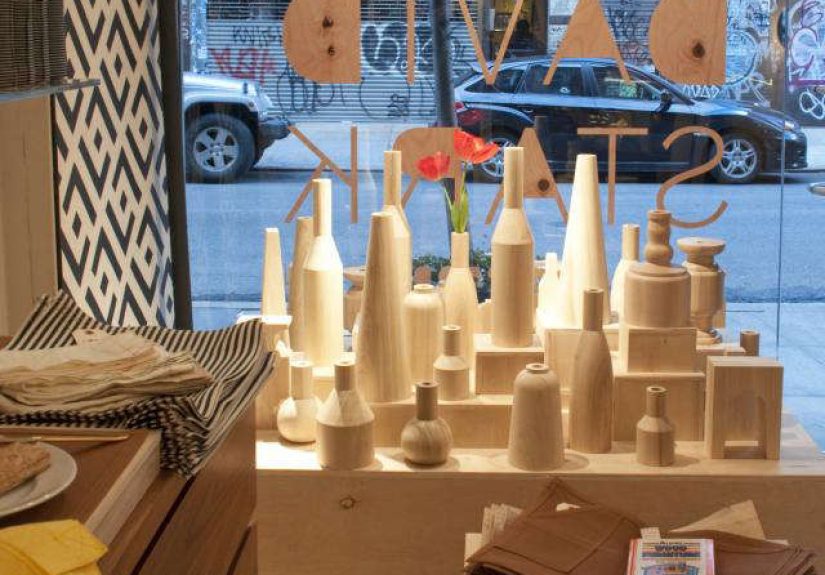
The pop-up ran in February 2012 at Haus Interior on Elizabeth Street in NoLita. It featured roughly 75 woodshop-inspired objects and home accessories developed by Stark and his team over months of preparation. The collection included hand-turned vases, printed pillows, table linens, clocks, decorative pieces, wooden place-card holders, and playful gifts. Some items were practical, some were sculptural, and some seemed designed mainly to make shoppers grin before saying, “Wait, is that made of wood?”
Why It Was More Than a Pop-Up Shop
The phrase “pop-up shop” can mean almost anything now. A temporary sneaker drop? Pop-up. A holiday market booth? Pop-up. A table of candles next to a coffee machine? Pop-up, apparently. But Stark’s Wood Shop had a fuller, more theatrical approach. It used the temporary nature of the format as a design advantage.
A permanent shop has to balance consistency, inventory flow, customer expectations, and long-term brand identity. A pop-up can be bolder. It can have a beginning, middle, and end. It can make a strong statement without worrying whether the concept will still feel fresh three years later. Stark understood this perfectly. Wood Shop felt like an event disguised as a store, or perhaps a store disguised as an art installation.
The “Store Ambush” Concept
Stark’s use of the “ambush” idea is important because it suggests surprise. A typical retail collaboration may place one designer’s products within another brand’s space. A store ambush goes further. It temporarily interrupts the normal rhythm of the store and replaces it with a fully formed creative universe.
That surprise factor is what modern retail often struggles to create. Online shopping is efficient, searchable, and dangerously easy to do while wearing pajamas. Physical retail has to offer something more: atmosphere, emotion, touch, scale, scent, surprise, and human connection. Wood Shop leaned into all of those advantages. It gave visitors a reason to show up in person.
A Small Space With a Big Personality
One of the most impressive details of Wood Shop was the scale. Reports described the space as compact, yet the transformation was complete. Stark’s team turned the boutique into a dense, layered retail environment where every shelf, wall, and object supported the theme. That is a useful lesson for small business owners, designers, and merchandisers: square footage does not determine impact. Concept does.
When a small shop has a clear design narrative, it can feel larger than it is. Customers slow down. They look closer. They discover details. They take photos. They tell friends. In Wood Shop, the visual merchandising was not background decoration; it was the main event.
The Products: Useful, Funny, and Wonderfully Odd
The Wood Shop collection blended home decor with humor. Some pieces nodded directly to woodworking materials and tools. Others transformed familiar domestic objects into wooden jokes with a designer’s polish. There were wooden versions of everyday items, oversized craft-inspired pieces, table accessories, vases, textiles, and gifts. The collection also included products such as linen napkins, canvas placemats, SmartPly vases, decorative holders, printed pillows, clocks, and Valentine’s-themed objects.
What made the products interesting was not just their material. It was the twist. A wooden cake, for example, is not useful in the normal cake sense. You should not serve it at a birthday party unless you enjoy dental emergencies. But as an object, it plays with expectation. It turns a familiar form into a conversation piece. That kind of design works because it gives the buyer a story to own, not just an item to dust.
Wood as Material and Metaphor
Wood is one of the oldest materials in domestic design, but Stark treated it with freshness. Instead of presenting wood only as rustic, masculine, or traditional, he used it as a flexible visual language. It could be warm, funny, graphic, sculptural, elegant, or absurd. In a retail world full of glossy surfaces and perfect packaging, the woodshop theme brought in texture and craft.
That material choice also connected the pop-up to larger design conversations about handmade objects, sustainability, and the value of visible process. Even when the pieces were playful, they pointed toward making, tools, workshops, and the human hand. The shop celebrated the beauty of construction while gently poking fun at the seriousness that sometimes surrounds design culture.
Retail Theater Before Everyone Called It Experiential
Today, “experiential retail” is a favorite phrase among marketers. Brands want stores that feel like content studios, community hubs, showrooms, and social media backdrops all at once. David Stark’s pop-up shop anticipated that conversation. Wood Shop was not only about selling objects. It was about staging an encounter.
The best pop-up stores understand that shoppers remember how a place made them feel. Did it surprise them? Did it make them laugh? Did it invite them to touch something? Did it offer a world they could not experience through a product grid online? Wood Shop checked all of those boxes. It was visual, tactile, limited, and shareable before “shareable moments” became a boardroom phrase with too many syllables.
Why Scarcity Worked
The limited-time nature of the pop-up gave the project urgency. Customers knew the installation would not last forever. That temporary quality made the experience feel special and encouraged people to visit while they could. Scarcity can be annoying when it is artificial, but in a genuine pop-up environment it can add energy. The clock is part of the design.
For Wood Shop, scarcity also matched the handcrafted, small-batch feeling of the collection. The objects did not appear to be anonymous mass-market goods. They felt specific to the world Stark created. Buying one was like taking home a prop from a very good set, except you were allowed to put it on your table without a stage manager yelling at you.
David Stark’s Broader Pop-Up and Retail Influence
Wood Shop was not Stark’s only venture into retail experience. His design approach has appeared in other pop-up and store concepts, including high-profile collaborations and installations where shopping, storytelling, and spectacle overlap. He has been connected with projects involving major brands, design stores, and cultural retail moments, including visually rich holiday concepts and garden-inspired pop-ups.
This broader body of work matters because it shows that Wood Shop was not a one-off gimmick. It was part of Stark’s larger belief that environments can communicate. Whether he is designing a fundraiser, a brand activation, a private celebration, or a temporary shop, the core question seems to be the same: What is the story, and how should people feel as they move through it?
Lessons for Designers, Retailers, and Brand Builders
Designer David Stark’s pop-up shop remains relevant because it offers practical lessons for anyone trying to make retail more engaging. First, a strong concept beats random decoration. A shop filled with attractive objects can still feel forgettable if nothing connects them. Wood Shop worked because every element belonged to the same idea.
Second, humor is a design asset. Many luxury and design spaces are afraid of being funny, as if a joke might lower the thread count. Stark showed that wit can make objects more desirable, not less. A clever product invites interaction. It gives shoppers permission to enjoy themselves.
Third, physical retail should reward attention. The more closely visitors looked at Wood Shop, the more they found. That layered quality is essential in memorable spaces. It turns browsing into exploration.
Small Brands Can Borrow the Strategy
You do not need a massive production budget to apply the Wood Shop lesson. A small retailer can create a seasonal concept, redesign a window display around a story, invite a local maker to take over a corner, or build a limited collection around one material. The key is discipline. Choose a theme strong enough to guide the visuals, products, copywriting, signage, and customer experience.
For example, a ceramics shop could stage a “Breakfast Club” pop-up with mugs, egg cups, linen napkins, recipe cards, and a tiny toast-themed window display. A plant shop could create a “Desk Jungle” installation for remote workers. A bookstore could turn a table into a “Rainy Weekend Survival Kit” with novels, puzzles, tea, and candles. The idea does not have to be complicated. It has to be complete.
Why the Pop-Up Still Feels Fresh
More than a decade after Wood Shop opened, the project still feels fresh because it avoided the trap of trendiness. It was not built around a color of the year, a viral shape, or a temporary internet mood. It was built around craft, humor, material, and transformation. Those ideas age well.
The shop also reminds us that design does not have to choose between intelligence and fun. Stark’s work is thoughtful, but it is not stiff. It respects craft without becoming precious. It turns a boutique into a stage without making the products feel secondary. That balance is difficult to achieve, which is why the project continues to be discussed by design lovers, retail strategists, and anyone who secretly believes a wooden toaster is a perfectly reasonable object to admire.
Experience Notes: What It Feels Like to Visit a Pop-Up Like David Stark’s Wood Shop
Walking into a pop-up like David Stark’s Wood Shop is different from walking into a normal home decor store. In a typical shop, you scan for categories: pillows here, candles there, vases on that shelf, checkout near the front. In a Stark-style environment, the first thing you scan for is the joke, the story, the hidden detail. The shopping brain takes a back seat for a moment, and the curiosity brain grabs the steering wheel.
The experience begins with the feeling that something has happened to the space. It is not simply stocked; it is staged. The objects seem to be in conversation with one another. A vase is not just a vase. It is part of a workshop fantasy. A pillow is not just a soft rectangle waiting for a sofa. It belongs to the same visual world as the clocks, linens, wooden novelties, and playful decorative pieces around it. This creates a sense of immersion that makes visitors slow down.
That slower pace is important. Good pop-up design changes how people move. Instead of entering, browsing quickly, and leaving, visitors pause. They lean in. They point things out to friends. They ask questions. They pick up objects not only to inspect quality, but to understand the idea. The best retail experiences create tiny moments of discovery, and Wood Shop was packed with them.
There is also a social pleasure in this kind of pop-up. It gives people something easy to talk about. A clever object breaks the ice faster than a formal sales pitch. Someone might laugh at a wooden cake, admire a hand-turned vase, or wonder how the entire store was transformed so completely. Suddenly, the shop is not just a place to buy things. It is a shared experience.
From a customer’s perspective, the most enjoyable part is that the merchandise feels connected to memory. You are not only buying a decorative accessory; you are buying evidence that you were there. The object becomes a souvenir of a temporary world. That is why limited-time design retail can be so powerful. It gives ordinary purchases a little theatrical glow.
For designers and retailers, the lesson is clear: people love spaces that reward curiosity. A pop-up does not need to shout to be memorable, but it does need to have a pulse. Wood Shop had one because David Stark treated retail as an event, objects as storytellers, and a small boutique as a canvas for imagination. That combination remains a smart blueprint for anyone trying to make shopping feel human, surprising, and genuinely fun.
Conclusion
Designer David Stark’s Pop-Up Shop was memorable because it understood what many retail spaces forget: people do not fall in love with shelves. They fall in love with stories. Wood Shop turned Haus Interior into a temporary world of craft, wit, and discovery, proving that a pop-up can be more than a sales channel. It can be a design statement, a brand experience, and a small adventure tucked into a city storefront.
By blending woodworking references, clever products, immersive merchandising, and theatrical timing, David Stark created a retail experience that still feels instructive today. For shoppers, it was delightful. For designers, it was a case study. For retailers, it was a reminder that even the smallest space can become unforgettable when every detail serves a strong idea. And for anyone who has ever underestimated the dramatic potential of a wooden toaster, Wood Shop politely disagreed.
Note: This article is written in original American English and synthesizes publicly available information from reputable design, retail, architecture, and event-industry sources. Source links are intentionally not inserted in the article body per publishing requirements.