Table of Contents >> Show >> Hide
- Who Is Siol Studios?
- Why San Francisco Is the Perfect Backdrop for Siol’s Work
- Siol’s Signature Design Language
- San Francisco Projects That Explain the Studio Best
- What Makes Siol Different From Other Design Firms?
- Design Lessons to Borrow From Siol Studios
- A Longer Look: The Experience of Visiting Siol Studios in San Francisco
- Final Thoughts
Some design studios try to impress you with drama. Siol Studios prefers something trickier: making a room feel inevitable, as if it was always supposed to look that way. That sounds simple until you realize how rare it is. In an era of loud kitchens, louder sofas, and homes that seem designed primarily for social media rather than actual humans, Siol’s work stands out for being thoughtful, tactile, and just a little bit sneaky. It does not shout for attention. It earns it.
Based in San Francisco and formally styled as Síol, the studio has built a reputation for integrated design that blends architecture, interior design, landscape, and long-term client care into one continuous story. That holistic approach matters in a city like San Francisco, where space is precious, light is moody, topography is bossy, and every square foot has to pull its weight. A house here cannot just be pretty. It has to think on its feet.
That is exactly what makes a designer visit to Siol Studios so interesting. You are not simply looking at a portfolio of stylish rooms. You are stepping into a worldview: one that values narrative over noise, atmosphere over gimmicks, and beauty that behaves itself. From a children’s playroom hidden behind a bookcase to a creative hub in SoMa with a living wall and a column-free gallery, Siol’s San Francisco work shows how a design firm can be both intellectually serious and warmly livable. Fancy, yes. Fussy, no.
Who Is Siol Studios?
Founded in 2007, Siol Studios is an interdisciplinary design practice working across architecture, interiors, landscape, and client services. That last category is part of what makes the firm distinctive. Many design studios hand over the keys, smile for the final photo, and disappear like elegant magicians. Siol takes a longer view, offering post-occupancy and concierge-style support that helps clients settle into their spaces and adapt them over time.
In plain English, the studio is not only interested in how a place looks on reveal day. It cares about how the place lives, ages, and responds to the people inside it. That mindset changes the work. It encourages less trend-chasing, more durability, and a stronger relationship between concept and daily life. The result is design that feels composed rather than decorated.
Leadership also helps explain the studio’s character. The firm’s principals include Jessica Weigley in interior design and Kevin Hackett and Robo Gerson in architecture. Together, they have shaped a practice that treats space as something experienced with the whole body, not just admired with the eyeballs. That sounds poetic, and yes, a little dramatic, but their projects back it up. Materials are chosen for touch as much as appearance. Light is treated almost like a building material. Gardens are not afterthoughts. And circulation is never just about moving from Point A to Point B; it is about creating feeling along the way.
Why San Francisco Is the Perfect Backdrop for Siol’s Work
San Francisco is not an easy city to design in. The housing stock is historic, the lots are tight, the grades are steep, and the weather changes its mind faster than a group text planning brunch. But those challenges tend to reward studios that can edit well. Siol is especially good at editing.
Rather than piling novelty onto already complicated buildings, the studio often works by refining what is there. In some projects, that means exposing structural elements and letting old bones speak. In others, it means opening a house to the garden, coaxing daylight deeper into the plan, or allowing a historic shell to coexist with cleaner, contemporary interiors. This approach feels especially suited to San Francisco, where the best renovations usually respect the city’s quirks instead of bulldozing them into submission.
There is also an unmistakably Northern California sensibility in the studio’s palette. Siol favors natural materials, soft yet structured spaces, and an indoor-outdoor rhythm that feels calm rather than performative. Even when a project is visually striking, it rarely feels like it is trying too hard. The work has confidence, not costume jewelry.
Siol’s Signature Design Language
Narrative Drives the Space
One of the most compelling things about Siol Studios is its belief that each project should be guided by a single conceptual thread. In practice, that means the architecture, interiors, and landscape are not designed as separate acts. They are chapters in the same story. A curve in a furniture piece might echo the angle of a roof plane. A material shift might connect a wall, a built-in, and a garden threshold. Nothing is random, even when it looks effortless.
Light Is Treated Like a Design Partner
If Siol had an unofficial mascot, it might be daylight. The studio repeatedly uses skylights, enlarged openings, careful glazing, and visual corridors to create rooms that feel more expansive and more humane. In dense urban settings, that is not just an aesthetic preference; it is a survival strategy. A dark San Francisco interior can feel moody in a cool way for about seven minutes. After that, it feels like you are living inside a purse.
Landscape Is Never an Afterthought
Another hallmark is the studio’s commitment to connecting interior life with landscape. Whether the project is a small terrace, a backyard dining zone, a rooftop deck, or a larger residential garden, the outdoor space is treated as part of the architecture, not leftover territory for a lonely potted olive tree and an optimistic folding chair.
Sustainability Shows Up in Real Decisions
Siol’s work also reflects a practical kind of sustainability. The firm has emphasized organic and natural materials, sustainably harvested woods, adaptive reuse, durable finishes, and strategies that improve light, airflow, and long-term livability. In other words, the environmental thinking is built into the decisions, not stapled on afterward like a guilty conscience.
San Francisco Projects That Explain the Studio Best
The 2010 San Francisco Decorator Showcase Playroom
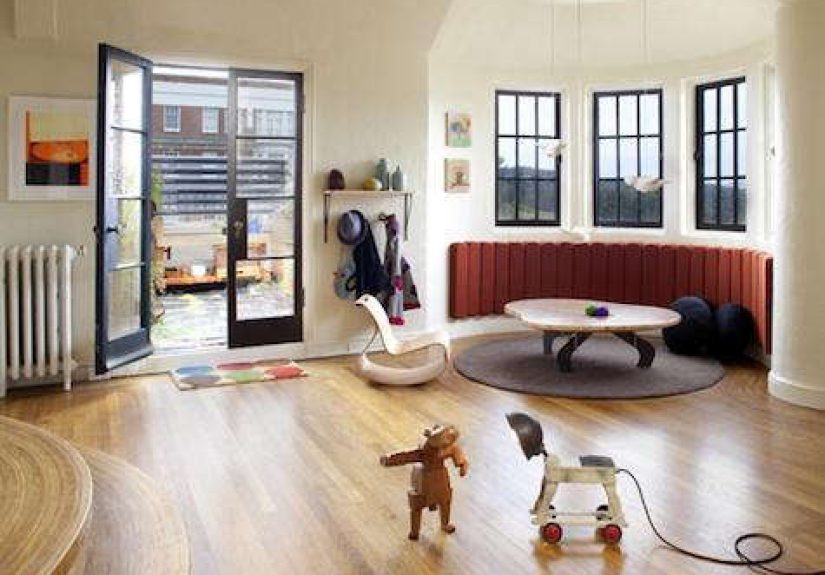
If you want a wonderfully weird and surprisingly revealing introduction to Siol, start with the 2010 San Francisco Decorator Showcase. For that project, Kevin Hackett and Jessica Weigley designed a children’s playroom and garden terrace that managed to be imaginative, educational, and sustainable without becoming precious. The interior included a raised stage, a music corner with a wall-mounted xylophone, a crafts table, and a reading nook hidden behind a bookshelf. Because apparently the correct number of secret rooms in a home is not zero.
What made the space memorable was not only the playful program, but the philosophy behind it. The project leaned into recycled materials, sustainably harvested woods, and a biodynamic terrace garden. Reports on the space also highlighted wind- and solar-powered irrigation features, along with a rainwater collection element for plant watering. Even in a showcase setting, where theatrical flourishes are almost expected, Siol managed to create something that felt both magical and grounded.
Four One Nine in SoMa
Four One Nine may be the clearest expression of Siol’s contemporary San Francisco identity. Designed as a community-minded creative hub in the city’s SoMa district, the project combines gallery space, content production, meetings, collaboration, and events in a highly flexible environment. The studio approached it with functionality, openness, green elements, and adaptability at the forefront.
A major move was the creation of a column-free central space through the use of a large steel truss. That intervention opened the plan and allowed the venue to function as a gallery, event platform, and workspace without visual clutter. Skylights pull natural light deep into the interior, while white ash, tile, and stone surfaces add warmth and texture without overpowering the architecture. A striking steel-and-concrete stair becomes both circulation and sculpture. Outside, planted elements and a living wall help blur the line between urban warehouse and garden retreat.
Four One Nine is important because it shows that Siol’s sensibility is not limited to homes. The studio can bring the same emotional intelligence to commercial and cultural environments, creating spaces that are polished yet social, flexible yet deeply considered.
Masonic: Sacred Space Without Dusty Formalism
At San Francisco’s Masonic, Siol completed a basement renovation that transformed an existing space into a lodge room inspired by Masonic traditions and geometry. This project could easily have gone sideways into theme-park solemnity, but instead it became an elegant lesson in restraint.
Rich materials such as brass, oak, leather, and marble create depth and ceremony, while the composition of the space reflects ritual, proportion, and procession. A circular stone feature representing the rising sun anchors the room. Intersecting vaults add atmosphere overhead. The end result feels intimate, quiet, and symbolic, but never cartoonishly mystical. That is a hard line to walk, and Siol walks it well.
Valley Street, 18th Street Loft, and the Art of Smart Renovation
Beyond headline-grabbing spaces, Siol’s San Francisco residential work shows just how deft the firm is with renovation. Valley Street, a Craftsman home in Noe Valley, pairs a traditional street-facing facade with a dramatically modern rear facade of glass. The contrast is not a stunt. It is a strategic release valve, opening the house to the garden and bringing a stronger indoor-outdoor lifestyle to the site.
The 18th Street Loft, located in a former See’s Candy factory, reveals another side of the studio. There, the challenge was not to invent character but to uncover it. Siol preserved the industrial bones, improved storage, and brought coherence to the layout so the loft’s best original features finally had room to breathe. It is a reminder that good design does not always mean adding more. Often it means seeing more clearly.
More recently, the studio’s work on a Victorian property with a historic earthquake shack turned a cramped, disconnected structure into a luminous dining room tied to the garden. That project captured one of Siol’s strongest instincts: restoring a sense of continuity between house, history, and landscape. Old San Francisco, new life.
What Makes Siol Different From Other Design Firms?
The short answer is integration. The longer answer is that Siol does not treat architecture, interiors, and landscape as separate shopping carts. Everything is linked. That means homes feel more coherent, commercial projects feel more humane, and even small spaces carry a sense of intention.
The studio also seems unusually interested in how people actually inhabit a room. Not just how they photograph in it, but how they read, gather, cook, move, work, retreat, and exhale. That may be why so many of the firm’s best spaces have a lived-in spirituality to them. Not spiritual in a crystals-on-the-windowsill way, necessarily, though San Francisco would allow it. Spiritual in the sense that the spaces help people feel more present.
There is also a generosity to the work. Even when the architecture is disciplined, the interiors rarely feel cold. Even when the materials are refined, the spaces still invite touch. Even when the concept is sophisticated, the room still knows how to host a Tuesday.
Design Lessons to Borrow From Siol Studios
1. Start With the Story
A home becomes more memorable when there is a clear idea tying it together. Before buying finishes, define the emotional and practical purpose of the space.
2. Let Light Do More Work
Skylights, interior glazing, wider openings, and better sightlines can transform even modest square footage. Good lighting is not decoration. It is architecture.
3. Connect Indoors and Outdoors
Even a small terrace or backyard can change how a home feels. When outdoor space is visually and physically linked to the interior, the house tends to feel larger and calmer.
4. Edit Before You Add
Some of Siol’s strongest work comes from subtraction: clearing clutter, exposing structure, refining circulation, and removing bad past decisions. A renovation does not have to scream to succeed.
5. Choose Materials With a Human Point of View
Think beyond surface appearance. Ask how a material ages, how it feels underfoot, how it handles daily life, and whether it contributes to comfort. Beautiful rooms should not behave like museum guards.
A Longer Look: The Experience of Visiting Siol Studios in San Francisco
A designer visit to Siol Studios, or even a deep look through its San Francisco work, feels less like touring a flashy brand and more like entering a conversation about how people want to live. The mood is not “look how expensive this is.” It is “look how carefully this has been thought through.” That distinction matters.
You can imagine the visit beginning not with a loud lobby gesture, but with materials: wood samples, stone pieces, metal finishes, fabric swatches, maybe a sketch pinned beside a photograph of a garden wall or a roofline. The studio’s work suggests a process rooted in observation and editing. Things are chosen because they belong, not because they trend well on the internet for six glorious weeks before vanishing into the digital fog.
Then there is the San Francisco factor. In many cities, luxury design can afford to waste space. In San Francisco, every corner has to audition. Siol seems to understand that deeply. Walking through its projects, you get the sense that the firm respects compression rather than fighting it. A hidden nook becomes a sanctuary. A narrow passage becomes procession. A deck becomes an outdoor room. A former warehouse becomes a creative ecosystem. A neglected backyard shack becomes a cathedral of afternoon light. That is not just problem-solving. That is spatial optimism.
What makes the experience especially rich is the range. One minute you are looking at a playful children’s environment with a secret bookshelf door and garden terrace. The next, you are considering the solemn geometry of a Masonic lodge, where proportion, ritual, and material are used to shape reflection. Then you move to Four One Nine, where the tone shifts again: brighter, more public, more collaborative, but still unmistakably Siol in its attention to texture, circulation, and atmosphere.
There is also an emotional steadiness to the work. Siol does not seem interested in empty spectacle. Even its boldest moments are anchored by use. The dramatic stair at Four One Nine is beautiful, yes, but it also organizes movement. The all-glass rear facade at Valley Street is eye-catching, but it also reframes daily life around light and landscape. The reading nook at the Decorator Showcase was whimsical, but it also understood a child’s need for retreat, enclosure, softness, and imagination. The magic is never detached from function.
And maybe that is the lasting impression of a designer visit focused on Siol Studios in San Francisco: the feeling that design can still be intimate, intelligent, and deeply responsive without becoming stiff or self-important. These are spaces that know how to perform, but they also know when to lower their voices. They offer clarity without sterility, elegance without ego, and sustainability without preaching at you from across the room.
For homeowners, designers, and curious readers alike, that makes Siol worth paying attention to. The studio’s work offers a persuasive case for why integrated design matters, especially in cities where history, density, and daily life are constantly negotiating with one another. San Francisco is not an easy place to make architecture feel both calm and alive. Siol manages it anyway. Which, in designer terms, is the equivalent of doing a backflip and somehow making it look like a casual stretch.
Final Thoughts
Siol Studios has earned its place among the most interesting design voices connected to San Francisco because it does more than style beautiful rooms. It creates environments with memory, rhythm, and purpose. The studio understands that good design should reveal something about a site, a client, and a way of living. It should also make everyday life easier, richer, and maybe a little more joyful.
That is the real takeaway from a designer visit to Siol Studios in San Francisco. The best spaces are not necessarily the loudest or the most decorated. They are the ones that feel whole. Siol’s work, across residential, cultural, and creative projects, keeps returning to that idea. And in a design world crowded with one-hit wonders and algorithm-friendly gimmicks, wholeness feels refreshingly radical.