Table of Contents >> Show >> Hide
- First, what are clinicians trying to prove?
- Core lab tests used in diagnosing diabetes insipidus
- How clinicians interpret the “paired labs”
- The water deprivation test: the classic (and carefully supervised) workhorse
- The desmopressin (DDAVP) response: separating central vs nephrogenic DI
- ADH (vasopressin) blood tests: why they exist, and why they’re not the usual first choice
- Copeptin: the newer lab test changing the DI playbook
- Additional tests that support the diagnosis (and look for a cause)
- Common “gotchas” that labs help untangle
- FAQ: “Which lab tests will I actually see on my lab report?”
- Experiences from real-life DI workups (what the testing process can feel like)
Diabetes insipidus (DI) is the medical world’s greatest branding mistake: it shares the word
“diabetes” with diabetes mellitus, yet it has nothing to do with blood sugar. Think of DI as a
water-balance problem, not a sugar problem. When the body can’t make enough antidiuretic hormone
(also called arginine vasopressin, AVP) or the kidneys can’t respond to it, the result is the same:
your kidneys behave like a faucet that won’t fully shut off. You pee a lot. You’re thirsty a lot.
And you start planning your life around the nearest restroom like it’s a VIP lounge.
Because symptoms overlap with other common issues (high blood sugar, diuretics, high calcium,
kidney disease, “I just love my water bottle”), diagnosing DI isn’t about one magical test. It’s a
pattern-recognition puzzle built from urine and blood measurements, plus a few carefully
supervised challenge tests. Let’s break down the lab work that clinicians use to confirm DI and
figure out which type you have.
First, what are clinicians trying to prove?
A DI workup usually aims to answer two questions:
-
Is this truly hypotonic polyuria? (A fancy way of saying: large amounts of
dilute urine.) -
If yes, why? Is it AVP deficiency (central DI), AVP resistance (nephrogenic DI),
or something else like primary polydipsia (drinking a lot and “training” the kidneys to make very
dilute urine)?
Core lab tests used in diagnosing diabetes insipidus
If you remember nothing else, remember this trio: urine concentration, blood concentration,
and sodium. DI is often suspected when urine stays in “water mode” while the blood trends
more concentrated.
1) 24-hour urine volume (or a measured urine output)
Before anyone does fancy stimulation tests, clinicians often confirm that urine volume is
genuinely high. This can be done with a 24-hour urine collection or careful measurement of urine
output. It’s not glamorous. It’s not aesthetic. It is, however, extremely useful.
- Why it matters: High urine volume helps separate true polyuria from urinary frequency (peeing often but not much each time).
- Real-world clue: “I’m up all night peeing” could be frequency, polyuria, or bothmeasurement clarifies the story.
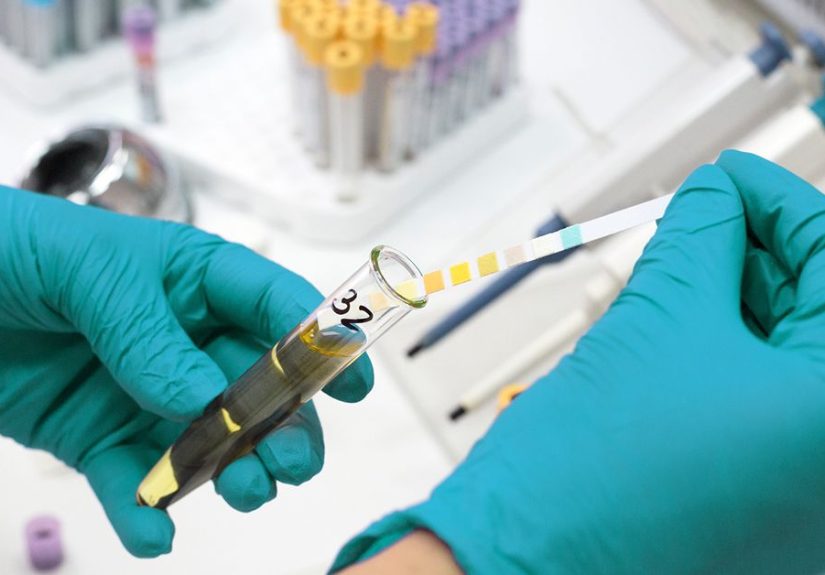
2) Urinalysis (including glucose) to rule out look-alikes
One of the most important “DI tests” is actually a test for something else: sugar in the urine.
When diabetes mellitus is uncontrolled, glucose spills into urine and drags water with it
(osmotic diuresis). That can mimic DI symptoms.
- Key labs in the “not DI” checklist: urine dipstick/urinalysis and blood glucose (often paired with HbA1c in practice).
- Why it matters: Treating the wrong “diabetes” is like fixing a leaky roof by mopping the floorbusy, exhausting, and ineffective.
3) Urine specific gravity
Urine specific gravity is a quick, widely available estimate of urine concentration. It’s often
included in routine urinalysis and can be an early hint that urine is unusually dilute.
- What it tells you: whether urine is dense with particles or mostly water.
- DI clue: persistently low specific gravity can support the “dilute urine” part of the diagnosis.
- Important nuance: specific gravity is convenient, but urine osmolality is more precise (more on that next).
4) Urine osmolality
If urine specific gravity is a quick snapshot, urine osmolality is the high-resolution version.
It measures the concentration of dissolved particles in urine and is central to diagnosing DI.
- DI clue: urine that stays inappropriately dilute despite dehydration signals suggests a water-balance disorder.
- How it’s used: measured at baseline and often repeatedly during diagnostic challenge tests.
5) Serum (blood) osmolality
Serum osmolality reflects how concentrated the blood is. In classic DI physiology, the body
loses free water in urine, so the blood can become more concentrated if thirst and access to
water don’t fully keep up.
- DI clue: higher serum osmolality paired with low urine osmolality is a “wrong-direction” combo that raises suspicion.
- Why clinicians like pairing tests: urine and blood values together tell a clearer story than either one alone.
6) Serum sodium
Sodium is a major driver of serum osmolality. In DI, sodium may be normal if someone drinks
enough water, but it can trend high (hypernatremia) if water losses outpace intake. In contrast,
primary polydipsia can push sodium low.
- Pattern thinking: high-normal to high sodium can support free-water loss; low sodium can suggest excess free-water intake.
- Safety note: sodium is watched closely during challenge tests because it can change quickly.
7) Kidney function and electrolyte screening (creatinine/BUN, calcium, potassium)
Clinicians often add kidney function and electrolytes for two reasons: (1) kidney disease can
complicate the interpretation of urine concentration, and (2) certain electrolyte problems can
cause or worsen a DI-like pictureespecially high calcium and low potassium.
- Examples: hypercalcemia and hypokalemia can interfere with the kidney’s ability to concentrate urine.
- Medication clue: lithium is a well-known cause of nephrogenic DI; clinicians often review medication history alongside these labs.
How clinicians interpret the “paired labs”
The most common early diagnostic step is measuring urine osmolality (or specific gravity) and
serum osmolality/sodium at the same time. Here’s the simplified logic:
When DI rises on the suspect list
- Urine: very dilute (low urine osmolality / low specific gravity)
- Blood: relatively concentrated (higher serum osmolality and/or higher sodium)
- Clinical context: high-volume urination + intense thirst, often including nocturia
When primary polydipsia becomes more likely
- Urine: dilute
- Blood: normal to low serum osmolality and/or low sodium
- Context: high fluid intake may be driving the dilute urine (not the other way around)
Real life is messier than these bulletspartial DI exists, chronic overhydration can “wash out”
the kidney’s concentrating ability, and different labs use different reference ranges. That’s why
clinicians often move to structured challenge testing when the baseline pattern isn’t decisive.
The water deprivation test: the classic (and carefully supervised) workhorse
The water deprivation test is designed to answer a simple question: Can your body concentrate urine when it has to?
If you stop drinking for a period of time, a typical body increases AVP and concentrates urine.
In DI, urine stays stubbornly dilute.
What gets measured during a water deprivation test?
- Body weight (because rapid water loss shows up here fast)
- Urine volume at set intervals
- Urine osmolality (often repeatedly)
- Serum osmolality and serum sodium at intervals for safety and interpretation
Why the “supervised” part is non-negotiable
For someone with DI, depriving water can lead to dangerous dehydration and rising sodium.
That’s why reputable medical sources emphasize close monitoringoften in a hospital or
specialized outpatient setting where staff can stop the test promptly if thresholds are reached.
The desmopressin (DDAVP) response: separating central vs nephrogenic DI
Desmopressin is a synthetic version of AVP (the hormone that tells kidneys to conserve water).
Clinicians use a desmopressin “challenge” to see if the kidneys respond.
How it works (conceptually)
-
If urine concentrates after desmopressin: the kidneys can respond, so the issue is
more likely central DI (AVP deficiency). -
If urine stays dilute after desmopressin: the kidneys are resistant, so
nephrogenic DI becomes more likely.
This approach is often paired with water deprivation results, because “partial” cases can show
intermediate responses. Clinicians interpret the full pattern rather than relying on one number.
ADH (vasopressin) blood tests: why they exist, and why they’re not the usual first choice
You might wonder: “Why not just measure AVP directly?” Great questionand the answer is:
you can, but it’s complicated.
AVP is small, unstable in samples, and sensitive to how the blood is collected, processed, and
stored. Many clinicians instead rely on urine/blood osmolality patterns and challenge tests.
When AVP testing is used, it’s usually in specialized centers.
Copeptin: the newer lab test changing the DI playbook
Copeptin is a peptide released in equal amounts with AVP, but it’s far more stable in blood
samples. In other words: copeptin is like AVP’s dependable best friend who actually shows up on
time and doesn’t fall apart under pressure (literally).
How copeptin testing is used
Copeptin can be measured at baseline, but it becomes especially helpful when measured after
controlled stimulation. Two commonly described stimulation approaches are:
- Hypertonic saline stimulation: raises serum osmolality and should trigger AVP/copeptin release in people without AVP deficiency.
- Arginine stimulation: a simpler alternative used in some protocols; it can also stimulate copeptin release.
Why clinicians like it
- Improved diagnostic accuracy in differentiating AVP deficiency from primary polydipsia in research and specialty settings.
- More “lab-like” than water deprivation (blood draws vs prolonged fluid restriction), though stimulation tests still require monitoring.
- Helps with gray zones where partial DI and chronic polydipsia blur the classic patterns.
Not every clinic offers copeptin testing yet, and protocols vary by institution. But it’s
increasingly discussed in modern diagnostic pathwaysespecially for tricky cases.
Additional tests that support the diagnosis (and look for a cause)
Some tests aren’t “DI confirmation tests” on their own, but they help clinicians understand
what’s driving the problem once DI is suspected.
Pituitary hormone labs (when central DI is suspected)
Because central DI can be linked to pituitary or hypothalamic disease, clinicians may test other
pituitary hormones (for example, thyroid and adrenal axes) to see if the pituitary is broadly
affected. These are blood tests that help with the bigger picture and safety.
Genetic testing (select cases)
In families with inherited forms of DI (especially certain pediatric cases), genetic testing may
be considered. This is not routine for everyone, but it can be valuable in the right context.
Common “gotchas” that labs help untangle
1) “My urine is dilute, so it must be DI.” Not always.
Dilute urine can happen simply from drinking lots of water. That’s why clinicians look for
inappropriately dilute urine relative to blood concentration and symptoms, and why
measured urine volume matters.
2) Partial DI can look like a fence-sitter
Partial AVP deficiency or partial kidney resistance can produce intermediate urine osmolality
and mixed responses. This is where structured testing (and sometimes copeptin) can clarify the
diagnosis.
3) Electrolytes can impersonate DI
High calcium and low potassium can impair urine concentrating ability. Correcting these
problems can sometimes improve symptoms, which is why they’re included early in the lab panel.
FAQ: “Which lab tests will I actually see on my lab report?”
Different clinicians and centers use different protocols, but many DI evaluations include a
combination of the following:
- Urinalysis (often including glucose)
- Urine specific gravity
- Urine osmolality
- Serum osmolality
- Serum sodium (and sometimes broader electrolytes)
- Kidney function tests (BUN, creatinine)
- Calcium and potassium
- Challenge-test measurements during water deprivation and/or after desmopressin
- Copeptin (baseline and/or stimulated), when available
Experiences from real-life DI workups (what the testing process can feel like)
If you’ve never done a DI evaluation, the lab list can look intimidatinglike you’re about to
audition for a role in “Fast & Furious: Electrolyte Drift.” In reality, most people describe the
process as annoying but manageable, with a few standout moments that are oddly
memorable.
One of the most common experiences is the “Wait, you want me to measure my pee?”
stage. A 24-hour urine collection can feel like an elaborate scavenger hunt where the prize is a
giant jug you definitely don’t want to explain to houseguests. People often say the hardest part
isn’t the collection itselfit’s coordinating normal life around it: commuting, school, errands,
and figuring out where that container can live without becoming the household’s unwanted mascot.
Still, many find it reassuring because it turns a vague complaint (“I’m peeing a lot”) into a
measurable fact.
Blood and urine osmolality testing can feel surprisingly anticlimactic. You provide a urine
sample, you get blood drawn, and then you go home and overthink every sip of water. Some people
describe a weird sense of validation when results show truly dilute urine despite significant
thirstlike finally getting proof that you weren’t “just being dramatic” about always needing
water. Others feel frustrated if values land in a gray zone, because it can sound like the lab
report is saying, “Maybe? Kinda? Ask again later.”
The water deprivation test, when it’s ordered, tends to be the most emotionally
charged part of the journey. People often report that the word “deprivation” is doing a lot of
heavy lifting: it sounds scarier than it is when done correctly, but it’s still not a spa day.
The most common feeling is plain old thirst, plus the odd boredom of being monitored while
waiting for the next timed urine sample. Many say the staff makes a big differenceclear
explanations, frequent check-ins, and the reassurance that the test can be stopped if safety
thresholds are reached.
The desmopressin response is often described as either “instant relief” or “well,
that explains a lot.” Some people notice a dramatic change in urine output and thirst if they
have central DIfewer bathroom trips, less frantic water-seeking, and sometimes the first
uninterrupted stretch of sleep in ages. Others, especially those with nephrogenic DI, may feel
disappointed that nothing changesyet also relieved to have a clearer direction for next steps.
Either way, many people describe that moment as the turning point where the evaluation stops
feeling like random testing and starts feeling like a diagnosis taking shape.
For those who undergo copeptin testing (often at specialty centers), the
experience tends to be “more medical, less miserable.” People frequently describe it as a
structured clinic-day test with blood draws and monitoring, rather than hours of fighting thirst.
Even when a stimulation protocol feels intense, many prefer having a clearer answer soonerless
diagnostic limbo, fewer repeat visits, and more confidence in whether the issue is AVP deficiency
or primary polydipsia.
The takeaway from these experiences is consistent: DI testing can be inconvenient and sometimes
uncomfortable, but it’s usually worth it because the right diagnosis changes
everythingtreatment options, safety guidance, and the simple ability to sleep through the night
without your bladder staging a coup.