Table of Contents >> Show >> Hide
- What “Double Bunk Bed” Can Mean
- Safety First: The Design Rules You Don’t Want to “Figure Out Later”
- Start With Mattress Size (Because Everything Else Depends on It)
- Pick Your Style: Four Great Double Bunk Bed Design Directions
- Materials and Structure: What Makes a Bunk Bed Feel Rock-Solid
- Design Details People Notice (and Love)
- Finishes and Comfort: The “Feels Like a Real Room” Layer
- A Smart DIY Build Sequence (High-Level, Design-Focused)
- Maintenance: The Five-Minute Habit That Keeps the Bed Solid
- FAQ: Quick Design Answers
- Conclusion
- Real-World Experiences and Lessons People Share After Building Double Bunks
- SEO Tags
A double bunk bed is basically the superhero of small bedrooms: it saves floor space, adds storage opportunities,
and (let’s be honest) makes any kid feel like they’ve been promoted to “cool room” status. But it’s also a piece
of furniture that needs to be designed like it’s going to star in an action moviebecause climbing, wiggling,
jumping (even when you say “don’t”), and the occasional midnight ladder descent are all part of the plot.
This guide focuses on designhow to plan a DIY double bunk bed that looks custom, feels solid,
and prioritizes safety. It’s not a power-tool tutorial. If you’re building one, involve an experienced adult,
follow tool manuals, and consider having a qualified carpenter review your plan. Your future self (and your walls)
will thank you.
What “Double Bunk Bed” Can Mean
“Double bunk bed” gets used in a few different ways, so lock in the layout before you buy materials or start sketching.
Here are the most common interpretations:
- Twin-over-twin: Classic, space-efficient, and easiest to fit in most rooms.
- Full-over-full: Bigger mattresses on both levelsgreat for teens, guest rooms, or shared spaces.
- Twin-over-full: A practical compromise: smaller top bunk, more roomy bottom bunk.
- “Double” as in two bunks side-by-side: Like a bunk-room lookmore floor space required, but visually dramatic.
Design tip: start by writing down who will use the bed (age range, height, sleep habits), how long you want the design
to last, and whether you need flexibility (like converting into two separate beds later).
Safety First: The Design Rules You Don’t Want to “Figure Out Later”
Bunk beds aren’t the place for “close enough.” Good design makes the bed naturally safer even before you add
house rules like “no parkour after bedtime.”
Guardrails are not optional (and mattress height matters)
The top bunk should have guardrails on both sides, and the design should ensure the mattress sits low enough so the
guardrail still extends well above the sleeping surface. A common safety benchmark is maintaining
at least 5 inches of guardrail height above the top of the mattress. That means you can’t choose guardrail
height and mattress thickness independentlythey’re a couple now.
Practical move: design in a “mattress line.” Mark the maximum mattress thickness right on your plan and stick to it.
If you upgrade to a thicker mattress later, you may accidentally downgrade safety.
Ladder access should be stable and predictable
A ladder that flexes, slips, or forces awkward stepping is an invitation for falls. In design terms, you want:
a secure attachment point, comfortable rung spacing, and handholds that make climbing feel automatic.
If you have the space, an angled ladder or stair-style steps can feel more natural than a straight vertical climb.
Openings and gaps should be designed to avoid entrapment risks
Any bunk bed design needs careful attention to spacingespecially around guardrails, end panels, and ladder openings.
Avoid creating “in-between” gaps that a child could slip into. This is one reason many builders prefer tighter slat
spacing and solid guardrail designs rather than wide decorative cutouts.
Use the top bunk for older kids
From a family-use perspective, many pediatric safety recommendations advise that children under about
6 years old should not sleep on the top bunk due to coordination and fall risk. Design can reduce risk,
but it can’t erase developmental reality.
Placement matters: design with the room in mind
The safest bunk bed can still become a problem if it’s placed under a ceiling fan, near window blind cords,
or in a cramped corner where ladder access turns into a sideways shuffle. Plan clearance for:
- Headroom: enough space above the top bunk so sitting up doesn’t equal a head bonk.
- Ladder “landing zone”: a clear area to step down safely (especially at night).
- Wall strategy: some families place bunks in a corner for extra stability and fewer open sides.
Start With Mattress Size (Because Everything Else Depends on It)
Mattress sizing is the boring hero of bunk bed planning. If you design the frame first and “pick a mattress later,”
you’re basically inviting future you to spend a weekend muttering, “Why is it two inches off?”
Common mattress sizes to plan around
- Twin: about 38″ × 75″
- Twin XL: about 38″ × 80″ (popular for taller teens)
- Full: about 54″ × 75″
Design tip: leave a little tolerance so making the bed isn’t a wrestling match, but not so much that you create
edge gaps that reduce safety. Your goal is “snug, not jammed.”
Pick Your Style: Four Great Double Bunk Bed Design Directions
1) The Classic “Square-Frame” Bunk
This is the traditional look: four sturdy posts, two stacked sleeping platforms, guardrails up top, and a ladder.
It’s the most straightforward option, easiest to match with different decor styles, and typically the simplest
to reinforce for stability.
Make it feel custom with details like recessed panels, a two-tone paint scheme, or a built-in shelf along the guardrail
(kept shallow so it doesn’t become a climbing foothold).
2) The Built-In “Bunk Nook” Look
Built-in bunks (or “built-in-style” freestanding bunks) create a cozy, architectural feelespecially if you add trim,
beadboard, or an integrated headboard wall. This style is great for shared rooms and vacation homes because it looks
intentional, not temporary.
If you’re going for built-in vibes, consider adding:
- wall-mounted reading sconces (installed safely and professionally)
- a small picture ledge for books
- under-bed drawers or rolling bins for storage
3) The “Modern Minimal” Bunk
Clean lines. Slim profiles. No chunky farmhouse posts the size of fence posts. This style works well in small rooms
because it feels visually lighter.
Minimal doesn’t mean weak. The trick is using smart structurestrong joints, quality hardware, and a design that
resists racking (side-to-side sway).
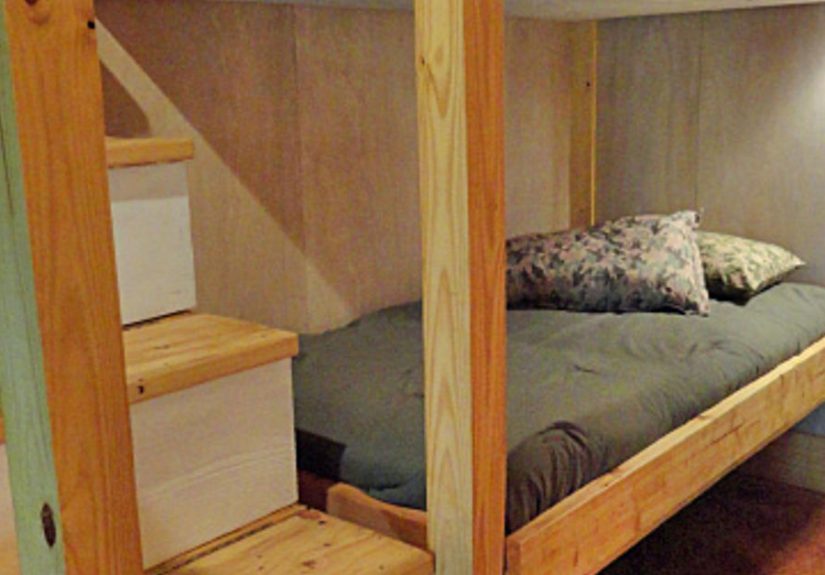
4) The “Family-Friendly Upgrade” Bunk (Stairs + Storage)
If you have enough space, stair access can be a game-changer. Stairs feel more stable than ladders for many kids,
and each step can double as a storage cubby or drawer. This design is especially helpful if you want the bunk bed
to stay useful as kids grow.
Materials and Structure: What Makes a Bunk Bed Feel Rock-Solid
Choose lumber like you’re building something people will climb (because you are)
For a budget-friendly build, many DIYers use construction-grade lumber (carefully selected for straightness).
For a premium feel, hardwoods are popular because they’re dense, durable, and take finishes beautifully.
Whichever direction you go, prioritize:
- Straight boards: warping is the enemy of square frames.
- Clean grain in structural parts: fewer knots and cracks in rails and posts.
- Dry, stable material: helps prevent squeaks and shifting over time.
Design for strength in three directions
A bunk bed isn’t just holding weight downward. It also deals with:
- Racking: side-to-side sway when someone climbs up.
- Twist: uneven movement when kids flop like fish onto the mattress.
- Impact: the occasional “Oops!” moment that nobody admits.
Design features that help:
- Sturdy corner posts with solid attachment points for rails
- Full-length side rails that act like beams
- Cross-bracing or tight end panels to reduce sway
- Quality fasteners/hardware intended for bed frames (not random leftover screws)
Don’t forget the mattress support system
Your mattress support can be slats or a platform. Slats are common because they allow airflow and can be replaced
individually if damaged. Whatever you choose, design it to stay seated securely so it doesn’t shift as the bed is used.
Design Details People Notice (and Love)
Make the ladder “feel safe” at a glance
A ladder that looks sketchy will be treated sketchily. A ladder that looks stable will be used correctly.
Consider adding:
- Handholds near the top entry
- Wider rungs for comfortable feet
- Non-slip tread (applied safely and neatly)
Plan for bedding changes (yes, this is a design problem)
If you’ve ever tried to tuck sheets on a top bunk, you know it’s basically Pilates with frustration.
Make your design bedding-friendly by allowing enough space between guardrails and mattress edges for hands to tuck.
Some designs also allow a portion of the guardrail to open for easier accessif you go this route, it must be
secure and child-safe.
Build in storage where it makes sense
Double bunks are often chosen because the room needs to work harder. Easy storage wins include:
- Under-bed drawers on the bottom bunk side
- Open cubbies at the end panel (kept smooth and snag-free)
- Stair storage if you choose a stair access design
Finishes and Comfort: The “Feels Like a Real Room” Layer
A great design looks intentional and feels comfortable. Before finishing, sand thoroughly and round over sharp corners.
For paint or clear coats, many families choose low-odor, water-based finishes designed for interior furniture.
Let everything cure fully before mattresses and bedding go back onfinishes need time to harden, not just “feel dry.”
Bonus comfort touches:
- Clip-on reading lights or professionally installed sconces
- A small shelf for a book and water bottle (secured and not climbable)
- Soft wall protection if the bed sits close to a wall (so pillows don’t fall into the void)
A Smart DIY Build Sequence (High-Level, Design-Focused)
If you’re building, a solid sequence keeps you from painting yourself into a cornersometimes literally.
Here’s the typical design-to-build flow:
- Measure the room (including ceiling height, fan clearance, and door swing).
- Choose mattress size and decide your maximum mattress thickness for the top bunk.
- Sketch the structure: posts, rails, guardrails, ladder/stairs, and support system.
- Plan anti-sway reinforcement (end panels, bracing, or hardware strategy).
- Dry fit major components before finishing.
- Finish (paint or clear coat), allow proper cure time.
- Final assembly + safety check: tighten hardware, confirm guardrail height, confirm ladder stability, and re-check clearances.
Maintenance: The Five-Minute Habit That Keeps the Bed Solid
Bunk beds live an active life. A simple maintenance routine helps keep the design performing like it should:
- Periodically check and tighten connections (especially ladder and guardrail areas).
- Inspect slats/supports for cracks or shifting.
- Listen for new squeaksoften a sign something has loosened.
- Replace damaged parts promptly instead of “watching it.”
FAQ: Quick Design Answers
How thick should the top bunk mattress be?
Thick enough to be comfortable, but not so thick that it reduces guardrail height. Design around a maximum thickness
so you can keep a strong safety margin above the mattress.
Can a DIY double bunk be separated into two beds later?
Yesif you design for it from day one. Separation-friendly designs often use hardware and rail connections intended
for bed frames, and they avoid relying on permanently stacked-only structures.
Should I anchor it to the wall?
Some designs benefit from wall anchoring for extra stability, especially in tighter rooms. If you choose to anchor,
do it correctly for your wall type and consult a professional if you’re unsure.
Conclusion
A great DIY double bunk bed design is a blend of smart space planning, structural strategy, and safety-minded details.
Start with mattress sizing, design guardrails and ladder access as non-negotiables, and build in stability so the bed
doesn’t sway like it’s auditioning for a pirate ship. Then have fun with the “custom” layerstorage, built-in style,
and finishes that make the room feel put together.
The best part? When the design is done right, the bed becomes more than a sleep solution. It becomes a little
architecture momentone that saves space, supports real life, and looks like it belongs there.
Real-World Experiences and Lessons People Share After Building Double Bunks
People who’ve built double bunks often say the same thing: the woodworking is only half the challengethe
planning is what makes the finished bed feel pro-level. One common “wish we’d known” moment is how much
mattress thickness changes everything. It’s easy to design a tall, pretty guardrail, then realize the chosen mattress
eats up the height and suddenly the rail looks more decorative than protective. Experienced builders recommend
choosing the mattress early and writing the maximum thickness right into the plan, like a rule you don’t negotiate
with at 11 p.m. on assembly day.
Another frequent lesson is that ladder comfort is not a luxury detailit’s an everyday safety feature. If rungs are
narrow or awkwardly spaced, kids (and adults) tend to climb in odd ways, which increases wobble and wear. People who
upgraded to wider rungs or slightly angled ladders often report fewer complaints and fewer “creative climbing routes.”
Handholds near the top entry are also one of those small details that families end up loving, especially for sleepy
nighttime trips down the ladder when balance is… let’s call it “still booting up.”
Squeaks are a classic post-build surprise. Many DIYers say the bed felt solid in the workshop but started “talking”
after a week of real use. The usual culprit is hardware settling or wood moving slightly as humidity changes.
The most practical fix people mention is designing for easy re-tightening and accessbecause if you have to remove
half the guardrail to tighten one connection, that connection will remain loose forever out of pure spite.
Designing clean access to key fasteners can make maintenance a quick habit instead of a dreaded project.
Bedding is the sneaky issue nobody sketches. Families often realize too late that making a top bunk bed neatly is
physically awkward if the guardrails don’t allow enough hand space to tuck corners. Builders who planned for slightly
more “tuck room,” or designed a secure access opening that makes bed-making easier, say it improved day-to-day
livability more than any decorative trim ever could. It’s also common to hear that adding a shallow shelf for a book
and water bottle reduces clutter, but shelves must be designed carefully so they don’t become climbing footholds.
Room placement stories come up a lot, too. People who placed bunks under a ceiling fan often end up relocating the bed,
changing the fan, or adding strict rules. Others learn that a bunk bed in a corner can feel more stable and reduce
exposed sides, but only if the ladder still has a clear landing area. The shared takeaway: measure the room like you’re
planning a tiny apartmentthink about door swing, walking paths, nightstand placement, and where kids will toss clothes
when they miss the hamper by three inches (which is, of course, always).
Finally, many builders say the biggest “upgrade” was treating the project like furniture, not framing. Taking time to
select straighter boards, sanding corners smooth, and using a finish that’s durable and easy to clean pays off fast.
A double bunk bed gets touched constantlyhands on rails, feet on ladder rungs, bumped corners during play, and
the occasional accidental kick from an enthusiastic blanket burrito. The designs that hold up best are the ones that
assume real life will happen and plan for it. If you design for safety, maintenance, and everyday comfort from the start,
the finished bed doesn’t just look good on day oneit stays sturdy, quiet, and livable for years.