Table of Contents >> Show >> Hide
- Why Generator Maintenance Is a Disaster-Prep Superpower
- Step 1: Know What You Own (Portable vs. Standby vs. Inverter)
- Step 2: Safety First (Because “Backup Power” Shouldn’t Create New Emergencies)
- Step 3: The Maintenance Basics (What to Do, and When)
- Step 4: Fuel Management (Where Most “It Won’t Start” Stories Begin)
- Step 5: Exercise Runs and Load Testing (Don’t Let Your First Start Be During a Crisis)
- Step 6: A Practical Maintenance Calendar You Can Actually Follow
- Step 7: Connection Setup (The Part People Get Wrong Under Stress)
- Step 8: Storage and Off-Season Care
- Common Generator Maintenance Mistakes (and How to Avoid Them)
- Quick “Storm Is Coming” Checklist
- Conclusion: Preparedness Is BoringUntil It’s Brilliant
- Real-World Experiences and Lessons (The Extra You’ll Thank Yourself For)
When the lights go out, your generator becomes the most popular “roommate” in the house. It’s loud, it eats snacks (fuel), and it has very strong opinions about maintenance. Treat it well, and it’ll keep your fridge cold, your phone charged, and your family from reenacting “Little House on the Prairie” by candlelight. Ignore it, and it’ll choose the worst possible moment to develop a mysterious cough, sputter dramatically, and quit like an actor storming offstage.
This guide walks you through practical generator maintenance for disaster preparednessportable, inverter, and home standby modelsso your backup power is actually… backup power. We’ll cover safety, fuel care, oil changes, exercise runs, storage, and the little details that prevent big, expensive headaches.
Why Generator Maintenance Is a Disaster-Prep Superpower
A generator is like a fire extinguisher: you don’t want to learn it’s empty while something’s on fire. Storm season, ice storms, heat waves, wildfire-related outagespower interruptions don’t send calendar invites. Maintenance is how you turn “We own a generator” into “We can rely on our generator.”
- Reliability: Clean fuel + fresh oil + a tested start = fewer surprises.
- Safety: Well-maintained cords, connections, and exhaust management reduce risk.
- Longevity: Small engines last longer when you treat them like engines (not lawn ornaments).
- Performance: A tuned generator handles load better and wastes less fuel.
Step 1: Know What You Own (Portable vs. Standby vs. Inverter)
Portable (Open-Frame or “Construction Style”)
Typically gasoline-powered (sometimes dual-fuel). Great for essentials: fridge, lights, fans, small appliances. Maintenance tends to be simplebut frequent.
Inverter Generators
Usually quieter and cleaner power (nice for electronics). Many are gasoline or dual-fuel. Still needs oil, clean fuel, and regular exercise runs.
Home Standby Generators
Permanently installed, often on natural gas or propane, and typically paired with an automatic transfer switch. Maintenance is part DIY (visual checks) and part professional (scheduled service).
Golden rule: Your owner’s manual is the “constitution” for your model. Use the schedule below as a smart baseline, then follow the manufacturer where it’s more specific.
Step 2: Safety First (Because “Backup Power” Shouldn’t Create New Emergencies)
Carbon Monoxide: The Silent, Deadly Mistake
Generators must run outdoors with plenty of airflownever inside a garage, basement, shed, or on an enclosed porch. Position the generator far from the home so exhaust can’t sneak back in through doors, windows, vents, attic fans, or “that one window that never seals right.”
- Place portable generators well away from the house (a widely recommended minimum is 20 feet).
- Point exhaust away from the home and neighboring structures.
- Install carbon monoxide alarms and test them regularlyespecially before outage season.
Electrical Safety: Don’t Backfeed the Neighborhood
Plugging a generator into a wall outlet (“backfeeding”) is dangerous and can energize utility linesrisking electrocution for lineworkers and neighbors. If you want to power household circuits, use a properly installed transfer switch or an interlock kit approved for your panel and installed by a qualified electrician.
- Use heavy-duty, outdoor-rated extension cords that match the load.
- Keep cords intactno cuts, missing ground pins, or “it’s fine if we don’t touch that part.”
- Keep the generator dry; avoid operating in wet conditions unless using equipment designed for it.
Fueling Safety: Hot Engines + Gasoline = Regret
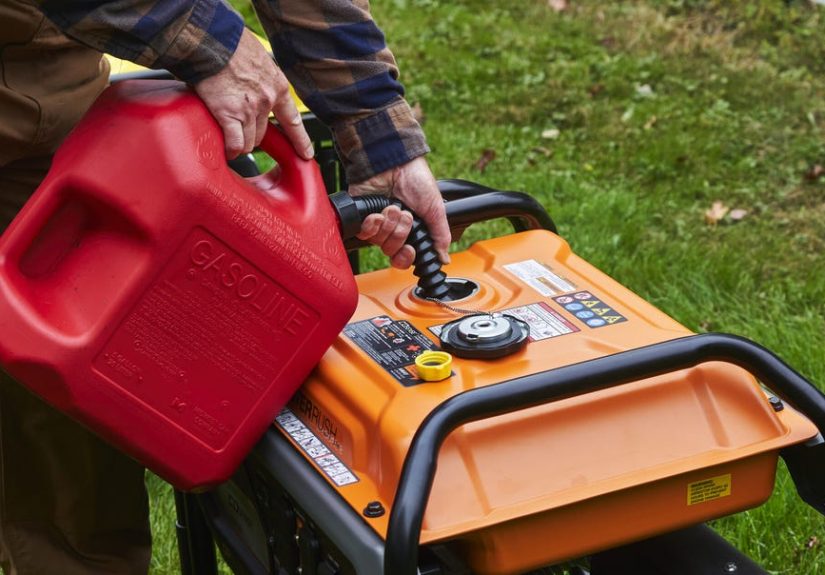
Refuel only when the generator is off and cooled down. Spilled fuel on a hot muffler can turn your “preparedness plan” into a fire department cameo.
Step 3: The Maintenance Basics (What to Do, and When)
The simplest way to think about generator upkeep is: before each use, monthly/seasonally, and annually. If your generator runs for long stretches during an outage, add “every X hours of runtime” tasks too.
Before Each Use (or Monthly if It’s in Storage)
- Check oil level: Low oil can shut the unit down (best case) or damage it (worst case).
- Inspect air intake and exhaust: Clear leaves, dust, and anything nesting (critters love warm enclosures).
- Look for leaks: Fuel smell, wet spots, or cracked lines are a “stop and fix” sign.
- Check cords and outlets: No frays, no melted spots, no wobbly plugs.
- Confirm your plan: Know which loads you’ll power and how you’ll connect them safely.
Oil Changes: The #1 “Don’t Skip This” Item
Small engines are picky. Many manufacturers recommend an early oil change during break-in (often within the first several hours to a few dozen hours), then a repeating schedule based on hours of use and/or time. In plain English: if you only use your generator during emergencies, time still mattersoil ages even when the generator doesn’t run.
- Portable generators: Common schedules include an early first oil change, then every 50–100 hours or annually.
- Standby generators: Often serviced annually (or by runtime), sometimes more often in extreme conditions.
Pro tip: Keep oil, a funnel, nitrile gloves, rags, and the correct wrench in a “generator kit.” During an outage is not the time to discover you own the wrong socket size.
Air Filter, Spark Plug, and Spark Arrestor
Dirty air filters reduce performance and increase fuel usebasically the generator version of trying to breathe through a sweater. Spark plugs wear over time, and spark arrestors (if equipped) can clog.
- Air filter: Clean or replace as the manual recommends (more often in dusty areas).
- Spark plug: Inspect periodically; replace at the interval recommended for your engine.
- Spark arrestor/muffler area: Keep it clean to reduce fire risk and maintain airflow.
Battery Care (Electric Start + Standby Generators)
A generator with a dead battery is like a car with a dead battery: you’ll suddenly remember every life choice that led you here. For standby units, battery health is especially critical because you’re counting on automatic starts.
- Check battery terminals for corrosion and keep connections snug.
- Replace batteries on the recommended schedule (many owners choose proactive replacement).
- Confirm the charger/maintainer is functioning if your model uses one.
Step 4: Fuel Management (Where Most “It Won’t Start” Stories Begin)
Gasoline: Treat It Like Milk, Not Honey
Gasoline can degrade over time, especially blends containing ethanol. Old fuel is a top cause of hard starts and rough running. Your plan should include fresh fuel, proper storage, and rotation.
- Use approved fuel containers and store them away from ignition sources.
- Add fuel stabilizer if fuel will sit; rotate fuel by using it in your vehicle or equipment periodically.
- For seasonal storage, consider draining the tank/carburetor or running the generator dry (per the manual).
Propane / Natural Gas: Cleaner Storage, Different Checks
Propane stores well long-term, which is why many preparedness-minded folks love it. But you still need to check hoses, regulators, fittings, and tank levels. Natural gas standby units avoid refueling logisticsbut should still be exercised and serviced on schedule.
Diesel: Stable, But Not “Set-and-Forget”
Diesel generators are common for larger needs. Diesel fuel can be more stable than gasoline, but it’s still vulnerable to contamination and water issues over time. If you rely on diesel, use a storage plan that includes filtration, inspection, and rotation.
Step 5: Exercise Runs and Load Testing (Don’t Let Your First Start Be During a Crisis)
A generator that sits too long can develop fuel issues, battery issues, and “I forgot how to be an engine” vibes. Regular exercise runs keep internal parts lubricated and help you catch problems early.
Portable Generator Exercise Run
- Run it every month or two (more often in harsh storage conditions).
- Let it warm up, then apply a small load (like a lamp or fan) to confirm stable output.
- Listen for surging, hunting, or unusual noises.
Standby Generator Exercise
Many standby generators run an automatic weekly exercise cycle. Don’t assume that means “all good forever.” Periodically verify it actually ran, and schedule routine professional service.
Step 6: A Practical Maintenance Calendar You Can Actually Follow
Portable Generator (Typical Home Use)
- Monthly (or every 1–2 months): Exercise run; visual inspection; check oil; check cords.
- Every use: Check oil; inspect air intake/exhaust; confirm safe placement and CO alarms.
- After extended runtime: Check oil level regularly and follow hour-based oil change intervals.
- Annually (or by hours): Oil change; air filter service; spark plug inspection/replacement as needed.
- Pre-storm season: Replace questionable cords; refresh fuel plan; do a full “practice outage” drill.
Home Standby Generator
- Weekly: Confirm exercise cycle ran (via app, indicator light, or control panel logs).
- Monthly: Visual inspection; clear debris; check for alarms/fault codes; confirm fuel supply.
- Annually: Professional service (oil/filter, plugs as needed, battery test, overall inspection).
- After long outages: Schedule a post-event check if runtime was heavy or conditions were harsh.
Step 7: Connection Setup (The Part People Get Wrong Under Stress)
Best Option: Transfer Switch / Interlock (Installed by a Pro)
If you want to power home circuits, a transfer switch or interlock kit is the safe way to do it. It prevents backfeed, protects utility workers, and makes your outage routine calmer: flip a switch, power selected circuits, done.
Portable “Direct Plug-In” Approach (Limited, But Common)
If you’re powering individual appliances, use heavy-duty outdoor-rated extension cords sized correctly for the load. Avoid daisy-chaining cords. Keep connections out of puddles and wet grass.
Step 8: Storage and Off-Season Care
- Keep it clean: Dust and debris trap moisture and attract pests.
- Protect from rodents: Check for nesting material and chewed wires (especially in sheds/garages).
- Fuel strategy: Stabilize and rotate gasoline; consider draining if recommended by the manufacturer.
- Store accessories together: Cords, funnel, oil, spare plug, filterone bin, clearly labeled.
- Do not “weatherproof” by moving indoors: Use only solutions designed for outdoor operation.
Common Generator Maintenance Mistakes (and How to Avoid Them)
1) “It ran last year, so it’ll run this year.”
Engines disagree. Old fuel, dirty carburetors, and dead batteries love this mindset. Exercise runs fix it.
2) Storing gasoline and forgetting it exists
Label cans with dates. Rotate fuel. Use stabilizer when appropriate. Your future self will say thank youpossibly out loud.
3) Running the generator too close to the house
Convenience kills. Distance and airflow matter. CO alarms are not optional “nice-to-haves.”
4) Overloading it (then blaming the generator)
Make a load plan. Start with critical circuits, add gradually, and understand startup watts for motors (fridges, freezers, sump pumps).
5) Improvising electrical connections
Backfeeding is dangerous. If you want a “whole-house-ish” approach, invest in proper equipment and installation.
Quick “Storm Is Coming” Checklist
- Test CO alarms (and replace batteries if needed).
- Confirm fresh fuel and a safe storage plan.
- Check oil level and top off if required.
- Inspect cords and connectors; replace damaged items.
- Do a 10–15 minute test run with a small load.
- Confirm your safe placement spot outdoors (and plan for rain safely).
Conclusion: Preparedness Is BoringUntil It’s Brilliant
The best generator maintenance plan is the one you’ll actually do. Keep it simple: exercise it, keep fuel fresh, change oil on schedule, check safety gear, and practice your setup before the weather turns dramatic. When the next outage hits, you won’t be outside in the dark whispering, “Come on, buddy,” like you’re negotiating with a vending machine. You’ll be insidecalm, charged, and quietly smug (the healthy kind of smug).
Real-World Experiences and Lessons (The Extra You’ll Thank Yourself For)
Let’s talk about the part nobody puts on the box: the “human factor.” Generator maintenance is straightforward right up until real life shows up wearing muddy boots and holding a surprise outage.
The “Stale Fuel Symphony”
A classic story goes like this: the power dies, the family cheers because “we’re prepared,” the generator rolls out like a hero… and then it runs for 30 seconds before coughing like it swallowed a kazoo. The culprit is often old gas that’s been sitting since last storm season. The lesson: date your fuel cans, rotate them, and treat gas with a stabilizer if it’s going to sit. If you only remember this during an outage, you’ll spend your evening Googling “carburetor cleaning” with 3% phone battery.
The “Oil: Out of Sight, Out of Engine” Moment
Another common scenario: someone runs a portable generator hard for a day or two, then it shuts down. Panic ensues. The generator becomes the villain in the storyuntil someone checks the oil and realizes it’s basically a philosophical concept at this point. Many small engines consume a bit of oil during use, and extended runtimes can mean you need to check it more often than you’d expect. The fix is simple: check oil before use, and during long outages treat oil checks like brushing your teethregular, non-negotiable, and best done before things get weird.
The “Extension Cord Spaghetti” Problem
In the chaos of an outage, people sometimes build a cord network that looks like it was designed by a stressed octopus. Daisy-chained cords, indoor cords used outdoors, overloaded stripsnone of it is great. A better approach: keep a small set of properly rated outdoor cords in a labeled bin, and pre-plan which appliances you’ll power. If you can, do a “practice outage” once a year: plug in the fridge, a lamp, and a phone charger, and confirm everything runs without tripping breakers or heating cords. You’re not just testing equipmentyou’re testing your routine under calm conditions.
The “Too-Close Convenience Trap”
People place generators closer to the house for convenience, weather protection, or because they don’t want to run a longer cord. Unfortunately, exhaust doesn’t care about convenience. It drifts, swirls, and finds openings. A helpful mental trick is to imagine carbon monoxide as a clingy neighbor who will absolutely show up uninvited if you give it the smallest chance. Pick a safe, outdoor location ahead of time and commit to iteven if it means you need a longer cord or a better connection plan.
The “Pest Condo” Surprise
Stored generatorsespecially in garages and shedscan become luxury condos for mice and insects. Nesting materials near cooling vents or wiring can create overheating risks, chewed cables, and mysterious “why won’t it start” days. The low-effort solution is a quick visual inspection during your monthly exercise run. If you see nesting, clean it out carefully, and consider pest deterrence in the storage area. The point isn’t to turn your generator into a museum artifactit’s to keep it from becoming a wildlife habitat.
These experiences all point to the same truth: preparedness is mostly tiny habits stacked over time. A short test run, a quick oil check, a fuel rotation reminder, a cord inspectionnone of it is glamorous. But when the outage arrives, those boring little actions feel like a superpower.