Table of Contents >> Show >> Hide
- Why Felt Bunnies Are My Go-To Easter Decor
- What You Need to Make These Cute Felt Bunnies
- Step-by-Step: How I Made My Felt Bunny Squad
- Clever Ways to Use Felt Bunnies in Your Easter Decor
- Tips, Tricks, and Mistakes I Definitely Didn’t Make (Except I Did)
- Why Handmade Easter Crafts Still Matter
- of Real-Life Easter Bunny Chaos and Joy
- Conclusion
Easter is creeping up the calendar, which means two things: the stores are full of chocolate I’m pretending not to see, and my home is slowly turning into a pastel bunny habitat. Instead of buying another generic plastic decoration destined for a dusty box, I decided to sew my own army of cute felt bunniessquishy, colorful, and smugly reusable. Inspired by the wildly creative Easter crafts shared on platforms like Bored Panda and classic US crafting hubs (think Better Homes & Gardens, HGTV-style DIY inspiration, Lia Griffith–style felt garlands, and kid-friendly craft guides), I wanted a project that looked boutique but was absolutely doable at the kitchen table.
The result? A simple felt bunny pattern that works as decor, a gift, a photo prop, or that one adorable thing you hold up and proudly say, “Yes, I made this with my own sleep-deprived hands.” These bunnies are beginner-friendly, budget-conscious, and endlessly customizableand they fit right in with modern Easter trends that favor handmade, sustainable pieces over one-and-done plastic clutter.
Why Felt Bunnies Are My Go-To Easter Decor
Soft, Safe, and Seriously Cute
Felt bunnies hit the sweet spot between adorable and practical. Quality wool-blend or craft felt is soft, easy to cut, and forgiving if your scissors suddenly forget how to make straight lines. Unlike ceramic or glass decor, these won’t shatter when a kid, cat, or overexcited adult elbows them off the table. Many US craft guides and retailers also highlight felt and EVA-based kits as safer and more kid-friendly options when paired with non-toxic glue and supervised cutting.
Budget-Friendly and Eco-Conscious
A few sheets of felt, a handful of stuffing, and some scraps of ribbon are enough to create an entire bunny family. Compared with store-bought decor, handmade pieces often cost less over time and can be restyled every year. DIY-focused sites like Sustain My Craft Habit, Lia Griffith projects, and Better Homes & Gardens’ Easter craft sections consistently lean into reusable, handmade accents as a smarter, greener way to decorate.
What You Need to Make These Cute Felt Bunnies
Here’s the basic kit I used to build my Easter bunny squad:
- Felt sheets in pastel and neutral shades (think blush, mint, cream, gray, soft yellow).
- Embroidery floss or strong thread (white, black, pink, or matching colors).
- Stuffing: poly-fill or holo-fiber (lightweight and easy to shape).
- Sharp fabric scissors (child-safe scissors if little helpers are involved).
- Disappearing fabric marker or pencil for tracing.
- Paper bunny template (front-facing or side-profile silhouette).
- Optional: fabric glue or hot glue gun (non-toxic where possible), tiny buttons or beads for eyes, mini pom-poms for tails, and narrow ribbons for bows.
Most reputable US craft sources recommend non-toxic supplies and close supervision when kids are around needles, scissors, or tiny embellishmentsand I co-sign that with every fingertip I’ve accidentally stabbed while multitasking.
Step-by-Step: How I Made My Felt Bunny Squad
1. Drawing and Cutting the Bunny Pattern
I started the old-school way: folded paper, quick sketch, one clean cut to reveal a symmetrical bunny. You want a simple rounded body, long ears, and enough space at the bottom to sit or stand. If drawing isn’t your thing, you can easily adapt shapes inspired by printable templates from established craft sites and felt garland tutorials.
Trace the template onto your felt twice for each bunny (front and back). Cut slowly and confidentlyno stress, felt is forgiving, and slightly wobbly ears read as “charmingly handmade,” not “failed art.”
2. Stitching the Edges
I used a simple blanket stitch along the edges, starting at one side of the base and working my way around, leaving a gap for stuffing. If you’re new to sewing, a whipstitch works just fine. The key is consistency: small, even stitches instantly make your bunny look boutique-level.
3. Stuffing and Shaping
Once about three-quarters stitched, I gently filled each bunny with poly-fill until it felt plush but not over-packed. You want a soft, squishy shapenot a felt balloon under pressure. A chopstick or blunt pencil helps push filling into ears and tiny paws. Then I closed the gap with the same stitch pattern.
4. Adding Faces, Tails, and Bows
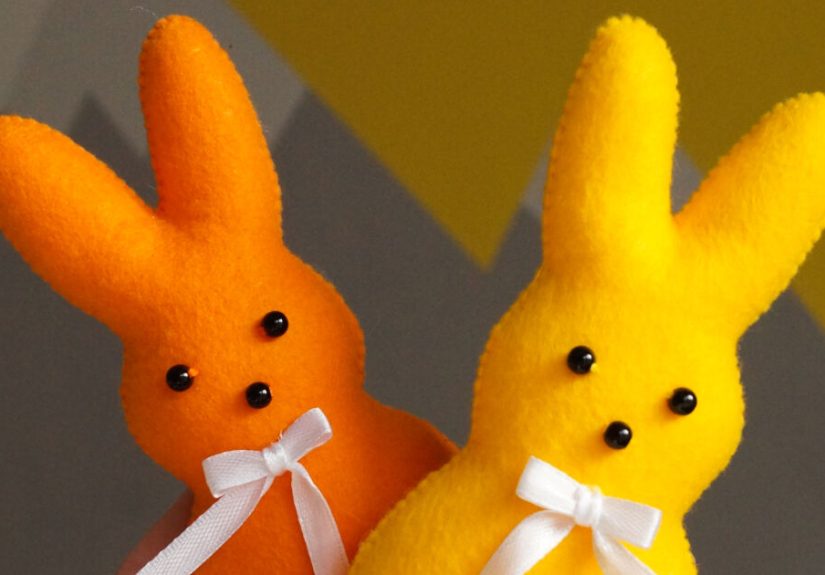
This is where each bunny develops a personality. With black embroidery floss, I added tiny eyes and a simple “Y” nose. A small pink stitch or blush of fabric paint gives them a sweet snout. I glued or stitched a mini pom-pom tail on the back and tied a ribbon bow at the neckdrawing inspiration from many felt bunny decor examples popular in US handmade marketplaces.
5. Styling Them Around the House
Suddenly, my home turned into an Easter storybook:
- Three bunnies peeking out of a woven basket with faux grass and painted eggs.
- A line of pastel bunnies on the mantle next to a minimalist garland.
- Mini bunnies tied to kids’ baskets as name tags (very Pinterest, very cute).
- One grumpy gray bunny on my desk supervising my deadlines.
Clever Ways to Use Felt Bunnies in Your Easter Decor
If you’re going to handcraft these little legends, you might as well make them earn their keep:
- Bunny Garland: Stitch or glue bunnies onto twine or ribbon for a simple garland, an idea widely loved in DIY decor communities and felt craft tutorials.
- Table Centerpieces: Cluster them with candles (LED if kids are nearby), eggs, and greenery for a cozy, photo-ready Easter table.
- Gift Toppers: Tie a tiny felt bunny onto a chocolate box or Easter gift for an instant “aww” factor.
- Photo Props: Perfect for Easter family photos, flatlays, or that obligatory “here’s my seasonal coffee” shot.
These styling tricks echo current Easter decor trends in US magazines and home sites: warm, handmade, and Instagram-friendly without looking overly staged.
Tips, Tricks, and Mistakes I Definitely Didn’t Make (Except I Did)
- Choose good felt: Cheap, flimsy felt stretches and pills. A thicker wool-blend holds its shape and looks luxe.
- Mind the eyes: If gifting to small children, embroider eyes instead of using beads or buttons.
- Color palette strategy: Pick 3–5 colors and repeat them. It keeps your decor cohesive instead of chaotic.
- Batch craft: Cut all pieces first, then sew in batches. It’s faster and weirdly relaxing.
- Storage: Keep finished bunnies in a fabric bag or box away from moisture and pets (apparently, some cats believe they are prey).
Why Handmade Easter Crafts Still Matter
In a season often reduced to sugar highs and shipping deadlines, taking an hour to sew a felt bunny is a tiny act of resistance against rushed, disposable everything. Handmade decor slows you down in the best way. It turns Easter prep into a ritual: choosing colors, stitching details, laughing at the slightly lopsided one, letting kids design their own versions.
US lifestyle and craft editors have repeatedly highlighted this shift toward intentional, creative celebrationsfavoring simple DIY projects, reusable decor, and meaningful traditions over excess. Felt bunnies fit perfectly into that story: small objects with big cozy energy.
of Real-Life Easter Bunny Chaos and Joy
The first bunny was supposed to be a “quick test.” I cut pale pink felt, stitched carefully, added a mint bow, and set it on the table. Within 30 seconds, it had a name, a personality, and a fan club.
That’s the danger with cute crafts: one becomes five, five become a colony, and suddenly you’re explaining to another adult why you were up at midnight embroidering rabbit noses like it’s the most natural thing in the world.
By bunny number three, I’d hit my rhythm. I lined up the templates, queued a playlist, and turned my dining table into a soft assembly line. There was something ridiculously calming about repeating the same small, precise motionscut, stitch, stuff, knotwhile watching a tiny character appear in my hands. No algorithm, no rush shipping, just thread and time.
Of course, not every experiment was a masterpiece. One bunny’s ears ended up different lengths, so I declared it the “rebellious cousin.” Another had eyes a little too close together, instantly promoted to “the one who’s seen things.” Instead of fixing them, I leaned in. That imperfect charm is exactly what people love in handmade pieces featured across creative communities: they look like someone cared, not like they rolled off a factory belt.
When friends dropped by, they didn’t ask where I bought my decor. They picked up the bunnies, turned them over, and asked, “Wait… you made these?” That right there is the best ROI on a craft project: surprise, delight, a little pride, and immediate requests for tutorials. A couple of bunnies “mysteriously” migrated into their bags on the way out; I pretended not to notice. (Easter is about generosity, after all.)
On Easter morning, the felt crew finally earned their starring role. One perched on each plate at brunch. A trio guarded the hot cross buns like soft, silent security. A tiny gray one sat inside a kid’s basket, nestled among jelly beans, quietly proving that not every treat has to be sugar. Parents clocked the handmade detail instantly: safe materials, no sharp edges, no batteries, no noisejust a keepsake they could toss into next year’s box instead of the trash.
By the end of the day, a new tradition had quietly stitched itself into my calendar: each year, one new bunny joins the family. Different color, different bow, same simple pattern. It’s predictably extra, but it turns “Easter decor” from a rushed purchase into a story I get to keep adding to. And honestly? That might be my favorite thing about these felt bunniesthey’re not just cute; they’re proof that even in a busy, digital, Prime-shipping world, we still love things made slowly, with intention, thread, and a tiny bit of chaos.
Conclusion
Easter is coming, the pastel invasion is inevitable, and your home deserves decor with personality. These cute felt bunnies are easy to make, fun to customize, kid- and wallet-friendly, and perfectly aligned with modern Easter vibes: creative, cozy, and a little bit playful. Whether you sew one elegant bunny or unleash a full colony across your living room, you’re not just decoratingyou’re building a tradition that can hop happily from year to year.
sapo: Easter is almost here, and instead of grabbing another forgettable plastic decoration, I’m sewing a whole squad of cute felt bunniessoft, colorful, budget-friendly, and ridiculously charming. In this guide, you’ll learn exactly how to make them, how to style them around your home, what materials to choose, and why handmade Easter decor feels so much more personal. From step-by-step instructions to real-life crafting stories, this is your playful blueprint for turning simple felt into your new favorite holiday tradition.